


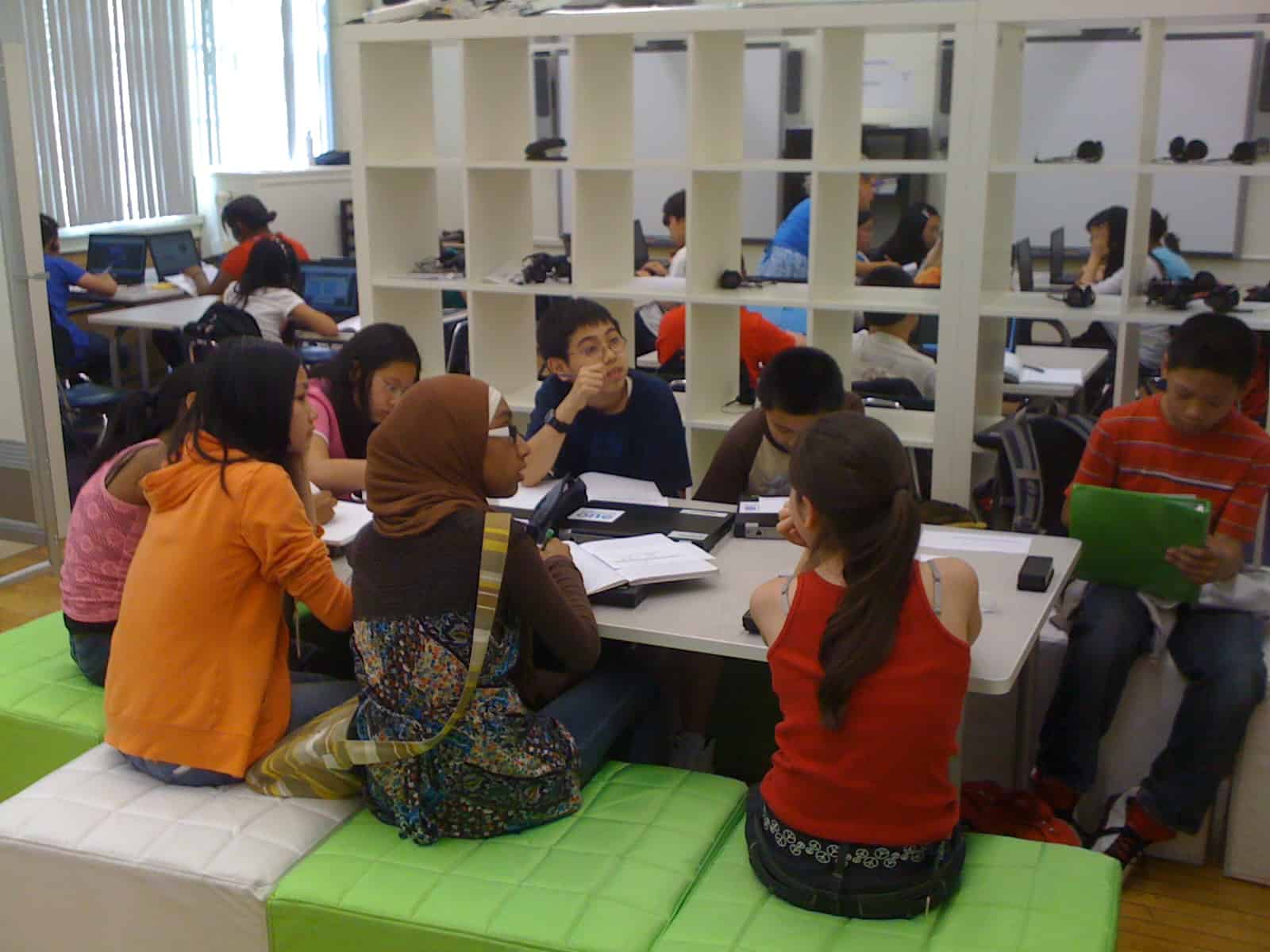
Intel Vision Video: Partial Picture of Blended Future
Intel released a video highlighting the not too distant classroom of the future, a blend of personal digital learning and hands-on, high engagement learning.

Become a Power Searcher: Join Google MOOC
Last week Google opened registration for Power Searching with Google, a free online course on advanced search skills. The six 50-minute classes will blend the MOOC (Massive Open Online Course) learning format pioneered by Stanford and MIT with social and communication tools to create a community learning experience.

Staff Picks: Blended Learning, Higher Ed, ISTE, DigLN
Tom Picks “Who Governs the Child?” Tom says, “The central tenant of Digital Learning Now!, a framework for state policy, is expanded access to the world of digital learning. The North Carolina struggle that Jeff writes about is emblematic of our time–the shift from a time when…
Udemy Launches Redesigned Website
Udemy expands online learning features, including student-teacher Q&A, progress tracking, and a personalized recommendation engine. The online learning platform Udemy.com today debuted a complete website redesign, enabling students to track their progress, interact more deeply with instructors and discover new courses relevant to them.

Blended Learning Can Improve Working Conditions, Teaching & Learning
Teachers have tough jobs—lots of kids and lots of responsibility—and budget cuts are making things worse. Blending the best of online and onsite learning can work better for students and teachers. There are 15 ways that blended learning is beginning to improving working conditions, teaching and learning.

SmartTech Roundup: Tablets, Blended Learning, STEM
Keeping Tabs On Tablets Nexus News. Google unveiled its Nexus tablet, coming in at $199, specs reveal both an 8GB and 16 GB option for the 7-in Jelly-Bean-powered tablet. In other Google news. Over 500 School Districts in US and Europe Use Chromebooks. Google launched new…
Who Governs The Child?
North Carolina is host to the latest battle over expanding digital learning, charter schools, and parent choice. It involves attempts by the State Board of Education (SBE) and the NC School Boards Association to block a proposed online public charter school, North Carolina Virtual Academy (NCVA) from serving students this Fall. Yet, beyond the details of this one new charter school, this issue has sparked a renewed debate over governance, and whether the principal virtue of “local control” in education is district control or parent choice.
Kinesthetically Kinect to Learning
I am sitting here in the San Diego Airport, with my head spinning with new ideas from the incredible - and at the same time incredibly overwhelming - ISTE conference. Yet, as I run back through the list of sessions and events one concept that pops out at me that is just dripping with yet to be tapped potential, is integrating the Xbox Kinect into classroom learning.
Teaching Authentic Writing in a Socially Mediated World
I need to confess. As an English/Language Arts teacher with nearly three decades of experience teaching writing in her professional backpack, I am supposed to know what I am doing. But the radical changes in the way we communicate in contemporary society have led me to dive deep into an existential crisis.
7 Top Trends at ISTE 2012
It was rumored that more 18,000 people signed up for the annual ISTE conference this year. The exhibit hall was buzzing with big booths from all the usual suspects in education including: Google, Blackboard, Pearson, Houghton Mifflin Harcourt and others. The traffic and engagement among attendees this year appeared much higher than 2011.