

Archive
element:when
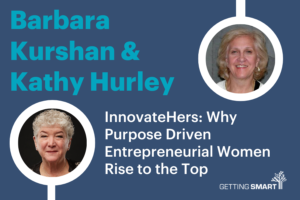
Barbara Kurshan and Kathy Hurley on InnovateHers
On this episode of the Getting Smart Podcast, Tom Vander Ark is joined by Dr. Barbara “Bobbi” Kurshan and Kathy Hurley the co-authors of the new book InnovateHERs: Why Purpose Driven Entrepreneurial Women Rise to the Top.

Dr. Paul LeBlanc on How We Can Fix Our Social Systems
On this episode of the Getting Smart Podcast, we're joined by Dr. Paul LeBlanc, president of Southern New Hampshire University and author of Broken: How Our Social Systems are Failing Us and How We Can Fix Them.

Understanding Opportunity Costs in Education
Opportunity costs need to be calculated in education and those calculations must be focused on the learners, not the school or system.
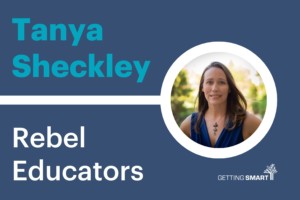
Tanya Sheckley on Rebel Educators
On this episode of the Getting Smart Podcast, Tom is joined by Tanya Sheckley, author of the new book Rebel Educator: Create Classrooms Where Impact and Imagination Meet.
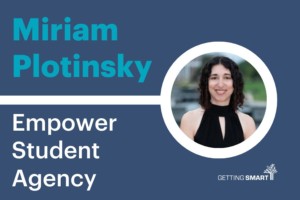
Miriam Plotinsky on How To Empower Student Agency
On this episode, we're joined by author and instructional specialist Miriam Plotinsky to discuss Teach More, Hover Less.
Chris McNutt and Nick Covington on The Human Restoration Project
On this episode of the podcast, we're joined by Chris McNutt and Nick Covington, two leaders of the Human Restoration Project.
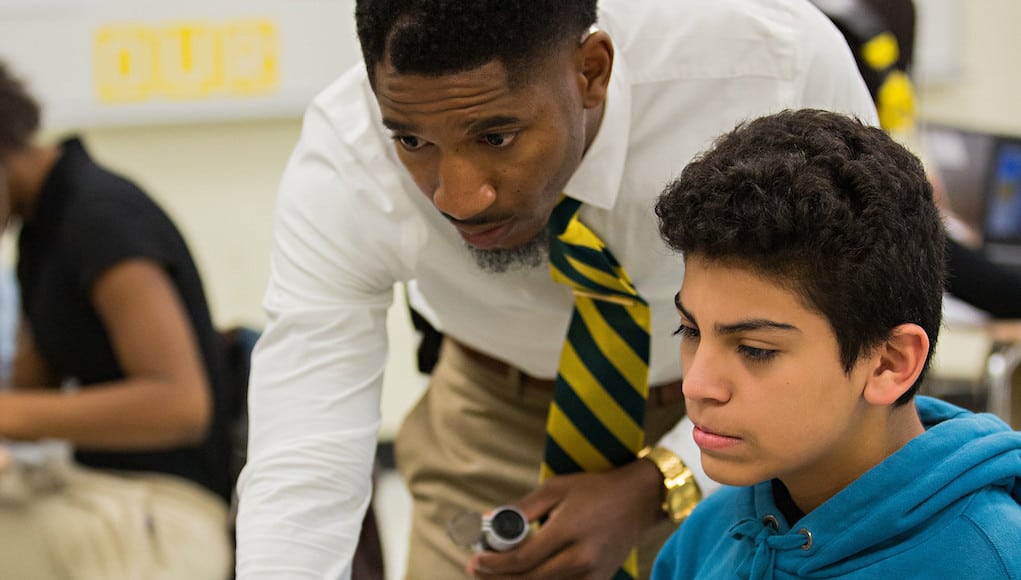
Every Student Needs a Learning Coach
As learning becomes more personalized, learning opportunities expanded and unbounded, and learning science research more robust, an updated and revised advisory role is more important than ever.
Dr. Don Haddad and Dr. Jackie Kapushion on St. Vrain Schools and Innovation Centers
On this episode we're joined by Dr. Don Haddad, the Superintendent at St. Vrain Valley Schools and Dr. Jackie Kapushion, the Deputy Supt.
Alex Budak on Becoming a Changemaker
On this episode, we're joined by Alex Budak, a UC Berkeley Haas faculty member and the author of Becoming a Changemaker.

Building Advisory Systems with Intentionality, Equity, Curation, and Impact
This piece highlights two leaders building advisory systems for today’s students that demonstrate the intentionality, equity, curation, and impact underscored in the design principles of New Pathways.