


Chris McNutt and Nick Covington on The Human Restoration Project
Key Points
-
Teacher professional learning can, and must, be done better.
-
Teachers must be viewed as creators.
On this episode of the Getting Smart Podcast, Tom Vander Ark is joined by Chris McNutt and Nick Covington, two leaders of the Human Restoration Project, an initiative aimed at transforming school systems towards human-centered policies that promote well-being and powerful learning.
Together they discuss what human-centered professional learning looks and feels like, how it empowers student voice and the human-centered schools network.
Links:
- Chris McNutt
- Nick Covington
- Human Restoration Project Podcast
- 100 Days of Conversation Podcast
- Human Restoration Project Conference
- Human Restoration Project PD
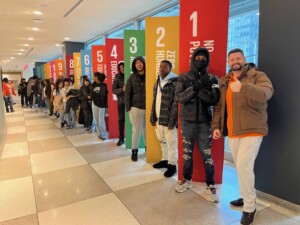
- UN Sustainable Development Goals
- Difference Making | Getting Smart
Transcript
This transcript has not been edited for spelling accuracy.
Chris, why is social justice a cornerstone of education success? Yeah, so I think about the French philosopher, and I’m going to butcher this name, Simone de Beauvoir, talks about this concept of the oppressor, the person who wants to control the system, wants to change the consciousness of the oppressed, not the situation which oppresses them. So for us, the reason why we want to switch towards social justice as a cornerstone to
educational success is we want to ensure that those who don’t have power have the capacity to have power and make change. So a big part of the work that we do at Humanity Restoration Project is incorporating not only the historical philosophy of progressive education, but also consider things like dismantling the carceral network, promoting LGBTQIA plus folks, representing Black Lives Matter, etc., to ensure that everyone is valued in the classroom.
You’re listening to Getting Smart Podcast. I’m Tom Van Der Rook, and today I’m joined by Chris McNutt and Nick Covington. They’re two leaders of the Human Restoration Project. It’s an initiative aiming at transforming school systems towards human-centered policies that promote well-being and powerful learning. Welcome, guys. Thank you. Yeah, glad to be here, Tom. Thanks for having us. Nick, I love your t-shirt. Humanized education. What does that mean? Yeah, at the
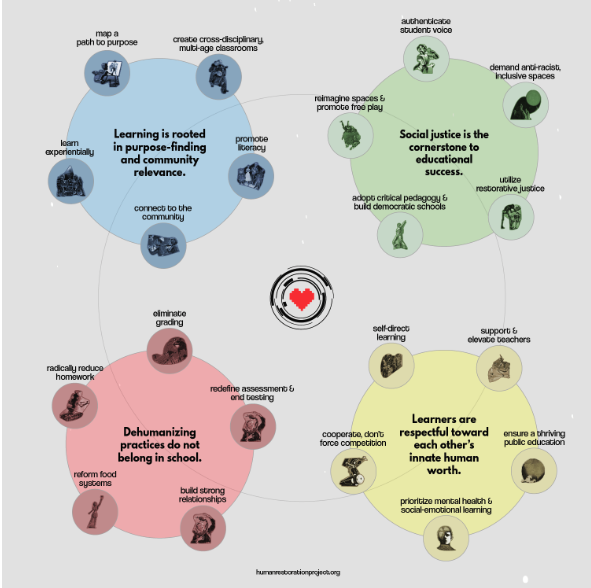
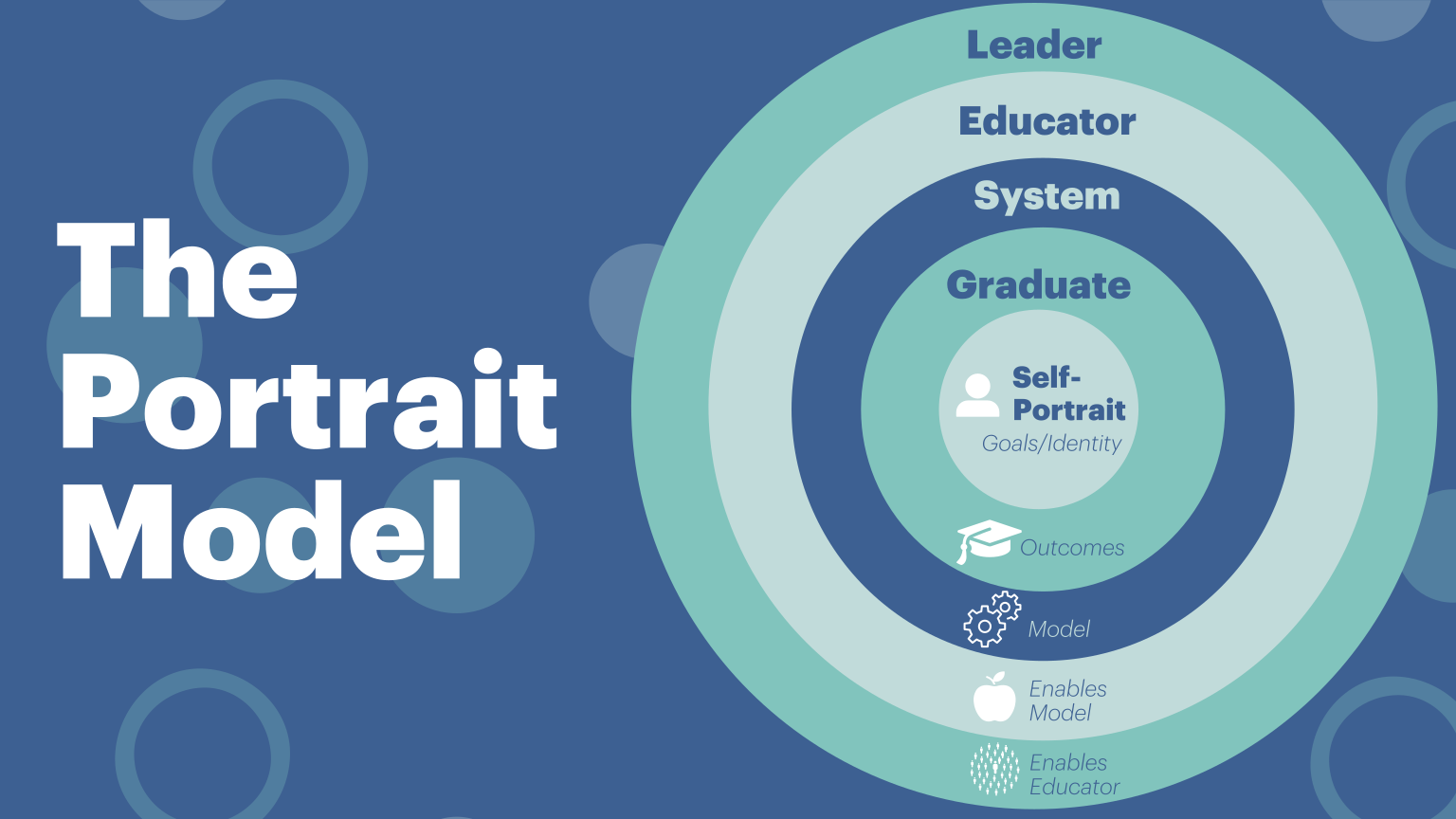
Human Restoration Project, we basically have taken that history of progressive education, you know, that goes back all the way through early reformers like John Dewey, and tried to connect that to a concrete system of values that we can build progressive practices around. So for us, those values mean that every learning is rooted, rather, in purpose finding and community relevance. Chris had already referenced the social justice as the cornerstone
to educational success. Dehumanizing practices do not belong in school, and that learners are respectful toward each other’s innate human worth. So we view the last two decades of top-down ed reform as widely having been a failure precisely for the reason that it had not invested in teachers as professionals, and instead decided to put test scores above, say, purpose finding and student well-being. And as a result, we’ve seen what? Decade of flat test scores while we’ve had
a growing mental health crisis. So we want to flip the script and kind of ask what would a better world or a better education system look like, even if it didn’t raise test scores? How can we, improve student health and well-being? How can we build stronger connections to the community around them? How can we, again, to Chris’s point about social justice, also help change the environment that students are graduating our schools into to make sure that they’re
humane environments as well? So looking at workplace policies, economic equality, the prison industrial complex, there’s the schools are a microcosm of society at large. So we need to consider them as such. Chris, you have a beautiful design framework behind the Human Restoration Project. And Nick mentioned a few of those elements. But before we dive into that framework, what’s the backstory? Where did Human Restoration Project come from? What does
that name mean to you? And then just a little background on the intellectual framework that you’ve built here. Yeah, yeah. So Human Restoration Project was incorporated as a nonprofit in early 2020. I started with a buddy of mine kind of as just a random thing to do, out of frustration with the school system. I was a teacher for eight years. I taught digital design and social studies in a public high school. And day in, day out, I felt like something was was wrong. Like I was going
through the motions at work. And I came across all this different research surrounding things like ungrading and restorative justice and purpose finding. And I didn’t feel like I had the proper tools to make that happen. So I did some research, started reading some books, and began to develop out the Human Restoration Project as a way to share out progressive education for, I guess, regular people. I think a lot of times we think about progressive education, we think about maybe
theory or high level pedagogy or kind of ivory tower type stuff. But it’s something that you can incorporate beyond the Montessori’s and Regio Amalia’s etc. It’s something that can happen in public schools. So over time, we’ve developed that into this framework in 2020, when we incorporated as a nonprofit, we brought in Nick. And Nick and I, along with a few volunteers, run the organization. That theory is heavily developed by folks like John Dewey into critical
pedagogy, so like Freire, Darter, and Giroux, as well as incorporating more social justice frameworks through folks like I think like Linda Darley Hammond, Bell Hooks, Jonathan Kozl, etc. So it’s incorporated through a bunch of different degrees of educational theory and practice in order to think deeply about specifically systems-based thinking. So our organization is differentiated by the fact that instead of focusing on certain lesson plans or something that you would
do day to day, we look at underlying issues within the school system that transform one’s practice. For example, if I go in day to day and I teach about social justice, but I give people grades, I am still ranking and filing them. I am still kind of enacting my power as a teacher, and I’m judging kids. We know based around the research of grades that it is harmful and it causes stress and anxiety. And ultimately, any kid who gets their report card halfway through the
year and has an F is not miraculously like, oh, geez, I’m gonna go ahead and fix that. No, they collapse. They tend to be pushed out of school. So our goal is to look at those underlying systems and offer teachers the framework to fix them. Nick, before we dive into the framework, what do you guys do? What’s the… Give us a bullet point on the sort of initiatives of the Human Restoration Project. Yeah, certainly. So before, I guess, June of just this year, Chris and I were both
full-time classroom teachers. I taught social studies here in Iowa for 10 years. And yeah, so we both have shifted now full-time into doing the Human Restoration Project, which really has expanded the scope of our work. So let’s talk about what we’re doing right now. So right now, we’re developing an interdisciplinary curriculum for our partners at the Holistic Think Tank, which is a sort of a progressive education group actually based in Poland. And
we had won a grant with them to develop a curriculum based on some… A set of interdisciplinary standards that they developed with their team and with their researchers. And we’re one of three groups currently working on developing that interdisciplinary subject curriculum. So we’re taking some standards, say, around, gosh, aesthetic competencies and entrepreneurship and some things that kind of have roots, again, across all disciplinary silos, and really building a
modular curriculum that can either be used as a, say, as an advisory or a home room kind of context, or you could build it out into a full-fledged curriculum over the course of a semester or even a year. So we’re currently working on that, and that’ll be available freely, hopefully, this fall. We’re also… We’ve also got a Human Restoration Project podcast, a bi-weekly podcast, where we talk to leaders that are doing awesome, progressive work or academics who are, you know,
putting the… Laying the groundwork and the research basis and the theory for action around those things. And also, just talking to people about their educational experiences. We’ll have episodes coming up here with Nick Susanis, who is a comic book artist and kind of has written a groundbreaking work in his work on flattening. Also talking to a labor organizer, Kim Kelly, who’s written for Teen Vogue and for Vice Magazine about her book, Fight Like Hell, about the history
of the labor movement. We’ve got that going on, and we’re also involved in professional development. So another kind of big arm for us as well, in addition to content creation and providing open education resources for teachers and people to use, is that we actually think that most PD kind of sucks and is bad. As both of us have experienced, you know, a decade of bad PD, we think we have a better model. And so for that, us, that looks like the human centered schools model,
where you can get involved in that project and to become a human centered school, kind of go through a process of onboarding where you understand progressive education, hold empathy interviews to understand learners and the issues in your community, engage in some teacher action research, help provide some support for teachers who are engaged in that work and then to grow the movement from there. So that’s kind of an ongoing process as well. We also just held in July, at
the end of July, our inaugural conference to restore humanity, which was a fully virtual conference. I think that maybe the first of its kind to be held in the mainstream on our Discord platform, which was real cool. We had about 120 people sign up for that. We had Henry Giroux present, we had Denisha Jones. We had an awesome group involved in restorative justice out of Harvest Collegiate High School in New York City called the Circle Keepers. And we had other events
and asynchronous coursework throughout the week as well. So, you know, we really just think that the best way to build a model is not to tell people what that should look like, but to help model it for them. So, our PD offerings model what we think the best progressive practices should look like. Our conference is built around what we think the best digital pedagogy looks like, etc., etc. So, we got a lot of irons in the fire and yeah, we’re happy to talk with folks like
you all, Tom, about the work that we’re doing. Are you thinking about building a network of schools that share this point of view? Yep. So, our theory of action really kind of comes less from a traditional professional development perspective and more from like a mass organizing perspective. So, in my recent past, I was also a labor organizer. I was my local union president for about four years. I’ve been a state member organizer and things. So, a lot of our approaches
to that actually use principles from organizing because we think that’s the way to sustain grassroots change. It’s not enough for one teacher to change their practices in a system that’s not receptive to that, but how can they get more people on board? How can they leverage their relative power and privilege in their context to get more people on board for the kind of changes that we’re going for? Chris, I really love the first principle of your framework that
learning is rooted in purpose finding and community relevance. What is purpose finding and what does that look like? In particular, maybe you could give us kind of an elementary snapshot of that and then a sort of a high school snapshot of it. But what’s purpose finding? Sure. Yeah. So, purpose finding is one of those things that sounds very obvious on paper, but the way that we actually act on it doesn’t really make much sense. So, purpose finding is
quite literally moving towards a pathway towards something greater than oneself. It’s finding the thing that interests you to the point that it brings you to life and makes you happy and healthy, and it impacts the people around you in some kind of pro-social way. A good example of that would be, I would assume, that many teachers find purpose in going out and teaching their classroom. However, the sad part of life is that the vast majority of people, and I’m drawing on Dr. Will Damon,
who is a kind of a cornerstone thinker in this field, he did a bunch of interviews with young people, and he found that only 20% of young people consider themselves purposeful, as in they go through their daily life knowing, hey, this is kind of like what I want to do, I’m acting on it, and I think I’m going to do something with it later in life. The rest of the folks are either thinking about it, but they’re not actually doing anything with it. They are maybe trying a bunch
of things out, but they aren’t really sure where to go with it, or shockingly, about 20 to 25% are completely disengaged. They’re completely zonked out, apathetic, they have no interest whatsoever in finding a purpose. So, we have a bunch of folks, elementary school, middle school, high school, and especially the later years, who are more and more disengaged. There was a study that found that 75% of high schoolers are disengaged in school, that’s a Gallup poll from 2016.
It’s a shocking amount of data that makes us question, why are we doing things this way? I also draw upon the ideas of William Dureshowitz, who did the work, Excellent Sheep, and he talks about this process of zombification. I identify really highly like that. This idea of you’re just going through the motions, you know that you’re going to go to college if you’re like middle class, typically, which I was, I was a middle class suburban guy, my parents went to college, so I
went to college, and I just chose the degree, actually my parents had, both have education degrees, and I was like, oh, I guess this is the thing I’m going to do. Now, don’t get me wrong, I love teaching, I really do identify with that work, but I didn’t really understand what I was doing until after I graduated college. So, there’s a lot of elements that are disorderly there, that we could reframe towards purpose finding within the classroom, so we can act on those
ideas earlier on. Can I build on that, Tom? Yeah, please. So, I was going to say, we believe so deeply in the power of education, but when you look at how children actually experience school, the research would tell you that they actually leave school asking fewer questions than when they went in. And of course, we think that the ends justify the means in that case, because it means raising test scores or chasing these other metrics, but the thing that’s going to have the
lead to long term life, creating lifelong learners is actually their ability to formulate and ask and answer self-generated questions, right, to build upon their curiosity. So, you know, we think that there has been a direct trade-off in the kinds of incentives and programs that have been implemented as part of the traditional ed reform package, and that’s part of the work of humanizing schools is putting learner-driven questioning, you know, and other theories of motivation,
other than the traditional behaviorist ones that have led schools for so long and, you know, try to look elsewhere. So, look at the self-determination theory of D.C. and Ryan and some other theories, you know, of pedagogy and motivation there, too, that don’t require dismantling public education or dismantling systems and piecing them out elsewhere, but, right, just putting the humans back at the center of that and both improving our motivation and our curiosity,
and we believe, and we think the research would support this, that, you know, the test scores and other measures of health and well-being for children will follow. Chris, this seems messy. Like, if we take seriously purpose-finding, relevance, social justice, right, we’ve known schools that value most compliance, right, and what you’re describing sounds inherently messy, so give us a picture of what this might actually
look like. What would a 10-year-old’s school experience look like, a day in the life of a purpose-finding, relevant experience rooted in social justice? What kind of stuff would you do at school that would fit your framework? So, I think for us, I would start off by explaining and kind of deconstructing the idea of learning as messiness and thinking in the abstract. I think of a lot of the stuff that we do in school
as kind of pantomining objectiveness, as in we feel like we’re getting students to learn, but at the end of the day, we’re actually not doing anything at all outside of feeling like we’re organizing it. I think about a study done by Susan Engel where she tasks teachers in training to identify engagement in classrooms, and all of these different teachers went out to different classrooms and they were writing down all their notes, they came back to her and they said,
okay, we’ve identified engagement. All the kids were staring at the teacher, they were raising their hands when questions were asked, and they agreed posture and they weren’t sleeping. And at the end of the day, she found that pretty much every skilled teacher identified that as engagement, which as you were just kind of alluding to, that’s compliance. That’s not engagement. Engagement is exploring ideas that you’re interested in going beyond perhaps the task
at hand and exploring a space that interests you. It’s purposeful at the end of the day. So, in terms of what this would look like for a 10-year-old, we have research data and teachers practicing this now. It’s not like this is an idea that just exists like in a dream state. So, what this would look like is, for example, operating a challenge. Maybe you’re a teacher who really embraces the UN Sustainable Development Goals, and your community is impacted by climate
change, which is a pretty mainstream problem no matter where you’re at. Perhaps you take an experiential journey, you take the kids out, and you go visit a space where maybe there’s a drought or flooding or something of that nature, and you talk about it with the local community, they learn from community experts, maybe some of their families are impacted by it or work there, et cetera. So, you connect with all those different people, you connect to the community,
you then take those kids back to the classroom, and you have a task like, hey, how are you going to help out? And everyone figures out in their own way what the best way to meet that challenge is. You might have some kids who embrace art and maybe kind of go like the culture route and try to find like a way to give back to the community or raise awareness through art. Or perhaps you have people that take on the challenge in a more like literal way where they are doing some kind of research
task. It always shocks me what young people can do when you give them the space and support to help them go through that process no matter how old they are. I’ve been fortunate to be able to visit many like expositions of learning in elementary and middle schools. And there are things that nine and 10 year olds do that honestly go beyond what many high schoolers I feel would feel like they’re capable of because of just childlike imagination, but also just freedom to explore.
So, that incorporates all those elements. It’s both purposeful and community relevant. It tax on social justice because there’s no way you could talk about that without talking about who’s impacted the most and who’s not impacted, et cetera. And it gives people the space to recognize their value as a human being. And none of that involves grades per se. You don’t have to have homework or grades or standardized testing to do any of that. And the learning is self-evident
by the product that comes out of it or even the process. Nick, we published a pandemic book called Difference Making Schools Alive with a Sense of Possibility. And that book argued that kids should be doing relevant, purposeful, community connected work for an impact, work that’s important to them and work that’s important to their community. Is that what high school ought to look like, more space for young people to do work that matters? Absolutely. I think one of the things
as a high school teacher that I saw, again, to Chris’s point where he was saying, look at what sometimes middle schoolers do and their engagement and their enthusiasm, I always was of the opinion that like your last year of high school should just be the capstone where that is what you’re doing. You are half in one world and half in the other, half in the world of school, and then half in the rest of your life outside of it. So I really think that it should be that capstone year where
you’re reflecting on the last, say, 11 or 12 years of your high school career. And then, what are you building for the next generation? How are you building that bridge to that world outside of school? What kind of connections are you making that are going to help not just support you, but then make either your school community better that are going to prove the experience for everybody else in your building and in your district? Or what are you doing that’s going to
address an issue in your area? Instead of just viewing your high school experience as, I don’t know, a collection of test scores that at the end of the day just show that you might have put your butt in a seat and you might have showed up on the day of the test. But we also know what’s the saying, right? D’s get degrees, you can graduate with a C and not be particularly engaged. So again, if we flip the script and put engagement and curiosity and community connection first,
learning will inevitably follow. It’s just about connecting the things that are relevant there too. Now, I think a related issue too is we’re seeing among young people in particular, distressing sense of alienation and isolation, both I think that’s come as a result of the pandemic and the crisis of identity that ensued. So I think there’s an element of community in there as well. The work that we do has to be collaborative that has to lift, that incorporate
a lot of voices, that has to lift all perspectives. So that way, students can not only feel like they’re making a difference, but feel good in the present and feel like they’re connected, again, to something bigger than themselves, not just in the future or in the hereafter, but right now with their buddies and with the people around them. Chris, we’ve been talking about what school looks like on a good day. Your framework also says that
we should stop and dehumanizing practices that do not belong in school. We’ve touched on a couple of those, but I think you guys have a sense that we should change grading, grouping, the basic ways that we organize school and provide feedback. And you see those as dehumanizing, is that right? Sort of. So I would push back against the idea that feedback has to mean grading. I’ve operated a grade list classroom pretty much my entire teaching career, and there’s a large
group of folks online, especially via teachers going grade lists and some other folks who are doing awesome work surrounding that concept of ungrading, which if we’re going to list out those dehumanizing practices, we start with grades. Grades are one of those things that, first off or not, something that’s always been there. Grades are a relatively recent addition to the education system the last 100 years. And so far, they haven’t done necessarily what they’re meant
to do. The idea was supposed to be that it would be a quick way to communicate what someone knows and what someone doesn’t know. So that way you can improve upon in the future with a quote unquote growth mindset. Well, the issue is, is that kids who get low grades become more and more disengaged with school. They don’t all the sudden start doing better. They end up doing worse. Meanwhile, kids who get very good grades tend to either continue to get good grades or obsess over
them. I was always, I guess, perplexed or worried about students in my class who, even though we operated an ungraded class halfway through the year, I had to enter a grade and we negotiated that, et cetera. And I circumvented the system a little bit. Almost every single kid got an A. So this is not something really to be stressed about. But kids who got all A’s would come to me and be like, you better not give me a B. I can’t get a B. If I pops up on the grade book,
that’s the end. And I’m just like, that’s what we’re concerned about instead of learning. And there are ways to go around that. We can do feedback driven learning without giving a grade at all. You can do that through negotiating grades. You could do a conference based grading, feedback driven grading, portfolio based grading. You can operate an ungraded classroom in an institution that still has grades. And then over time, obviously push back to try to eliminate
that altogether. A few other ones just to name them quickly in terms of dehumanizing practice homework, which to me is the easiest like open and shut bookcase homework, just exacerbates inequities. And the research will actually show you that if you give kids more homework, it doesn’t really improve what they’re learning. In fact, oftentimes it hurts them, especially if they’re in an environment where they need to take care of siblings or
something that’s taking up their time at home, you can just not give homework and that will solve that problem. Redefining assessment, I think everyone has kind of heard the story around standardized testing. I think it’s self evident at this point. And we went through a pandemic here where a huge number of universities didn’t care about test scores and the world didn’t collapse and everybody was okay. So we can get rid of that one. A couple other ones,
building strong relationships. Nick and I are both huge critics of the behaviorist movement, which really is like nowadays feels like it’s led by the teach like a champion crowd of this idea of you need to control everyone in the way that you build strong relationships is by like, I don’t know, it’s like robotically managing them. Like you’re giving voice to people by cold calling on them. And so just being a person and talking to kids about how they’re doing,
these are these are very simple ideas. And finally, this is kind of a strange one for us, as it really stands out. But it’s something that I think about all the time, which is reforming food systems. The way that we operate food in school makes no sense. And if we’re going to have a progressive school system, a human centered school system that cares about kids, they can’t at school eat slob, like you still have to be able to eat healthy food. There’s a really good
book on this called The Labor of Lunch by Jennifer Gaddis, who’s probably probably one of my favorite books I’ve ever read actually, that talks about why food is the way it is, and ways that you can change that it’s actually cheaper to just partner with local farms and feed people. But there’s a lot of corporate contracts and stuff that prevent that. So there’s a lot of different things that go on in school that really don’t make much sense. Nick, the last pillar in humanizing education is
really about respect, respecting each individual’s dignity. It sounds like culture is really important to you. Is that fair? Yeah, certainly. I think one of the trends that I think we’ve seen, again, schools as a microcosm of society, as we’ve seen an increased individualization of our economy, our society, we’re all supposed to be just self-sufficient, independent, rationally ordered economic thinkers. And we know that that’s just not the case. And in fact, we kind of believe that
that kind of system of economic organizing has been incredibly, incredibly harmful, both to schools and to communities, and has kind of led to some of the fracturing that we’ve seen more broadly. We’re talking a lot here about living in the pandemic world, I think, has certainly shined a lens on that, putting our individual wants and desires ahead of the needs of everybody to survive and thrive in unprecedented times. So yeah, that’s why when we talk about something
like self-directed learning, that needs to be balanced out by the fact that we have an obligation to each other as learners in a learning community of students, communities of adults, either as colleagues or as family members, community members, etc. So yeah, so building a culture, I think, is really important. Having students involved in the democratic decisions, decision-making process, not just of your classroom, but of your school and of your district, is really important as well.
We just talked to somebody yesterday, and they run a school in Pittsburgh where there is a student who actually is a voting board member. So when we were talking to the principal of this institution, he doesn’t get a say in how the board votes. The student actually has voting power over those things over them. Another way that you could do this is just have students collectively design those collective commitments for your classroom space. That’s something that I was really big
about in my own classroom space, and that will be writing shortly, actually, a guidebook on creating democratic classrooms as well. So again, balancing your needs for individual autonomy in the way that you are physically, in the way that you sit in a classroom, the way that you engage with the content, sort of a universal design approach for learning, but then also understanding and balancing that with the obligations to each other as well. So yeah, and of course, we think that by improving the
individuals, we’ll improve the collective as well. Another part of this, too, maybe the last two pillars there, and one that I think, again, is in stark contrast to the last couple of decades of top-down standardized reform movements, is those really came at the cost of teacher organization and the notion of teachers at professionals and look at the environment that we’re living in now, where we’re lowering the bar for teacher certification, where we’re having teacher
shortages, where kids in college with a couple of credits can go in and teach your kids’ classroom, or members of the military can go in and teach. But we really want to, we think that professionalizing the teaching profession actually helps improve learners as well. So yeah, we want our teachers to be able to negotiate a union contract and get paid a living wage and can’t just be like, um, uberized gig workers and be replaceable dime a dozen, because, you know,
if we believe in community, we believe teachers are as much of that part of that community as well. Chris, I want to ask you about new school development. I love some of these design principles that you’ve laid out, learning experientially on a path to purpose, connected to the community, multidisciplinary, focused on literacy, maybe multiple literacies. That sounds like a beautiful recipe for new school development.
Is that true? And do you guys think new school development is really important? And part two of the question is, can existing schools create a path to over time take on those design principles and really transform the way they’re doing business? So two-part question. So is new school development a big part of your impact strategy? I would say yes and. I think that the concern with developing any kind of new school system is that those schools tend to be charters and we’re
not an anti-charter organization. We’re not folks that believe that like charters shouldn’t exist, but we do recognize that sadly the way that charter schools work in the United States is that they do tend to defund or somehow hurt public schools around them. Therefore, our work primarily focuses on equipping teachers with changing the schools that they’re already in. So yes, certainly charters that are new schools in general who would look at our work and go like, hey, I want to make a human
restoration project human-centered school great, impact as many people as you can. But in terms of our theory of change and how we want to take this, have this take hold over time, is much preferable that teachers take these tools and expand their own classrooms and do a very much grassroot style movement. Primarily, the reason being is that’s what’s going to work. We’ve tried reform measures across the United States to, for example, like through like race the top or no child left behind,
to incorporate new types of schooling through different types of metrics and doing a top-down approach to start even new schools. And it hasn’t worked. We’re in a worse place now than we have been in times past. Instead, it’s going to take educators at a grassroots level making those changes. I would say in terms of how that looks over time, we’re big believers in the Deborah Meyers small schools movement, which involves taking public schools and developing schools within schools.
So a stepping stone beyond just like redo the entire public education system is, why don’t we pilot what this would look like with maybe 100 kids inside the existing school? There’s a cool school down in Cincinnati I worked with one time where they had an auditorium that was used maybe four times a year and they decided like, hey, let’s prototype a new, more progressive, self-directed model in the auditorium space. And they just took about 50 kids or so and their classes were all in
this like subdivided auditorium and they tried it out. And that served as the basis to expand upon the program in the future because families felt comfortable with it. They saw the cool stuff that was going on. There was still an option for a more traditional education if folks wanted it. And it was all free because it was all public ed. So to us, it’s more important to show rather than tell. You can try it out within the existing school model, see how it works. And it’s our belief
based on all the research that’s out there and what we’ve seen that parents will appreciate it and seeing what students can add on to this real quick. Love that. Yeah, Nick, what would you add to the start where you are, start small, go fast, let it grow? Yeah. Yeah, I would just say 90% of students in the United States attend public schools. So if you’re going to affect any amount of change, it’s going to have to be in that 90%, right? Charters and private schools serve the
difference in a homeschool and all that’s fine, right? It’s part of a healthy, thriving education ecosystem. But what we’ve done with public education in the United States is subvert every other goal that we’ve ever had for our kids in order to chase higher and higher test scores, right? For the purpose of what? Economic competition, good jobs, a thriving democracy. Do we have those things? So that’s where we say, right, what has the last 20 years of ed. reform given us,
right, when we’ve been chasing test scores, let’s try to do something different, right? Let’s do it within the existing public school infrastructure and let’s just put students and teachers and communities at the center of it. That’s all we’re saying, right? That can take a million different shapes, right? We have people in HRP circles who are homeschoolers, right? We have people who, we have board members on our staff who teach at environmental charter schools, right? Chris and
I were both public school teachers. So it runs the gamut. But at the end of the day, 90% of kids are in public schools. So that’s where this needs to be again. We’re partial to certain models that are smaller just because we’ve been fed as professionals. The old John Hattie research that says that class size doesn’t really matter and politicians have drawn on that to tell us the same. But we know that’s bull. And we know that kids fall through the cracks and we know
how much work it takes to build strong impactful relationships. So, right? What do we have to lose from starting small? That’s kind of at the end of the day, what do we have to lose? And Chris McNaughton, Nick Covington, they’re leaders of the Human Restoration Project. Chris, if people want to learn more, where can they find you? You can find all of our free resources, podcasts, upcoming event information,
anything and everything at humanrestorationproject.org. And all of our socials are at HumrezzPro, first three letters of reward. Thank you, Chris and Nick for joining us. I appreciate your advocacy and energy and the insights that you’re sharing with all of us on a weekly basis. Thanks for being with us. Thanks, Tom.
Thank you, sir, Mason Pasha and the whole Getting Smart team. And until next week, keep leading, keep learning and keep innovating for equity. Thanks for tuning in to the Getting Smart podcast today. We want this podcast to be actionable, insightful, and a great way to learn about what’s next in learning. In order to stay on the cutting edge, we need people in the field that tell us what they’re
hearing, what they’re wanting, and what they’re needing to learn more about. Got a topic or a guest in mind? Send your recommendations to me, Mason at GettingSmart.com. And if you like what you’re hearing, don’t forget to leave a review and Apple podcasts or subscribe wherever you listen.

0 Comments
Leave a Comment
Your email address will not be published. All fields are required.