

Archive
component:how.learning-experiences
Searching For What Students Need to Learn
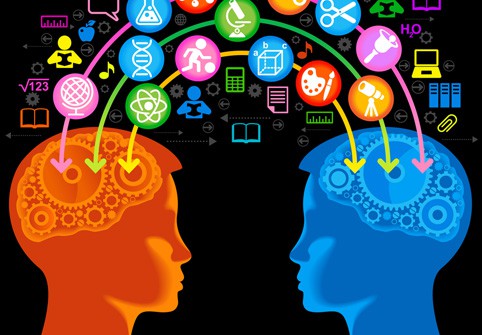
Our students are using technology more and more every day. This is the reality, especially as digital tools become part of everyday life. In order to be effective digital learners, one of the universal competences every student needs to master and all teachers need to model is the ability to perform an effective search. Search skills are essential for making anyone an independent and effective learner in today’s society.
How Can Embodied Learning Help Students?
The phrase “embodied learning” is coming into vogue, but it has different meanings for different stakeholders. For learning scientists, it has a very specific meaning, that is - comprehension and retention are affected by sensory motoric input. At SMALLab Learning we create educational content that taps into embodied learning using the latest advances in motion capture technology.
Staff Picks: Teaching, Testing, Gamification, Writing, & Cheaper Higher Ed
CCSSO and the K-12 Center at ETS hosted a conference on Tech Enhanced Assessment. In my lunch keynote I talked about profiles, playlists, projects, and progress based on demonstrated mastery.
Teaching & Testing the Common Core
“If we get this right, we’ll put our students on the path to a better future.” Gene Wilhoit, CCSSO, was talking about implementing Common Core assessments during closing panel of the Technology Enhanced Assessment conference. “Assessments are one element in the ecology of schools and school improvement,” David Conley said, “The whole system needs to be addressed.”
An Odd Couple of Measuring 21st Century Skills
The morning session at the Technology Enhanced Assessments conference hosted by the K12 Center at ETS and CCSSO featured what Michael Russell, Measured Progress, called a formative assessment odd couple—a messy science virtual world and a math homework helper.
5 Characteristics Connecting Montessori Ed & the Personalized Learning Movement
At first glance, the intersections between Montessori education and high-quality digital learning are not immediately apparent. To those of us with some knowledge about Montessori methods—based on formal training, general awareness or, as in my case, the observations of a parent whose children attend a Montessori school—its natural materials and deep traditions seem to stand in opposition to the vision of a futuristic, technology-rich digital or blended learning environment.
How P2PU is Reshaping Professional Learning for K-12 Teachers
Professional learning for K-12 teachers is an exciting space with great demand and high payoff for successful models. However, much of the professional development currently done for in-service teachers reflects old, industrial-era models of learning: rows of desks, teachers standing front and center, seat time, and lecture. Current models of granting credit to teachers are similarly antiquated and are rarely designed to prompt innovation in the classroom.
Khan’s Big Contribution Will Be Competency-Based Learning
Carrie Morgridge kicked off the 4th Sharefair at the University of Denver’s Richie Center with a description of the benefits of blended learning. The Morgridge Family Foundation has been a big supporter of DU and the adoption of personalized learning technology by Colorado and Florida schools.
Change the space, change the program, expect high outcomes
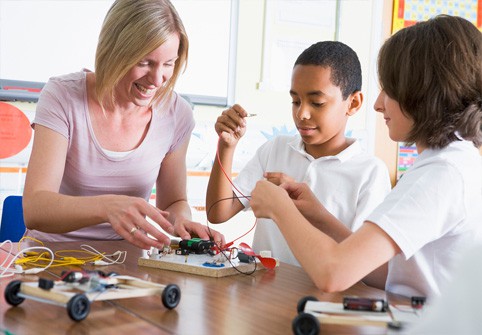
Stephen Harris directs the Sydney Centre for Innovation in Learning (@scil). It is the research, creativity and development unit of a K-12 school serving 1300 students. His philosophy is change the space, change the program, expect high outcomes.
In the Future, Teachers Remain Key to Student Success
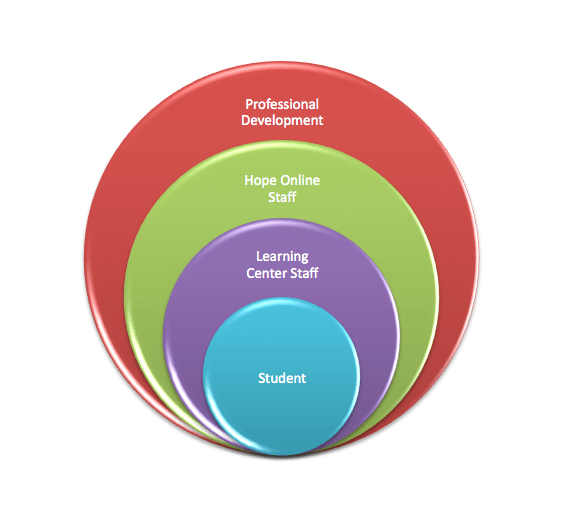
New technologies and 21st century students will change tomorrow’s classrooms but quality instruction will remain the most important indicator of student achievement, which is why we must invest in professional development for teachers today.