

Archive
element:for-whom
Personalized Learning
Infographic: The Countdown to Next-Gen Assessments
Digital Learning Now! (DLN) today released “Getting Ready for Online Assessments,” the third interactive paper in the DLN Smart Series, which provides recommendations for states and districts to prepare for new, online assessments in the wake of Common Core State Standards (CCSS) implementation in the 2014-15 school year. Here is an infographic that describes the shift to the online assessments over the course of the next 21 months.

Personalized Learning
Blended Learning Decision: Enterprise or Portfolio
For many districts, the most important strategy decision will be whether to build a common district plan or encouraging schools to develop their own plans.
Personalized Learning
Sir John Daniel: Openness Rather Than Scale is MOOC Contribution
"I'm delighted that openness has gotten to some very closed institutions," said Sir John Daniel. As the former CEO of Commonwealth of Learning and Vice-Chancellor of Open University, he knows a lot about higher education, open education resources (OER), and online learning.

Personalized Learning
Seattle School Breaks Down Language Barrier to Improve Math Proficiency
Personalizing and engaging students in math is an ongoing challenge in schools across the country. In Washington State, where countless organizations are working diligently to improve access to quality math learning for students’ futures, some schools are implementing a blended learning math program that draws upon game-based learning to increase math proficiency.

Personalized Learning
Part 1: To Personalize Learning, First Personalize Teaching
The irony is hardly lost on anyone when at education-related professional conferences educators sit in the audience as experts lecture them about how to teach as a guide-on-the-side rather than a sage-on-the stage. A “do-as-I-say-not-as-I-do” moment that often has even the lecturer chuckling.
EdTech
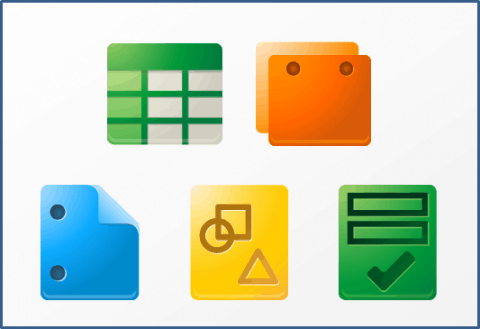
5 Ways to Use Google Docs in the Classroom
Google Docs is a user friendly suite of online collaborative tools that come with tremendous potential for use in the classroom. Last year all of the students in our school received Google Docs accounts and I was kept quite busy getting students and teachers up and running with the new tools, then discovering innovative ways to use them as effective tools for learning. Here are some of the favorites.
Personalized Learning
McKinsey Report on Edu to Employment: Useful Frame, Missing Innovation
McKinsey released a report called Education to Employment: Designing a System that Works. The six findings are rationale but fall short on the innovation front. The big sector wide solutions that the McKinsey team described will be beneficial when and where the occur. In the mean time, watch for organic solutions that emerge around new skills acquisition capabilities and marketing signaling strategies.

Personalized Learning
World Education University Disrupts the Cost of Higher Education
Massively Open Online Courses (MOOCs) were thetop megatrend of 2012. MOOCs made theshift from curiosity to employability. Antioch University is proving that it's getting easier to convert a MOOC experience into college credit. ACE is close behind, evaluating Coursera courses for credit. EdX and the Gates Foundation partnered this month to offer MOOCs at MassBay Community Colleges, proctored through Pearson VUE.

EdTech
Share Student Voices & Gather Audiences With 10+ Tech Tools
Once the essays were written, students used my shared Symbaloo webmix, “Creative Gallery,” to locate an appropriate technology tool to showcase their essays. Although the majority chose Blogger, students also used Wix, Weebly, Storybird, Google Docs, Windows Movie Maker Live and YouTube to share their viewpoints. Furthermore, students were encouraged to suggest any mode of sharing their essays, whether it be an unknown app, website, or some overlooked traditional method. Take a look at my "Creative Gallery" webmix below.

Personalized Learning
How MOOCs Already Changed Higher Ed in 2012
As we all know, cost is the major reason that students drop out of college, with the two highest cost factors being tuition and textbooks. In 2012, we have talked a lot of the potential of MOOCs to make higher education more open, more affordable and more responsive to employers’ needs than the traditional university structure.