


Archive
element:for-whom

Blueprints Are Not Enough: Building Balanced Assessment Systems for Science of Reading 2.0
Ms. Rivera has done everything right: she attended the state-mandated Science of Reading (SoR) training and internalized the new, evidence-based curriculum. She is teaching phonics and phonemic awareness. Yet, as October settles in, she feels a familiar anxiety. She is teaching the “what” of the new laws, but…

Norwalk Public Schools: Unpacking the Levers for Deeper PoG Implementation
Norwalk Public Schools leverages four key implementation levers to bring its Portrait of a Graduate to life, ensuring deep, system-wide impact.

What if Proficiency is not Proficient? The Case for Calibration
Calibration ensures consistent, equitable assessments in CBE. Learn why shared judgment is essential for personalized, competency-based systems.

Taking Stock: Reflections on Upgrading the Quality and Explainability of Educational Measurement in the AI Era
How might we upgrade the quality and explainability of educational measurement in the AI Era?

Preparing Youth for Their Future: What Our Exploration of Durable Skills Across Twelve Innovative High Schools Tells Us About What Is Possible
Innovative schools develop durable skills through authentic work, competency-based learning, and reflection, preparing students for dynamic futures.

Education’s Netflix Moment: A “Yes, And” Approach for Assessment System Innovation
Understanding the new era of assessment requires balancing traditional methods with innovative, adaptive strategies for growth.
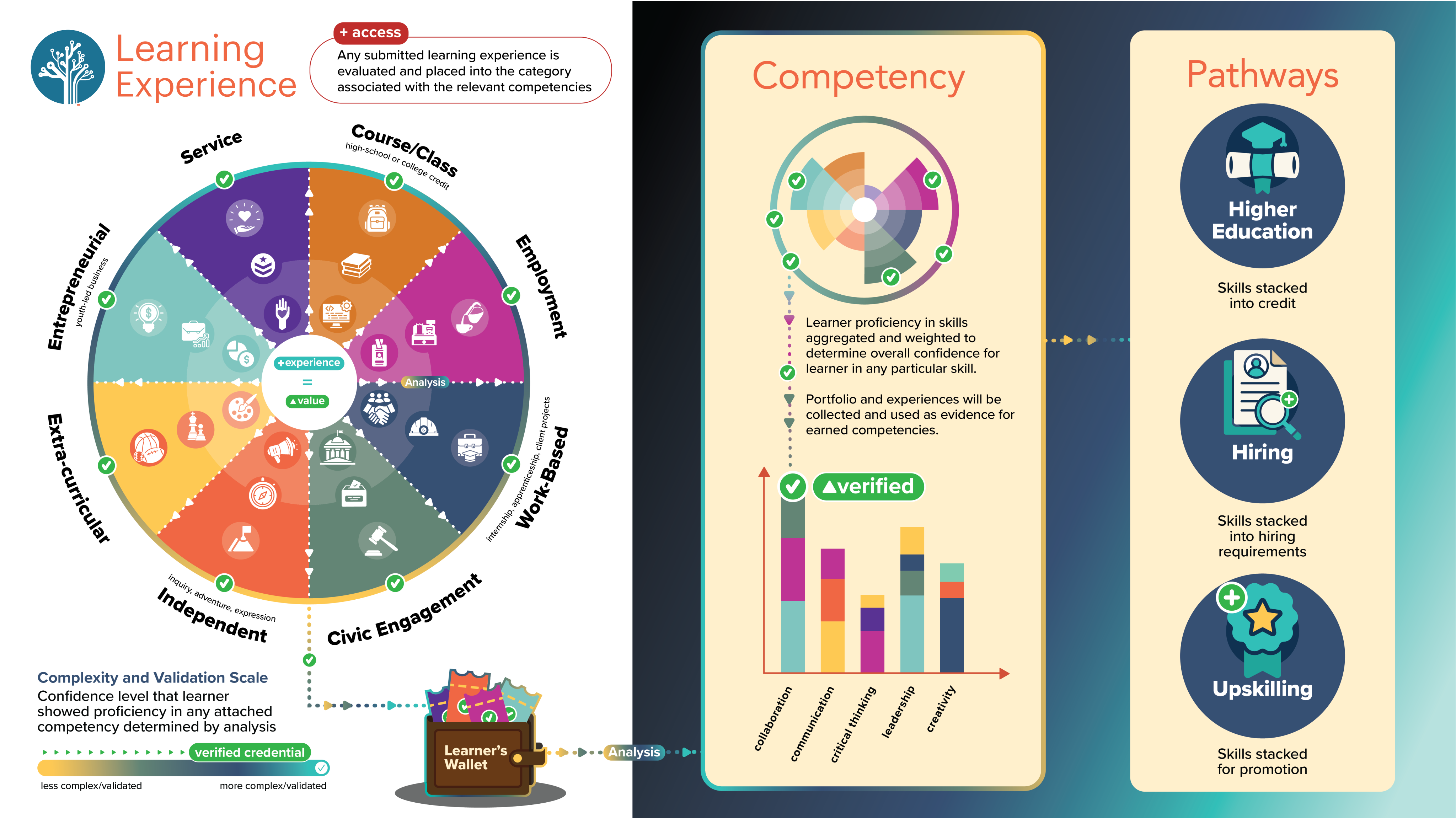
Proof Point, Pressure Point: Why Signals Will Make or Break What Comes Next
Signals like microcredentials and LERs are critical proof and pressure points in creating a trusted, learner-centered education ecosystem.

Advancing Artificial Intelligence, Measurement and Assessment System Innovation: A National Mission to Secure the Future of Learning and Work
Explore how The Study Group is transforming education through AI-powered measurement and assessment initiatives for better learning.

The Architecture of Inference: Appreciating Robert Mislevy’s Evidence-Centered Design in the Age of AI
Explore the insights of Robert Mislevy on assessment scores and learning contexts, merging language and subject knowledge complexities.

A Textured View: How Stories Are The Currency of Badging
AI in education demands a shift to learner-driven storytelling, experiential learning, and tools for capturing rich, textured evidence of growth.