

Getting Smart on Approximately 400 Podcast Episodes
On this special episode of the Getting Smart Podcast, producer Mason Pashia is joined by Tom Vander Ark and Shawnee Caruthers to celebrate the approximately 400th episode of the Getting Smart Podcast.
They discuss why Getting Smart started a podcast in the first place, run through a quick lightning round of favorite moments and laugh a lot.
Episodes mentioned in the episode:
- Dr. Roberta McFarland on The Magic of Outdoor Education
- Joe Erpelding on Magical Schools and Thrively
- EduCatered: Ululani Shiraishi
- 100 Days of Conversation Project and The Importance of Community Agreements
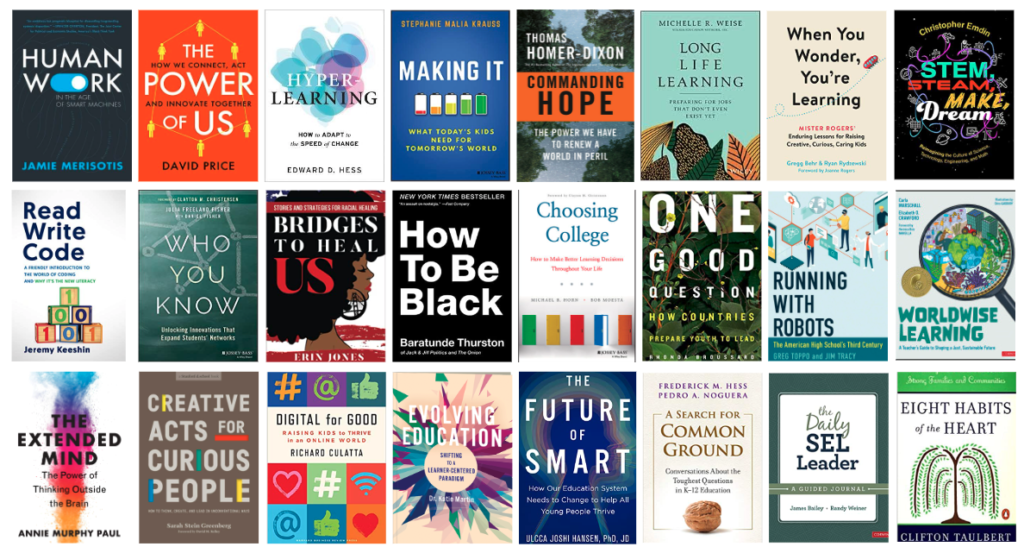
- Chris Emdin on STEM, STEAM, Make Dream
- Summit Tech Academy on Learning Pathways
- Immokalee High School on Entrepreneurship and Projects That Serve Community
- Embark Education on Embedding Learning in Business
- Jamie Merisotis on Human Work in the Age of Smart Machines
- Clifton Taulbert on Habits of the Heart
- Timothy Jones on HipHopEd and Techniques4Learning
- Erin Jones on Stories and Strategies for Racial Healing
- Dr. Trish Scanlon on How Voice Technologies Should Work For Kids
- Dr. Angela Duckworth on Developing Character
- The Future of Learning with Dr. Pamela Moran, Byron Sanders and Dr. Ed Hess
- Stephanie Krauss on Readiness, Opportunity, and The Right to a Decent Life
- Michelle Weise on Long Life Learning
- Chelsea Craig and Dr. Anthony Craig on Indigenous Ways of Knowing and Leading
Transcript
This transcript has not been edited for spelling accuracy.
Tom, what does it mean to learn out loud? I think leaders have a commitment to learning and to sharing what they’re learning as they’re learning it. But that can be really uncomfortable because your learning is often fresh and not fully processed.
But that idea of learning out loud is really the origin story of getting smart and starting to blog on a daily basis back in 2008. And that idea of learning out loud was also part of my superintendency. Much to the chagrin of most of my staff because I was sharing not fully formed leadership lessons with my community.
But I do think it shows a sense of humility and openness and models, the sort of learning that we want from everybody. You’re listening to the Getting Smart podcast. I’m producer Mason Pasha and today I’m joined by Tom Vander Arc and Shawnee Carruthers, two people who need no introduction.
To celebrate the approximately 400th episode of the Getting Smart podcast. 400. We made it. We made it to this benchmark. 400.
Tom, why did Getting Smart decide to start a podcast in the first place? I think we started this back in 2015. So I’ve been blogging on a daily basis since about 2008. And by this time, maybe I was sick of writing. That could be part of it.
But we were starting to see, we were three or four years into the podcast, Boom. And people use a lot of video to share on what they’re learning on social media. And so we thought we would give it a try. It actually launched as part of two of the campaigns that we were running in the middle of the last decade.
One was our smart parents project, which was advice for other parents trying to raise kids. The other one was Smart Cities, which was seven keys to education and employment. This was advice to community leaders. And as part of both of those efforts, we started recording a podcast with people providing
advice on parenting and trying to build community. I was going to ask the question, who would you rather work with, a podcast producer or an editor? But I figured that wouldn’t be fair and it was a little biased. No, definitely a podcast producer.
What kind of, you know, because usually when we finish a podcast, then you go away and do your magic and make me sound better. An editor usually sends me something full of red ink. And then I just feel bad about myself as a writer. So I love working with you, Mason, and I appreciate that you make Shawnee and I sound
better than we actually are every week. Yes. Oh, hardly. You guys are great. All right, we’re going to jump into a quick lightning round, which is just a couple of
moments that stood out to me through the podcast. We’ll think of it as a little light quiz. So first question, who did we interview along the South Fork of the Snoqualmie River? Oh, Mason. I think this is the, is this the only outdoor podcast that we’ve ever done?
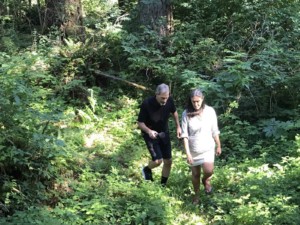
Mason, I traveled up the Snoqualmie to almost the top of the Snoqualmie Pass on our east of Seattle to Camp Wascoitz, where every kid in Western Washington goes in fifth and sixth grade. We interviewed the camp director, Roberta McFarlane, really one of the world’s leading experts on outdoor education.
She now leads outdoor education for the state of Washington. And Mason, you and I had just had a great time chasing her around with a microphone, puffing and puffing and talking over the water and hoping like heck, we didn’t run into a bear. Yes, absolutely.
We’ve got some great footage of us trying to kind of crane around with a mic. So this is also one of my favorites. This was probably early in the pandemic, but who gave our first virtual hug in a podcast? I remember being surprised and feeling a bit awkward about our friend, Joe Erpelding. Joe had been the school leader at Design 39.
Chani, that’s one of our favorite K schools in the whole world in North San Diego County in the Poway School District. Joe came on the podcast right after he left Design 39 and joined Thrively, an EdTech provider. We love Joe and really appreciate his leadership, but those public hugs are a little awkward for a Stadiogalax me.
Well, I would say we appreciate all his energy. So Joe, given a virtual hug, it’s just like super on par for who he is. Bring it, Joe. We love you. We just gave you an audio hug.
You just didn’t maybe hear it. All right, this one is actually from the Educator podcast. But this is who’s nickname means breadfruit, which is a kind of tree that can feed 15 people for a whole year. Yeah, she was definitely one of our favorites.
And that was Ulaani Shiraiishi. And she is Adam Maui. And, you know, it was very kind of humbling to talk to Ulu. And she was just a good reminder of the importance of the place that feeds you, which is your home and the importance of elders and just the love of her Hawaiian culture and just
the mentorship and education that they learned from the celebrated elders and their community, which is super inspiring and super enlightening. And she just does like fun things like fun book clubs and things of that nature. One of the great things about all of the pods we had so far is that they kind of become friends for a really long time and we can just talk to them.
But huge, huge love for Ulu. Yeah, I’ll never forget when she said the food she’d bring to a party was a salad goulash because she just loves diversity of things. Yeah, she said she was like a cranberry or something and just like, OK. You got it.
Awesome. OK, so who said the line with open hearts and with open minds, but we’re coming for you in regard to, I believe, their governor at the time. Oh, that was a hundred days of conversation. Right, Aaron. But one of the young men that Aaron brought on helped me, Mason.
Yeah, his name is Cole. He was he was amazing. Yeah, he was. He was extraordinary. And Aaron, Aaron, Rob.
Yep. Hundred days of conversation. She had enlisted some student leadership in the in the Twin Cities and the three young men that came on were incredibly articulate and passionate. They were amazing. Yeah.
All right. Who said if you want the bell of joy to ring, ring the flippant bell? There was Clifton. Yeah, it’s Robert. No, I love that.
He had a beautiful memoir and he was certainly one of our most joyful guests. He was. That was that was a good one. So getting smart events, we always love to kick off with a poem. And recently we were lucky enough to have a guest kick off the podcast with an original poem. Who was that?
It was Aaron. And I’ll go ahead and answer even though it was Tom’s pod, but I did listen to it. And I loved her original poem. I loved her energy. Like just as soon as I listened to that whole pod, I went right to Twitter and started like
sharing it out like, y’all, you have to check this out. She is just, you know, so great. And I remember in her pie, she said, I want to be the me I didn’t have. So you can be the me you’re meant to be. And that just really spoke to me.
And so I was just like, this is someone to follow. This is someone to know. And those are the people who just got to kind of keep an eye on. Absolutely. All right. Similarly, just an incredible guest, so joyful.
Who decided an off record freestyle for us? There are literally no words for Timothy Jones. Like Mason, I remember, you know, the pop was great. Like he said some really dope things. But then after the pot was over, after the mics were quote unquote off,
he just spit this rhyme that we just said in all of. And we were like, oh, we wish we would have recorded it. Then we’re like, no, we’re just so glad that it was just for us. And someone who just has that kind of genius, who can just be super thoughtful and and say all of these great rhymes and be super passionate about
education and students. It’s there’s just literally no one like Tim Jones. This is a challenge to all of our listeners to give a personalized freestyle to whoever is next to you at this moment. Mason, I want to give Aaron’s book a plug.
Aaron Jones that we talked about last bridges to heal us. Stories and strategies for racial healing. Great book, easy plane flight read, but powerful stories of racial healing. And thanks for giving her a shout out, Shani. Yeah, for sure.
She’s awesome. All right. And then a final question here. Who did we talk with about being nice to your voice assistants? Mason, we talked to the I think an Irish tech ed tech leader, Patricia Scanlon, soapbox labs, is that right?
Yeah. And then somebody we gave somebody gave us some advice recently about digital assistant etiquette. That was it was Angela Duckworth on building character. Yeah, right. Pretty great.
It’s true. I asked her if I if I had to stop yelling at Siri. Siri hates me. Siri, you never give me good advice. But Angela told me that I should probably be nice to my digital assistants. You’re right.
We apologize to every household where we just set Siri off for now. I would recommend the and the Duckworth podcast to anyone, though. It’s she she is brilliant and really research driven. She gives you answers that are really grounded in the best of research. And we really enjoyed chatting with her recently.
Awesome. All right, going to do a little bit of a pivot to just some of our general favorite podcast memories. So what, Sean, you what are some of your favorites that you’ve heard or participated in?
Well, these this is hard. Now, I have not been in the podcast game as long as time. So let’s just start there. But I definitely have some clear favorites. I’ll start with Chris.
Chris and then if if you all haven’t checked out any of his work, we say run. He’s done some great books around car, ratchetemic and for white folks who teach in a hood. And then one of his latest is Stem Sting Make Dream, which is the book we most recently talked about, but his energy is just literally unlike no other.
So Chris M. Dent is definitely at the top of the top of the list. And then I love love talking to kids and talking to students to learners. And they always surprise me. And I just always sit there and I wonder, like, am I really talking to like 15
year olds or 17 year olds? But a particular group that sit out to me with Summit Tech, which is a school in Kansas City, Missouri. And number one, they have like the state, the most state of the art studio that you’ll ever see.
And it’s located in the Lee Summit Public School District. But just listening to all of these students or all of the different pathways that they want to pursue, it was just so encouraging. And just listening to the activities that they’ve been participating in to get to their next step, which is truly, truly humbling.
And then a couple of others was harvesting housing, which is just this group of students who are trying to create housing for migrant workers. And just students who no one told them to do this, they just decided to care enough to start something. And even when they exit out of quote unquote, the traditional walls of high
school, this is something that they’ll still continue because this wasn’t a high school project. This was truly a really purpose filled mission. And then one of the last one was Embark Education, which is a group of amazing middle schoolers in Colorado who are running a coffee shop and a bike shop.
And the things that they knew and the reflections that they were able to share at like seventh and eighth grade was just like, wow. So I really love all of those. Those are some of my favorites, but I have others like Margarita, Gillespie, and some that I did at South by Southwest, but those were the ones that
really stood out to me. Shony, can I just interject that I love that you’ve brought so many youth voices and more diverse voices to our podcast. So it’s just been so great to have you both host the Getting Smart podcast, but also launch your own podcast.
Yeah, I appreciate that. It’s been really, it’s just been really soul feeling just to be able to meet people and tell their stories. We should insert a little commercial here for educated. What is educated?
So like thanks for mentioning it, Tom. That wasn’t planted at all. But it is just a really fun teacher center podcast to help teachers like really have a place to be amplified, their voices to be amplified. And like Tom said, we really do focus on really diverse voices
and because we really, really believe in equity at Getting Smart. And so this was just an additional way to do something really short about 15 minutes and hear what teachers are doing, how they’re fostering belonging, how they created a sense of equity and leading. But most importantly, what recipe they would add to a cookbook.
So there is literally no way I’m going to be on the pie with time and not ask about a recipe. So in true educator style, Tom, if you were to add a recipe to a cookbook, what would it be? Oh, bomb.
I just finished a barley burger. Here. My expert reviewer, who happened to be my wife, said it’s the best veggie burger that she has ever had. It’s barley cooked in stock with carrots and peppers and shiitake mushrooms.
There may have been a little Chick-fil-A sauce in there. And these are just exceptional. I don’t know why you’d ever go back to McDonald’s when you can make a barley burger and a little guacamole on top that kicks it up a notch. Well, if you want to know what Tom is eating more of, then follow him on
Instagram at epidotvedge. Epidotvedge. Thank you. Anyway, Johnny, love that you brought student voice to the pod. Love the teacher voices that you’re amplifying to educators.
And thanks for being part of the 400 great episodes of Getting Smart Podcast. Yeah, absolutely. Thank you. Tom, when you’re not working on your next cookbook, Presto Pesto, I’m curious, what you’re typically writing about future of work type themes, right?
That’s been the thing for probably the last seven plus years as a just a core undercurrent of what we’re thinking about. So what was your favorite future of work podcast? You know, the one Jamie Marisotis, who’s the CEO at Lumina Foundation in Indian apolis wrote a terrific book called Human Work in the Age of Smart Machines.
And Jamie, I think, just made a really beautiful general audience description of what the heck is going on with working and what it means for us and our kids. So I really loved my conversation with Jamie and appreciate his work and how that’s informed the work of the Lumina Foundation. And Tom, I remember after you interviewed him, I think you literally talked about it
for like two straight weeks. You were so enlightened and inspired by the work. Those are the best when somebody just kind of sticks with you for days after. Sometimes I’ll get a ping from Tom like four days after a podcast and he’ll be like, great conversation.
And I’ll be like, oh, you just had one. And he’s like, no, four days ago. Like I’m still thinking about it. Um, to continue with sort of like the same structure of the last question, what was the best podcast we did in the future of learning?
Man, it’s super hard to pick. Um, the ones that surface, um, I think the best one on the future of learning, that was also the most fun was this extraordinary conversation that we had with Dr. Ed Hess from, I think he’s from UVA. The, um, at the business school there, he had written a new book.
What was that called? Hyper learning. And, um, stroke of luck. I invited Pam Iran, one of America’s best superintendents and our friend Byron Sanders from Big Thought in Dallas to come together and talk about the future
of learning podcast just exploded. It ignited. It was just, it was such a beautiful, um, energy filled, um, dialogue about up the possibilities, uh, of student experience. That, that one was just, I don’t know, Shawnee, do you remember listening to that?
I did. And I’m a big fan of, I don’t know, Ed as well, but a Byron. And so that caused me, he caused him to jump just a little bit higher. I loved all those moments in that one when every, every time Ed would finish talking, Byron would pause and he’d be like, can we all just
like soak that in for a while? I don’t want to talk. And then he’d follow up and just be like, brother Ed. It was amazing. That one was just electric.
Um, the other one said, uh, that I loved how you know, uh, a review of Julia Freeland Fisher’s, uh, book was, was really, really exceptional. Um, we reviewed making it by, uh, Stephanie Krause. That was a beautiful one where she talked about, um, competencies and credentials and cash, um, in, in a way that I’d never, uh, thought of before, um, in, in terms
of the readiness that young people need. Um, and then Mason, remember the review that we did with, um, Michelle Weiss called long life learning, beautiful turn of phrase that made you think about you’re very likely to live, you know, my grandkids are very likely to be 125 and they’re, they’re, they’re beginning a marathon, uh, of long life learning.
And I thought that was just super insightful and a calling for particularly higher ed institutions to, to rethink their life long and long life, uh, mission. Those were highlights in the lifelong journey of getting smart. I mean, not, you know, us, but in the notion. I’ll, I’ll always, uh, be a little bit personally offended that Michelle called
out the fact that she studied literature, but she started to know, notice that the people who studied poetry weren’t getting jobs. And that, that, that’ll forever, that’ll forever sting and encourage me to remember that podcast, but also I did, I did love that. I was, didn’t she study like Korean poetry?
Yeah, she did, which is why I was okay. She has a pass cause she did it, but she did. She noticed that her peers were, or not the first ones getting the job. It’s okay. It’s okay.
All right. On the subject of creativity though, how about the best podcasts on creativity and innovation? Um, Sarah Stein Greenberg, the director of the Sanford D school put together a spectacular book on creativity.
Um, it’s kind of a creativity cookbook. Actually, now you think talk about cookbooks, Shawnee. It’s the short chapters with tips and tricks on how you and your colleagues in your workplace can be more creative. It’s the kind of, it’s a very cool book that you can just throw open and find a
tool that you could use some, somewhere during your, your day. So I love that one. Um, Mason, we did one on, um, imagination where we talked about collective imagination with Martin Reeves, brilliant guide, important book, but that phrase of collective imagination, how leaders can create organizations, even
communities of collective imagination where together you can imagine a better future. I thought that was, uh, was a beautiful book. Absolutely. And we’ve been really thinking a lot about, um, citizenship and we actually
got one of your favorite, uh, pod hosts on the podcast. We talk about it, but who were some of your, who are some of your favorite? Marin Toondi. And Thurston. Yeah.
And I like how Mason said favorite. Like he just said it like very lively. No, Tom was seriously fanboying over, over. Oh, super nervous for that one. Cause it’s like, dude, I’m your biggest fan.
Did you guys know that I like eat those things up and then I’m on Slack with, Oh, Baritunde was so awesome this morning. Tom kind of did to Baritunde what I’m doing to him this episode where it’s like, let’s talk about every episode you’ve done. And let’s think about it.
Totally fanboyed Baritunde. We went through like his whole, it’s like, dude, you really did listen to those. I don’t even remember interviewing those people. Yeah. Seriously, you listen to how to citizen by Baritunde.
The first season is all about tech and ed tech and how can be part of sort of imagining a new way to contribute to your community? It’s, it’s beautiful and important. I don’t want to leave this category without mentioning our colleague, Fernanda Rain, maybe our most frequent by guest.
Yeah, I mean, we can’t just leave it there though, because Fernanda, I mean, truly she’s one of those kind of like Prince where you just need like the first name and you’re done with it. But he is one of the most energetic on fire educator who really believes in what history should look like for students, how it should be taught, how
they should soak it up. I mean, she is literally all things in terms of advocacy for student learning in history in life. But yeah, definitely she belongs in this category. Fernanda purple rain rain, as we call it.
Our organization is history collab. And Fernanda is really becoming one of the world’s most important advocates for deeper learning, particularly in the area of citizenship, big advocate for community connected projects, probably the best in the world at activating museum based learning and connecting learners with civic
organizations and museums in this country and really worldwide. Last thing I’ll mention, she’s a Russia scholar and Mason, my, my favorite question and answer of the 400. So it was either you or Fernanda may have suggested asking her about Red Square, a place that I’ve been a couple of times.
And I asked Fernanda to explain the 500 year history of the Russian Empire and what it meant for what Putin is thinking right now. In a visual way, as if we were standing in Red Square. And it was a breathtaking, vivid trip through history that explained really what’s what’s happening today in the world in a way that I think only
Fernanda could do. I mean, those kind of moments really are a highlight of why we do what we do to be able to share moments of insight like that. For sure. And we’ve been thinking a lot about place and climate and a bunch of that over
the last years. We’ve got a new campaign that we’re continuing to put stuff into called green schools, which you can check out at gettingsmart.com slash green schools. But Tom, what was your favorite podcast that we’ve done on climate so far? Yeah, I had speaking to be in a groupie.
I’ve been a man of Thomas Homer Dixon for 20 years. He’s the first one that pointed out the ingenuity gap that our civic capacity is going down with the complexity of the problems that we face climate and others are are going up. And his new book, instead of bringing me down, brought me up because it’s called
commanding hope. And he really described that we can have a hopeful future together if we do what we should be doing. And it’s a it’s a beautiful read and super relevant for education communities. For sure.
I think a lot of people listen to podcasts and they assume that it wouldn’t be very hard to host a podcast because you’re just kind of talking to somebody, but you get to think about it in advance and you get to run the show. But I’m doing it right now. It is not that easy.
And then there’s a lot of things that make it pretty tough. So what do you both think is the hardest part about hosting a podcast? Well, it’s hard to listen and think about what you’re going to ask next. So, you know, it’s funny. I always listen to the day they come out.
I listen to the podcast and I hear things that I don’t remember because I was trying to think about where am I going to take this interview because it’s on a crazy journey that I didn’t expect. So so being fully attentive while you’re formulating really good questions would be number one.
Formulating really good questions would be number one. And number two, because we do this every week and it often includes reading a book and a number of background materials. It we I mean, we take preparation seriously. And so just getting ready to thoughtfully engage with really smart people on it.
On a broad range of topics is a beautiful challenge. But it goes back to that opening question of learning out loud. You have to be you have to be willing to be embarrassed by asking questions that are not as well formulated as it could be. Exactly. And I’ll ditto on that.
But it is nice when the guests recognize that that preparation that you put into it matter. And I remember Chris Emden when we were having a chat about his book. And I mean, he noticed that the prep was really there and he appreciated the thoughtfulness and the thoughtful questions as a result. But yeah, sometimes having to pivot in a moment is not easy.
And then, you know, just really making the guests feel really comfortable and, you know, making sure that the energy is appropriately matched is sometimes a challenge. But, you know, and sometimes, you know, you don’t know most of the people who you’re going to be talking to.
And so there’s a little bit of anxiety there because there’s a chemistry that goes along with podcast guests to really make it magical. But every time that I was the most nervous about interviewing someone, those are genuinely the best podcasts that I walk away from. And a lot of them have to do with students because students aren’t like,
you know, talking on podcasts all the time or promoting their work. They’re just showing up and being kids and being learners and doing great things. And now they have to, you know, get on a forum where they’re talking about it. And I always walk away and like, I cannot believe that just happened. That was like the best experience that I’ve ever had.
Mason, what’s the artist part about hosting and producing a podcast? We have to turn the table. I mean, I think it’s just how fast the world moves and how slow the podcast pipeline can move. You can go from you go from trying to get someone on the calendar four months out.
And then suddenly you like so many things have changed in the world. And you’re like, this topic is still important. I just don’t know where it fits right now in the story we’re trying to tell. Yeah. So trying to be responsive, but also persistent is a really interesting tension.
Sometimes international guests don’t show up. That is very, yeah, that’s absolutely super true. They don’t show up or just like latency, lots of freezing and people just taking their best guess at what you said. Sometimes they have lousy Wi-Fi.
Yes. Sometimes they have lousy audio. Those are all super true. What I don’t know if you want to disclose this, but which which one was hardest to piece together into a quality show? Oh, there have been a couple that are pretty tough for a lot of different reasons.
We had one of the recent ones that Shani did with the Summit Tech students was not a challenge on anyone’s behalf, but we just had the most like different audio files. We had eight or nine separate tracks and all talking at different times. And it was like a two parter. There have been a couple that just had really glaring technical issues.
So we just got to kind of make a patchwork quilt out at the end of what they said. The Summit Tech Academy, this is in Southeast Kansas City. That’s a beautiful podcast. The students are super articulate and the audio quality is great. And so people wouldn’t know that it was that it was that was so challenging.
So thanks for doing your magic behind the scenes, Mason. I got to plug my little brother Wyatt, who’s back there helping me with some of these audio things too. So it’s definitely a team effort to Wyatt. First time you’re going to shout it on the pod. But go Wyatt. Thank you.
It’s a Wyatt. You make it sound better than we actually are. All right. So Shani, you mentioned the subject of nerves a little bit, like getting nervous for a podcast. Sometimes it’s because you’re messing with like five different people
and one has responded over email. And sometimes it’s because you just aren’t sure where the conversation could potentially go. So I’m curious, what guests have we had on that have been the biggest challenge for both of you in terms of nerves and prep? Yeah, no, that’s that’s a really great question.
It’s typically ones where there are multiple guests in a in a pod. So those can be a little bit challenging. One, just because you want to make sure that all the voices are heard and then you want to make sure that the people listening understand who they’re listening to. But Mason, one, you make it very easy.
And then two, the people you’re talking to are really cognizant of the process. And so that makes it super easy as well. And then kind of once you get into the conversation, things begin to flow and all the anxiety melts away. And then you just kind of just hold your heart for like the next 30 minutes or so
because they’re just saying some super beautiful things where you’re trying not to cry on a pod because you’re just so inspired. And again, most of that happens with kids, but adults obviously say some really beautiful things as well. But when you hear like students talk about their challenges and when you hear students being super uplifting of their teacher leaders
and what they’ve done for them, it’s just you just literally can’t breathe. And you just think, why was I even nervous? This is like, you know, magic. Yeah, I mean, and I’ll just plug in here too. Like it has been a tricky last couple of years and we’ve as a result
been fortunate and unfortunate to have lots of hard conversations on the podcast. So I think that that’s just one challenge that I know we’re always thinking about is like how to broach a topic, how to make sure the right people are talking about it. And that from a production side, that’s definitely getting the right folks to talk about the right things is a challenge.
But Tom, what about you? What’s been the most challenging? We have tried in the last two years to take on more challenging topics, particularly in diversity, equity and inclusion. And we’ve had we’ve tried to bring more indigenous voices to the podcast. I think about the beautiful, but challenging conversation that I had
with a husband and wife team with Chelsea Craig and Dr. Anthony Craig on indigenous ways of knowing and leading that I found was was really a beautiful. But for me, a challenging conversation. Just challenging personally and challenging in terms of norms and conventions and and, you know, historical senses of identity.
And I think they in in a beautiful way sort of took me to to a new and different place with a way to think about how you could lead a community in a way that’s authentic. Both to yourself and to your community. Absolutely. Yeah, it’s super beautiful when we get people on to we mentioned Ulu earlier, but I’ll never forget it was one of Shawnee’s first podcasts.
And she had to say Ululani Shirayishi from Kamehameha Schools Maui in the first paragraph. And Ulu was so patient as we were just like, we want to get this right. And it was incredible. Mason, I want to give a shout out to our colleague, Ashley Ranin,
who’s really helped us bring more indigenous voices to the to the pod and the blog and just a general sense of Mahalo. For sure. For sure. Ashley is wonderful at that. So that’s we’re kind of reveling in some of our favorite guests.
But I’m curious, like, what are the hallmarks to both of you of a great guest on a podcast? I think a lot of our listeners may one day be a guest if they haven’t already been one. Well, we already said they need to be able to do a freestyle rhyme. So number one, number two is like being so passionate that you just kind of want to move out the way
and just let their energy just move forward. I also just really appreciate guests who aren’t afraid to laugh. There are some really funny guests and some really funny stories that they tell. And I just really appreciate when people are so authentic, just organic, and they just kind of decide to be in the moment and just let it go where it goes.
I appreciate that. And then I just really appreciate ones who take the time to uplift others. At the end of Educator, we always talk about what is one voice or multiple voices in the community that you feel like other people should check out or who you’re listening to. And just their, I mean, they get, I think, like really excited to then talk about someone else
and share that sense of community that I really think that’s another hallmark of a great guest. So just the ability to share and share like and really do what educators do, which is uplift others and then figure out a way to share a resource with the next person. I would just say energy, insight, and good audio. Come on, get a good microphone, people.
You’re on a podcast. They don’t cost that much, but just bringing energy and insight. That’s like Shani said, really what we’re trying to share. Awesome. That’s great. Shani, I’ve got a question specifically for you and this kind of pertains to the last one.
So on Educator, a question we typically ask is, how do you nurture a sense of belonging in your classroom? And I’m curious, how would you answer that if I changed it to how do you nurture a sense of belonging on the air? Well, it’s funny that you first mentioned the classroom piece because as a former, I will always consider myself an educator. But as an educator, it was really important to build those relationships with students and teachers and whatnot. And so
I’ve been able to then transfer that skill set over to the podcast. Now, I’m going to be honest, some of my jokes fall flat and I don’t get it because I’m hilarious, of course, but they don’t always land, but that’s okay. But before we start the pie, we just really take time to just chat and just be in community with each other and just assure them that it’s going to be okay. We’re just going to hang out and chat and be friends for this next 15 to 40 minutes or whatever the case
may be. So just giving a sense of camaraderie, just making sure that they know that this isn’t a high pressure situation. This definitely won’t be the hardest thing that they’ve done in their lives, but to truly just like enjoy the process and take those first 10 minutes or so just to build those relationships. For sure. Tom, we’ve alluded to this a few times on this podcast, but you are a podcast connoisseur at this point. Every year we put out a list of like 100 podcasts you should
check out and I’m pretty sure you actively listen to all 100 of them. And so what are some of your tips? How do you consume podcasts well and often? 1.5 speed. Look at that 1.5 speed. There’s very few, there’s occasionally a few that I have to slow down, but almost everybody sounds pretty good at 1.5. So I do it while I’m out riding a bike out and about. I have daily playlists and weekly playlists, so I get a really interesting array of news and economics and education and food.
I have a Saturday food series that I listen to where I have about five food blogs that give me inspiration for eating for the whole week. Those are tough to listen to on the bike though. The whole time, you kind of wish you were anywhere else. Amazing. My new favorite in 2022 is people I mostly admire, Steve Levitz. Pod is super guest and really thoughtful line of questioning. That’s from our friends at Freakonomics.
Just that’s a great new pod and almost everyone of those is really worth listening to. And speaking of work listening to, and I know they’re not doing any new, well sometimes they’ll drop a random one, but our favorite between the three of us is home cooking. I mean, we miss it, we love it. Speaking of magic, podcast magic, and we laugh a lot. We have the merch. I laugh so hard, it hurts when I listen to that show. They’re just silly fond and the recipes are great.
Oh yeah, say definitely worth listening to. And Tommy, you were talking about some of your favorite pods and I always go to you to say, hey, Tom, who should I be listening to? Or hey, Mason. And the ones that you all have recommended unbeen is really, really beautiful to listen to. Trollblaster to Walter Isaacs. Isaacs and just really hearing how people are doing the things that they’re doing. And then he’s just a beautiful storyteller. It’s really the history of innovation,
which I love. And Walter just brings stories to life. Yeah, and I was just saying the most recent one was just about running and how people have brought from all different races and genders, just the importance of what they bring to that community. So those are the kind of things that I’ve learned from that pod. And then the other is just the moth, which speaking of storytelling, just people coming on stage telling their stories in a really beautiful and transparent way. Some
are funny, some are sad, but all are worth listening to. Love that. All right. And our final question is just who are some people that we would love to get on the podcast in the next couple of years? Who should we swing for the fences on? I don’t want to get too close to the microphone, but I do want to make sure that they hear me. I am Chance the Rapper. I am saying Chance the Rapper. I need you on the pod. And after that, I will say LeBron James. Like, these are people who are doing
obviously amazing things in their respective fields, but they are also changing the future of education in their cities in Ohio and in Chicago. They are just really doing some beautiful things for kids. And they are just super passionate about it. And then the last one that I’ll add is Principal Caffele, who is all about principal leadership. And I, as a former Kinsley public schools educator, I’ve seen him a few times, and he is just on fire. And he has a great Twitter and
all of that. So it would be great to have him on the pod as well. I’d say Obama, Oprah, and Otuma. Parag Otuma has a podcast called Poetry Unbound. And what I really appreciate about that is Parag is a beautiful teacher. He starts every episode with a hook. He reads a poem. He discusses it, and then he reads the poem again. Mason and Johnny have brought that tradition to our
weekly rhythm at Getting Smart. We do a Monday poetry reading that’s really modeled after Otuma’s poetry, Unbound. So I love his leadership and teaching. There are no better O’s than the three you named. There’s two educators that start with C. One is Secretary Cardona, but I’d add Alberto Carvalho, who’s recently moved to LA, USD. He was a longtime Miami superintendent.
Just really appreciate his sustained leadership in America’s biggest districts. He’s smart and brave and has been at it a long time, and he has really beautiful suits. Well, in speaking of smart and brave and poetry, we have to add Amanda Gorman because she needs all of her. Thank you. Let’s add her to the list. That’s a pretty good list. It’s a great list. That is a good list. Yeah, we’ll work on that.
Line those up, will you? Yeah, I’ll get them in all your ears very soon, I’m sure. I just want to give special thanks to our bread baking, music making, poet laureate, creative director, friend, colleague, audio master, Mason Pasha. Oh, wow. Thank you. Thank you, Mason. Thank you, Mason. That felt like the hands soccer tunnel. It felt like I was running through it, and that was no time. And Wyatt, who secretly does the hard work behind the scenes.
Amazing. Well, awesome. Thank you both for joining. Thanks for all you do with Getting Smart on the podcast and off. And thank you, as always, to all of you for listening and keep learning, keep innovating for equity. Thanks for tuning into the Getting Smart podcast today. We want this podcast to be actionable and insightful and a great way to learn about what’s next in learning. In order to stay on the cutting edge, we need people in the field to tell us what they’re hearing,
what they’re wanting, and what they’re needing to learn more about. Got a topic or a guest in mind? Send your recommendations to me, Mason at GettingSmart.com. And if you like what you’re hearing, don’t forget to leave a review on Apple podcasts or subscribe wherever you listen. Feel free to share the podcast on social media using the hashtag GSPodcasts. Thanks so much.
Dr. Gail Thomas
Do you have any information on Special Education K-12 AND post high school?
Replies
Mason Pashia
You can find all of our post-secondary information https://www.gettingsmart.com/category/post-secondary/ and special education https://www.gettingsmart.com/?s=special+education
Chinamasa Ronald
INTERESTED IN THE PEDAGOGY OF MATHEMETICS AND SCIENCE EDUCATION AT SECONDARY LEVEL