


Dr. Roberta McFarland on The Magic of Outdoor Education
This episode of the Getting Smart Podcast is sponsored by our recent publication Designing Microschools: Why Small Learning Environments is a Big Idea.
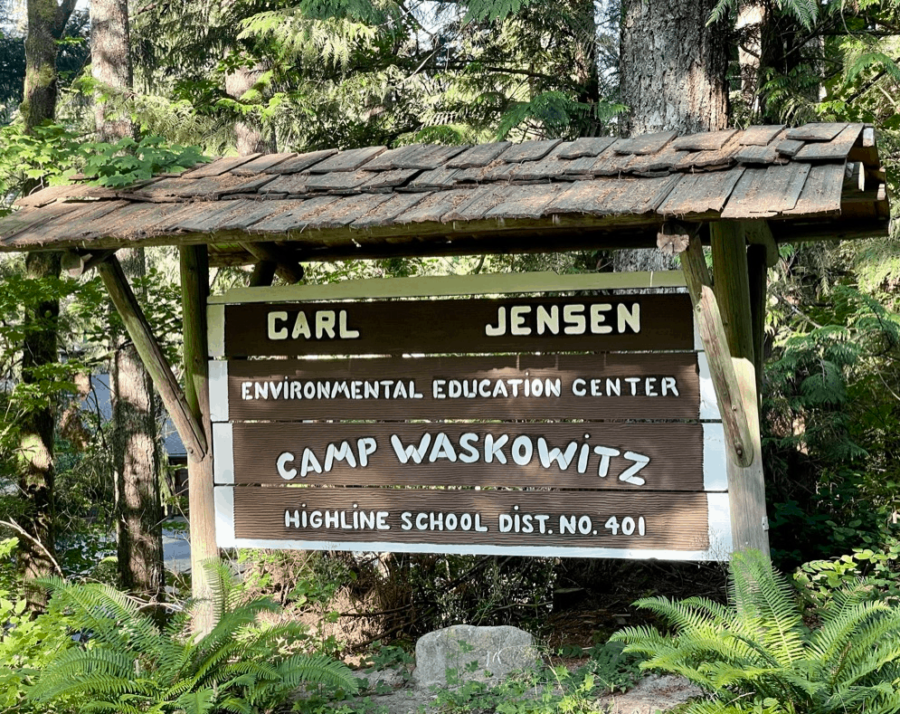
On this episode of the Getting Smart Podcast, Tom Vander Ark sits down with Roberta McFarland, Director/Principal of Outdoor Environmental Education for Waskowitz Outdoor Programs.
Dr. McFarland has a long career in residential outdoor environmental education and she loves helping young people find magic by engaging on a journey of diversity with people and nature.
Let’s listen in as they discuss the magic of the outdoors, learning by playing,
Transcript
This transcript has not been edited for spelling accuracy.
Hey there! The Getting Smart team recently released a new resource, Designing Micro Schools, Why Launching Small Learning Environments, is a big idea. You can download it at www.gettingsmart.com. Also, if you’re interested in further exploring micro schools, our strategic solutions and school design projects are tailored to support you from ideation to scaling. Email Jessica at www.gettingsmart.com if you’re interested in learning more about how we might work together.
Alright, let’s get to the podcast. Music We’re talking about outdoor education today. This is Tom VanDruyck in the Getting Smart podcast. We’re really thrilled to be at Camp Wasquit. It’s talking to Roberta McFarland, the director of one of the best outdoor education programs in America.
Roberta, it’s so great to see you. So good to see you, yes. Thanks for welcoming us here to the camp. It is something I love talking about. I’ve been in the field for 42 years and not only is it my profession, it’s my application, and it’s something I believe every student needs to have a week in the woods.
How long have you been director here? I’m starting my 25th year. So you started the year I started as superintendent and federal way. And so the Highline School District just north of Fetaway owns and runs this program, but you must serve many school districts in western Washington.
You know how many school districts? Yes, aside from Highline, we also serve approximately 10 other different school districts, both public and private. So we also have quite a few parochial schools that’ll attend for a week with us as well. So how many students on a normal year come through Wascovitz?
On a normal year, we’ll have for a four-day, three-night, or a five-day, four-night experience. There’ll be approximately 2,022 students that will share our campus. And for that core program of outdoor education, how do you think about the objectives of the experience? What would you say are the headlines? What do kids get from the experience? Well, we like to say we are a journey of discovery, exploring the diversity of people and nature.
And I think what makes residential outdoor environmental education different is that it is an immersive experience educating the whole child. They’re social, emotional. For many of them, they’re either in fifth or sixth grade, and it’s the first time they’re having a sense of independence from home. And they are, their eyes are, and truly, wide open and curious about the new friends they’re going to make,
what they’re going to see when they hike in the woods from the thatch ants that are building highways and these huge mounds to possibly seeing some bear scat and looking and seeing directly what a bear eats because of that. So they’re learning about systems, they’re learning about themselves and how they can do it. They can explore, they can ask questions, and they can make new friends from the different schools or from their own classroom. So I would say it’s really about exploring who they are and the land that they live in or live on.
Yeah, you know, districts like mine have a lot of great natural resources close to home, but there is something really special about the residential program. This really is a 24-hour experience, isn’t it? Yes, it is. And not only do we have some amazing, you know, they go on their hikes, they do investigations, they’re about asking questions.
So we’re really looking at the scientific process. What lives here? How can you tell? What evidence do you have? And then it’s also about building community and the community they’re building is through campfires and singing goofy songs,
singing songs that people have sung for ages. It’s telling stories. It’s about acknowledging the land and the indigenous tribes that were here prior to us. It’s about looking at the trees and what they are used for and what, you know, what they provide for us just by living. And, you know, as they’re providing, refreshing our air, the riparian zone helps keep the water fresh and clear and clean.
And they do it in a way that they’re exploring and beginning to understand systems that when you read in a book, it doesn’t, you don’t have the full sensory experience of how important these systems in our natural world are. Roberta, I think in the first class that you served 25 years ago, there was a young lady named Caroline Van Der Arc. She’s our president. She’s my daughter and she’s just had a life-changing experience here.
I think it created a lifelong sustainability mindset just of really being appreciative of the environment that she’s in. Being mindful of the other creatures that we share that mindset with. And that’s one of the reasons that I’m such a big fan of you and your work. Our family has had two girls that have come through here and had just really great experiences. Oh, that’s fabulous.
And, you know, that is not untypical of what we hear from so many of our former students. Their one week will change how they view themselves and their relationship to the natural world and even to their communities and their local parks and the schoolyard and that. And then if in our high school program, we use high school students to come as volunteer leaders to stay in the cabin and also be teaching assistants, those students, when they’ve come up multiple times,
they will then come back and say, Roberta, this summer I took my family on a camping trip. We loved it. I felt comfortable taking my family hiking in the woods. And these are many students that don’t typically, or families that don’t typically see themselves as hikers or campers. But after a week, they begin to access the state, the national and the local public lands that we have so much of here in Washington State.
Roberta, you mentioned the high school program. I just learned about that. It’s so cool. You have a program for 10th, 11th and 12th graders here. It’s really a micro school focused on the environment. Is that right? That is correct. The environment and leadership. Many of our students are disenfranchised often with a comprehensive high school.
And so we’re a very, we’re a small school that provides leadership opportunities through their work here at Wasquitz. We will take them on backpack trips and overnight camping, snowshoeing and for so many of these students. And Highline is a very diverse community and it has high poverty. This, seeing Mount Rainier when they’re hiking up in the snow and the Tahoma Hills and looking at that beauty, they are awestruck. And it just is such a pivotal moment in creating their own scheme of who they are and what they want to do.
And yes, so the high school has been highly successful. The sixth grade teachers, some of them have had these students in their class. And so when their sixth grade student who may have been not a student that was always on task or on target comes in as a leader and the sixth grade teacher sees the growth that this 10th or 11th grade student is. And five, six years later, it is so gratifying, you know, tears run down the sixth grade teachers saying that they got to spend a week with this student that they weren’t sure where they’d turn up. And to see that this program changes them, most of the many of those students go into and become paraeducators and then look at becoming educators or counselors in the school system.
And then I’ve hired several of my former students as outdoor educators here, which is just, I can’t wait for the day when one of them takes my job. So, Roberta, I would love to see a small school like that in every one of the national parks. Every one of our state parks ought to have a micro school in it or associated with it where students can learn about the park and really become an ambassador for the park. Isn’t that a great opportunity? That’s an amazing opportunity. And our Wells Wascovites Environmental Leadership and Service Program or school could easily be replicated throughout the state, throughout the nation for that matter.
It just takes a school district that’s willing to think outside the box and trust that high school students will find their place and will succeed when you give them the opportunity. I want to jump to the end of the story really quickly. Next year you’re going to be moving to the state level and helping leaders statewide create better outdoor education programs and improve their approach to place-based learning. That’s really exciting for, I hope it is for you. It is for all of us at the state level. I am thrilled with that. I am, so I’ll be retiring from Highline and I don’t know that I would have retired as early had this opportunity not come up.
So, I am ready to take on the challenge of helping other facilities, camps, summer camps that do not currently serve as an outdoor school develop their capacity and their programs so that every student in the state of Washington can have a week in nature. Washington state legislatures last year allocated us $10 million in order to help bring back the students to the outdoor centers that have been closed for a year and a half. And we’re hoping to build upon that. Governor Inslee is 100% supportive behind this idea because it not with today’s climate disasters between the fires, the heat dome that occurred, the hurricanes and everything else that are at incredible levels. His climb time curriculum that was brought in a couple years ago definitely has a place within residential after ed. So, I am looking forward to helping the state reach, you know, the goal of having every student have an immersive overnight time in nature, exploring the diversity of our landscape here in Washington and the systems that are so different and so important for us to have a healthy, meaningful life.
Roberto, I’ll mention that a couple weeks from now the Highline School District where you work is also opening the Maritime School, which is another very exciting waterfront small high school that’s going to focus on waterfront career pathways. So they’re really building on the legacy that you’ve created here at Wasco. It’s and I think like maritime I think Wells could be the beginning of a national network of park focused high schools. So let’s work on that in your new job. That would be fabulous. And it is and Tremaine Holloway who is the principal, the starting principal there he and I have talked extensively about the different ways that we do project based learning how we use internships with our students and how we give them opportunities to immerse themselves in the field and prepare themselves for what they want to do when they graduate high school. And that gives them such a jumpstart so that so many students when they’re in high school and students that come to our program, they’re trying, you know, the ground is shaky underneath them and we want to give them a solid foundation and the best way to do it.
And we all learn best by experience and we need to give them those experiences with the academics that will help prepare them to be highly successful. And whether that’s in technical reading and writing, or in more academic structures, either way, our programs will help every student in their journey. It’s almost like we have an individual education plan for each kid, regardless of where they’re coming from, but we help them reach their goals. I would love to go do a walk and talk and visit this amazing campus. For our listeners, we’re about 40 minutes west of Seattle. Correct.
We’re up near the summit of Snoqualmie in a beautiful mountain valley. And we’re in a camp. The history goes back to World War II, is that right? Right. We are an old CCC camp, Civilian Conservation Corps, and it is one of the, it will either be the only or one of two remaining CCC camps that are entirely intact. So we are on the national landmarks and Highline School District has been here since 1947. In fact, there is a video called Classroom in the Cascades that was put together with funding from the Kellogg’s Foundation that describes the process of starting environmental education.
And what is, it’s a wonderful video. However, it was considered innovative in 1947 and disappointingly it is, we are still considered innovative and here it is 2021. So I can’t wait for us to be the norm in the world. I think that this is something that needs to take hold and grow and be available for all students everywhere. So show us what happens.
Yeah, let’s go. So Roberta, the office here, is this an original building? This is not actually, this was an attribute that was built with funding from our, the, at the time, Teacher’s Credit Union. They helped support this. So it was named after their original founder, Bob Handy.
And, but all the other buildings that you see around were either housing for CCC, the dormitories, which are young men between the ages of 18 and 22 that came and did conservation projects around the area. They were responsible for building the forest service headquarters and they were responsible for planting trees, snow removal, all kinds of good stuff. And we like to think that we also are responsible for helping grow and take care of our natural environment in that sort of ways. Yeah, so let’s go around this way. I hear some kids in the pool who’s here today.
Yeah, we have, we lease our facility in the summer to different organizations that want to have a summer camp experience. And this happens to be the Byrne Foundation and they are here with students from all over Washington state that have had, that have been Byrne victims. And so they come together and have an amazing experience in nature creating community with each other. How many buildings on the campus? Me?
Yeah. A couple dozen? We, yep, there are 10 buildings that are part of the original CCC attributes. And then we have, well, really just one other building that has been built since then that houses my office and the office of my assistant directors. How many kids can overnight here?
We can have up to 200. So the main program that runs during the school year is it targeting fifth and sixth grade? Correct, yes. And that would be typically it’s either the last year of your elementary experience or it’s the first year of your middle school experience. I remember that it was a pretty big deal for those middle school kids to go away for a couple days.
Sometimes the first time for many of those kids. Yes, it is. And I think it’s the first step. It’s at the critical age or a very defining moment for creating independence from family and starting to grow young adolescents. They like to push it away.
So why not give them opportunities to experience independence in a safe and nurturing environment? Is there a little bit of a preparation program that helps teachers get kids ready for the outdoor experience? It is. We have, there will be an open house where families can come visit and see where their students are going to be. They also will get to meet the staff here and our nurses on site so she can help them feel comfortable with any medical concerns they might have while their students are away.
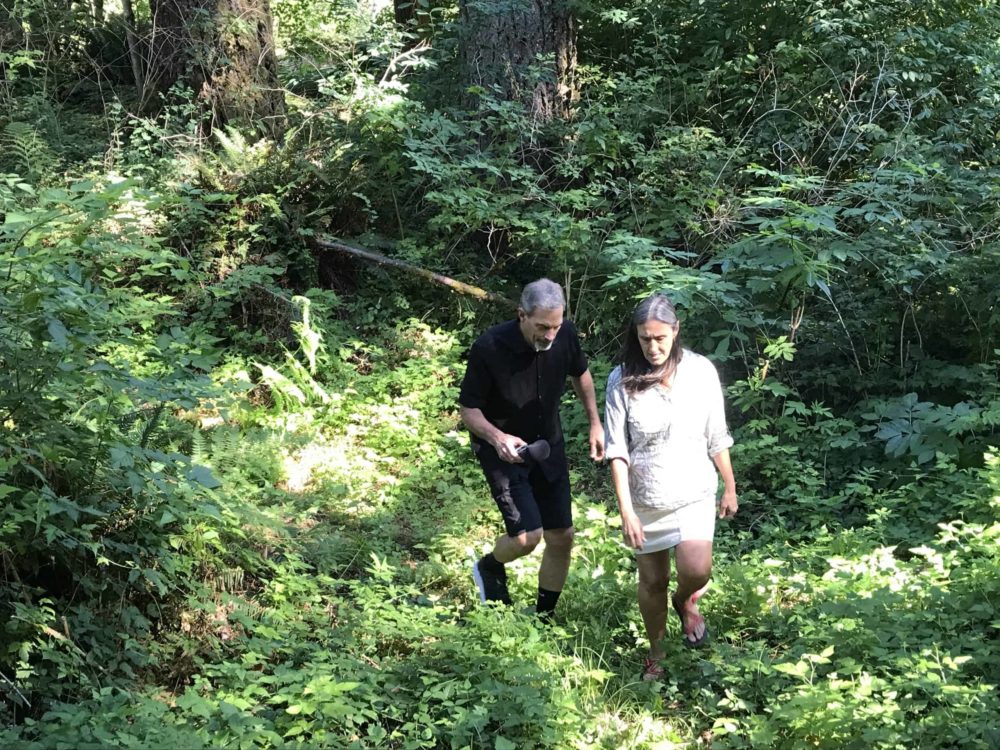
We also have our website that provides in-depth information for families and the teachers will also do pre-teach before they come here so that they, the students will be familiar with a lot of the concepts and just know what to expect so that they can immerse themselves quicker into the experience here. So Roberto, we’re walking down this spectacular little trail in the woods heading down to a creek. I can imagine that there’s a number of middle school kids that have never done anything like this until they get here. I would, yeah, I would agree with you on that.
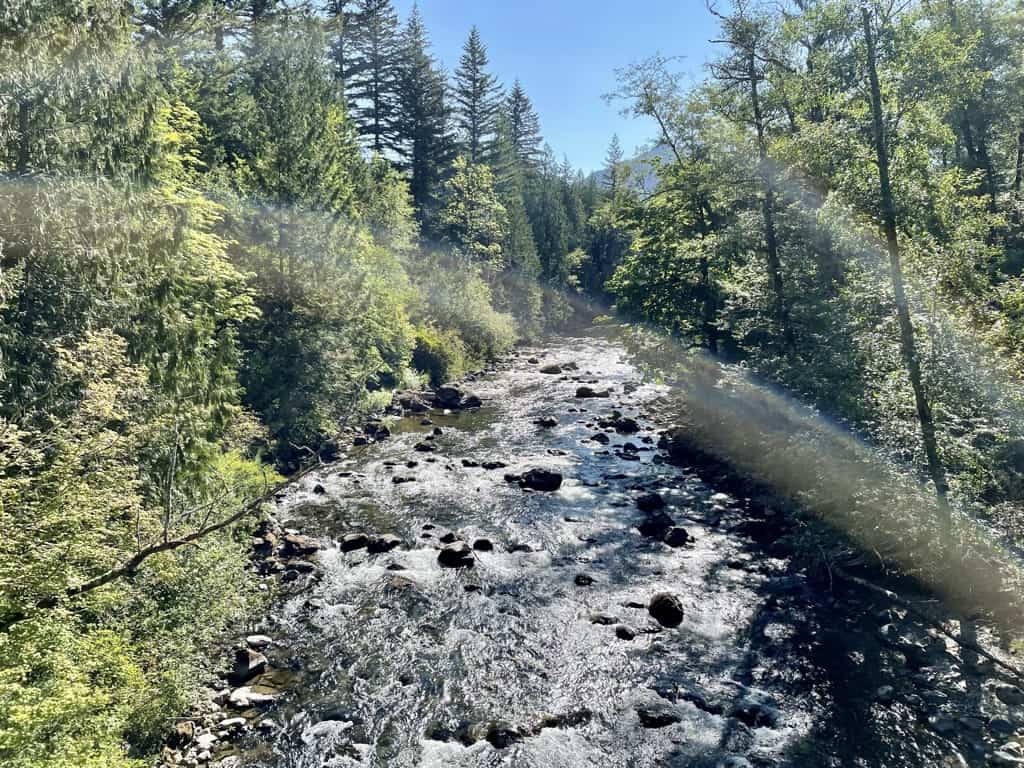
I think that our experience tends to be the first time students have been able to spend a week in nature exploring it and seeing, you know, this is the South Fork of the Snoquami River. This is spectacular. Yeah, and, you know, and they may even get to explore one of my favorite things if I have an extra 10 minutes or so. I will do rock skipping and we’ll have rock skipping contests and we’ll just, you know, have fun without technology. I guess you could say learning more about what’s around us.
And so this is a favorite thing. Also, they will do an invertebrate study where they’re going to collect creatures and see what lives here. We may, some of the pre-teaching or it might be something they do after is we’ll do a water quality testing of this river and then they may go find a stream or a river near their home or a pond and they’ll do a test there and look at the difference between this mountain river compared to one that’s in a more urban environment. Comparing contrast lessons, super easy to do.
Yeah, and so this is a favorite spot for all of them. We have on the other side of the Snoquami River over 300 acres and we have about 25 miles of trails there. We hope to sample that today. Yeah, we have about four outhouses, another first for many students using an outhouse, and we have several shelters so that we are outside in the rain, snow, sleet or hail. I guess we’re almost like the postman’s in that way.
We make sure we deliver the curriculum outdoors where it’s meant to be. And yeah, and that for many kids, it’s interesting. We asked them what’s their favorite part and so it’s aside from the food, they love the food. The big thing they love is their hikes and there are some special places that are over there that we try to make sure that every student gets to see. Again, Carl Jensen, who was the original superintendent here, he purchased for $1.
The stampede pass lookout tower and it got moved here. Oh, wow. And so all kids will hike up the lookout tower and have a vista view of the valley. And then we also have what we call the Burma Bridge. It stands about six feet over Porky Pine Creek and all the kids will have there.
A Burma Bridge is where you have two wires that are hand-hold and one wire that you walk across. And every kid will do that. And it is for many of them, they ask, what are your fears? Leave your fear on that side of the bridge and walk over to the other. And for so many kids, they are, they shed whatever it is, they’re in tears, but their whole class is supporting them across.
And teachers that come in the fall say that experience lasts the whole year in their relationship, the rapport that the class has with each other, and they become a supportive learning community as well as the rapport the teacher has with the students. Discipline and other things go to the wayside. Yeah, I remember my teachers vouching for that. You could really see and feel the difference when kids came back.
They had really created a cohort. Right. A sense of mutuality that would be hard to create any other way. It is. And I think, again, that’s the difference between residential outdoor environmental education.
And there is a place-based education or visiting your local nature centers and state forests and all that is super important. But we can help develop an appreciation and that can’t be beat when you are living at 24 hours a day for three or four days, several nights. And that’s with all the sights, the sensory experience is total, I guess. Yeah, that might include a little fear. Absolutely.
And wonder and awe. Absolutely. No range. It does. And you know, it’s funny.
These are the kids that you really love to see. Homesick on the first day. In tears, really upset. And they have a stomach ache or they have that. And we get good at vetting out who’s homesick and who’s really sick.
And then on Friday, when they leave, they’re still crying because they don’t want to leave. And they’ve had the best time of their life. And that’s because they overcame a fear and they found that they can do it. And it is life-changing for them. The confidence level that they experience, not only in asking for help when they need it on a math problem or in a reading.
A history lesson or whatever. But also within their own, their life. And, yeah, in approaching new situations. So, yeah. All right.
What else do we need to see here? Yeah, so let’s go over. Let’s cross the bridge and go over. This is such a cool path. Isn’t it?
And we have campfires down there. We don’t use flashlights. So the kids, it’s kind of like, because they could get in the way. In each other’s eyes and stuff. So they will walk down the path and it’s magical.
We sometimes hang lanterns and it just creates a sense of peace and meditative. And then we come together as a community and sing, tell stories. They’ll share. Some of them will share experiences. It’s pretty neat.
All right. We’re back to the residence halls. How many students did you see? How many students did you see could stay here every night? 200.
200. Okay. Hey, while we’re walking, maybe you could give teachers some tips on place-based education. If you’re planning on maybe a local outing, what do you do beforehand, during, and after to make it really great?
Yeah. I would say you set your expectations and most of them have to do with safety so that you can safely go explore. You’re probably going to be walking or I would. It would be wonderful if you’re able to walk and get out into the school yard.
So set up safety expectations and then give the students a project, a goal, something that they’re working for where they get to explore and think about what it is you’re asking them to do and then maybe to present later so that it comes full circle. It’s really nice if you’re able to invite and have community members be part of that as well where they can tell the story or the history of an area.
So we’re walking over the south fork of the Snoquami and this is a bridge to, I would say, the wilderness. I’m going to need a picture of this, Roberta. Yeah. Let me go in the two of you real quick.
What’s the history of the bridge? The history of the bridge. Just to say, Pemko and the teachers credit union have been huge supporters but they donated the money to create this bridge and then they had a relationship with the National Guards and they used their two prong, one of those Warhawk helicopters to put it in place.
Prior to that, it was a log they had to walk across and every winter it floated away. So this has been fabulous. That’s amazing. What a view. It is.
The group yesterday said they saw a bear, a small bear getting some water down on this side and I myself would love to see a cougar someday from the bridge. Yeah. With them down there below and I think that would just be phenomenal. But cougars do not like to be seen and so in my 25 years and I will say in the history
of Wasquitz, which has been here for over 74 years, there’s never been an animal interaction that has gone bad. And we see evidence of but we do not see them. Wow, what a cool bridge. Isn’t that?
I bet you have a… This is the place where students, teachers will have their poetry writing class and it will be usually Sincway and or Haiku giving some structure so that the students can be creative and feel good about their writing. It is an awe-inspiring place.
Wow. I just smell the cleanliness of the air and then the variety of plant life that is here and we ask the students to look closely at the different color flowers that are available, the shape of the leaves. Yeah.
Some beautiful old growth forest. There’s not as much of that as there used to be. No, there isn’t. And actually this would be second growth. Most of this was cut at one time so this is now probably 80 years old or so.
Yeah. Just gorgeous. Not having students on site for a year and a half, you can see how it’s taking over again. Yeah. Time for some of those high school students to do some trail maintenance.
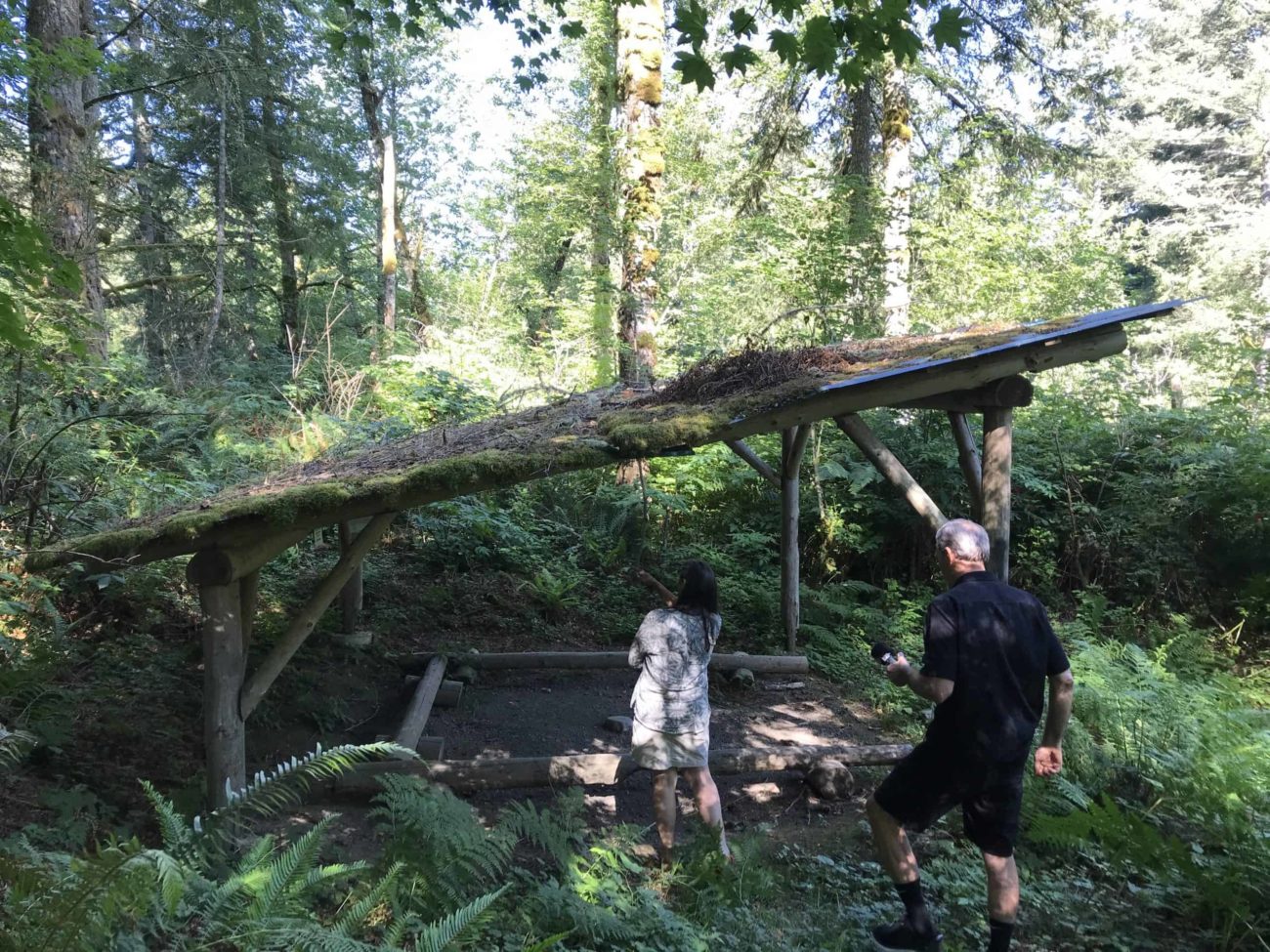
Absolutely. We have a shelter here but look at how the trail has been grown over and that was a shelter built by high school students. We can go look at it. Here’s one of our special places and this was built by high school students almost 19
years ago I’d say. That was their project for the summer and they named it Da Bomb Shelter and classes will have a campfire here or they may eat and have their lunch out in this trail. That’s great. But you’re right, I need to get the high school students back to clean this up.
Roberta, you must have some special teachers here. Oh my gosh, yes. The outdoor, and not just the teachers that are here, my outdoor educators on site that are creative, that are empathetic, that work long, long days and hours to make sure that every student has a safe emotionally and physical experience here on site.
But the classroom teachers at Waskowitz, the classroom teachers actually teach a lot of the work that’s here, a lot of the curriculum and that allows them to make it a part of their whole year, not just the one isolated week. And I love that, that model. Classroom teachers love doing what they do best.
We will train them, we provide all the materials, we help them create a flow that is meaningful for their class and then with help from the high school student leaders who serve as teaching assistants and with help from our outdoor educators, they will create an immersive experience for their students that will call back on prior knowledge and what they taught in the classroom and then the teachers will be able to say, remember when we and use that as a springboard to introduce
a new lesson, maybe two, three months from when their experience was here at Waskowitz. That’s great. And that could be social emotional learning, it could be ecology, biology. And history. History, right.
Yes, any of that. When you look at Washington State history, how important the resources that Washington State had, predominantly trees, you know, they were sent all over the western United States and other places, the logs and the timber, to build our cities. When you move to the state, are they going to make you work from Olympia or do you get to commute?
Well, I will get to work from home, but I imagine I’ll be traveling across the state quite a bit. I imagine you will. And I’m looking forward to that. I love the diversity of Washington State from the, you know, the Palouse to the Olympic Peninsula to, you know, the mountains and everything in between.
I hope. I’m looking at how overgrown everything is. And I am just hoping that outdoor school grows this quickly and sturdily once we really begin the work of getting outdoor school for every student in the state. And to help us with that project, I need to mention that there was $90,000 in the state budget for western Washington University
to conduct a lay of the land study. And they are going and they are looking to see who gets specific data on who runs an outdoor school program and what schools are doing outdoor school, whether through a provider such as Wascoots or on their own and going to a state park or and using it to help their students. Is that underway right now?
It is. It is just started. And they are currently looking at who is providing outdoor ed in the field. And then hopefully starting in August, September, they’re going to really be researching with school districts to see who does it and where they go.
And it’s going to be presented to the governor early October. And then from there, I can and some of my colleagues can really begin to develop a plan once we know what we have to work with to extend it to everywhere. Wow. Look at this spectacular vista.
This is the south flat. South fork of the Snoqualmie River. Oh, the Snoqualmie. I’m picking the south flats in Denver. The Snoqualmie.
Wow. Amazing spot. It is. And, you know, I know we’ve been in beautiful places and traveled and that sort of thing, but it always takes my breath away just looking at where I get to live, where I get to work. And I can only, you can only imagine for a student seeing it for the first time, their feeling.
And our high school leaders, I’m going to, you know, they come up multiple times and this becomes their sense of place. This becomes when they think of the environment, they think of this and they become advocates for more places such as these for all kind of a thing. They understand the value of a park. The value of trees on a school yard. Yeah.
And that’s huge. It is. All right, we should head back. I want to save time for a bike ride because this is spectacular. Well, the Heikin Bike Trail is right here.
That sense of place is so important. I grew up in Colorado, so I always think of any place I can see Mount Evans is. Yeah. As a home. Yeah.
So having that rooted sense of home, that sense of belonging in a place that’s rich with experiences is a real gift, right? It’s very meaningful. And it’s more than just driving by it. It is really getting to know, you know, the area, what lives there. You know, remember the friendships you had when you were there?
You know, you go back to the songs you sing. And it’s aided by a little bit of fear, anxiety, exhilaration, awe. Absolutely. All the things that you can experience in place. Yes, absolutely.
You know, this would be, we’re walking through some, some wandering Blackberry, we’re walking through some ferns and things. And yeah, it’s not super comfortable to have the Blackberries rubbing against my ankles. But I still love it. And the students, I guess my point is, students will sometimes have that discomfort, but then they come back. And here’s a good example.
A really hard rain and they get stuck in the rain and they’re walking through it. And they’re miserable until they get back and brag about it and how brave they were and how they survived. And that’s all they talk about. That’s a good point. We’re here on a beautiful summer day, but you run programs when it’s dark and wet.
It’s dark and wet. And they’ll make it back just as dusk is, you know, 430. And, um, but it doesn’t matter. It’s, it’s great. There was, I was talking with one teacher recently and they reminded me, my second time up at Waskowitz was the year it rained.
It snowed and we had beautiful sunny weather and they loved it. So, yeah, we live in a place that is very changeable. We’ve talked a little bit about place-based education, but there’s some of the tips and tricks that you do here. You can do at any school in the country, right? Where you can just walk out the door and walk around the block and invite kids to notice what they see.
Absolutely. And look for evidence of what lives here, what businesses there are, what systems are in place. Absolutely. You know, you might even just follow a raindrop, you know, that lands on the top of a roof in a school. Where are the downspouts?
Where does the water go from there? Um, does it go onto pavement or does it go into a, um, garden area? And just follow that down to even maybe through the watershed that it goes. And that would not be going very far out your classroom door. That’s a great example.
Our friends at the Horace Man School in Washington, D.C. do that. They follow the raindrop onto the grounds of the school, into a local culvert, into a creek, and then out into the Chesapeake. So it ends up being a two-year journey following a raindrop to the ocean. Yeah. And you know, it could also be as easy going into the parking lot and counting, doing a graph of how many blue cars there are, red cars, white cars, silver cars,
and making an inference as to what is the most popular color of cars driven by teachers at that school. I love that mixture of, uh, Outdoor Red and Data Science. Yeah. That’s great. Wow.
This is a very cool, very cool spot. Here’s a map of all our trails. So here we are, and there’s the bridge we crossed. That’s the bomb shelter. And then we have, these are all our trails.
There’s the Burma Bridge, a Lollie shelter, Elk Meadows, um, Bear Tree. And there’s our lookout tower. And you can see how stupid it is to get up to the lookout tower. So we also do some mapping skills. Um, we do do a little bit of GPS, but we find batteries die out quickly.
So we’ll give them, and I think it’s the basis for understanding by reading maps and using a compass to be able to better understand your GPS and where coordinates come from and that sort of a thing. But, um… Well, I’m so glad this place is still growing, uh, going strong and changing lives. Yes.
It’s a great place to be serving kids. Yep. It has been, um, a glorious journey for me. Um, I love what I do. I love the difference it makes for students, for teachers, and for staff.
Um, it truly is life-changing for so many. And, um, I really do hope every student in the state of Washington can have this experience wherever, um, in whatever terrain or place they live, whether it’s out on the sound in a boat or it’s in cabins in the woods or on a tent on the side of a mountain. Um, every student needs to investigate where they live in our great state of Washington. Thanks, Roberta.
It’s been great, uh, to visit. Thanks for, uh, hosting us today. Um, thanks for listening to the Getting Smart Podcast. Keep learning, keep innovating, and keep exploring your place. Thank you.


Peter Wieczorek
As a teacher/director at an experiential high school that offers daily field experiences & 20-25 overnight learning expeditions each year at no cost to students & families I love the emphasis on outdoor education! Thank for a great discussion.