

Steward Stories: CommunityShare Proves That the Community Is the Curriculum
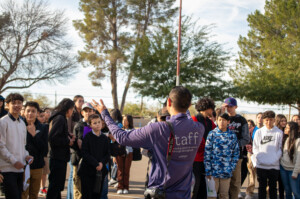
What if every community member, from a landscape architect to a university researcher to a sitting senator, could become part of a student's education? CommunityShare has been quietly building that reality since 2015, connecting more than 85,000 students and their educators with community partners across 12 states through a model it calls a human library. This Steward Stories profile traces the vision, the timeline, and the hard-won lessons behind one of the most compelling ecosystem intermediaries in the country. Education leaders who are wrestling with relevance, learner agency, and community trust will find both inspiration and a practical framework here.
Exploring Policy From the Ground Up: Illuminations from the Da Vinci Network
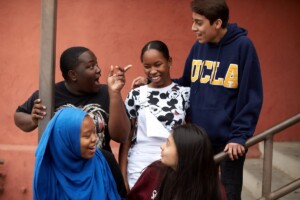
What does it look like when a school is genuinely designed around the lives learners are living, not the regulations they must comply with? In this new piece from Sarah Bishop-Root and Lindsy Ogawa, the Da Vinci Schools network in California shows how policy can be a tool for possibility and a source of fragility at the same time. Through the story of Da Vinci RISE and its students, this piece offers education leaders a grounded, human-centered lens for understanding the gap between what our best schools are trying to do and what our systems are designed to support.
The Microschool Mindset: Why Small Thinking Is the Biggest Shift in Education
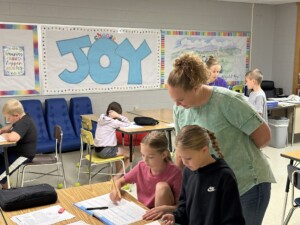
What if the most transformative idea in education right now has nothing to do with how big your school is? In this piece, George Philhower, superintendent at Eastern Hancock Schools and co-founder of the Indiana Microschool Collaborative, makes the case that the microschool mindset is a philosophy any school can adopt. From grading practices to flexible pathways to joy as a design principle, this is a grounded, visionary read for every leader asking what school could look like if we built it around learners instead of legacy systems.
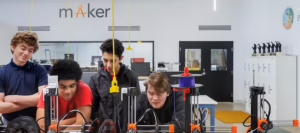
Steward Stories: How the PAST Foundation Turned Real-World Problems Into a Learning Ecosystem
What does it look like when a foundation built by a field scientist becomes the connective tissue of an entire regional learning ecosystem? The PAST Foundation's story, told through 25 years of timeline milestones and student voices, offers education leaders a concrete model for weaving together schools, industry, community, and out-of-school time into something greater than any single program. From portable STEM labs to microschool pathways co-launched with universities and industry partners, PAST demonstrates how systemic change begins with a commitment to learning that is rooted in real work and real relationships. This is essential reading for leaders ready to move from coordination to transformation.

Beyond the Classroom Walls: What Research Says About Virtual Field Trips
Field trips have always been more than a day away from desks. They are the moments students remember, the experiences that build empathy and ignite curiosity. A new Getting Smart post examines what the research says about virtual field trips and offers a classroom-ready framework that helps educators design experiences worthy of that same legacy. For leaders looking to expand access and deepen engagement without waiting for a bus, this is a practical and visionary read.

How Student Feedback Shaped New Features for English Language Learners in Math
What happens when you build EdTech features by actually listening to students? Kyron Learning partnered with the AIMS Collaboratory and the Gates Foundation to study motivation and engagement among English language learners in middle school math, and the findings drove real product changes. This piece traces how closed captioning, highlighted transcripts, and clickable definitions emerged from classroom observation rather than assumption, offering a model for what participant-driven, learner-centered product development can look like at its best.
Schools Are Testing the Past: How Assessment Must Evolve for Writing, Speaking, and Listening in the AI Age
When a student completes a writing test in a locked browser, we learn what they can do alone. But the world asks something harder: can they use AI without being used by it? In this sharp and timely essay, Eric Tucker argues that assessment for writing, speaking, and listening has not kept pace with how communication actually works, and maps a practical path forward. Education leaders navigating AI policy, curriculum design, and high-stakes testing will find both a diagnostic and a blueprint here.
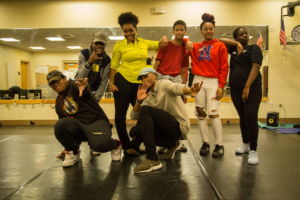
Steward Stories: Spotlight on Providence After School Alliance
What does it look like when a city becomes a learning campus? The Providence After School Alliance spent two decades answering that question, aligning schools, city agencies, and community organizations so young people could access high-quality learning far beyond the school day. This Steward Story traces PASA's evolution from a bold response to a local crisis into a nationally recognized model for ecosystem building, credit-bearing out-of-school learning, and the kind of coordination that outlasts leadership transitions. For education leaders navigating fragmented systems, PASA's journey is both a blueprint and a call to action.

When AI Chases Test Scores, What Gets Left Behind?
What happens when a school system delegates student achievement to an AI system with a single directive: raise test scores? In this provocative new piece, David Ross draws on AI alignment theory, Goodhart's Law, and a decade of stagnant NAEP data to map the subordinate goals an optimization engine might quietly pursue, from narrowing the curriculum to managing teachers as variables. It is essential reading for any leader navigating the intersection of political pressure and emerging technology.
We’ve Been Judging Symphony Rehearsals by the Last Note: Why Multimodal AI Can Finally Measure Mathematical Practice
For decades, math assessments have measured the residue of thinking rather than thinking itself. In this sharp, research-grounded piece, Eric Tucker argues that multimodal AI can finally make the Standards for Mathematical Practice visible, capturing spoken arguments, strategic shifts, and productive struggle in real time. For district leaders and curriculum directors rethinking assessment infrastructure, this is essential reading on what it means to measure what actually matters.