

Archive
component:where.technology

ChatGPT: Here’s What You Need to Know
Rachelle Dené Poth explains everything ChatGPT.
New Problems, Diverse Teams, Smart Tools
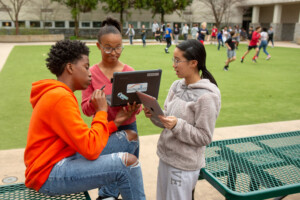
Every secondary and postsecondary learner deserves at least a couple of cycles each year of opportunity spotting, team-based solution designing, and feeling the satisfaction of delivering public impact.

Artificial Intelligence and Adaptivity to Strengthen Equity in Student Learning
Artificial intelligence has the potential to support educators and the creation of learning opportunities for each student–and educators are already using AI to adapt their work.

Four Key Lessons from Utah for Accelerating and Expanding Learner-Centered Education
Policymakers and practitioners regularly stated that the country couldn’t afford to simply revert to our traditional, industrial-era approach to education. What can be done to take advantage of this opportunity and transform and reinvent our K-12 system into something better?
Town Hall Recap: What’s Next in Learning 2023
On the 2023 edition of our annual “What’s next in learning?” Getting Smart Town Hall, we dug into some of the core drivers impacting learning today

School Systems Lack Capacity to Support Data Driven Decision Making, National Survey Finds
Data can be a powerful tool for education improvement, but school systems need help to ensure that educators and administrators have access to timely, accurate, and actionable data, as well as the analytical skills needed to leverage it in meaningful ways. The Project Unicorn coalition is working to ensure that the promise of education data is not a myth, but an everyday reality.

What Happens When AI Doesn’t Understand Students? An example for creative and equitable AI policy in education
Artificial Intelligence (AI) bias is a challenge for the broad adoption of AI-based solutions in the classroom. Speech recognition technologies offer a specific example of where we can start crafting specific policy and solutions for developing effective and equitable education technologies to support teachers and improve student outcomes.

Can Edtech Be Used to Better Serve Daydreamers?
We want our students to be dreamers, but ensuring that they absorb the necessary information will enable and equip them to be “doers” as well.
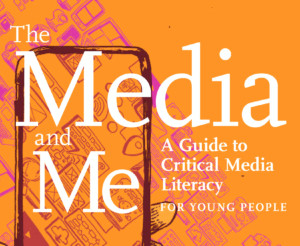
Looking Behind the Screen: Critical Media Literacy Gives Us Tools to Understand How Media Shapes Our Perception of Others and the World
Critical Media Literacy seeks to equip people with the tools to be independent media users, free from oppression or restrictions by others.

Delivering on the Promise of Digital Equity
A new white paper, Delivering on the Promise of Digital Equity, explores how state and local leaders can work to close the digital divide in their communities.