


Archive
component:what.competencies

20 Ways Education Will Improve by 2020
It’s getting easier to learn anything anywhere. It’s getting easier to create learning environments that work better for teachers and students. Here are 20 ways that learning (K-20) will change over the next five (or 10) years.

The Liberal Arts Have a Bright Future in Competency-Based Learning
By: Michael Horn. Although competency-based learning in higher education is arising based on the need for more affordable programs that prepare students for the workforce, by no means is competency-based learning inherently synonymous with the demise of the liberal arts.

4 Essential Competency-Based Education Commitments for HigherEd Leaders
If higher education institutions can remain focused on these core commitments, then competency-based education can make a substantive contribution to improving the quality of education, access for those not well served by traditional models, and building a closer relationship with employers and improved employability for graduates.

Learner-Centered Vision Will Frame Next Generation Learning
A learner-centered vision starts from the evidence that all children are naturally curious and motivated to learn. It envisions a system that adapts to learner needs and interests and supports their development of knowledge, skills, and dispositions they need to thrive.

Infographic | 7 Key Competencies for Whole System Change
In 'Leadership: Key Competencies for Whole-System Change' published by Solution Tree, Getting Smart Advocacy Partner, authors Lyle Kirtman and Michael Fullan identify seven key competencies for leaders to create and sustain systemic change.

What I Learned From My Daughter’s First “C”
So, what did I learn from my daughter’s first “C" I learned there’s a fair amount of “unlearning” that still has to happen before we will all feel comfortable in completely competency-based learning environments. As more and more schools shift from letter grades to levels of mastery, we would all do well to continue challenging the assumptions we all have about how we define and describe when learning is or isn’t happening.
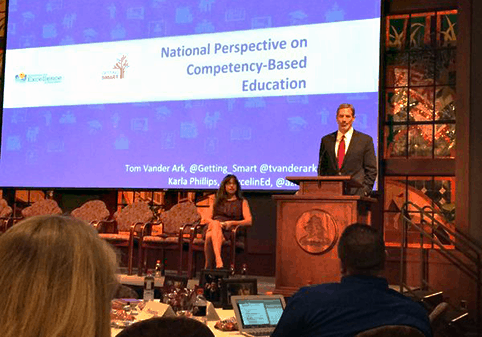
Utah EdLeaders Consider Competency
Co-authored with Karla Phillips. Elected officials, state board members, K-12 and HigherEd leaders gathered at Southern Utah University for a Joint Education Conference to talk system improvement and innovation. The discussions addressed five potential next steps including flexibility from time based systems, a transition to proficiency-based diplomas and anytime, anywhere learning.
A Reflection on the Field of Competency Education
By: Chris Sturgis. In perhaps the year's best blog on competency education, we examine the expansion of CompetencyEd, progress by leading organizations, the greatest weakness currently in the field and current Issues going forward.

Support for Teachers in a Competency Education School
By: Brian Stack. Principal of Sanborn Regional High School in Kingston, NH, shares how he is working to prepare and support teachers with meaning learning opportunities that support students in Sanborn's shift to competency education.
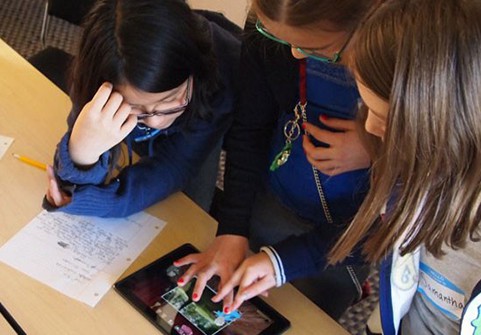
What’s More Important, High Test Scores or Self-Direction?
The education technology discussion is fraught with false dichotomies. One that I find particularly troubling is the false choice between improving test scores and preparing for life and work in the 21st century.