

Archive
component:how.professional-learning
Prototyping Education as a Platform
I wish school were different for my children. As a mom living in a school district with excellent schools, high test scores and property values, research-based practices, and warm, thoughtful educators who care about my kids you would think I would be satisfied. But like generations of parents before me, I want more for my kids than what I had.
Ministers Learn About Improvement at Scale
An Education Leaders Briefing concluded the World Education Forum in London this week. Greg Butler from Microsoft (who helped my district go 1:1 in 1996) moderated the session that I participated in with Sir Michael Barber, Chief Education Advisor at Pearson, and Microsoft education lead Anthony Salcito.
6 Vectors Advancing Personalized Learning
Personalized learning will significantly improve achievement levels, boosting completion rates in both K-12 and postsecondary education. That claim is based on six recent developments.
7 Things Next Gen Schools Will Do Well
Seventeen years ago as a new superintendent I was invited to Microsoft to learn about 1:1 programs in Australia. The architect of those programs, Bruce Dixon, told a compelling story of student engagement in transformed learning environments.
How Active, Digital Learning Fosters Business Skills in Students
The array of social technologies open a wide swath of possibilities for active learning, particularly in the online and blended teaching space.
Hire Edupreneurs: Advice for School Start-Ups
In the jargon-filled world of education, neologisms should be used sparingly. For a new school aimed at inspiring innovators and entrepreneurial leaders with a new learning model, the termedupreneur is indispensible. Edupreneur combines the concepts of education and entrepreneur – a person who undertakes any enterprise or venture, usually with considerable initiative and risk.
Next-Gen Models Break New Ground, Promote System Redesign
The 20 breakthrough school models recognized by the Gates Foundation funded Next Generation Learning Challenges (NGLC) took on the turnaround challenge, leveraged higher education partnerships, and improved the performance and sustainability of school networks (as outlined inpart one of this three-part series). They also illustrate how blended learning supports and extends experiential learning (part two).
Next-Gen Models Attack Problems, Leverage Opportunities
It's great if you think you have a good sense of how a next-generation school would work, but good luck trying to get funding. Most school districts don't have a process to respond to new school proposals much less funding them. And good luck getting a grant for a charter school before you get a charter approved (i.e., when you really need the money). That's why, given the emerging potential for personalization, the Next Generation Learning Challenges(NGLC) is a timely and important program.
Q&A: A Split Screen Strategy Drives Proficiency-Based Learning
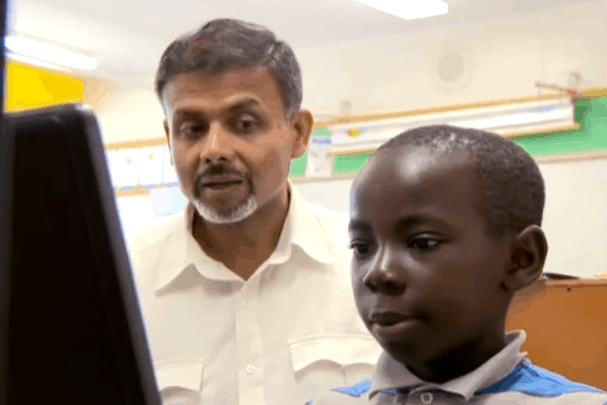
Ananth Pai, an elementary teacher in Minnesota, turned to game-based learning and a "split screen strategy" to engage and motivate students in the classroom. Today, Mr. Pai shares increased insight into his shift to a "split screen strategy" and how his efforts to personalize learning through proficiency-based learning model fit into a predominantly traditional school setting - with seat time, grades, and more.

Q&A: Online Environments Improve Professional Learning
Paul Lambert of an up-and-coming startup joins us today to share insights into his latest professional development and learning platform, Learndot. Learndot, formerly the new-age education platform Matygo, provides a flipped-classroom style learning environment for organizations who are looking for professional learning platforms to teach clients, customers, and employees new skills.