

future of learning
Personalized Learning
Online & Blended Learning Resources
iNACOL is an incredible resource for educators, leaders, policymakers and anyone interested in tracking developments in personalized learning. Keep up with iNACOL news and news across the field by signing up for Plugged In and keep an eye on the iNACOL website for webinars, new resources, and blog posts that track current implementation efforts and address key policy questions.

Leadership
Prizes to Promote Learning
While not an exhaustive list, there are four types of prizes that could prove to be useful in education. An example is provided in each category.
Personalized Learning
Video: Blended Learning Models
Part two of the five part DLN Smart Series video series features blended models from around the country.

Personalized Learning
Teaching Students to Code with PowerPoint
Regardless of perceived academic ability, every single student who set about creating their very first computer game on PowerPoint software started thinking in ways that so many of us only hope for in our language, science, or math classrooms.

Personalized Learning
Infographic: Why US STEM Initiative Shouldn’t Over Look Computer Science
It is time to start teaching our students to code. Code.org wants all teachers to sign up for The Hour of Code coming in December. Teaching kids to code does not mean you have to be an expert- read Dave Guymon's post that went live today, Teaching Students to Code With PowerPoint.
Leadership
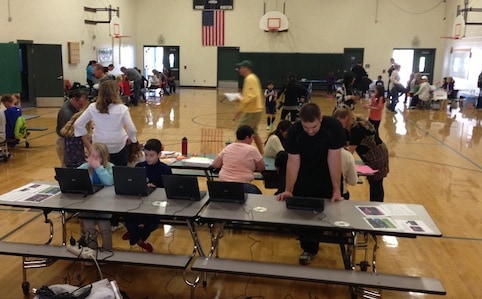
How Many Educators Does it Take to Organize a Local Maker Faire?
If, perhaps, you are searching for a Maker event in your area but don’t see one planned anywhere close by- it might be time to plan your own! It’s really pretty easy and an ideal way to get conversations happening and relationships building between schools, parents, organizations and businesses in your community- and when you plan your own, it’s tailored to your area and customized for the students you are intending to reach.

Personalized Learning
Disrupting Pedagogy – Part 2
And only if, innovators develop digital content that supports authentic pedagogy – and that provides sufficient context for students to understand, not just memorize – and then make that available for adoption and co-evolution within on-line schools and other smaller markets.
Innov8
EdTech 10: Awards, Blends, & Connections at #iNACOL13
The Getting Smart team enjoyed every minute of the iNACOL Blended and Online Learning Symposium this week, the biggest and best blended learning conference on the calendar. Read more for other big stories this week!

Personalized Learning
Disrupting Pedagogy – Part 1
The Clayton Christensen Institute recently published a paper that goes much further, describing the unique characteristics of the education system as a market and introducing us to the theory of hybrid innovation. Michael Horn explains that a key characteristic in the education market that changes how disruptive innovation will work for education is a lack of non-consumption – nearly all kids go to school and the market for schooling outside the system is comparatively small.
Personalized Learning
#iNACOL13: The Happiest Place on Earth
This year’s iNACOL conference brought to life the true meaning of online and blended learning- it has to be a give and take and the more you contribute, the more knowledge you take away. As always our team is blown away by the passion and dedication of education leaders around the country and feel privileged to cover and participate in these amazing events. We were humbled by how much was given and the amount of knowledge we received.