

Personalized Learning
Personalized learning is a mindset and approach to teaching that focuses on meeting each learner where they are and tailoring a curriculum that considers their interests, prior knowledge and skill level, and pace. Such a demand on the teacher requires sophisticated usage of technology in a combination of personalized, blended and online learning.
In the Future, Teachers Remain Key to Student Success
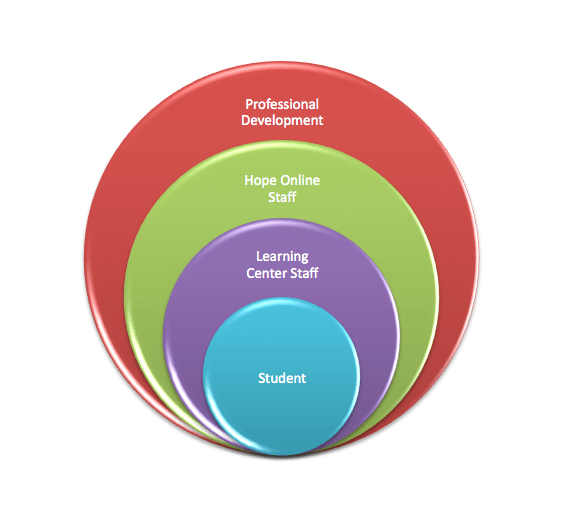
New technologies and 21st century students will change tomorrow’s classrooms but quality instruction will remain the most important indicator of student achievement, which is why we must invest in professional development for teachers today.

Sloan Blended Classroom Conference
Blended learning has the potential to support a series of customized experiences for each student. It should support individual progress models based on demonstrated mastery. It should promote a team-based work environment that leverages the talent of experienced teachers while supporting the development of new teachers. All of these benefits will be derived from well constructed, engaging, and often adaptive content for at least a portion of the student day.
How Leaders Inspire Groups to Innovate
Success in today’s global marketplace demands innovation. The world has watched the likes of Jack Welch (General Electric), Steve Jobs (Apple), Bill Gates (Microsoft) and Bill George (Medtronic) as they inspired their businesses to innovate. Each possesses varying degrees of the key characteristics and leadership styles known to result in innovation. The same styles translate to innovation in education.

Who Will Work in Schools of the Future?
Robin Lake, CRPE, filled in for Rick Hess last week. One of her great EdWeek blogs asked who will work in schools of the future? "The best technological innovations really are transforming the way kids learn and the way schools are organized." That's the difference between edtech layered on top of how we've always done school and real blended learning.
School Board Members Consider Digital & Deeper Learning
Bob Wise, Mark Edwards and Tom Vander Ark discussed digital learning at NSBA in Boston. Another session considered the potential for the Common Core to encourage deeper learning.

Oklahoma Dialog on Digital Learning Now
The shift to digital learning adds benefits but increases complexity. And, in most places, there’s no more money. In fact we’re dealing with what Marguerite Roza calls the Decade of Deficits.
After School: 5 Apps Your Students Are Using When You’re Not Looking
So, Dick (now he prefers to be called Rich) and Jane are upstairs in their bedrooms, supposedly doing their homework. But you suspect they are doing what they usually do, chatting in Facebook, browsing friends’ Tumblr posts, or looking for funny cat videos on Youtube. Think again.

10 SkySong Trends
One day does not a trend make but ten trends were on display at the best edu-innovation of the year, the ASU Education Innovation Summit (#eisummit):
Using the Principles of Innovation to Develop Technology
Awareness and understanding of current technology’s capabilities is the foundation of innovating that technology into the future. The bits and bytes are mere details; the important thing is an awareness of any given technology’s possibilities.
Like Fish to Water: Virtual Learners in 2012
I have worked as an online educator since 2005 – facilitating learning in a two-year online program that equips current educators with Master’s degrees in Educational Leadership and signifies their formal readiness to take on positions of leadership inside their schools or districts. Getting to know these professionals through weekly interactions over the course of two years allows me to maintain an important connection to “real” schools and the students they serve as I fulfill other professional roles as an education policy researcher and consultant.