


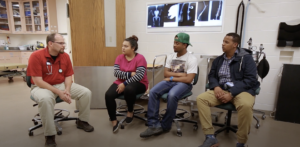
Core Plus Explore: How Embedded Career Relevance Improves Engagement in Foundational Courses
What if the answer to student disengagement lived inside the curriculum itself? A new partnership between Edmentum and Roadtrip Nation embeds short, unscripted career exploration interviews directly into core high school courses, connecting algebra, biology, and English to real professionals and real possibilities. With data showing fewer absences, greater relevance, and students discovering careers they never knew existed, this model reframes a familiar question: school is not just preparation for graduation. It is preparation for possibility. Education leaders will want to see how this approach works, and what it signals about the future of instructional design.

Beyond the Shiny Object: How to Assess Your System’s True Innovation Readiness
Too many districts launch the next big initiative before their systems are ready to sustain it. In this new piece, Getting Smart contributors Nate McClennen and Rebecca Midles introduce the 5 C's of R&D Readiness and 8 Archetypes of System Transformation, a practical framework for honestly diagnosing where your school or district stands before committing to wide-scale change. Whether your system is a Vanguard or a Frozen System, this tool helps leaders move from reactive initiative-chasing to intentional, coherent redesign.
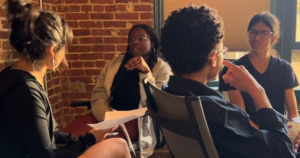
How Empathy Interviews Transform Stakeholder Engagement into Shared Ownership
What if the most powerful tool in school improvement is a single, unhurried conversation? In this post, Jennifer Poon and Doannie Tran make the case for empathy interviews as the essential first step in genuine community co-creation, and explain why it matters deeply who conducts them. Drawing on their work with Burlington School District, they show how shifting the interviewer from consultant to community member transforms not just the data collected, but the relationships and shared ownership that follow. This is a must-read for any education leader serious about building strategies that reflect the full truth of their community.
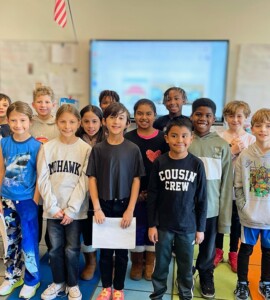
Coming Full Circle: The Portrait Lives Through Students
The final installment in Norwalk's Portrait of a Graduate series asks the most important question of all: what do students say when you ask them to describe the Portrait? This post makes a compelling case that student co-design is not a nice-to-have but a core implementation lever, and it offers concrete strategies, from design sprints to feedback cycles to student-led reflection, for keeping student voice at the center of the work. For education leaders navigating the gap between vision and practice, this is an essential read.

Voiceless Collegiality: When Getting Along Gets in the Way of School Leadership
When a leadership team meeting ends with everyone offering to help but no one agreeing to lead, something important has gone wrong beneath the surface. In this sharp, diagnostic piece, education leadership professor Andy Szeto names a pattern hiding in plain sight: voiceless collegiality, the organizational silence that masquerades as team harmony. Szeto identifies three distinct types of silence eroding school effectiveness and offers concrete shifts for leadership teams ready to trade comfort for clarity.
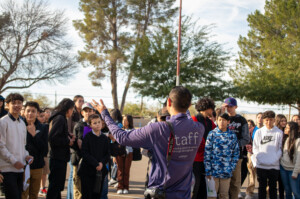
Steward Stories: CommunityShare Proves That the Community Is the Curriculum
What if every community member, from a landscape architect to a university researcher to a sitting senator, could become part of a student's education? CommunityShare has been quietly building that reality since 2015, connecting more than 85,000 students and their educators with community partners across 12 states through a model it calls a human library. This Steward Stories profile traces the vision, the timeline, and the hard-won lessons behind one of the most compelling ecosystem intermediaries in the country. Education leaders who are wrestling with relevance, learner agency, and community trust will find both inspiration and a practical framework here.
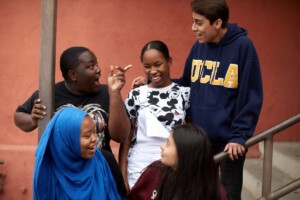
Exploring Policy From the Ground Up: Illuminations from the Da Vinci Network
What does it look like when a school is genuinely designed around the lives learners are living, not the regulations they must comply with? In this new piece from Sarah Bishop-Root and Lindsy Ogawa, the Da Vinci Schools network in California shows how policy can be a tool for possibility and a source of fragility at the same time. Through the story of Da Vinci RISE and its students, this piece offers education leaders a grounded, human-centered lens for understanding the gap between what our best schools are trying to do and what our systems are designed to support.
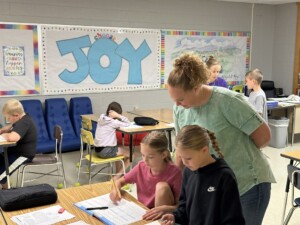
The Microschool Mindset: Why Small Thinking Is the Biggest Shift in Education
What if the most transformative idea in education right now has nothing to do with how big your school is? In this piece, George Philhower, superintendent at Eastern Hancock Schools and co-founder of the Indiana Microschool Collaborative, makes the case that the microschool mindset is a philosophy any school can adopt. From grading practices to flexible pathways to joy as a design principle, this is a grounded, visionary read for every leader asking what school could look like if we built it around learners instead of legacy systems.
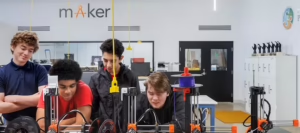
Steward Stories: How the PAST Foundation Turned Real-World Problems Into a Learning Ecosystem
What does it look like when a foundation built by a field scientist becomes the connective tissue of an entire regional learning ecosystem? The PAST Foundation's story, told through 25 years of timeline milestones and student voices, offers education leaders a concrete model for weaving together schools, industry, community, and out-of-school time into something greater than any single program. From portable STEM labs to microschool pathways co-launched with universities and industry partners, PAST demonstrates how systemic change begins with a commitment to learning that is rooted in real work and real relationships. This is essential reading for leaders ready to move from coordination to transformation.

Beyond the Classroom Walls: What Research Says About Virtual Field Trips
Field trips have always been more than a day away from desks. They are the moments students remember, the experiences that build empathy and ignite curiosity. A new Getting Smart post examines what the research says about virtual field trips and offers a classroom-ready framework that helps educators design experiences worthy of that same legacy. For leaders looking to expand access and deepen engagement without waiting for a bus, this is a practical and visionary read.