


EdPolicy

Would Alabama’s Football Coach Nick Saban Do This?
We all know that something in our educational processes is not right. Our businesses talk about how our graduates lack skills, our government talks about how we are falling behind as a nation, our neighbor talks about how they can’t find a job and our schools talk about how frustrated they are. Like the scene in the movie Moneyball “blah, blah, blah, blah, blah.” All talk aside, what is the fix? We can even debate it, yet not many will argue that something needs to change. Once we starting fixing our nation’s education our neighborhoods can begin to regain their confidence, our communities can start to feel like an actual community and our local economies may just start to pick up.

Students Inspire College Readiness With Street Art
Voting ends today on SchoolTube's video competition Going Mindless, which encourages students to express change in their schools or communities by modeling the youthful, positive change by the R&B band Mindless Behavior. The band will pick their favorite student video to award an exclusive Mindless Behavior concert at their school.

What Would You Do With Endless Internet Bandwidth?
The theme of the CoSN 2012 Annual Conference was to “reimagine learning” and the keynote speakers and concurrent session presenters all provoked us to do just that. From my conference experience, none was more provocative than the session, “On The Horizon: Harnessing Emerging Technologies In Education,” with Larry Johnson, CEO of New Media Consortium.

10 Ways Big Data Will Improve Learning
The shift to personal digital learning will soon swamp our schools with more data than teachers ever dreamed possible. More and better data will inform educational decisions, lead to better public policy, and will boost achievement. It's time for schools, districts, and states to begin planning for Big Data.
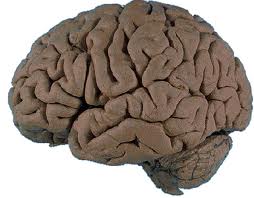
12 Findings on Mind, Brain & Education
Mind, Brain, and Education is the first in a nine paper series from JFF called Students at the Center. Like all of JFF's work, the series focuses on helping students from all backgrounds graduate ready for post secondary education and the 21st century knowledge economy. Student-centered learning, according to JFF, provides "flexible learning experiences that enable students at various levels to build toward mastery of a common set of core skills. A commitment to addressing the individual needs and goals of each student is at the core of the model.

Staff Picks: mLearning, ePortfolios, intellectual work & Rethinking ED
Tom Picks “Celling a Great Idea” Tom says, “I agree that the flip from bans to widespread daily use will happen fast and that the BS era (before smartphone that is) will soon seem like a strange and distant past.” Caroline Picks “Technology…
Why My Six-Year-Old Students Have Digital Portfolios
From the first week of school, the six-year-olds in my classroom begin to create an online presence in the form of a blog and digital portfolio. We use a blogging platform to do this, and include artifacts that show their progress in writing, reading, math, social studies, and science.

Top 5 Frequently Asked Questions of an Online English Teacher
Most of what I do is trail-blazing: delving into new territory in order to improve the way I teach and the way my students learn. This is both exhausting and exhilarating. Luckily, I have awesome colleagues who are willing to collaborate and explore with me. Here is a list of the top five frequently asked questions of an online, English teacher, along with my most honest answers.
Education Must Move Center Stage in the Presidential Election
Joel Klein had a great oped in the Washington Post this morning. Like Joel, we're disappointed with the lack of focus on education on the campaign trail, "Until former senator Rick Santorum called President Obama “ a snob ” last month for wanting all Americans to attend college, education had been practically invisible in this presidential campaign."
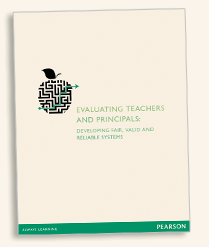
Pearson Launches New Guide to Strengthen Teacher/Principal Performance
To assist states and school districts as they undertake the critical task of developing and launching next-generation educator effectiveness systems, Pearson today unveiled a new guide, “Evaluating Teachers and Principals: Developing Fair, Valid, and Reliable Systems.”