


Posts by Guest Author

Some Student Data Should Never Become Digital
By: Charles Fadel, Center for Curriculum Redesign Adapted from “Cognitive Security Architecture for Student Learning Data” Schools have been capturing student data for decades, and eventually will also use new applications such as Intelligent Tutoring Systems (ITS) that can adapt to each student’s pace, performance,…
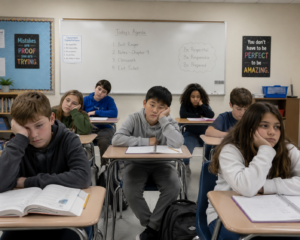
The Tyranny of College Admissions: Why It’s So Challenging to Have Real Change in K-12 Education
College admissions requirements keep K-12 tied to grades and Carnegie units, slowing competency-based and skills-first learning.

What If School Offered More? The Case for Community Schools
Community schools boost student success by connecting learning with mental health, family support, and local community resources.

The Conditions That Make Durable Skills Real: How Schools and Systems Build for Agency, Identity, and Vision
How schools build durable skills through authentic work, reflection, relationships, and learner-centered design.

What AI-Enabled Education Actually Looks Like When It’s Working for Workforce Students
How AI can make workforce pathways visible through competency records, labor market alignment, and clearer student-to-job outcomes.

How System Leaders Can Intentionally Design to Build Math Identity
How system leaders can improve math achievement by designing instruction that builds math identity, reasoning, and confidence.
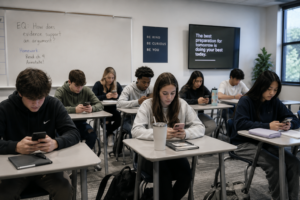
Addressing Symptoms but not Problems: How Fight, Flight, Freeze, and Fawn Shape the Modern Classroom
How fear of screen time and AI shapes school responses—and why education must address structural challenges, not just devices. and why education must address structural challenges, not just devices.

The Ozempic Problem: The Generative AI Norms Forming in Silence, and How Youth and Adults Can Shape Them
By: Shereen El Mallah, Jenny Poon, and youth authors Alex Mathew, and Adora Olise This year, Ms. Chen started using AI to provide feedback on student writing. It saved her two hours a week and ensured that the last essay in the stack received the same quality of…

Kinds of Thinking (& Prompts for More Thinking)
Eight kinds of thinking—from strategic to intuitive—that help educators, leaders, and learners make wiser decisions in complex contexts.
What If the Rules About How Teachers Work Together Were Also Just Made Up?
Bay Area schools are redesigning teacher collaboration to personalize learning, strengthen instruction, and improve educator sustainability.