

Archive
element:whats-next
How Philanthropy Can Improve & Accelerate the Shift to Digital Learning
There are a dozen opportunities for foundations to focus, improve and accelerate the shift to digital learning including planning support for school, district, network, and states; supporting pilots programs and new schools; and sponsoring research, advocacy, and learning opportunities.
5 Things I’ve Learned About Startups (& Life)
The Pearson Foundation launched a cool project called 5 Things I've Learned, check it out. My contribution is below is focused on launching an organization or a project.
Good Work: Serving Ideas
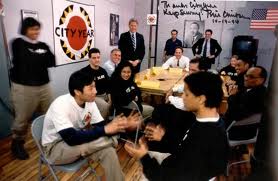
Think of the young people that go to Washington DC as the Cognitive Corps—working in service of an idea or ideal. Advocacy work is an attempt to make a difference at scale. If there is any success, it will be delayed gratification. But for the right cause, it is work worth doing.
Infographic: How to Extend the Reach of Excellent Teachers
Did you know that only 25 percent of classes are taught by excellent teachers? We need to find ways to leverage great teachers and extend their talents to more students through the use of technology, new classroom models, and more.

10 impact opportunities for donors and sponsors
Are you looking for investment opportunities to improve equality and equity in education? This week, we’ve compiled a list of 10 great philanthropic and sponsor opportunities: Make new state tests as good as possible by sponsoring a design prize for innovative math and logical reasoning assessment items. The first two…
Impact at Scale: Contribution, Translation & Execution
I usually write about Good Work–finding and doing mission-related work–on Sunday, but I spent the last two days with a couple dozen inspiring folks sharing strategies for creating impact at scale. Using a mixture of investment and organizational, they making a difference around the world. Leila Janah, Samasource, is…
Shift Your Classroom: Small Strategic Steps
For most of my teaching career, I’ve been a pretty traditional teacher (even now I slip back into that mode sometimes). However, as I went through the motions of trying to “teach” my students, something didn’t feel right. My students seemed to learn things only for the exam, were focused on the mark, not the learning that was supposed to be taking place. When the unit or semester was over, they dumped all their notes and assignments. Frustrating.
4 Characteristics of Education Programs That Actually Work
“Education” is a huge conversation, but almost all of the conversation is about the education problem. There is not a serious or mature conversation about solutions. Meanwhile lots of resources and, as important, attention, are going into an ever-changing, wide variety of programs which, it is hoped, will be part of some solution. How do we know when we’re looking at any given program, whether it can have game-changing impact on K-12 schools, or has no chance? I call the former, programs that “Actually Work.” Here I identify and describe four characteristics of any program that Actually Works: Scope,Results, Robustness, and Scalability. Failure at any one of these is failure to Work.
Good Work: Gift Giving
Christmas is the gift giving day. Mission–related work is about giving gifts every day—contribution more than extraction. Gift giving, or mission-related work, is never easy and it’s never done--it responds to the most pressing needs in society. It is hard work, but gift-giving is the ultimate reward.
Q&A: ExpandED Principal Discusses Extended School Days
This December, The After-School Corporation (TASC) launched an initiative to take its ExpandED Schools program to the national stage. ExpandED Schools connects schools to community organizations in order to provide students with increased learning opportunities in the community through an extended school day. At Thurgood Marshall Academy Lower School (TMALS) in Harlem, an ExpandED School, Principal Dawn Brooks DeCosta discusses her experience with the program.