


Archive
element:how
The Architecture of Ability: How Evidence-Centered Design and UDL Can Shape AI-Era Assessment
ECD, UDL, and The Cow Path Educational measurement is at a crossroads. Multimodal artificial intelligence (AI) finally opens a pathway to move beyond the industrial-era, one-size-fits-all summative test in favor of unobtrusive, agentic, and adaptive assessment. But directing raw computing power at children without guardrails is ill-advised. Using…

Making Learning Visible for Students and Adults Through Reflection
Norwalk Public Schools integrates reflection to deepen Portrait of a Graduate implementation, fostering ownership and coherence across the district.
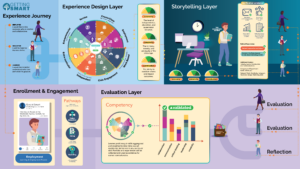
Experience Matters: A Common Language for Talent, Trust, and Economic Mobility
This report from Getting Smart and Education Design Lab proposes a Common Language of Experience—a robust, interoperable framework for evaluating, designing, and articulating experience value across any context.

Blueprints Are Not Enough: Building Balanced Assessment Systems for Science of Reading 2.0
Ms. Rivera has done everything right: she attended the state-mandated Science of Reading (SoR) training and internalized the new, evidence-based curriculum. She is teaching phonics and phonemic awareness. Yet, as October settles in, she feels a familiar anxiety. She is teaching the “what” of the new laws, but…

Why PBL and 21st Century Skills Aren’t “Add-Ons”: Using AI to Prove They’re in the Standards
AI reveals that PBL and 21st-century skills aren't "add-ons" but are already embedded in CCSS and NGSS, transforming how we view modern teaching.
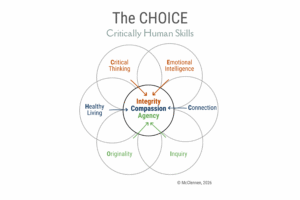
The CHOICE We Make: The Critically Human Skills That Define Our Future
Explore the CHOICE framework for critically human skills and redefine education to foster agency, compassion, and integrity in an AI-driven world.
Measuring What Matters and Doing it Well: Innovating Assessment in the AI Era
Imagine a student finishing a test feeling more capable. To assess is, intrinsically, to teach and to learn. It is time to build the GPS our students deserve.
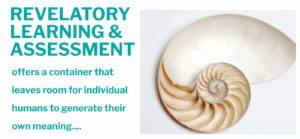
A Revelatory Mindset – what is it, and why might it be transformative for learners?
A Revelatory Mindset fosters curiosity, humility, connection, and alignment, enabling learners and educators to embrace awe, growth, and authentic relationships.
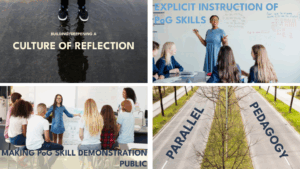
Norwalk Public Schools: Unpacking the Levers for Deeper PoG Implementation
Norwalk Public Schools leverages four key implementation levers to bring its Portrait of a Graduate to life, ensuring deep, system-wide impact.

What if Proficiency is not Proficient? The Case for Calibration
Calibration ensures consistent, equitable assessments in CBE. Learn why shared judgment is essential for personalized, competency-based systems.