


Social-Emotional Learning

Competency-Based Education
What Should Young People Get Really Good At?
Young people should master creativity, problem-solving, and future-ready skills by reimagining education and embracing a transdisciplinary approach.

EdTech
Gen AI Demands We Teach Critical Thinking
Critical thinking is crucial in the age of AI and misinformation. This blog emphasizes teaching students argument analysis to discern truth in digital content.

Leadership
The Next Horizon
"Horizon Three" aims to redesign education for a future-ready system grounded in equity and learner agency, highlighting innovative examples like Reggio Emilia.

Competency-Based Education
How to Design Schools to Grow Thriving Adults: A Provocation
Explore the essential processes in education that foster real-world competencies to help students become thriving adults, beyond traditional core subjects.

Leadership
How the ‘Portrait of a Graduate’ Infuses Student Learning with Joy and Hope
Explore how educational leaders can balance accountability and joy by integrating strategies that foster purpose, agency, and belonging, creating vibrant learning environments that support student well-being and inspire them to thrive.

Equity & Access
Afrofuturism as Liberation and Design with Ingrid LaFleur
Afrofuturism empowers marginalized communities by envisioning futures where Black excellence thrives, fostering innovation and representation in STEM and beyond.

Equity & Access
Community-Centered Research & Development in Education
Exploring the role of R&D in public school innovation, emphasizing community collaboration, empathy-driven testing, and scenario planning for equity.
EdTech
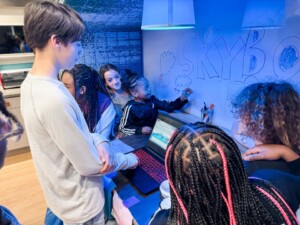
AI in Education: Leading a Paradigm Shift
Exploring AI integration in education, this blog discusses its impact on teaching paradigms, personalized learning, and the future of educational technology.

Learning Design
Here are our design principles. What do you think?
Getting Smart promotes equitable innovations in learning through values, goals, and design principles to ensure transformative education experiences.

Leadership
5 easy steps for responsibly piloting AI and tech in education
Evaluate AI tools ethically, aligning with student needs and goals. Ensure they support, not burden teachers, while addressing potential biases.