


Competency-Based Education
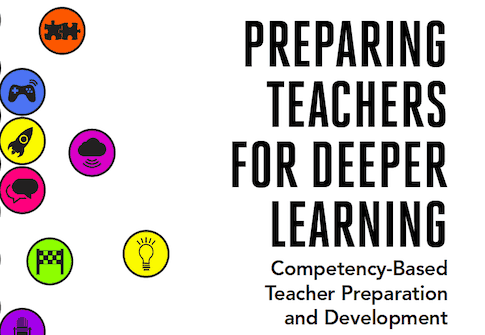
Preparing Teachers for Deeper Learning
Today Digital Promise and Getting Smart released “Preparing Teachers for Deeper Learning: Competency-Based Teacher Preparation and Development.” This white paper outlines the attributes of next-generation teacher preparation and makes recommendations to support the development of teacher preparation and development systems.

Infographic: Competency-Based Teacher Prep & PD
This infographic, “Competency-Based Teacher Preparation & Professional Development,” outlines how the role of teachers is changing amid broader shifts to personalized, blended and deeper learning.

Assessing Deeper Learning: A Survey of Performance Assessment and Mastery – Tracking Tools
A Getting Smart report that outlines 12 key features of a performance based assessment system and barriers identified in obtaining better tools. This paper outlines platform necessities as Deeper Learning and the application of educational technology continues to progress.
Report Released on Deeper Learning Performance Assessment Tools
Getting Smart, with support from the Deeper Learning Student Assessment Initiative (DLSAI), comprised of the Asia Society, ConnectEd, Envision Education, and New Tech Network, released “Assessing Deeper Learning: A Survey of Performance Assessment and Mastery Tracking Tools.”

Piedmont City Schools Re-Imagines the Future for Rural Students
Piedmont City School District is not a big city story but instead proves that all of our kids deserve better conditions for learning and to be fully prepared to enter this 21st century world, regardless if they live in the city or in a “harder to reach” rural area.

A Look Inside Standards-Based Grading at Starr Detroit Academy
By: Jeremy Vidito. Standards-based grading was one of numerous strategies we implemented from Day 1. And it became evident quite early in our first year that we had some challenges to overcome if we were going to successfully implement standards-based grading.

Testing: Why We Need More of It. Lots More.
Let’s give testing back the power to enrich and improve learning. And if the role if high-stakes testing is to ensure equity, let’s focus on making the tests equitable. Or are we too addicted to a simplistic view of tests, to causation/correlation fallacies, and to outdated metaphors of school to make abundant access to tests available to all students, parents, and teachers?
How the Feds Could Contribute to Competency Education
iNACOL released a paper--A K-12 Federal Policy Framework for Competency Education--the most comprehensive look at the federal role in supporting the shift to competency-based education.
A Personal Journey to Help Reinvent Schools
It was clear that instruction needs to focus more on learning by doing, collaboration, and competency-based student progress. This represents a fundamental, systemic transformation …

Competency Education: The Solution to Retention
As we turn the corner in designing new learning systems, the notion of considering retention can now be safely set aside. In a competency based learning system, no child is retained. It is as simple as that. Why?