

Archive: Jan 2012
Personalized Learning
The Learning Mindset: Winning in the Civilian Sector
The 1% and 99% are making headlines. But I'm more worried about the 20%, the 50% and the 75%. The 20% of Iraq and Afghanistan vets age 18-24 who are unemployed, the 50% who are underemployed, and 75% who don't graduate from the programs of study that they start after they get out.
Personalized Learning
How Intelligent Scoring Will Help Create an Intelligent System
The Hewlett Foundation is sponsoring a competition that will demonstrate that automated essay scoring is already pretty good—on most traits it is as good as expert human graders. This prize competition will make it better. The reason Hewlett is sponsoring the competition is that they want to promote deeper learning—mastery of core academic content, critical reasoning and problem solving, working collaboratively, communicating effectively and learning how to learn independently.
EdTech
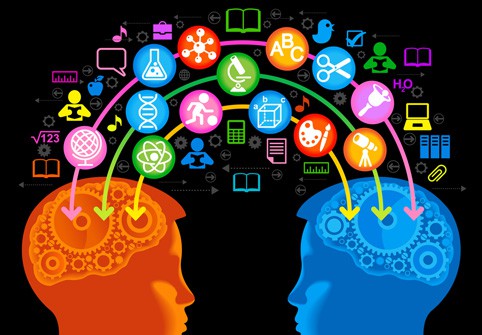
Are You Left or Right Brain?
Right brain versus left brain learning has been a longstanding debate among other science theories around learning styles. Yet, the bottom line is that different parts of our brains take on different functions and tasks to help us learn. Just as some might have stronger upper arm strength over lower leg strength, our brains have their strengths as well. Developing exercises that target these areas can improve our comprehension, retention and efficiency in learning new subjects.
EdTech
SmartTech Roundup: Tablets, Tech for Prep, Startups & Blends
Tabs & Texts Next from One Laptop Per Child–not a laptop, it is an 8 inch plastic tablet with 3 charging options, a battery, a solar panel, or a crank. Classteacher Learning System launched Classpad, another incredibly cheap tablet out of India. Equipped with “artificial…
Leadership
Good Work: Meeting Special Needs
Today I simply want to recognize and thank parents and teachers that work with students with special needs. Nature recently devoted a full issue to the subject of autism. There are some promising organizations attempting to meet special needs. But this blog is mostly a thank you card.
EdTech
Q&A: The Educational World Is Flat
Tom Vander Ark is an educational innovator who thinks like an engineer. He is currently the CEO of Open Educational Solutions, a partner in Learn Capital, and director of the International Association for K-12 Online Learning. Previously he served as President of the X PRIZE Foundation and was the Executive Director of Education for the Bill & Melinda Gates Foundation. He is a prolific writer and speaker, and in 2006 Newsweek readers voted Tom the most influential baby boomer in education.
EdTech
‘A Smile As Big As the Moon’ Airs ABC January 29th
ABC Network airs its Hallmark's Hall of Fame feature "A Smile As Big As the Moon," an inspiring story of a high school football coach and special education teacher who took a class of special education students to NASA's Space Camp, Sunday, January 29 from 9:00 p.m. to 11:00 p.m. EST.
Personalized Learning
Educational Management Organizations: The Rest of the Story
The NCEP, issued its annual data compilation covering educational management organizations (EMO). While the summary sounds benign, I think it’s fair to say that the NCEP hates EMOs—especially the for-profit versions. This AFT funded report is not a sympathetic data compilation. From the ensuing stories it is clear that journalists were coached on attack strategies. EMOs have the unique opportunity to develop coherent academic models and support networks where everything works together to benefit teachers and students.
Personalized Learning
4 Characteristics of Education Programs That Actually Work
“Education” is a huge conversation, but almost all of the conversation is about the education problem. There is not a serious or mature conversation about solutions. Meanwhile lots of resources and, as important, attention, are going into an ever-changing, wide variety of programs which, it is hoped, will be part of some solution. How do we know when we’re looking at any given program, whether it can have game-changing impact on K-12 schools, or has no chance? I call the former, programs that “Actually Work.” Here I identify and describe four characteristics of any program that Actually Works: Scope,Results, Robustness, and Scalability. Failure at any one of these is failure to Work.
Leadership
Staff Picks: Online Learning, Digital Learning Day
Tom picks "What Is the Newest Innovation In Online Learning?" while Karen picks "iLearn Project & Digital Learning Now! Host Wash. Online Learning Symposium." Sarah picks Digital Learning Day!