


Archive
component:when.finance
Revising Federal Rules Would Promote Innovation, Improve Performance
In times of scarce resources and limited dollars, finding cost-effective ways to promote innovations in education is imperative. If federal education officials really want to help improve student performance, they should be doing all they can to promote technology-driven innovations in public schools.
Student-Centered Learning Need Not Cost Districts More
A new study of the financial implications for public schools embracing student-centered learning (SCL) models reveals that districts don’t need to spend more on these schools if they fund all schools fairly, and then allow schools to make choices about how they use their resources.

Q&A: Patrick Supanc Wants Students to Score with Alleyoop
Too many young people are entering their post-high school college and career worlds woefully underprepared, particularly in the areas of math and science. Despite all of the investment of time, effort and money they make to get into college, they are at high risk of dropping out or graduating late.
Learn from All Successful Schools, Not Just Charters
Few would argue with the notion that public education in America needs to improve to ensure that our country remains prosperous in the coming years. And we should look wherever we can for ideas on how we can increase student achievement for each child in the nation.
What Does it Mean When a College Kid From Ecuador Beats the Best?
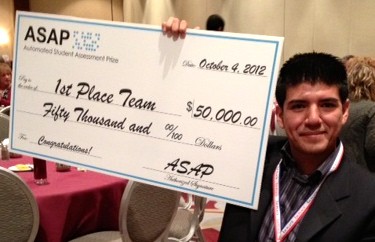
Yesterday the William and Flora Hewlett Foundation awarded $100,000 to the top five teams in an assessment scoring competition. The goal was to build software systems that could grade short answer responses on state standardized tests as accurately as trained experts—a more difficult challenge than the essay competition held in the first quarter of this year where the winning algorithms equaled experts.

It’s Time for a Special Needs App Fund
Alesha Bishop and Lisa Valerio worked together for 10 years at Charles Schwab. After both gave birth to sons with special needs, they have reunited to support the development of learning tools for students with special needs and family-friendly apps.

Digital Learning Now! Outlines 3 Strategies for Funding Computer Access
Digital Learning Now! (DLN) today released "Funding the Shift to Digital Learning: Three Strategies for Funding Sustainable High-Access Environments," the first in a new DLN Smart Series that will provide specific guidance on adoption of Common Core Standards and the shift to personal digital learning.

RTT-District: Scaling Personalizing Innovations
Last week the Department issued the final guidance on Race to the Top District(RTT-D) competition. It's a big opportunity to improvement for underserved kids.
Escalating Tuition Costs Aren’t in Anyone’s Best Interest
Colleges and universities provide a critical service to our society. However, institutions of higher education are also businesses. In our current economy, our attention is increasingly drawn to the business side of education. Rising costs, and a scarcity of funds to help those students who cannot afford them, are hurting our bottom lines – and those of many families across the country.

Investing in Education Innovation
Ask yourself, would the next Rocketship Education or Goalbook grow in your backyard? If not, what would it take? One thing is for sure: education innovation does not happen by accident.