

Archive
component:what.learning-progressions

Competency Education: The Solution to Retention
As we turn the corner in designing new learning systems, the notion of considering retention can now be safely set aside. In a competency based learning system, no child is retained. It is as simple as that. Why?

14 Developments to Watch for in 2014
It's been a big year for innovations in learning. If 2012 was the year of the MOOC, 2013 was the year blended learning went mainstream--even schools that were just layering tabs on top of an obsolete model called it "blended." The following are 14 developments to watch for in 2014.

Closing the Motivation Gap
The fact that the best professors in the world are making their courses freely available is an important milestone in learning opportunity, but MOOCs are largely serving the college educated seeking additional education.
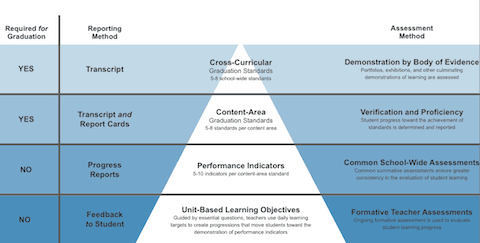
Consortium Points the Way on Proficiency-Based Learning
"David is a great resource for our region," said Nick Donohoe of the Nellie Mae Education Foundation, NESSC's primary benefactor. "He has a forward-thinking view of where learning needs to go, related to policies and assessment in particular," and he's particularly good at "summarizing 'edu-ese' for state legislators and local school leaders."

10 Elements of Next-Generation K-12 Systems
Next generation systems--across a state or region--will share ten elements: goals, standards, a focus on personalized learning, assessments, talent development, authorizing, data systems, accountability, funding, connections, and supports.

Optimizing Personalized, Blended, Competency-based Schools
Wouldn’t teachers start to have those “what if” moments at lunch or walking in from the parking lot about how they could combine different elements of the different strands of innovation. Wouldn’t students start to bring ideas between classrooms about how their project-based learning could really benefit from having access to some of the resources on-line or how they might be able to create more deeper learning projects if once a week there was a three-hour open period to work on projects so they could get o they could get 4′s not just 3′s for “grades”?
10 Trends Driving the Future of Education
I believe the ultimate power of blended and online learning lies in the potential to transform the education system and enable higher levels of student-centered learning through competency-based approaches.

Visions of Personalized Learning in Denver
While some schools are buying truckloads of tablets, thoughtful districts are holding conversations about the potential of personalized learning. The right first step, as recommended in the Blended Learning Implementation Guide, is starting with clear goals and a sound strategy.

Disrupting the Space-Time Continuum: Competency-based Learning Explained
Competency-based learning allows students to circumvent the accumulation of excessive and often-wasted credits simply for the sake of fulfilling (what many believe to be) an arbitrarily defined term of study along the aforementioned continuum.
What Role Should States Play in the Shift to Personalized Learning?
Designing a high performance school model with an aligned and integrated IT stack is a tall order. State agencies, improvement districts, and funders should encourage schools to work together in networks [link] that share school models and platforms.