

Personalized Learning
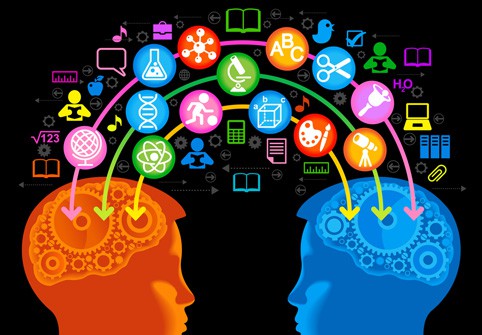
Personalized learning is a mindset and approach to teaching that focuses on meeting each learner where they are and tailoring a curriculum that considers their interests, prior knowledge and skill level, and pace. Such a demand on the teacher requires sophisticated usage of technology in a combination of personalized, blended and online learning.
Shift Your Classroom: Small Strategic Steps
For most of my teaching career, I’ve been a pretty traditional teacher (even now I slip back into that mode sometimes). However, as I went through the motions of trying to “teach” my students, something didn’t feel right. My students seemed to learn things only for the exam, were focused on the mark, not the learning that was supposed to be taking place. When the unit or semester was over, they dumped all their notes and assignments. Frustrating.
Blended STEM: LEGO Education Combines Discovery, Invention and Presentation
Boomers grew up with the colorful building bricks first developed by LEGO® in 1932. Decades of product extensions aimed at older youth created an extensive catalog of hands-on learning in science, technology, engineering and math (STEM) exploration. In 1997, through a joint venture with science supplier Pitsco, Inc., LEGO Education formed to develop innovative K-12 learning solutions around a wide range of STEM skills.
Touching the education elephant
Here's a list of 10 interesting education-related experiences from the past week. I’m intentionally casting a wide net, but it’s all focused on innovations in learning. Blogging helps me make sense of what I’m experiencing. What’s your personal learning plan? How are you making sure you get multiple touches at the education elephant? How are you making sense of it all?
5 Features of Blended Environments and More Q&A
I did a short podcast for Ken Royal today. It included the three primary benefits of personal digital learning and the five features of blended learning environments we'll soon see more of.
What Online Students Want
Online learning. It's a popular buzzword in both higher education and K-12 institutions. Each year, more formal and informal learning opportunities germinate online. Globally, many public institutions believe that "online education is critical to their long term strategy" and the number of online learners is steadily increasing (Allen & Seaman, 2008, p.3).
The Learning Mindset: Winning in the Civilian Sector
The 1% and 99% are making headlines. But I'm more worried about the 20%, the 50% and the 75%. The 20% of Iraq and Afghanistan vets age 18-24 who are unemployed, the 50% who are underemployed, and 75% who don't graduate from the programs of study that they start after they get out.
How Intelligent Scoring Will Help Create an Intelligent System
The Hewlett Foundation is sponsoring a competition that will demonstrate that automated essay scoring is already pretty good—on most traits it is as good as expert human graders. This prize competition will make it better. The reason Hewlett is sponsoring the competition is that they want to promote deeper learning—mastery of core academic content, critical reasoning and problem solving, working collaboratively, communicating effectively and learning how to learn independently.
Q&A: The Educational World Is Flat
Tom Vander Ark is an educational innovator who thinks like an engineer. He is currently the CEO of Open Educational Solutions, a partner in Learn Capital, and director of the International Association for K-12 Online Learning. Previously he served as President of the X PRIZE Foundation and was the Executive Director of Education for the Bill & Melinda Gates Foundation. He is a prolific writer and speaker, and in 2006 Newsweek readers voted Tom the most influential baby boomer in education.
Educational Management Organizations: The Rest of the Story
The NCEP, issued its annual data compilation covering educational management organizations (EMO). While the summary sounds benign, I think it’s fair to say that the NCEP hates EMOs—especially the for-profit versions. This AFT funded report is not a sympathetic data compilation. From the ensuing stories it is clear that journalists were coached on attack strategies. EMOs have the unique opportunity to develop coherent academic models and support networks where everything works together to benefit teachers and students.
4 Characteristics of Education Programs That Actually Work
“Education” is a huge conversation, but almost all of the conversation is about the education problem. There is not a serious or mature conversation about solutions. Meanwhile lots of resources and, as important, attention, are going into an ever-changing, wide variety of programs which, it is hoped, will be part of some solution. How do we know when we’re looking at any given program, whether it can have game-changing impact on K-12 schools, or has no chance? I call the former, programs that “Actually Work.” Here I identify and describe four characteristics of any program that Actually Works: Scope,Results, Robustness, and Scalability. Failure at any one of these is failure to Work.