


Archive
component:how.assessment

What is Performance Assessment?
Performance assessments are real-world scenarios that reflect the ambiguity of real-world challenges. They require higher-order thinking and problem solving. They are concluded with authentic performance. Projects are the most common performance assessment. The tools to support projects and track academic development are (slowly) getting better . Transparent evaluation criteria: the learning outcomes drive the creation of the task.
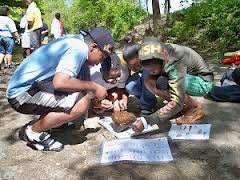
Expeditionary Assessment: PBL Lessons from Ron Berger
Expeditionary Learning (EL) is a network of project-based schools. Chief Academic Officer, Ron Berger, is a thoughtful advocate for better assessment. Check out his advice for better PBL....and his new book.

Knowing The Score: Actionable Assessment from Student Writing
The challenge is finding ways to obtain meaningful data from these types of performances, and much of my focus has been on automatically extracting information from students’ writing.
Pearson Implements Efficacy Frame & Shares it With Sector
The Incomplete Guide to Delivering Learning Outcomes, authored by Sir Michael Barber, Pearson's Chief Education Advisor, and Saad Rizvi, SVP of Efficacy, "the report shares Pearson's 'Efficacy Framework', a review process designed to evaluate and improve impact on learning outcomes, and sets out the company's strategy, initiatives and insights in applying it."
Takeaways and New Questions from EAA School Visits
I encourage you to take the time to put a team together or even a cross-district or cross-state team to go visit Nolan Elementary, Phoenix Multicultural, Brenda Scott Academy for Theatre Arts, and Southeastern Technical High School sooner than later. Michigan and Detroit have a lot of volatile political dynamics (i.e things change), and I’d hate for people to miss the chance to see what can happen when you integrate personalized, mastery-based, and blended into a “student-centered” model of learning.
Common Choice: Thin Test Prep or Deeper Learning
Higher expectations and engaging learning experiences are compatible. New college and career ready expectations will yield better preparation for American students if education leaders value deeper learning rather than resorting to stifling test prep.

Educational Excellence Starts at Home
The culture of educational excellence starts in the home," says co-author Dr. Ina Mullis. "It follows with a school that has a focus on educational success by all the parties concerned – the teachers, the administration, the parents, the students themselves. It continues into the classroom with a teacher that is holding student engagement.

New Assessments for New Skills
Without measurement the teaching of collaboration is extremely difficult. The current challenge is how to develop Collaborative Assessment tasks, particularly formative assessments that align with local curriculum, contexts and needs.
K-12 Assessment and Teacher Evaluation: Lessons from Tim’s Fifth Grade Class
Matt Chapman authors the final installment of NWEA's three part educator evaluation series focusing on K-12 assessment and teacher evaluations.
K-12 Assessments and Teacher Evaluation: Using Data to Help Teachers Strengthen Their Practice
In the second addition to this three part guest series, Dr. Anne Udall of NWEA argues that there is real opportunity for schools and district leaders to use assessment data, particularly from interim assessments, to help educators grow their expertise.