

Town Hall Recap: What’s Next in Learning 2026
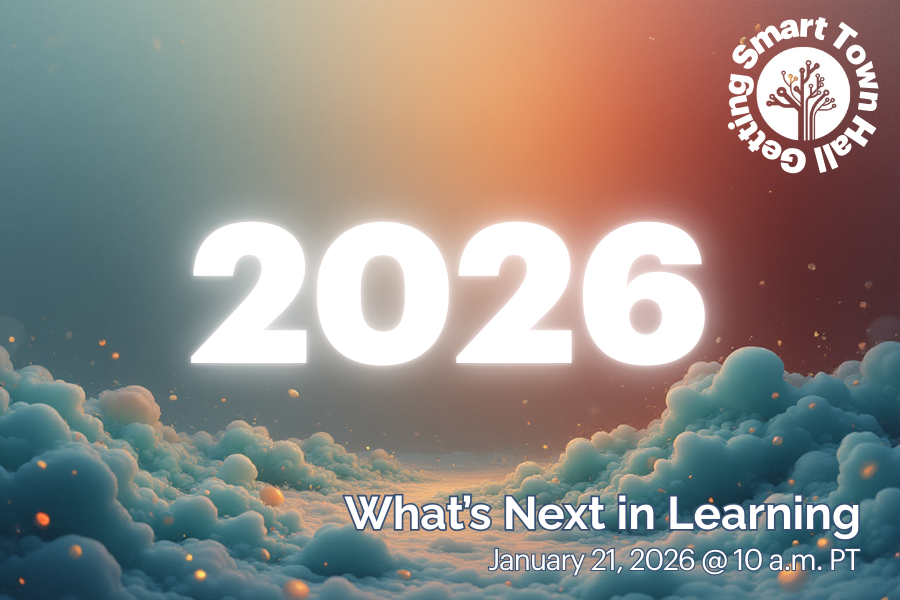
As we enter 2026, the Getting Smart team is diving deep into the convergence of human potential and technological opportunity. Our annual Town Hall isn’t just a forecast—it’s a roadmap for the year ahead. We will explore how human-centered AI is reshaping pedagogy, the power of participation, and the new realities of educational leadership. Join us as we define the new dispositions for future-ready educators and discover how to build meaningful, personalized pathways for every student.
Nate McClennen: Hello, everybody. Excited to be here. This is one of our favorite town halls of the year because, when we prep for this, we have to really reflect on what we predicted for 2025 and then think about 2026.
And every year, we say there’s a lot happening. So that’s the one conclusion we can make. Today, we’re going to do a little bit of tag-teaming here among team members and walk through a bunch of different categories. We know that this isn’t comprehensive, but we think these are some of the more important things that are going to continue to emerge in 2026 as we look at the next 12 months.
So, automation of work, of course, we’ll have a section on AI and education (EDU) because everybody’s talking about it. A section on enrollment and what that means long-term, especially in the United States. A section on real-world learning and authentic experiences. And then, to finish it up, everybody’s favorite: a section on policy.
So that’s where we’re headed today. And like I said, we’re going to tag-team. Just a little bit of a preamble—after each section, we’re going to pause for a minute and think about this prompt. It’s going to be the same prompt every single time. One of the things that we’re seeing tension around in the ecosystem with all of our great partners and friends that we work with is this idea of how we, as folks who live and work in the education system, can be responsive to emerging trends like AI or policy or whatever the case may be, while at the same time providing a clear and coherent vision to our communities—whatever community you work with.
Those tend to sometimes be in contradiction with one another. So as we’re walking through all these trends, we want you to think about and comment on how you mitigate this tension between having a clear north star—where we’re headed—but at the same time dealing with all these forces that are coming at us, some of which are out of our control.
So that’s our driving question for today’s presentation. Just to give you a sense of what we’re leaning into in 2026 at Getting Smart, we’ve been writing a lot about our learning innovation framework, and we’re thinking a lot about connection. How do we continue to connect to everybody else in the space that’s doing this work on school transformation? And how do we use the language of the framework to help align and curate our resources around something that’s logical and makes sense to everybody else in the system? When we built this, we built it to be inclusive and to have other folks feel like they belong within this based on the frameworks and logic models they have, etc.
And then the last thing we’re thinking about is coordination. Even in the innovation space for schools, we’re thinking about how we coordinate our efforts more universally—whether it’s nationally or globally—so we’re all learning from each other faster and accelerating faster, etc.
So we have a lot of ideas that we’re leaning into in that area as well. On that note, I’m going to pass it off to Tom to lead us off with automation of work.
Tom Vander Ark: Thanks, Nate. I just want to convey one idea here, and that is that in December, we hit a really important threshold that, for me, signals that the world is forever different—both in terms of threats and opportunities—and that has some significant implications for youth development and education.
In 2025, we were three years into this age of AI, and 2025 saw the rise of AI agents—not just chatbots or answer bots, but AI agents actually doing valuable work for us—and the rise of vibe coding. This term was just invented 12 months ago. The idea of software actually creating, using natural language as the coding interface.
These ideas have come together to spark the beginning of widespread automation of knowledge work. In November, McKinsey said current capabilities could theoretically automate 57% of U.S. work—probably more accurately, 57% of the tasks of knowledge workers, not full jobs, but valuable tasks. A few days later, on December 11, OpenAI released GPT-5.2, and it remarkably outpaced human experts in 44 occupations in measures of economically valuable tasks on a benchmark they created called G-G-D-P-V. This is a big deal because it is the first time at scale across multiple occupations that these large language models have demonstrated expert-level or better expertise, and they did it 11 times faster and for 1% of the cost. It’s a remarkable demonstration.
Then, on Christmas Eve, Anthropic released Claude 4.5, which some people thought was even better. It caused a lot of murmuring from Christmas to New Year’s that we had actually achieved artificial general intelligence (AGI). It seems clear that now the three big models—Gemini, GPT-5.2, and Claude from Anthropic—are clearly at the AGI stage. These major models are doing valuable work at scale.
I think it has a lot of big implications. One of the first unpleasant ones is that we saw in the fall just an explosion of AI spam. “AI spam” was the word of the year according to Merriam-Webster. Like me, you probably got an inbox full of people doing automated marketing.
The headline implication here is that there’s a paradox of opportunity. Recent college grads and those coming in may likely find difficulty finding a job. I think this is just the beginning of rolling employment disruption that will mark the second half of this decade.
This is sort of a wonky venture observation, but one thing that happened in 2025 is that venture capital investors, 18 months ago, were thinking about how AI could replace SaaS (software as a service). Last year, when they observed how good these systems were at automating human labor, they started thinking not about replacing software but about replacing people. Suddenly, instead of looking at a few trillion dollars of SaaS software, they started looking at the multi-trillion-dollar human labor market as the TAM (total addressable market). That’s what’s behind this AI bubble stuff. It’s not a bubble if you think the opportunity set is replacing human labor.
So that’s kind of a scary prospect. It’s likely going to be hard to get a job. At the same time, it’s never been easier for AI-capable adults to step into value creation and begin immediately solving real problems, creating value for themselves, their families, and their communities—to step into entrepreneurship, social entrepreneurship, or business entrepreneurship.
This amazing paradox is what is facing young people. The last thing is I think this threshold we’ve reached, where we’re beginning to automate work, has big implications for education. Nate will talk about that, but it at least requires us to take seriously the call for AI literacy. I hope that many systems not only focus on AI literacy this year but also on AI capability. Victoria talks about AI dexterity. Our friend Mike Yates at TFA says we don’t need young people who are just AI literate, who know about it, or who are aware of it. They need to be able to use smart tools to make a difference and make a contribution.
In addition to that, I think it’s time for what Charles Fadel calls a modern emphasis on agency, creativity, critical thinking, curiosity, curation, applying judgment, emotional intelligence, and adaptability. Nate talked about the Getting Smart framework. These are the first two important steps of creating a community vision and updating learner outcomes. I think we’ve reached a threshold where it’s time to have a community conversation and update our learning goals.
Nate McClennen: Yeah, and we’re seeing a lot of work, and I think it’ll continue in 2026, around this parallel work of portraits of graduates. What are the durable skills and transferable skills that are needed to thrive in the age of AI? This work is combined with the ongoing standards-based literacy work in mathematics, English language, etc. So, there’s this parallel track, and those who can merge those and bring them together—it’s going to be interesting.
As we move to the next section, specifically talking about AI in education, again, think about this: we have these emerging trends in the workforce and this massive disruption. What new jobs or opportunities will be created for the young people in the system now to thrive when they’re older? How do we predict those? How do we help set them up? I think things that are durable—communication, collaboration, creativity, curation—all these things are going to be really, really important, and we need to lean into those.
So, let’s talk about AI. I broke down this section into just a couple of very specific things that we’re seeing and our predictions for 2026. I wanted to start by just doing a quick review. This is the slide I had last year, and this was our prediction for 2025. I think, generally, all of these have come true. Deep research—people are now doing this whenever they want with AI. Large language models—video continues to accelerate. The friend-dependent brand hasn’t quite emerged, but companions, which I’ll talk about a little bit, are continuing to grow. Agents, for sure, as Tom talked about. I think many schools now are using some sort of AI platform that is ubiquitous and attached to their desktop. Most people are using Brisk or Magic School. That was not the case at the beginning of 2025; it has spread like wildfire. Policy—more and more has emerged in policy over the last year. And, of course, personalization continues to be something that people are working on. So, I think we did pretty well last year. Let’s see how it trends out for our predictions for 2026.
A couple of things that we’re seeing: Number one, as Tom alluded to, is AI literacy. With more people using AI, there are more and more education AI literacy options out there. We know that teens are using more AI chatbots. Pew Research says 64% of teens say they’ve used chatbots, and three in 10 use them daily. I think that’s an underestimate. In the last couple of months, 84% of high school students reported using generative AI for schoolwork. I think this is going to get closer and closer to 100%. Schools are responding, and AI literacy programs are growing. I wanted to call out just a few different schools that are actually leading the charge as AI-first schools—not to say that every school has to do this, but some are. Gwinnett County Public Schools is leading with their framework, and you can find that online. All the schools in the district are adhering to this AI-first framework and helping develop young people to thrive in an age of AI. Ypsilanti, Michigan, as part of the Future Learning Council, just named the nation’s first HP AI Spotlight School. So, there are these opportunities to become high levels of AI literacy in schools. I think we’ll continue in 2026 to see more and more schools adopt that at all levels so that students understand what they’re using.
The second category is AI for learning. This is a great paper that just came out in November: AI Tutoring Can Safely and Effectively Support Students: An Exploratory Randomized Control Trial in UK Classrooms. You can see on the left here that when you go into this paper—and we’ll put it in the show notes—you’ll see how it’s a human-assisted tutor. The humans are responding and checking the responses of the AI tutor. We think in 2026, this is the holy grail. People are going to continue to push this over and over, and it’s not going to be separate from a human; it’s going to be in partnership with a human, at least at first. That ties into where else AI for learning will happen. Vibe coding is the one that I’ve been using. AI Studio also has a model that allows you to build sites. I think there’s going to be a lot of creative enterprise with young people, and that’ll help improve student outcomes, especially around the durable skills world. Of course, as we talked about, if you finish school in two hours a day because you’re getting your literacy skills, then what happens the rest of the day? There’s this byproduct that might happen where we need more real-world experiences because AI is helping young people learn faster and giving them access to better tools. We think that in 2026, this is going to keep pushing. There’s so much money going into this and investment that it’s an important one to consider.
AI decisions—this is a great partnership between Learner-Centered Collaborative, ED3, and Getting Smart, where we started to say that every teacher is going to have access to a bunch of tools. It’s going to be our decision to think about how we’re using these for positive, enriching learning versus negative, eroding learning. By negative, it’s not intentional harm to students; it’s about cognitive offloading, standardization, compliance, digital reliance, and things like this. So, we always want to think about how AI across, say, the SAMR framework—substitution, augmentation, modification, redefinition in technology—can improve critical thinking, creativity, learner agency, etc. These are the things we need to use AI for. There’s going to be increased decision-making at the educator level about the use of tools, whatever’s permissioned by the districts or schools.
To finish this off, there’s, of course, going to be AI for efficiency. Agents for all educators and education leaders—we think this is going to grow in 2026. Every teacher, eventually—whether it’s in 2026 or beyond—will have their own agents. If it’s as simple as using Gemini, those are agents that can help you become a better teacher. Education leaders can use them to create more efficient systems with all the work they have to do to keep systems running. We’re also seeing some of the big large language models catering to education. A free version of ChatGPT was just released, built for teachers. It’s free through June 2027. You can see the play here—the investment money coming in. They’re trying to attract bigger audiences. Transform education with Gemini—if you’re a Google site, that’s happening where there are education-specific platforms. Thinking about how to use those in this AI-positive way is going to be important because there are going to be a lot of options.
Nate McClennen: And then finishing up with AI for companionship. We alluded to this earlier—there’s increasing use of AI, regardless of whether it’s in school or not. Young people and adults are using it for emotional support, advice, and entertainment. A recent survey by Common Sense Media, conducted about a month or two ago, found that 72% of respondents have used AI companions for support, advice, or entertainment. What impact will this have on schools, districts, and learning organizations in 2026? It is profound. It’s an outside force, and even if it’s not allowed during the school day because media or technology isn’t permitted, it’s happening outside and around schools, and it will impact education.
So, there will be pushback, and there are a couple of big areas of pushback. The United States is leading in being the most reticent and least trusting of AI compared to other countries. We have a bit more hesitancy around adoption, even though it’s happening and investments are being made. Brookings just released a report in December, stating that at this point in its trajectory, the risks of utilizing generative AI in children’s education overshadow its benefits. They’re talking a lot about cognitive decline and preventing learning.
The other thing that’s happening, because we have midterms coming up in the fall, is that this is going to get really political very fast. Politicians are going to take a stand, and there will be advocacy campaigns pushing and moving school districts, school boards, and schools in different directions based on the platforms and media we’re receiving in this politically charged environment.
I’m going to pause there for a second. There are a lot of comments coming through that I’ll take a look at, and I’ll hand it off for enrollment.
Victoria Andrews: Alright, thanks, Nate. I know that was a massive overview of AI and its impact on education. I’m going to discuss a little bit about enrollment and its impact on education. Let’s start by looking at some of the trends we’re noticing across the country, what they mean, how we can respond, and what are some examples of how people have already started to respond.
Here are some national headlines that are signals for us. We know that school closures are happening across public districts in the country, whether it’s in Washington or Colorado. The decline in enrollment is making a major impact on public education. The reasons for the decline will vary based on location, but we cannot ignore that schools and districts are facing rising costs as well as declining enrollment. So, what do you do with that tension? As Nate stated at the very beginning, we’re going to continue to discuss the various tensions. How do you continue to march toward your mission and vision when you’re looking at a decrease in funding because of a decrease in enrollment?
Some of the impacts of the decline in enrollment are tied to birth rates. People are having fewer children, and so fewer children are in school. Another massive impact on the decline in public education is the aggressive immigration policies we’re seeing across the nation. Once upon a time, schools were indeed safe havens, but families are not necessarily feeling that safety anymore. It’s interesting to see how different communities are responding to that, but it is, in fact, impacting public school enrollment. We’re also seeing an increase in private choice, which is something I highlighted last year as it related to enrollment.
I really appreciate The 74 for this landscape overview. As you can see, projections through 2031 show that not every state across the country is seeing a decline. There are some states—whether it’s because of the attraction of lower costs of living, geographic location, or various policies—that are seeing an increase in enrollment. However, the greater majority are, in fact, seeing a decrease.
As mentioned before, under the umbrella of school choice, we’re seeing the expansion of education savings accounts (ESAs). Right now, there are 19 states with ESAs. This time last year, Texas, where I’m from, was trying to decide on this, and it is indeed moving in that direction. We continue to see more states adopting ESAs, tax credits, and other forms of private choice. Nate’s going to get into it a little bit later when discussing the state’s approach to the various accounts available to parents when it comes to making more choices and having more options for their young people.
With declining enrollment, it’s going to hurt the bottom dollar, but it also means there’s competition. Just like with anything, if you have the opportunity for competition, what happens in that space? We mentioned ESAs. Homeschooling families are increasing, and they have more options. It’s not just about going to Lakeshore to get a workbook and teaching your student. They have options like OutSchool, Acton Academy, and Prenda. We’re seeing more independent microschools, and we’ve supported a couple of those over the last two years with our Learning Innovation Fund grants. We’re also seeing something that hasn’t happened in a very long time: private school enrollment is increasing. This is partly because some of these smaller microschools fall under the umbrella of private schools, which can impact the data. It may not be the traditional mindset we have around private schools or what people often call independent schools. However, we’re also seeing some very creative independent schools, such as Alpha, which I’m sure many of us have heard about. Shawnee is going to talk a little bit more about that in the next section. We’re continuing to see choice programs flourish across the country.
With more options, we have to take a different approach, especially for public entities. We can’t just rely on the bus stopping at the house at the end of the block and all the kids going to that school. Parents and families have so many more options, which means this is an opportunity to become a little more innovative.
Public districts are going to need more aggressive marketing campaigns. This is often an area that many public districts have taken for granted, assuming that whoever lives in the neighborhood will show up at their schools on the first day. That’s not the case anymore. Some examples I want to highlight include the Indiana Microschool Collaborative. I don’t know if I saw George Philhower here, but I had the opportunity to visit this public microschool, which is free. He is the superintendent, and he reached out to homeschool families to ask, “What are we not doing? Why did you leave? What can we offer?” Just taking that approach of public and private partnership is something we’re going to see more of.
Victoria Andrews: Hearing those concerns, George worked with some of those families and created the Indiana Microschool Collaborative. Tom sits on their board. I’ve had the opportunity to see it in action. The public microschool is situated on a campground that is not being used Monday through Friday. It has a kitchen, lots of outdoor space, and a creek—I believe it’s situated near Nameless Creek. You see children in multi-age groupings, fully embracing nature. You see place-based learning at its finest, and you see families that are truly pleased that this was even an option. They’re looking to expand more microschools within that collaborative.
Another great example of an approach to aggressive marketing is Fall Creek in Wisconsin, home of the Crickets. It’s a small rural district with about 800 students, but they did not take those students and their families for granted. They activated and engaged their community. They said, “We don’t just want you to come to football games on Friday nights. We want you to feel like you’re a part of our community forever.” They had initiatives like “Take a Picture with Your Fall Creek Swag Across the Country.” While the district has roughly 800 students, if you go to any of their social media sites, they’re approaching 2,000 followers and beyond on platforms like Facebook. They’re utilizing their assets and thinking creatively.
The final example is in Forney, Texas, about 30 to 40 minutes outside of Dallas. The Opportunity Central (OC) initiative is a unique and innovative approach led by their superintendent. The facility allows for student-run businesses as well as businesses from the community. They’re bringing the community in, no longer keeping them at bay. Of course, we know word of mouth still goes a long way. They’re able to see themselves as a part of the learning environment.
With any kind of situation, especially when it gets tense or tight, it’s an opportunity to innovate. We hope you can look to these examples and more. If you’re doing something innovative in response to declining student enrollment, please share that in the chat. I’m going to pass it off to Shawnee.
Shawnee Caruthers: Thank you, Victoria. We’ve heard a lot so far, and now we want to dive into authentic experiences. Tom surfaced this at the beginning when he talked about inviting students to feel accomplished. One of the best ways to do that is through authentic experiences. Victoria referenced enrollment decline earlier. How can we ensure that students want to come to school? By giving them something valuable to connect to—authentic experiences.
When we say “authentic experiences,” most people think, “Oh, that’s a great idea,” but we don’t all mean the same thing. Authenticity doesn’t just mean hands-on or project-based. It’s about doing work that goes beyond the gradebook. It’s about putting students in front of a real audience, doing real work, and making a real contribution. This is where students stop asking, “Is this for a grade?” Instead, they start asking, “Did this work?” because they’re diving deeper.
As leaders, when we provide these super-engaging experiences for students, we want to ensure they are responsive and coherent. Being a responsive leader in this space means meeting learners where they are. There’s no prescribed notion of school because students are different every year. You need to cater the experiences to the students in the building at that time, leverage community assets, and allow for multiple pathways to mastery and success.
To ensure clarity and coherence, it’s about measuring what matters. Define the quality of real, authentic learning experiences. The experiences shouldn’t just be random acts of innovation; they should be designed systems with guardrails. When we build abundance and social capital through engaging experiences, we shift from seeing students through a deficit lens to an asset-based one. Regardless of their zip code, every student has something valuable to offer.
Why does this matter? Because trust grows—not only between students and adults in the school but also with the community. Communities want to keep students there, and students need to see themselves as part of the community. These engaging experiences don’t just happen in classrooms or formal programs. They happen everywhere—in neighborhoods, local businesses, and faith spaces. Opportunity and learning can happen anywhere.
We’ve done a lot of work with the Kauffman Foundation around real-world learning. Real-world learning invites learners to think beyond the high school diploma. The goal for real-world learning is that by 2030, all students will have access to what we call market value assets. These can look different for each student but generally include client-connected projects, internships, entrepreneurial experiences, college credit, or industry-recognized credentials. These experiences ensure students are set up for success before they leave high school.
You’re probably familiar with the CAPS Network, led by our friend Corey Moan. They have 120 sites advancing professions-based learning. When you walk into CAPS, you’ll see learning happening everywhere in a truly authentic way. Students are in charge of their learning. They have agency, and the adults are there to facilitate, but the students are leading. Another network is the Student Ready Success Network in Missouri. It has taken the notion of real-world learning from a pocket in the Kansas City ecosystem and spread it across the state. Seventy Missouri districts are advancing real-world learning and competency-based education (CBE), showing how these approaches go hand in hand.
P-TECH is another example, with 300 career-based STEAM early college high schools offering work-based learning. Each high school may approach it differently, but the goal is the same: to ensure students have experiences beyond the classroom. For example, the U.S. government’s EPIC (Employee Provided Innovation Challenges) program allows students to engage in meaningful work connected to real-world problems.
Shawnee Caruthers: Moving back into our driving question: In a rapidly shifting world, how do we both respond to these emerging trends while providing a clear and coherent vision to our communities? How do we do that through the lens of engaging experiences?
When we think about engaging learning experiences, we do a lot of work with the Kauffman Foundation around real-world learning. Real-world learning invites learners to think beyond the high school diploma. The goal for real-world learning is that by 2030, all students will have access to what we call market value assets (MVAs). These MVAs can look different for each student but generally include client-connected projects, internships, entrepreneurial experiences, college credit, or industry-recognized credentials. These experiences ensure students are set up for success before they leave high school.
You’re probably familiar with the CAPS Network, led by our friend Corey Moan. They have 120 sites advancing professions-based learning. When you walk into CAPS, you’ll see learning happening everywhere in a truly authentic way. Students are in charge of their learning. They have agency, and the adults are there to facilitate, but the students are leading. Another network is the Student Ready Success Network in Missouri. It has taken the notion of real-world learning from a pocket in the Kansas City ecosystem and spread it across the state. Seventy Missouri districts are advancing real-world learning and competency-based education (CBE), showing how these approaches go hand in hand.
P-TECH is another example, with 300 career-based STEAM early college high schools offering work-based learning. Each high school may approach it differently, but the goal is the same: to ensure students have experiences beyond the classroom. For example, the U.S. government’s EPIC (Employee Provided Innovation Challenges) program allows students to engage in meaningful work connected to real-world problems.
Here’s an example of what this looks like: Real-world learning and EPIC invite students to go deeper. The goal is to ensure that no matter where students are or what their background is, they truly have access to opportunity—equitable opportunity. Victoria mentioned the Alpha School earlier. Alpha asks a dangerous question: What if academics don’t need to happen all day? That can be a little uncomfortable for some traditional learning systems. At Alpha, students complete their core academics in about two hours a day. But what happens with the rest of the day? It’s not just free time. It’s time freed up for life skills, leadership, entrepreneurship, and real-world problem-solving.
They’re not the only school doing this. There’s a school here in Kansas City called De La Salle that has a real-world learning block. For freshmen, it might look like going off-campus to a different entity that provides those experiences. For other grades, it might look like going out into industry and diving into client-connected projects. Our friends at History Co:Lab allow students to make meaningful connections through cultural institutions. Carving out time for real-world learning is key so that innovation isn’t random but intentional.
When you put all these things together, we have to ensure that students have the agency to walk through these experiences. As we build more entrepreneurial experiences, for example, we need to engage our Chamber of Commerce systems. Chambers are another way for students to have high-value learning experiences and dive into community-based ecosystems. Why do chambers matter? Because they’re the intersection of business, policy, and talent—not just for adults, but for kids too.
In the Shawnee Mission School District, they’ve started a student Chamber of Commerce. Students don’t just visit businesses; they run the ecosystem. They recognize that students have a strong and powerful voice. Students are creating more and more businesses every day, and they need a support system. Now, there’s a student Chamber of Commerce that provides support for student-run businesses, offers funding, and even includes membership in the Chamber of Commerce ecosystem. Here in Kansas City, 120 students have built a functioning student chamber that mirrors real civic and economic structures traditionally seen with adults.
Some more headlines: As Victoria mentioned earlier, apprenticeships are having a moment. Apprenticeships are another example of deep real-world learning experiences. Headlines like “Apprenticeships Are No Longer Plan B, They’re a Power Move” and “Apprenticeships Are the New ROI in Education” are becoming more common. Apprenticeships are where education meets economic reality. By diving into apprenticeships and client-connected projects, students are now able to answer questions like, “What did you do in high school?” or “Give me a time when…” during mock interviews or real-world opportunities.
Nate McClennen: All right, thank you, Shawnee. That was awesome and highlighted a ton of work being done around real-world experiences. We’ve had a bunch of questions coming through, and I think what we’ll do is wrap up with a couple of slides here and then open it up for some conversation. There are some really good questions around this idea of real-world experiences. We all believe in them—at least the chatter suggests we do—but how do you credit them? How do you get them included so that they count for something? We talked a little bit in the chat about seat-time exemptions and things like that. If you have insights there, please add them, and we’ll have that conversation in a minute.
Let’s finish off with everybody’s favorite: policy. We’re calling this section “State-Level Governance,” but it’s really about policy in general. There are three different things we wanted to share here that are shaping what’s going to happen in 2026.
First, we thought state influence would continue to increase. I think that’s going to be true. On the right-hand side, the U.S. Department of Education has a very clear statement about returning education to the states. However, yesterday, Congress moved to pull back a lot of the proposed cuts. So, the Department of Education is looking more and more like it’s going to be more fully funded than expected over the last six to 12 months. This tension—who controls what, the money flows, the power flows, decision-making, etc.—is something I suspect we’ll continue to see in 2026, with states taking more of a lead. It will be interesting to see what happens with the money flows in this area, which have been a little tumultuous over the last 12 months.
Nate McClennen: Let’s move on to the second point regarding policy: the growing trend of backpacking student funding. Victoria already touched on this earlier. You’ll see another version of the map here, showing K-12 tax credit policies. It’s not comprehensive because there are a lot of different types of policies, but I want to highlight one that I think is the sleeper for 2026. It’s the growing conversation around how to use the Educational Choice for Children Act (ECCA) funding. This act was included in the omnibus bill and allows for a 100% tax credit—up to $1,700 per taxpayer—that goes to a scholarship-granting organization (SGO). These SGOs can then distribute that money to students in their particular community or region.
What’s interesting about this is that it’s a full credit. If you donate $1,700 to the SGO, you get that back as a credit on your taxes. For the individual, it’s a zero-change transaction. However, the governors of each state have to approve the law going into effect. This will put pressure on governors, especially in blue states, to decide if this is worthwhile. It also raises questions about whether public schools and public school foundations can use this funding. It’s an enormous amount of money—uncapped except at the $1,700 level per taxpayer—but it could mean billions of dollars flowing into states via these SGOs.
Right now, we don’t have the architecture in place to make this happen, so the next 12 months will involve significant preparation. This could be a boon for public education and for parents who are thinking about backpacking their money. It’s something to watch closely in 2026.
The third point is about literacy and the science of reading. The science of reading reigns supreme and will continue to do so in 2026. Almost every state—and likely more states—will move toward this approach. We’re seeing a return to phonemic awareness and evidence-based literacy instruction. This shift is responding to a literacy challenge we know exists in core literacy skills.
However, one of the best observations we’ve made is that the science of reading alone will not work in 2026, despite policy changes, unless it’s connected to the science of learning. Just because you have a policy on the books and provide a curriculum to a teacher doesn’t mean students will automatically become better readers. It needs to be combined with great pedagogy, meaningful classroom experiences, and evidence-based practices. This will be a significant focus in 2026 as more states adopt science of reading policies.
We’ll leave it here with our driving question: In a rapidly shifting world, how do we respond to these emerging trends while providing a clear and coherent vision to our communities? Tom, you started us off. What’s your reaction as we think about closing this discussion?
Tom Vander Ark: I want to acknowledge that we surfaced some tension around the idea of districts shrinking, which is a difficult and complex challenge. Districts are not well-suited to shrink because many of their costs feel like fixed costs. I want to appreciate Diana Berg’s contributions on this front. She talked about austerity services that help districts shrink strategically while becoming more nimble, perhaps in a smaller size, and perhaps as part of a more collaborative, evolving ecosystem.
It’s super challenging to shrink while simultaneously playing offense—being more aggressive about marketing, program development, and creating new opportunities. You’re talking about developing new programs and schools while potentially closing others. Diana, anything you’d like to add about balancing defense and offense simultaneously?
Diana Laufenberg: Yes, I work with a lot of schools that get into a bind over scheduling and utilization of staff. I had this conversation four times last week: How do we do what’s best for students under these conditions? A very unfortunate but necessary statement that often comes up is, “We are doing the best for students within our budget.” It’s a hard pill to swallow when you feel like you’ve been doing something beneficial and seeing growth, only to have to change due to budget constraints.
What I often tell people is that you have to start as far away from the classroom as possible when making cuts. Cut to the bone in other areas before you ever touch a teacher’s classroom or remove support there. That’s how you can keep moving forward under these tricky circumstances. Having a clear mission and vision is critical when making these decisions. What are you trying to do? Keep the cuts as far away from that core work as possible.
Tom Vander Ark: Thank you, Diana. We appreciate your work and how you’ve acknowledged the unique challenges of our time. Many administrators are facing new and existential challenges. In this period, inviting them to take on an abundance mindset, to be collaborative and creative, and to build community rather than dismantle it—it’s super challenging. Nate, it feels like that’s the work of 2026.
Nate McClennen: Agreed. How do you press forward with a sense of abundance and opportunity while facing all these pressures? That’s the big question.
Shawnee Caruthers: Thanks, Nate. I just want to remind everyone that young people don’t lack motivation—they lack meaningful problems. We always talk about inviting young people into meaningful work. Engagement spikes when learners have work that matters. Regardless of the AI advancements or other trends, we must remain uniquely human-centered. The way we do that is by giving young people work that truly matters—work that connects them to meaningful problems in their communities so they feel engaged and connected.
Nate McClennen: That’s a great note to end on, Shawnee. We appreciate everyone’s insights today. Thank you all for attending.
Links
- Finland’s Approach to Combating Fake News in Classrooms
- Amanda Bickerstaff on AI Literacy and Futurism
- AI Literacy Toolkit by AI for Education
- Micro School Collaborative
- Enhancements to 529 Education Savings Accounts
- Philadelphia’s Career-Connected Learning Program
- CTE Policy Watch: FY 2026 Funding Bill
- Building 21’s Launchpad Program
- Inquiry Schools’ Created Materials
- Purpose-Driven Expertise by Joseph South
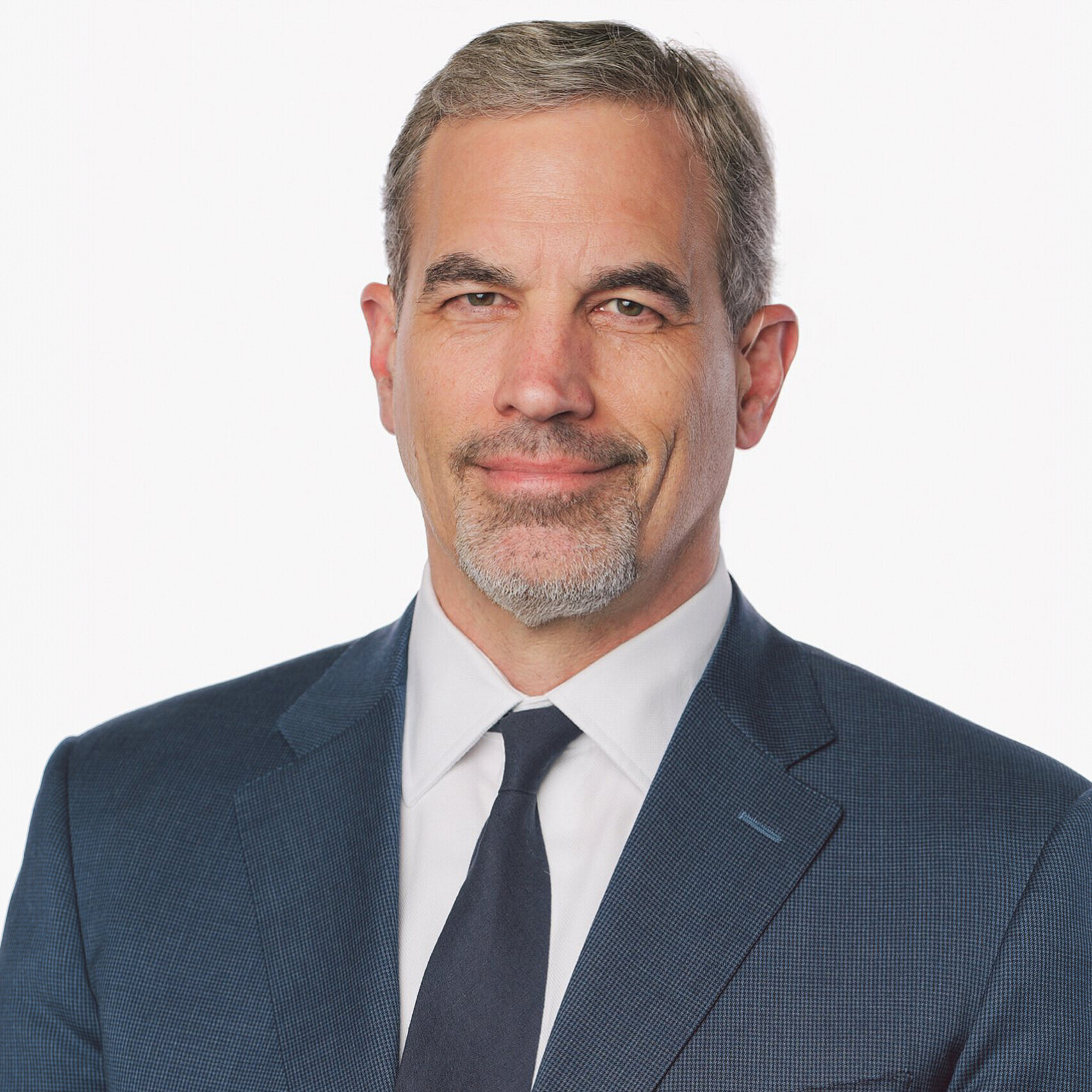
Tom Vander Ark

Nate McClennen
Shawnee Caruthers


0 Comments
Leave a Comment
Your email address will not be published. All fields are required.