


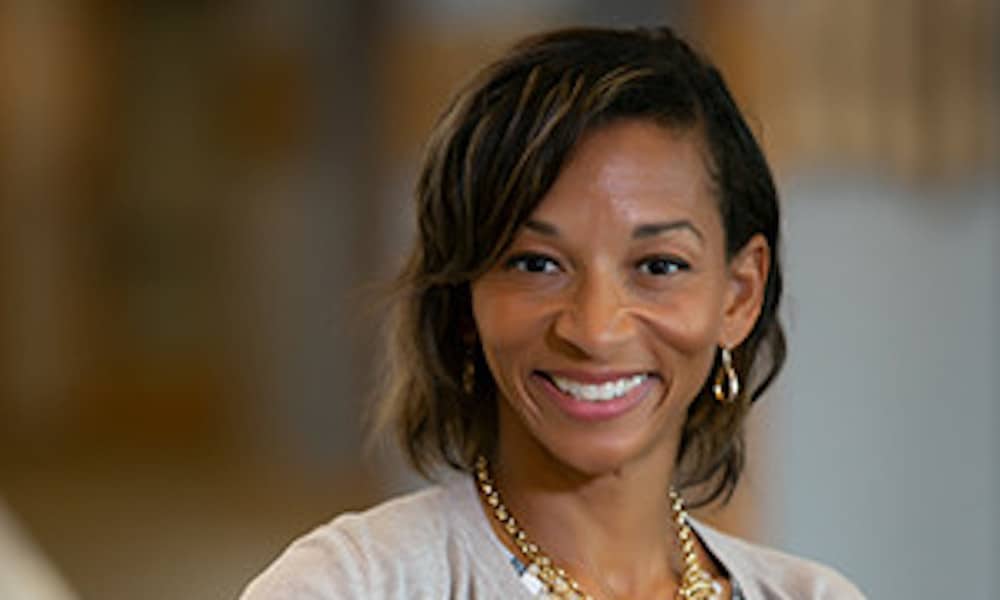
Podcast: Lia McIntosh on Community Development
Key Takeaways: [1:21] Did Lia grow up in Missouri? [1:29] Why did Lia decide to study business? [2:04] Did Lia grow up Methodist? [2:17] How did Lia get an internship at Procter & Gamble? [3:33] Lia shares how her internship led to a job opportunity after college. [3:47] Did Lia enjoy her time at P&G? What did the experience teach her? [4:28] Why did Lia choose to go to a seminary? [6:06] Did Lia find that this experience was well-aligned with her personal values? [7:24] Lia shares her perspective on what it is like to lead a church. [9:08] Wayne ‘Coach’ Gordon speaks about CCDA and community development. [9:53] Tom and Lia continue their discussion. [10:20] Would Lia agree with the idea that you’re always “on” as a community leader? [11:18] After a decade of serving several congregations, Lia decided to join the Kauffman Foundation. What originally drew her to the foundation? [13:02] Does Lia feel that all of her prior experience has really prepared her for her role at Kauffman? And how would she describe the work that they do at Kauffman? [14:29] Lia explains what the Education Fellows Program at the Kauffman Foundation is all about! [16:49] How many Ed Fellows are there this year? And when does the program start and wrap up? [17:15] Lia details what the Ed Fellows Program looks like and what they’re advocating for. [18:55] Tom speaks about the schools he, Lia, and a group of Ed Fellows have visited together. [20:01] Lia gives an overview of what she saw at Lawndale. [21:21] Jessica shares an important resource: Getting Through on GettingSmart.com. [22:03] Tom provides some background about Lawndale and Lia gives her reflections. [23:08] Lia gives her thoughts on one of the themes Coach talked about during their trip: loving in a holistic way. [24:39] Tom speaks about Lawndale’s pastors’ commitment to the community. [25:34] Lia talks about another important theme in Lawndale’s community: empowerment. [27:27] The role ownership played in Lawndale’s success. [28:18] Coach shares his story of moving to Lawndale in 1975 and why he also believes in the importance of committing to place. [29:56] Tom and Lia continue their discussion on the themes of ownership, empowerment, and commitment to place at Lawndale. [31:15] Coach provides his thoughts on community. [31:49] Tom and Lia discuss the Christian Community Development Association (CCDA) Conference and why it is of importance to the Kauffman Foundation. [35:20] Lia gives advice to other foundations that are trying to approach community development in a thoughtful way. [36:44] Lia gives her closing thoughts on the importance of community during times of crisis.[39:12] Tom thanks Lia for her community-building work and for joining the Getting Smart podcast! [39:52] Jessica closes out the podcast by thanking Lia once again and thanking listeners for tuning in.
Mentioned in This Episode: GettingSmart.com/GettingThrough Ewing Marion Kauffman Foundation The Kauffman Fellows Program Lia McIntosh Lawndale Christian Development Corporation Christian Community Development Association (CCDA) Wayne ‘Coach’ Gordon INROADS LEAP Innovations 1871 Cristo Rey Network William Julius Wilson
For more, see:
- The Growing Need for Online Teachers
- Voices from the Field: Insights into the Future of Learning
- Getting Through: Leading Through and to a New Generation of Learning Systems
Stay in-the-know with innovations in learning by signing up for the weekly Smart Update.
Transcript
This transcript has not been edited for spelling accuracy.
You’re listening to the Getting Smart podcast where we unpack what is new and innovative in education. I’m your host Jessica and today we’re going to explore community development with a couple of experts we know. Leah McIntosh is a marketer, organizer, pastor, and now grantmaker.
She leads the Education Fellows program at the Kauffman Foundation in Kansas City. The program’s goal is cultivating community leaders who are advocates for education. It’s a nine month opportunity for 37 civic and faith leaders to learn and travel together. The Getting Smart team had the opportunity to plan and facilitate several site visits with the Ed Fellows.
After Leah’s remarkable story from marketing to ministry, Tom and Leah discuss what’s been called the Laundale Miracle. It’s the transformation of a low income community in West Chicago. It’s a great story of patient and persistent community development sparked by Wayne Coach Gordon and Laundale Christian Development Corporation.
Tom and Leah recently visited Coach in Laundale and were fortunate enough to see what he is building with CCDA. In today’s podcast, you’ll hear snippets from Coach himself from that visit. Leah McIntosh, welcome to the Getting Smart podcast. Good morning and thanks for having me.
Did you grow up in Missouri? I did. I grew up in St. Louis, Missouri. Born and raised there. Why did you decide to study business at Mizzou?
Well, Mizzou first off is our flagship campus in the state. So it was accessible and they were providing scholarships and the business school was one of the programs that was available. My mom also worked in business as a salesperson in the transportation industry. And I would see her leave home every morning with a briefcase and a suit on and she looked
fantastic. So I thought that might be a fun career and decided to study business. By the way, did you grow up Methodist? I did not. I grew up Lutheran, Missouri Synod.
No kidding. I married a Missouri Synod Lutheran. We’ll come back to that in just a minute. How did you get the internship at Proctor & Gamble? In high school, there was a program called Inroads.
It still exists today. It’s a nonprofit organization founded in 1970 by a gentleman in Chicago. And his vision was to provide a talented minority youth, an opportunity to engage with business and industry and thus become community leaders and to create a diverse workforce. That program recruited kids in high school and stayed with them for six years.
So starting my junior year in high school. We did Saturday school to learn what we call soft skills today about being in a business environment and also took academic classes to make sure we were strong. Through that program, Inroads, they matched us with companies to become interns. And that company just happened to be Proctor & Gamble in St. Louis as a junior in high
school. And I worked with them all through college in the summers and my senior year in high school before going to college. Wow, that’s a great opportunity. And that led to a job after college, right?
It did. Proctor & Gamble for 12 years in sales and marketing after college before leaving and then going on to seminary. Was that a great experience at P&G? A great company, wonderful people.
And it gave me a foundation for leadership, for understanding systems. So it was wonderful training ground. In my role, I traveled about 75% of the time. And after a while, that lifestyle was tough and my husband and I decided to settle down a bit.
And so I transitioned at that point. But a great company. And I still have quite a bit still invested with Proctor & Gamble. So I hope it continues to do well. It seems like you had a great career.
So why seminary? Well, at the point in my early 30s, as I began to settle down a bit, had gotten married at that point, I found myself asking, what do I want to do with the rest of my life? And really since that I needed to go on a personal journey. And one of the quotes that struck me at that time was from Mahatma Gandhi.
And he said, the best way to find yourself is to lose yourself in the service of others. And for me, that connected with my faith and with ministry. The church we attended at that time, our pastor was Emmanuel Cleaver, who’s now Congressman Cleaver, US Congressman, serving our district. He was the pastor and a congressman.
And I thought, wow, that’s leadership. So I followed those footsteps to some extent and went on to St. Paul School of Theology. That was right in Kansas City. And became a pastor.
And pastor churches for 10 years before before transitioning. That was in a Methodist denomination, right? Yes. So my husband had been a lifelong Methodist. And when we got married and I moved from St.
Louis to Kansas City, we attended his church, which happened to be a United Methodist church, which I found to be much more progressive than my Lutheran Missouri Senate experience. And women were leading in ministry. There were lots of opportunity to serve the community. And that really connected with my heart.
Right. Well, the Methodists are Wesleyans and I think really stress, love your neighbor as yourself and and really teach more responsibility. And it sounds like that was well aligned with with your personal values at the time. Is that right?
Well, absolutely. My family, very important part of our life. And so community and family have always been the center of our life. And as African Americans, the history of our people, the stories that my parents told always included community.
So there were there was no other way to be except with one another serving and helping each other or we literally would not make it. And so from a faith standpoint, when I saw a whole community of faith doing that, it it was the right fit for me. And I would say my Lutheran Missouri Senate church in school, I went to Christian school
K all the way through 12 in St. Louis. And that was sponsored by the Lutheran Missouri Senate church, which is how we became Lutheran. So it also had a big commitment to the inner city community in St. Louis in particular. Leah, I would love just a reflection on leading a church because today we’re talking about community development.
And most of our listeners are our teachers and school leaders or system leaders. And they might be unfamiliar with the the the role of leading a faith congregation and maybe just a quick reflection on the nature of that challenge. What’s it like and maybe both the the challenging part and the rewarding part of leading a faith congregation?
Well, as an ordained past star, we take a vow, a lifetime commitment to the principles of our faith. And being ordained to lead includes four things. We lead in word, which means that the words we speak, most people think about preaching on a Sunday.
So that is important. Sacrament, which for us is Holy Communion and its baptism. So it’s inviting people into a way of life, of discipleship. The third is order, which is we vow to help order and organize the church, which was very much like my business experience and in service.
So it’s a commitment very similar to that of a school leader or systems leader, where we agreed to lead by example, by the words we speak and the actions we take day after day, Sunday after Sunday. We appreciate Leah’s point of view on community development. Let’s listen to Coach talk about CCDA and community development in his own words.
One of one of the core values of CCDA, CCDA started out of our church 30 years ago and the CCDA officers are still here. I don’t know. You walk by him. You probably didn’t know it, but and the we have eight key components and one of those are the
core values of Christian community development. So what I would say we do, this is called Christian community development. That’s if you have a need a phrase, John Perkins coined that phrase. And that it basically is a holistic, you know, it’s a way of loving in a holistic way. Now back to Tom and Leah’s conversation to hear more about their visit with Coach at Laundale.
Although it seems different than other leadership roles, I found it to be very similar to the way I let my teams, my in corporate America. And it was from a place of values and faith for me. And I did the same thing as a leader of a congregation. I think like being a like being a system leader, it is sort of a 24 seven job when
when you go to the grocery store and you see constituents, you’re sort of always on in terms of the responsibility that you feel for your the community. Is that fair? That’s fair.
People look up to you and expect that the words you speak and the actions you take would inspire them to be their best. So we are role models, whether we choose it or not. We have the ability to cast an inspiring vision that can lead people forth. At our best, we impact the community.
And so school and church leaders really go hand in hand, help create a healthy community, along with our leaders in health care and in politics. We all impact the community together. Right. And that’s the subject of our chat today that this,
that’s leading a faith congregation and leading a school or school system are are really all about building community. So after a decade of serving several congregations, you decided to join the Kauffman Foundation. What was appealing about that? Well, there was one step between leading congregations in Kauffman and that was community organizing.
As a as a church leader, a community organizer, sought me out, came to the church and began to help me see how my congregation could impact the future of the community in which we sat in. And that intrigued me. I grew up as a daughter of a dad who led the civil rights movement.
Part of it, I would say, in his college in northeast Missouri. He and his friends, along with a Methodist minister, integrated lunch counters in Kirksville, Missouri, as college students. And so I had that model in my mind that pastors could impact community. And community organizing was the vehicle to do that.
So as I got a sense of my next calling, it was to be even more intentional about community organizing and impacting community collectively. So I spent a year doing community organizing in between leading congregations and coming to the Kauffman Foundation. What an amazing, fascinating, and unusually appropriate opportunity
to go to Kauffman to work on community building, right? It’s just interesting how all of your life experiences really prepared you for the work that you’re doing at Kauffman now. It absolutely feels that way. And our work at Kauffman is community engagement and innovation, particularly around education.
And what we realized that without being deeply engaged in the community, the investments that will make us philanthropists on behalf of Mr. Kauffman’s vision would not be sustainable. Those that are closest to the problem have the solution. We come alongside community members, school leaders, systems leaders, who are with students,
teachers, staff every day, and know their real challenges. And we want to be of support towards their vision, solving their problems, not the ones that we think are there from our limited experience, often sitting behind a computer and reading articles. We’ve got to be in touch, having conversation and experiencing life together to be able to
shape the future of education and thus the future of our communities. What a great point. We’re going to come back to that idea of listening to community in just a minute. But first, what’s the Ed Fellows program? The Education Fellows at Kauffman is a group that comes together for nine months
and has the opportunity to come in as a community member, typically not a systems or a school leader. These are leaders in other aspects of the community. It might be an arts organization or a faith congregation or another kind of community group. And these are people who believe in and want to be helpful related to education, but often don’t know how.
So they come in, spend a day a month of their personal time. They take time off work and most of their employers find value in them learning about the education system. We visit schools, we study topics such as professional development and what’s leading edge for systems leaders.
And then we go back out and advocate for quality education. We have members that have come out of the Education Fellowship at Kauffman and run for school board. Begin to participate in their PTA and take leadership roles. They go out and begin to host internships for students because they see that’s a way that their business can make a difference in education.
So our vision is to continue to cultivate people within the Kansas City region who are advocates outside of their day to day work for education. And we come alongside the systems and school leaders and support them. As I mentioned when we were together a couple weeks ago, it’s really brave philanthropy. It’s such a smart commitment to community development, but it’s also not quite clear
when, how and where it’s going to pay dividends. So I love the program, but it’s, I think it’s a great example of appropriate risk taking on the part of a foundation. Maybe you could give, how many Ed Fellows are there this year and what’s the sort of profile? There are 37 Ed Fellows in the 2019-20 class that’ll be wrapping up in May.
And the next class will start in September. So each year we plan to have about 30 people at this point who stay with us for nine months. Meeting once a month. It’s a mixture of faith leaders and what we call civic leaders. Many come from nonprofits today, but we also have a vision of having corporate leaders.
The business community is quite powerful across this country. And so we know we’ve got to have business, nonprofit, philanthropy, even some educators at the table, having conversations and building relationships. So here’s where we do see the dividends. It’s in relationships being formed, innovative ideas being birthed, and people going out advocating
for quality education. What we know is that the systems and school leaders cannot do it alone. So whether we’re advocating for greater funding for teachers or for schools, or we’re advocating for a policy change at the local level, we need community members alongside education professionals to do that work.
And that’s what we’re creating. Now we’re in our first two years of the fellowship. And the question we’re already getting is can we scale this model? Well, we don’t know yet what it’s going to take to scale it, but it’s absolutely possible to equip hundreds and thousands of people to be education advocates.
It’s a very exciting model, and it’s bound to continue to produce amazing dividends for the Metropolitan Kansas City. Leah, we’ve had the chance to work with you on a couple trips earlier in the year we went to Boston with a group of ed fellows. And a couple weeks ago, you and I led a group of about 16 or 17 to Chicago.
We had a really interesting trip. We visited several schools. We visited our friends at Leap Innovation, and they’re located in the merchandise market right downtown in adjacent to 1871, an entrepreneurial incubator. We also visited the Christo Ray schools, a Jesuit school where students engage in
work study. And then we spent one of the most interesting afternoons of my life in Laundale, visiting Wayne Gordon and the Laundale Christian Community Development. Maybe just give us an overview of what you saw there. Wow, it was quite an interesting afternoon.
What we saw is a congregation that started as a new church plant, which I know what that’s like, starting from zero and building up a congregation of faith. So Coach, what we affectionately call him, those that know him, Coach, who’s also a pastor, built the congregation in Laundale and had a vision of not just worshiping on Sunday or doing a Bible study midweek, but being a part of the community and meeting the practical needs
of that community. And what we see today is everything from a health center to a place for people to exercise, affordable housing in several city blocks that’s owned by the church and really owned by the people, I would say, who inhabited and keep it going. So really great example of community development with the church, with people of faith at the center,
because it was consistent with the values of that congregation. And that’s exciting. Hey listeners, it’s your host Jessica. I wanted to just take a quick break to share an important resource with you. Recently, our team launched the Getting Through Micro-Site to support educators,
leaders, and families on the path forward during this unprecedented and uncertain time. There’s something there for everyone, whether you’re just getting started with your transition to distance learning or you’ve had plans in place for a while and now have the opportunity to share your work and guidance with others. We hope this gives you a place for your voice and an opportunity to learn.
We know we will get through this together. Check it out at GettingSmart.com slash Getting Through. Okay, now back to the show. It’s really exciting. A little more context.
This white kid 45 years ago moved into a very poor African American neighborhood. So it was quite unlikely thing for this young man to do with his family. Any reflections on that? Wow, it takes a lot of courage. And what I understand is that his faith and his understanding of engagement with community
led him to the heart of a community like Laundale in Chicago because there was need. That he felt like his calling was to go into the places of most need and inhabit that place. To be the salt and white. Mm-hmm. And we’re better to do that than where salt is needed and light is needed.
He found that for him in particular in Laundale. Let’s talk about a couple of the themes that we heard from Wayne. One was he talked about loving in a holistic way. What do you think that he meant by that? Well, it was very obvious when we saw the health center, which was a half a block long
that provided care to community members for very affordable rate. It was very apparent when we saw people working out in the health facility right there in their community. When he talked about his partnerships with schools, it was clear that love was an action word or is an action word that’s demonstrated in making sure people’s needs are met and their hopes and aspirations became attainable.
Whether it was finding a job or navigating the criminal justice system. As a pastor, he shared a story of how he used his privilege as a white man to go to court and advocate on behalf of black and brown folks that find themselves before a judge. And he knew being white, being a man having a suit on, was a way that he could advocate for justice.
Yeah, it is right. I want to just add a footnote to that that they have a staff of about eight pastors at Lawndale and they have a commitment to serve their community. One example is visiting every person who’s in the hospital every day. And coach said, that may not be me, but if you’re in our congregation and you
have a run-in with the law and you’re going to be in court, it’s very likely that it will be me and in suit and tie using every possible advantage that I can. So just the way that he was trying to be strategic about using their collective resources to do good for his community, I thought was interesting and insightful. Leah, talk a little bit about empowerment. That seems to be an important theme in that community.
Well, he quoted that you never empower people if you give them something for free. And what I interpreted there, and as he talked to more about it, the role of the church is not just to give handouts to people in the community. And what that does, he explained, is that creates a permanent underclass where there are folks who are in need and others that provide for that need. Now we know in times of crisis, people need help. And longer term, empowerment becomes justice.
It becomes the most loving act where people not only have immediate needs met, but they invest in the community and they become owners. And thus they have power to change what needs to be changed. And so as we think about the community, owning homes, owning businesses, being entrepreneurs are all part of empowerment, not just receiving handouts. And that was really intriguing. And we don’t always hear that from faith leaders so clearly. So that encouraged me a lot.
Yeah, we were reflecting earlier that there’s really a business model behind everything. There on Ogden Street, there’s a pizza parlor and dental clinic and the urgent care clinic and eye clinic. But there’s a business model behind each one of those. And it’s a coach’s sense that, as you said, that’s long term justice. That’s creating sustainable community assets. It creates a sense of dignity for people. It’s also related to this idea of ownership. And coach talked about his friend
John Perkins when he told a story that you can give a man a fish. But it’s better to teach him how to fish. And then John Perkins said, yeah, but it’s also important to know who owns the pond. That this idea that ownership is really important. And that insight from Perkins led Laundale to become really active in renovating houses, even building new houses, in trying to facilitate low cost mortgages to try to create a generation of home owners. So I thought the link between
ownership and empowerment was an interesting one. We love the idea of ownership and empowerment and bringing the sense of community back to Laundale. Coach has been committed to this mission for decades. Let’s listen to his story of moving to Laundale in 1975 and why he also believes in the importance of committing to place. I got here in 1975. Dr. King moved here in 1966. Now in 1966, there was still 100,000 African Americans here. But between 1960 and 1980, the population was cut in
half. Now William Julius Wilson, I don’t know if you know that name, but he’s an African American sociologist, used to be at the University of Chicago. Then the Harvard stole him from us. But he wrote on poverty. He’s the one that coined the phrase, the permanent underclass. His whole study of that was North Laundale. He watched what happened. One of the negative effects of the Civil Rights Movement. Everything has a pro and con. Can you say there was a negative thing? Well,
it created, in William Julius Wilson’s terminology, it created in America a permanent underclass. Because prior to 1965, in the Civil Rights legislation, African Americans had to live in Laundale. They had no choice. But after the Civil Rights legislation, African Americans, and you know, sometimes we had to push with the courts and things, they were able to move out. So the population, people that could get out of Laundale got out. And they moved to other parts
of the city. They moved to some of the suburbs and different places like that. And so our population was cut in half. By 1980, we were down to 65,000 people. Now back to Leah and Tom discussing the theme of ownership, empowerment, and commitment to place. Absolutely. And he told the story of how he with a group of men in Laundale came together to create a peace circle, as he described. And what was intriguing about coming together, learning, listening, living, and then loving,
is what he described, is that when we’re owners of a community together, we create peace. He talked about negotiating with the mayor of Chicago. And that all stemmed out of his deep investment and empowerment of people and simply being there for 40 years. And so if there’s one thing I could say to leaders, there’s a temptation for all of us to jump from place to place or project to project. And yet there’s so much value in being rooted in a place, in a time, long enough
to see real change happen. And that’s the commitment that I’ve made and that the Kauffman Foundation has made to community investment and development for the long term. And that’s what it’s going to take. As you hear from Leah, once connected with Coach, she felt that they were aligned in the mission to create strong community development programs. Let’s listen to Coach’s thoughts on community. Well, advocacy is an important part of everything you do. You work to change individual lives.
You love individual people, but we have to always be working for systemic change. So we’ve got to improve the public schools in this neighborhood if we’re ever going to make a difference. And if the people that are still here. To wrap this podcast, let’s listen to Tom and Leah discuss the Christian Community Development Association Conference, the Kauffman and Fellows Program, and how Kauffman is also working to create systemic change. Yeah, Leah, I thought it was really remarkable when
Coach talked about his own sense of calling. It’s very much rooted in that neighborhood. He knows he’s where he’s called to be and that his life is about making Laundale a better place to live and work and raise a family. Really a beautiful commitment to place. So Coach and John Perkins together created the Christian Community Development Association. They’re hoping to have their annual meeting in Kansas City this summer.
You’re one of the sponsors of that event. Why is that organization an event of interest to the Kauffman Foundation? Well, our strategy as it relates to education is to be with and among the community. And the faith community has become for us an important constituency. And I use that language because it’s a group of people with similar values who also have also cared about education. So as a faith leader, the outcome of the church and its impact in a community
is connected with the school in that local community, the district, the system that’s a part of that community. And so we know because our faith is connected that as a foundation, engaging with the faith community is smart philanthropy. And so when we found out that the CCDA National Conference would be in Kansas City, it’s a perfect opportunity to engage with the faith community and learn together. And that’s why we’re investing and look forward to the conference.
Leah, at the outset, you talked about listening to community. I just want to underscore that Coach many times in our afternoon together talked about listening to community and being responsive to the needs of the community. It sounds like you’re trying really hard and in your relatively new work to take that approach. Is that fair? Absolutely. And the Education Fellowship is an intentional way that we’re structuring that listening. One of the persons who’s a pastor of a local church here in
Kansas City, who’s in the fellowship, brought the CCDA partnership opportunity to me as a funder. And he said, wow, did you know the conference is coming to Kansas City? Would Kaufman want to be a part of it? I may have never known until months later or ever that that opportunity existed, had it not been from that local pastor, who also had the opportunity to be with us in Chicago, a few weeks ago, and actually visit with Coach. Any closing thoughts on your approach to community,
maybe advice to other foundations that are thinking about community development and how to approach it in a thoughtful way? My advice would be to be patient and be willing to take risks. Engaging community, building relationships in the long term will allow investments to be sustainable and successful, but it is not quick work because to build trust with the community takes time. But if we will be willing to go slow with intention and to take risks because some
investments will not yield what we hope they would, but those are learning opportunities. If we continue learning together with a commitment to community, we will be better for it. Ultimately, our work as philanthropists, as education leaders, will be apparent by the health of our community, not this year, but five, 10, 20 years down the road, and that’s what our investment is about. Leah, last thing is that we’re a couple days into really a total shutdown of our economy, and
I guess I’m really terrified of the impact that it’s going to have on low-income workers that are really struggling paycheck to paycheck and suddenly out of work for some unknown period of time. Any thoughts about periods of time like this and what it means for community? Community defines itself, I believe, in times of crisis. So where the values that we lift up and the visions that we proclaim are aspirational until they are tested. So the way I’m approaching it,
and the way I believe we all should, is with a sense of hope and of belief that as a community, we will rebuild. Our community, our country will never be the same, but it can be better. What we know, the data tells us, is that there are huge inequities economically between the haves and the have-nots in our country, that that wealth gap continues to widen. So as we go forward, our future is connected. So we have got to begin to close that gap and meet the very practical needs
of our neighbor. So as I think about scripture and reflect on my faith, being responsible for our neighbor is our call today. Because if our neighbors are not well, the economy is not well, our businesses, our education system will not be well. So it’s going to take give and take on all of our part to become well again. We are one. We are not separate. We are one community. We are one people, and it’s going to take sacrifice and helping by us all. And that means policy and
practice change, and also just the way we do life, will be quite different going forth, I believe. Leah McIntosh, we really appreciate the community building that you’re doing. In this chapter of your life, you’re doing it from the Kauffman Foundation as a philanthropist, but we appreciate your all the different ways that you’ve been a community leader through business and through your work in faith communities. Thanks for joining us on the Getting Smart podcast.
Thank you, Tom, and for the work of Getting Smart and our partnership and ability to have conversations and think about ways we can be helpful. I am grateful. You will. A big thanks to Leah McIntosh for joining us. Her work in the Foundation’s commitment to community development is inspiring. And thank you listeners for tuning in to today’s show.
We hope you learned something valuable and share it with someone in your network. We also hope you’re subscribed to the show so you don’t miss out on any future or bonus episodes. So just go ahead and hit that little subscribe button before you go on to your next favorite podcast. Okay, that’s it for this week. For the Getting Smart podcast, this is Jessica signing off.




0 Comments
Leave a Comment
Your email address will not be published. All fields are required.