

Deanna Mulligan on Leadership and the Opportunity Gap
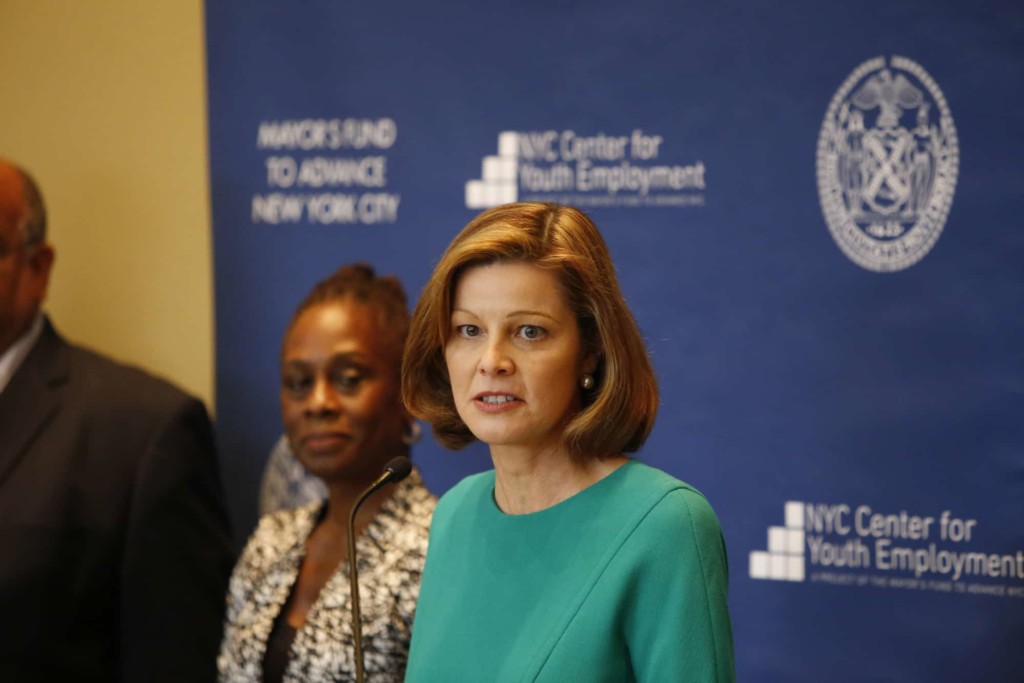
- Deanna Mulligan
- Guardian
- Hire Purpose: How Smart Companies Can Close the Skills Gap, by Deanna Mulligan and Greg Shaw
- Clayton Christensen
- Hit Refresh: The Quest to Rediscover Microsoft‘s Soul and Imagine a Better Future for Everyone, by Satya Nadella and Greg Shaw
- PTech.org
- Infosys
- The Power of Place: Authentic Learning Through Place–Based Education, by Tom Vander Ark and Emily Liebtag
- Getting Smart Podcast Ep. 280: “Julia Freeland Fisher and Mahnaz Charania on Social Relationships and Networks”
Transcript
This transcript has not been edited for spelling accuracy.
You’re listening to the Getting Smart podcast where we unpack what is new and innovative in education. I’m your host Jessica and today we’re talking with Deanna Mulligan on leadership and the opportunity gap. Deanna grew up in a small town in Nebraska, earned an MBA from Stanford and after eight
years at McKinsey, launched a career in insurance where after a two-year sabbatical, she became the CEO of Guardian, one of the ten largest life insurance companies in America. Deanna focused on culture and talent development at Guardian and she served on the President’s Advisory Council on Financial Capability for Young Americans. In her new book, Higher Purpose, Mulligan shares how companies and education institutions
can work together to close the skills and opportunity gap. Let’s listen in as Tom talks with Deanna about her journey and her new book. Deanna Mulligan, welcome to the Getting Smart podcast. It’s an honor to be here Tom, thanks for having me. Deanna, did you grow up in a small town in Nebraska?
I did, Wisner, Nebraska, population 1,300. And did you go to Nebraska for college? I went to undergrad at University of Nebraska and then to Stanford for graduate school. How did you get to McKinsey? I think you spent eight years at McKinsey.
Yes, well after Stanford, I moved to New York with my husband who wanted to go in the banking industry. I thought we were going to stay in California, so I was ready to settle down in Silicon Valley and be a tech person. My husband at the last minute, who was a banker, decided he wanted to move to New York.
So we moved and I had to think about a new industry because back in those days, there wasn’t much tech in New York. That’s not the case today. So I had always had a love for insurance and statistics was always one of my favorite classes and I ended up going to work for New York Life Insurance Company in their MBA training
program. But then later changed to McKinsey. I had a number of my classmates from Stanford at McKinsey and they actually called me and said, hey, we have a big insurance practice. You should be over here.
So that’s how I ended up with McKinsey. And I was there, yes, eight, almost nine years and enjoyed it very much. It’s pretty great training, isn’t it? Right in terms of how to frame a problem, how to facilitate group practice, how to think about change theory.
What kind of things do you think you took from those eight years? One is always in learning mode at McKinsey, that’s for sure. And McKinsey invests a lot of money in training. It’s young associates and a lot of time and there’s a real mentorship model. So one of the things I learned in addition to all the formal classes and seminars and
one off training and coaching was the value of watching experienced people do it. Sort of the craft of consulting is really a good thing to learn by the mentorship model, which has, I think, figured into my philosophy years later. Why did you go into insurance? What was interesting about that?
Was it a particular opportunity or a sector you were interested in? Well, as I said, I’d always been interested in statistics and math. And of course, insurance makes great use of that. It felt like an industry that was really important to people. We are with people at the worst times of their lives.
So people depend on us to protect their families and their future. So it seemed like a noble and important thing to do. And I was looking for something that had a purpose as well as matched my interest. And insurance seemed like a great fit. So you had a rising career in insurance.
And I think when you were in your 40s, you took a year or two off. Yes, I did. I took almost two years off, aged 39 to 41. And there were several things that drove that. This is going to sound a little strange, but I kind of came face to face with my
mortality in my late 30s in that I lived in New York, lived through 9-11, and lost a few people we knew. My husband had been in a horseback riding accident and had a serious brain injury. It took three months off work. And I lost a relative, a young relative who was very close to me, was 37,
all about the same time. And so I said, wait a minute, I might not live forever, which is pretty obvious. But sometimes when you’re in your 30s, those things aren’t in the forefront of your mind. I said, let me stop and think about what I really want to do.
And I thought I would take six months off, maybe a year. So I talked to some people who had done it. And one of the things I learned from them was, oh, six months is not enough. You probably need a year, maybe two. And I remember thinking at the time, two years.
I could never take two years off. Well, they were correct. And two years turned out to be the right amount of time. It’s an interesting thing to do. I think it probably created some empathy for other people going through situations.
Is that fair? That’s definitely fair. I had a lot of empathy for people who had lost loved ones and just lost in general. Of course, that ended up pointing me back to the insurance industry again, because that’s what we do.
But while I had my time off, I did explore other options. I love art and design. And I looked at some opportunities in that world. At the time, I still am. But at the time, I was a pretty serious equestrian riding every day.
And I thought maybe I’ll open a tax door or have a horse farm. Because we’re more dream jobs. And at the end of the day, I said, I really like insurance. I need to be with an organization that’s purpose driven. I need to be able to really act on my values every day.
And I ended up a Guardian, a company that is very values driven. Guardians of Mutual Company. We’re owned by our policy holders. So our whole goal is to maximize our ability to pay their claims, to be there when they need us.
And we have three values we live by. People count. We do the right thing. And we hold ourselves to very high standards. Three simple values, but we really do use them in decision making.
And so finding an organization like Guardian where I could apply my love of statistics and math and really think about a higher purpose and do things in the right way based on Guardian’s values was really a terrific opportunity. What was your entry point at Guardian? What position did you come in at?
Well, one of the things I did after my sabbatical was I started my own consulting firm. And Guardian was one of my clients. And so I had worked there as a consultant for over a year, and they had an opening running their individual life and disability business. And so I took that job, even though I wasn’t really looking for another corporate job at
that point. I really fell in love with Guardian and I took the job and I ended up becoming the CEO about two and a half years later. Hey, before we get too far from your sabbatical, I wonder if that experience shaped your views on family leave.
Particularly, I’m thinking right now, we’re recording in the middle of a pandemic that’s having disproportionate impact on women. We’re seeing a lot of women, more women than men losing employment. We’re also seeing it appears that millions of women are stepping back from the workforce because they have children at home.
And so I’m wondering how your experience sort of shaped your view on the policy of leave. Well, Guardian is one of the largest administrators of family and medical leave. So we provide that service both to governments and to private companies. And so we’re a big believer, obviously, in family and medical leave. And for our own employees, during this crisis, we have instituted leave policies for people
who need to take care of their families or provide education for their children. So yes, I’m very empathetic and we are at Guardian with what families are facing right now in terms of trying to do their work and educate their children in some cases at the same time. Deanna, you were CEO for 12 years.
Is that right? No, almost 10. 10 years. The CEO role is big and complicated. I’m curious how you came to understand your role.
Clay Christiansen sometimes talks about jobs to be done. How did you think about your role and what you were, the ways in which you were trying to impact or improve the organization? Well, I’m a big fan of Clay Christiansen’s work and I was privileged to hear him read from one of his last books.
And I do believe that the role of the CEO is to be, first of all, the leader and the shaper of culture and values. So for us, being kind of a purpose-driven organization, that’s very important. Secondly, for us as an insurance company, I saw my role as making sure that Guardian was financially strong and able to pay claims far into the future.
So if you think about it, when you buy a life insurance policy as a relatively young family person, that’s a promise for the insurance company to pay maybe 50 or 60 years from now. So our biggest job is to be here when our clients need us and that could be 50, 60, 70 years from now. And in the very turbulent financial times we are living through and have lived through,
that’s really job one for the CEO at Guardian is making sure the company is here another 50, 60, 70 years. Our founder actually said a life insurance company should live forever because as long as you’re writing new policies, you’re making new promises. I took that part of my job very seriously, but also the culture of serving our clients
and putting their needs first and providing excellent customer service since they are our owners. But what that meant for me was really taking care of our employees, the people who work at Guardian. And if you take care of your employees, they’ll take care of your customers.
Let’s do a quick deep dive on that topic. Many of our listeners are teachers or leaders or they’re involved in the human development space. I wonder what you learned as CEO about talent development. One of the things I learned is that talented people want to work in a place where they
feel that the leadership cares about them and that they in turn are allowed to care about the people who work for and with them. So we have been able to attract at Guardian a lot of very talented people who might normally have worked at a public company where they could get stock options or an investment bank or a private equity firm where they would make more money than they would make at Guardian,
but they came to Guardian for our culture. So I think a culture is very, very important in terms of talent management and talent attraction. And in a company with a very long-term point of view like ours, there’s also an opportunity to develop people, to have them develop, grow, learn on the job.
It’s not about turning a short-term profit. It’s about being here for the long term. So that allows the CEO and the leadership team to really invest in people over time. Congratulations on your new book, Higher Purpose. The subtitle is, How Smart Companies Can Close the Skills Gap.
So where did the idea for a book come from? And did anybody warn you that it’s torturously difficult to write? And how did you meet our mutual friend, Greg? Let’s go back to the origin story. So where did the idea come from?
The idea for the book actually came out of the 2008 financial crisis, believe it or not, and I observed how difficult it was for many people to find new employment after they lost their jobs. I mean, obviously the COVID-19 crisis and subsequent job losses in some ways overshadowed the job loss that happened in 2008, 2009, but there was a lot of upheaval then.
And many people who were mid-career or later had a very hard time becoming re-employed, and I thought about that a lot. What were the origins of that unemployment crisis and what companies could do to prevent that kind of crisis from happening again? At Guardian, we implemented a lot of, we’re really a learning organization, I would say,
and we implemented a lot of opportunities for people to learn new skills, and part of our culture is really to become more and more each day of a learning culture. So I put those things together, and then being a member of several business groups such as CECPs, which is CEOs for corporate purpose, the Business Roundtable, which recently about a year ago came out with the statement of the purpose of a corporation.
Those things all started to come together in my mind. In addition, in 2015, I was asked by President Obama to be on an advisory panel, a presidential advisory panel on financial capability, building financial capabilities in young people. One of the things that, one of the conclusions we came to on that advisory council was that young people need to learn financial skills, but before they can put those skills to use,
they really need to learn how to get a job, and they need to learn how to manage college costs and how to make the decision about how to go to college, how to fund college, and in some cases, would community college or certificate program lead them to a job in a more financially sustainable way? So all of that work sort of came together.
I will say that as a CEO, I did not have a lot of spare time to write a book, and although there were several failed attempts, I finally decided that I needed a co-writer, and in the process of looking for co-author, read Satchena Della’s excellent book called Hit Refresh, and Greg Shaw was the co-author on that book, and I said, aha, this is the person. I love this book.
I think this person who helped Satchena Della write it is the right person for me because it seems as though we have a lot in common. So we contacted him, and he had three books in the works in no time, and we had made commitments to our publisher, and of course our publisher was ended up being very generous and constantly extending the timeline.
We tried a few other things, and they just didn’t pan out, and finally Greg was available, and I called him and said, we really do need you, and he said, I’m still interested in this topic, and fortunately then we were able to get together, and the book came together very quickly. I had done a lot of research.
My team at Guardian had done a lot of research. We had hired outside people to do research, to write some drafts, to work with us, and so we had a lot of material that Greg and I were then able to put it together really quickly because of the meeting of the minds that we had on this topic. That’s a great story.
Greg and I had a chance to work together at the Bill and Melinda Gates Foundation, and he’s not only a talented writer, he’s just a beautiful human being. So I’m glad that the two of you connected, and can I say that it was a positive writing experience? It’s still challenging, right?
It was a very positive writing experience, yes it was, and a learning experience. I try to exemplify for the people at Guardian, everyone has to keep learning. As the CEO, I certainly learned a lot in writing this book. Sometimes it was a little painful, but it was certainly worthwhile. Tiana, your book discusses some interesting trends that are happening.
You described how Guardian really became a learning organization. We’re seeing many companies that are so worried about talent development that they’re really backing into post-secondary and becoming quite involved in post-secondary education. What’s your take on how companies and secondary, high school in particular, and post-secondary, college plus, how can those two worlds work together to close the skills and opportunity
gap? Well, that’s a good question, Tom, thanks for asking. There is a lot written in my book about that very topic of companies and higher education and post-secondary education working together. I think it’s critical, and in higher purpose, the book, you’ll see some examples.
One example, for example, is IBM with their P-Tech high schools, where they’ve worked very closely with local schools to develop a program where students can get a high school education and one or two years post-high school all together in the same place. Work experience at IBM? Work experience and certificate and then potentially end up with a job at IBM without the need for
a full four-year degree. Not only has that worked well for IBM, IBM has put together a model that they generously have allowed other companies to use, kind of a handbook of how to run a school like this in your own locale. It’s been successful in a number of different places around the country and in a number of
different industries, for example. In fact, there’s probably 300 P-Tex around the country, including at Co-Winored in Texas. Our listeners can learn more about that at ptech.org. We’ll include this in the show notes, but that’s a great example. We also at Guardian work very closely with a number of community colleges and we’re a big
believer that community colleges are not only a great source of talent for companies, they’re a great option for students in terms of being financially and otherwise accessible. And sometimes they don’t get the airtime or the airplay that a four-year college degree might. And we have several examples in the book as well of how community colleges and companies, including Guardian, have worked together.
We’ve written about Infosys, the big Indian tech giant that has training centers around America and they’ve hired more than 10,000 Americans, many directly from community colleges. So a great example of how some unexpected allies can come together and create great new affordable accelerated career pathways. Yes, and even at the college level, the Business Tire Education Foundation
is a great organization that matches CEOs with presidents of colleges and universities to talk about how four-year degrees can be more relevant and the graduates can be more readily employable by companies. We’re a member, a big supporter of that organization as well. Deanna, my last book came out the day the WHO declared COVID a global pandemic. You never really know sort of how and where your book is going to land in the world and
you have a book coming out in the middle of a pandemic. You may have had just an inkling of what was going to what was happening while you’re doing your final footnotes and references. Is that true? When we were doing the footnotes, the references and the forward, we did add some thoughts on COVID. We really didn’t have the time to kind of rewrite the book around COVID, but I think a lot of things
that are in the book are very relevant right now as people struggle to find new jobs, companies struggle to think about what do they do with their employees in this time when they may not have the same level of demand they had before. And really it’s about how do we rebuild our economy and certainly I think they’re going to need to be public-private partnership in terms of educational institutions, the government, companies and not-for-profits all working together to really solve this challenge.
Is there, you know, now that we’ve seen the scale and scope and toll of this pandemic, is there is there an epilogue that you would add to it, any new lessons that you wish you could tag on? Well, I think the message of the book, our purpose is more important than ever. I think companies in some ways have a bigger responsibility than ever because we can’t leave the problem of unemployment to the government to solve, right, to the government and its individuals. It’s bigger
than that. We all have to play a part in getting the economy and by the economy it’s really the workforce back on its feet again. Deanna, I find that I have to write things down to understand what I think about a topic. I wonder if you changed your mind about something while you’re writing the book or if it helped you formulate a point of view in a way that was interesting or surprising to you. One of the things that I learned is it’s not as easy as it sounds, right? It’s a
great thing to say, oh, public-private partnerships are going to be the solution and you know this time from the work you’ve done in your career, everyone would like that to be the case, but it’s often quite challenging. So I think having models that we can hold up to say here’s a public-private partnership that worked really well, for example the IBM P-TECH schools, is really important to getting the next generation of these kinds of initiatives off the ground.
And I didn’t, as in many things, I didn’t realize how hard it was until I started doing it. Deanna, that’s a perfect example, right? It sounds great, it’s an amazing proposition, but it’s really thorny in every possible respect. So I appreciate that. The lesson is it’s probably harder than it looks, right? It’s harder than it looks and I think the lesson I learned is don’t give up. Because we talk about this in the book in our first few attempts to
partner with community colleges. We made a lot of mistakes and we didn’t get the relationships we wanted, build the relationships we wanted or get the results we wanted, but we were persistent and we kept asking for help and looking for new people to help us. And in the end, we did develop some very satisfying relationships, but I think that the lesson on all of these is your first attempt may not succeed, your second attempt may not succeed. You need to go in this with a, you know, eyes open
and a learning attitude. But, I guess, Deanna, I have come to observe that you and Guardian are both really purposeful and values-based and that if you can start a partnership that way, that even though you do encounter difficulties, if you’ve entered into a partnership with people that have those shared values, that it helps you power through. Is that fair? Thank you, Tom. Yes, I think that’s fair and accurate that keeping the purpose in mind from the
beginning, the higher purpose, so to speak, is really essential to making these kinds of situations work. So on that topic about purpose and the importance of a values-based response, what recommendation would you have for young people thinking about their career and let’s acknowledge that it’s the weirdest time in modern history to be thinking about a career or starting a career. What advice would you have for young people? Well, I have a lot of empathy for young
people starting out in any economy or situation because for many young people, the first goal is to find a job that will support one so one can have an apartment and eat and eventually have a family and that’s job one. And I think if we can help young people to have their value system, first and foremost in mind as they’re doing those things, they’ll be a lifetime payoff. But it’s very easy when you’re young, especially in this environment, to just say,
I just need a job, I just need to pay the rent. And I would say that your career will probably go farther, faster, and be more satisfying if you think through your values and try to align what you’re doing with your value system. And people will notice in this world, values-driven people and values-based people do stand out. So don’t be afraid to take a stand for your values. There may be some short-term pain, but there’s going to be very long-term gain
for both companies and individuals. I appreciate that. And so many fronts, Deanna. Deanna’s new book is called Higher Purpose, How Smart Companies Can Close the Skills Gap, Get a Copy of It. It’d be a great one to use in your book review, whether you’re in a company or an education organization. It’s a terrific book. You’ll enjoy it. Deanna, congratulations on all your success at Guardian and on this great new book. Thank you, Tom. I really appreciate
being a guest on your podcast. And it’s nice to talk to a like-minded person. Thanks. Take care. A big thanks to Deanna Mulligan for joining us this week. We appreciate your continued leadership and focus on closing the opportunity gap. For more on the opportunity gap, be sure to check out episode 280 with Julia Freeland Fisher and Manaj Chiranya on social relationships and networks. We’ve got it linked in the show notes and on the blog. And like always,
make sure you rate and review the podcast and hit subscribe. All right, that’s it for today, listeners. Thanks for tuning in for the Getting Smart podcast. This is Jessica, signing off.



0 Comments
Leave a Comment
Your email address will not be published. All fields are required.