


Career & Technical Ed

Anthony Kim, Education Elements, keynoted the inaugural LearnLaunch event in Boston last week. He discussed blended learning and challenged edtech companies to show growth similar to other sectors.

The new Common Core State Standards, which are being phased in by school districts in most states, are designed to reflect the skills and knowledge that will be most critical to success beyond high school. The benchmarks focus on developing skills in reading, writing, speaking and listening, language, and media and technology.
Despite the ever-growing penetration of mobile devices and wider acceptance of BYOD, I feel that a lot of the potential of mobile learning is being underexploited. Many of the solutions are focused on wrapping up content and disseminating it to students. As important this is, we should demand more.

Huntsville City Schools deployed 1:1 access to technology this year in partnership with Pearson. Scott Drossos leads Pearson's 1:1 team and visited Huntsville on Digital Learning Day.

When talking with people who are not educators, I often think of Fannee Doollee, a character from the Zoom television series, which ran on PBS in the late seventies, who has a fascination with double letters. Fannee Doollee loves one thing but hates something very similar. For example, she loves swEEts but hates candy (notice the double EE in sweets). Similarly, in my conversation with parents and community leaders, I am always amazed at how they can advocate for one thing while mocking a possible solution.
One in three children are now considered overweight or obese, according to a study from USC Rossier School of Education. As a result, many schools are feeling pressure to ensure their students get adequate exercise and healthy meals, which has recently caused an innovative meshing of video games and the physical education curriculum.

In this digital age, when devices and networks are increasingly connected to services in the cloud, the information stemming from those connections has grown exponentially.

I had never heard Hall Davidson speak until I saw him at the Midwinter meeting of the Texas Association of Schools Administrators. If you have not heard his presentation, you are in for a treat: enthusiasm, energy, state-of-the-art information. As we say around here in Texas, it was the whole enchilada.
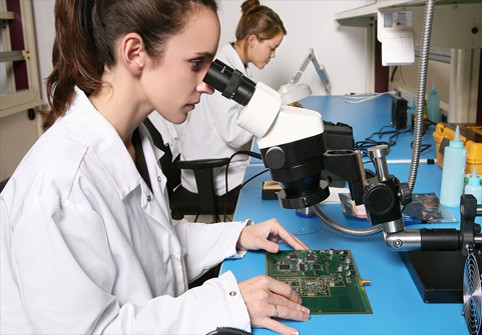
There is a digital divide threatening the future of girls in this country. Three of the top ten “Best Jobs of 2013” are in the computing field, according to U.S. News and World Report, yet women make up just 25% of the labor force in science, technology, engineering and math-based (STEM) jobs. With all projections pointing to STEM-sector jobs continuing to grow at a higher-than-average rate, today’s young women cannot occupy just the fringes of the field.

When I started my blog about the new research on parenting and education, one of the first topics that I wrote about was home schooling. I came across new findings about the explosion in parents opting out of both private and public education, the ways that parents are using new technology and virtual learning to teach their own children, and about other trends in home schooling, such as un-schooling.