


Transformation Journey: Lake City Area Schools
Every school that has tried to change and failed has done so for the same reason: the system kept producing exactly the results it was designed to produce, and nobody changed the system. What Lake City Area Schools discovered — through honest self-examination, disciplined sequencing, and a refusal to mistake movement for progress — is that real transformation requires a different kind of courage than most improvement efforts demand. Not the courage to launch something new, but the courage to admit that the old system was working perfectly: producing disengagement on schedule, graduating students unprepared on time, and generating just enough compliance to keep the lights on. This is the story of what happens when a district decides that is not enough.
Tim Hejnal, Superintendent of Lake City Area Schools and Meghan Utech, Director of Curriculum and Learning have led this charge.
Listen to the audio journey or read the transcript below.
View Full Transcript of the Conversation
Rebecca Middles: I’ve been doing this work for a long time, and I’ve learned a few things about school visits. What you see when you walk into another school depends entirely on what you’re ready to see. Two teams can visit the same place and come home with very different takeaways. One might notice the building layout, student engagement levels, or even the schedules posted on the wall.
Another might notice belief systems, learning design, or perhaps a unique assessment practice. By the time these two guests began visiting some of the longest-running personalized learning models, they weren’t looking for inspiration. They were looking for coherence — to pressure-test their thinking. And when you visit from that place, you don’t come home copying; you come home clarifying.
That’s very different. And that’s Tim Hejnal and Meghan Utech.
What they’re building reminds me of the early years of personalized learning in Alaska: expeditionary learning, outdoor education, and community-centered beliefs. It also started with students outside doing hard things and discovering what they’re capable of. This is Tim.
Tim Hejnal: We are known as the Christmas Tree Capital of Michigan. That’s the work that I did as a child — trimming Christmas trees, planting, and so on. And we have a beautiful lake.
And this is Megan.
Meghan Utech: For over 50 years, adventure learning and outdoor education have been a part of this community. And when we have talked to different stakeholder groups, that’s always been something they want to make sure never goes away, and that they want it to be strengthened and continued.
Tim Hejnal: I actually shared this a year or two ago at a district-wide development event. I said, guys, this is the question I want us all to answer: How much longer do those students need to wait until they have a teacher who cares enough to show up every day and plan lessons that are dynamic and engaging? I went home that night thinking, right on, man, you killed it. But then I said to myself, you know what, Tim? How much longer does your district need to wait? How much longer does this community need to wait until they have a leader that cares?
But for me, that was a moment where I just said, you know what — how much longer? And the answer is: they can’t wait.
Rebecca Midles: You can feel that spirit — that insistence that learning should be authentic, challenging, and joyful — in their portrait of a learner. What they’re doing could also be a quiet antidote to one of the most common missteps in this work: the check-the-box approach to standards. If any system isn’t careful, it can slowly drain the joy out of learning and teaching.
But there’s another side to this too, because the opposite mistake is just as common. In an effort to promote engagement, choice, and joy, learning expectations can quietly become inconsistent, disconnected, or too soft. Students are busy and engaged, but no one is sure about the depth of learning, the sequencing, or where the gaps are.
Tim Hejnal: We are in a 250-square-mile radius in terms of districts, so there’s a lot of ground to cover in the morning for our buses. Over 20% of our community chooses online learning. Over 7% choose to homeschool.
And what we realize is that even though our parents aren’t demanding something outright, they are quietly asking for something. We talk about how, if we don’t change, at some point we will just be turning the lights on in our school buildings for ourselves.
And that’s not okay with us. We’ve always desired a chance to lead differently than the traditional education system. And in that work, in districts, you reach a place where you can’t go beyond — for a number of reasons. It could be a tolerance for change, the structure, tradition, and so on. But when you get to that place, you know that on the other side of it is what you wish you could have for kids and for yourself to a degree.
Standards-based toward competency-based has been the dream in education for 20-plus years. Coming out of the pandemic, we really had two choices: we could go back toward what was comfortable, or we could run toward what we saw to be great. And that’s what we decided to do.
When we went virtual, we took a poll on how many homes needed internet connectivity and provided 453 hotspots to our people. And I think people just trusted that we were taking care of them and doing the right thing, even though we didn’t know how we’d pay for it.
Meghan Utech: Dr. Hejnal came into the room and said, we’re going to partner with the best and the experts, because I want you to become the expert in this — as far as the leadership team goes. So he had that vision: yes, we are going to partner, but you really need to pay attention and dig deep, because you need to become the experts as we move forward. What that does for you as a leader is such an important step — taking that ownership of becoming the expert to the best of your ability. Because when we were trying to find a gradebook that fit our needs for standards-based grading and eventually competency-based grading, I knew which questions I was asking.
I wanted to make sure that their definition of standards-based scoring and grading was the same as ours here at Lake City. And I think that’s really important as a leader — you need to have the confidence and the understanding to be able to ask the right questions.
You know: What are these standards? What does that actually mean? What is the complexity level that kids need to demonstrate in order to be proficient? And through that work — which took quite a bit of time — we’re much stronger because of it. Now we can get to that interdisciplinary class approach because we’ve done that foundational work, and that’s where we’re going.
I think it was important to start with that smaller grain size because there were some really good, deep, authentic conversations that took place at the table during PLCs with grade-level teams, instructional coaches, and leadership.
Rebecca Midles: This wasn’t about finding the right program. It was about becoming knowledgeable enough to recognize it. They built that clarity through a deep, shared understanding of standards, grounded in proficiency, skills, and PLC conversations — creating the foundation for more complex interdisciplinary work to take root.
Tim Hejnal: We have had such support here in terms of our leadership, our school board, our community, our students, and our instructional staff.
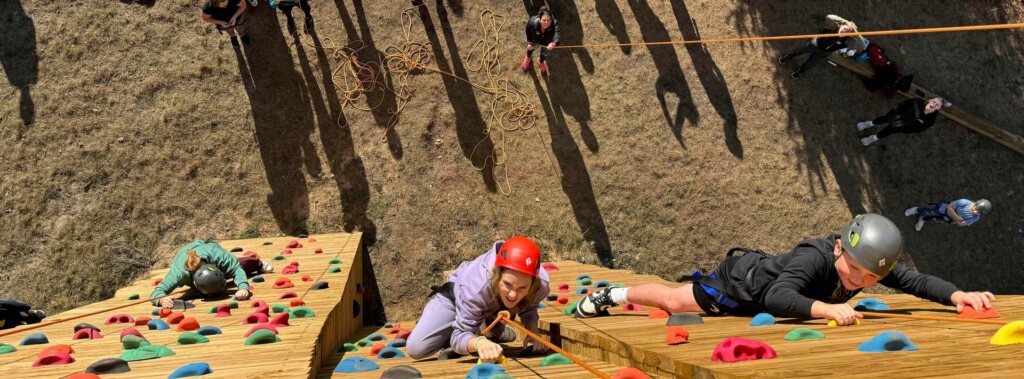
Coming out of the pandemic, when ESSER funds were flowing through, we had town hall meetings just to talk about how people would like us to spend these millions of dollars. It wasn’t more computers or more books. It was: we want to make sure our kids are grounded in our adventure learning center components — our climbing wall, our ropes courses.
We looked at Native American rites of passage to help ground us, and then worked our way out from there. So when we brought it into a school context, it was really rewarding just to begin thinking about those transitions. Moving from elementary to middle school should be more than just your bus driving to a different building and now you get to move between classes.
Going from middle school to high school should mean more than just earning credits toward a GPA so you can get into college or whatever. We decided to build the pre-K through grade 12 as a continuum — environmental education and outdoor education through early elementary, probably K through 3.
Then in fourth and fifth grade is when we really start adventure education. Fifth grade is when we start working on the metaphors — the isomorphic metaphors of how can this experience relate to that? Asking kids to really think deeply.
When I went to school in Lake City, our outdoor ed started in sixth grade as a camp experience. It was a week-long outdoor camp. We learned to cross-country ski, ice fish, winter survival, and many other things. And there were life lessons attached to each.
So even though you’re learning this skill, you can take it and apply it to the wider world. And sixth grade really is that sweet spot — Piaget would say we can make the leap from concrete to abstract. And that’s when a climbing wall can become a metaphor for a life journey.
But not before that.
When I hired our high school counselor seven or eight years ago, I said, Jim, someday we’ll have a climbing tower. You’ll be working with a family and you’ll say, you know what, guys — meet me out at our climbing tower. We’ll work this out out there. You’ll put dad on belay, put a harness on the kid, he’ll climb, and you’ll work through that. Then you talk about trust in the family. And now we have it, and Jim’s still here. Jim’s like, hey, I remember you saying that.
The really cool thing is he’s the one sending kids off on the rappel. Jim will hook up every 11th-grade student and have them lean back, and he’ll say to them, you know what? I’ve just taught you everything you need to know to be successful. To do this, all you have to do is trust yourself.
Then the kid leans back and gains that power. And two weeks later in his office, he’s having that same conversation: we’ve taught you everything you need up through 11th grade. Not that there’s not more to be learned, but believe in yourself.
We take those as anchor-point experiences and build around them — ensuring that every other grade level leads up to them and that there’s a nice handoff.
And it’s so cool, because we’ve had kids who will go partway up on a climbing wall, and that’s their 100%. That’s their top for the day. But you know what? Next year, or in the spring, or any time throughout the course of the year when you’re like, you know what, I’m ready for that — we’ll drive you out there. If that’s a driver for you in terms of goals, we’ll make it happen.
When the point game becomes the focus instead of the learning that used to happen in elementary and middle school, we become part of this point-exchange economy. When we lose students in those moments, we create the two biggest challenges that we face in secondary education: apathy and absenteeism.
Rebecca Midles: Change is hard, and sustaining it is even harder. It often unfolds as a series of moments — some feel like progress, others like loss. Staying close to the why helps steady the work, but how leaders show up for their educators is critical. Tim and Megan point to what makes a difference: staying grounded in purpose while intentionally supporting educators through every stage of the transition.
Tim Hejnal: Every day we talk about our portrait pieces: acting with integrity, courageous learning, thoughtful thinking, communicating with intention. When we go out to our adventure learning center, that’s our laboratory.
Taking it slow and ensuring everything is measured is so important, because that makes time for the conversations of loss, the conversations of grief, and the conversations that are necessary when you’re asking someone whose practice has been shaped over 30 or 40 years to move from what they’ve always believed into something new.
And the work is done in one-on-one conversations.
The work is not done in department meetings. The work is not done in PD days where we stand in front of the district. The work is done in one-on-ones. It’s like Meghan, when she was walking into classrooms — she needed to be prepared for a funeral or a celebration, right? One after the other, and multiple in a day, over and over, for a number of years. Because you might be meeting with someone who has embraced this work — let me show you the scale, it’s so awesome — and she might get excited about that. But then she’d move into another room where someone was lamenting and she’d have to walk them through it.
There’s a Lee Iacocca quote that I memorized when I was in sixth grade, in Jack Kerry’s class. It sat behind his desk. It goes: In a completely rational society, the best of us would aspire to be teachers, and the rest of us would have to settle for something less — because passing on one generation’s knowledge to the next ought to be the greatest responsibility and the greatest honor anyone could ever have. I believed that in sixth grade. That’s why I’m here today, in this role.
Meghan Utech: For us, the definition of an educator is any adult in the building who interacts with a student — and that can be anywhere, from the front office to the counselor to the intervention team to paraprofessionals. So it’s really important that they have great conversations with students and that they’re showing them those different competencies themselves and modeling it, because our portrait pieces are aligned to each other. Our educators are able to model the expectation for our students as well, as far as their competencies for the portrait of a learner.
For everyone to be considered an educator, we need to have a common language around our students. So it’s not “these students” or “your students” — they’re our students. And I think to help create that culture of “our students,” all the different stakeholder groups have to be aware of the different initiatives and focus points that we have.
So thinking through professional development opportunities — one thing that we’ve tried to improve on is giving small professional development sessions to our front office staff about standards-based learning and grading. Not that they have to know all the nitty-gritty details, but they need to understand the why behind it and the concept.
We’re designing different experiences right now internally where we’re doing site visits for our internal educators who aren’t in a traditional classroom. We actually had some of our school board members and counselors listening to a teacher panel on Q&As, and then we’re taking them into a handful of different classrooms across the district just so they can see what we’ve been working so hard on for our students.
Tim Hejnal: We’ve had a chance now to really align even our hiring process. We’ve taken our portrait attributes and competencies and aligned interview questions to each of them.
For each of the six, we have three hiring interview questions that we use. We’re also developing a strengths finder, so that in the second round of an interview, someone can take a strengths assessment and we can see where they are. For example, their ability to have empathy might be really strong, but being a champion for learners, according to what they’ve shared, might not be as developed.
So can we have a real conversation about what that looks like?
Meghan Utech: One phrase that we like to use is that we want to have a continuous conversation of practice.
So how do you create a culture and have an intentional system in place to help facilitate that? We’ve been able to design a system that documents conversations, action steps, and plans moving forward for every individual and or grade-level team at the elementary level. And these are transparent to the educators as well, so they know where we left off, what our plan is for next time, and what our action items are — all documented, housed, and used to help create that continuous conversation of practice.
So whether I meet with a team, a department, or an individual, I can pull up that document and update it. And then if our instructional coach checks in with them the next week, they can pull up that same living document. That’s how the continuous conversation happens.
For that culture piece, we know how important it is for personalized learning experiences for students — and we need that for our adults too. So thinking through professional development opportunities on the days we offer it: how can we know where each individual teacher is in their understanding? Where do they need more support? What are they ready for, if they’re ready for those next steps? We have a system in place for that as well, so I and the team can look at it and say, how can we differentiate our PD? The more we can model and show them that this is how we prefer to learn too — that way we’re growing our educators in an appropriate way, and they can take those perspectives and apply them to their own classrooms as well.
That’s done through PLCs, PD days, staff meetings — the best that we can. Those are some of the ways that we make sure that culture stays strong and that we can continue to improve it.
For me, I would say the connections and collaborations with others have really strengthened me — whether internally, getting perspectives from others and always asking for feedback, or reaching out to other schools, other leaders, asking questions like: hey, what do you think about this? Or how did you do that? Not that I want to replicate what they do, but it’s continuously sharpening me in the right ways — sharpening our own thoughts and beliefs on things. And I think that’s what’s really helped me get to the point where we’re able to make the right next choices as we move forward.
Tim Hejnal: We feel like this isn’t just a poignant moment for this work. It’s not that we’re at a crossroads, even though we are. It’s that we’re at a place where this is the answer. Kids are choosing, parents are choosing. What we need to provide is clear — and if we don’t do it, they’ll find it elsewhere.
And in our role in that, I would say: just being able to lead that work each day. Being able to talk to students who are really having solid conversations about their learning. Being able to partner with our teachers.
It’s every day when I walk in — today’s the day. It needs to happen today for kids.
The Community: A Place Called Lake City
Lake City, Michigan — the Christmas Tree Capital of the state — is a small, hardworking community built on agriculture and forestry, where neighbors check on neighbors and the fabric of daily life is unmistakably blue collar. It is also a community that, quietly and without demanding anything, was telling its school district something important.
Parents weren’t protesting. They were simply making different choices for their children — choices the traditional system wasn’t offering. District leaders Tim Hejnal and Meghan Utech looked at that data and heard a clear message: change, or eventually be turning the lights on for yourselves.
If we don’t change, at some point we will just be turning the lights on in our school buildings for ourselves. And that’s not okay with us.
Tim Hejnal
The Decision: Run, Don’t Retreat
Emerging from the pandemic with hard-won community trust — and a track record that included securing 460 internet hotspots so no family was left without connectivity — the district faced a clear choice: return to what was familiar, or run toward what it believed education could be. It ran.
The commitment was to competency-based learning — a model where students progress by demonstrating mastery, not by accumulating points on a fixed timeline. The belief was simple: the best elementary classrooms already work this way. Every teacher knows a child must learn to read before moving on. What if that orientation followed students all the way to graduation?
We had two choices coming out of the pandemic — go back toward what was comfortable, or run toward what we saw to be great. We chose to run.
Tim Hejnal
The Diagnosis: We Created the Problem We Were Fighting
There is a moment in secondary school — somewhere in the shift from elementary to middle — when students learn that school is no longer about them. The point-based economy takes over. Compliance replaces curiosity. Students stop asking what they are learning and start asking what the assignment is, how many points it is worth, and what the minimum is to pass.
When a student walks into a classroom and knows the game — do the assignment, collect the points, move about the day — disengagement is not a character flaw. It is a rational response to the system they have been trained to navigate. And when that system stops offering anything they value, they stop coming. The chronic absenteeism crisis and the student apathy crisis are, in this view, the same crisis — and one that schools built for themselves.
We talk about fighting apathy and absenteeism — but we created those conditions ourselves. The moment students learn that the experience is no longer about their mastery, we lose them. We built the problem we spend every day trying to solve.
Tim Hejnal
Recognizing that — not as an abstraction but as an institutional admission — reframed the entire project. The goal was not to fix disengaged students. It was to stop building the conditions that disengage them. And that realization is what made every hard decision that followed feel not just justified, but necessary.
The Foundation: Slow Down to Go Fast
The most important decision Lake City made may have been what they chose not to do: they did not rush. Tension in transformation work almost always comes from trying to do too much at once — jumping toward a competency-based model before educators share a common understanding of what the standards actually require, what proficiency actually looks like, and what evidence actually counts.
Working closely with Marzano’s team, Lake City spent real time developing proficiency scales with educators — grade-level teams wrestling together over standards, arguing about complexity, and discovering shared and divergent assumptions. Slow, generative, sometimes uncomfortable work. But it made learning visible: to teachers, to students, to families. And that visibility was the prerequisite for everything that followed. A system that had been producing disengagement on autopilot could not be replaced overnight — but it could be replaced, one shared understanding at a time.
You have to become an expert in what you’re trying to do. Then you can confidently make decisions — and not just jump on the next new thing you hear about.
Meghan Utech
The Adventure: The Model in Its Purest Form
If the foundation work answered the question of how to build the system, adventure education answered the question of what the system is ultimately for. Nearly fifty years of outdoor and experiential learning were already embedded in Lake City’s school culture — and when community stakeholders were asked how to spend pandemic recovery funds, they didn’t ask for more technology. They asked to deepen what they already valued.
That mandate matters because adventure education is not a supplement to the competency-based model. It is its most visible, tangible expression. The six Portrait of a Learner competencies — Courageous Learner, Reflects with Purpose, Engages with Empathy and the rest — are abstract until a student is on a climbing wall twenty feet off the ground, deciding whether to trust themselves. There, the competencies are not discussed. They are practiced, under real conditions, with real stakes.
The transitions that matter — elementary to middle school, middle to high school, and the pivotal junior year — are marked with rites of passage designed to mean something more than a change of building or a new set of graduation requirements. By eleventh grade, every student is hooked into a harness by the school counselor, taught everything they need to know to rappel, told to trust themselves, and asked to lean back. They do. Two weeks later, in his office, the counselor has the same conversation: we’ve taught you everything you need. Believe in yourself.
The proof that the learning transfers shows up in unexpected places. One Lake City student, stuck at home during a snow day, designed a scavenger hunt that included a clue about what a climbing wall represents. Her younger brother knew immediately: he ran to a mirror. Because the wall is about discovering who you are becoming. He already knew.
The Human Work: Change Happens One Conversation at a Time
A system that was producing disengagement on autopilot was not built by bad people. It was built by good people operating inside structures that rewarded the wrong things. Changing the system meant asking those same good people to examine their practice without feeling condemned by it — to hold the tension between we were doing our best and our best was not enough.
In the early years of implementation, walking classroom to classroom meant being prepared for a funeral or a celebration, one right after the other, multiple times a day. One educator lit up by the work. The next one grieving a practice built over thirty years. The emotional range was enormous, and it required a leadership range to match — knowing when to push, when to sit with discomfort, and when grace was being confused with avoidance.
The system built to hold this work is both warm and rigorous: a shared living document tracks every educator’s growth, ensuring every follow-up conversation picks up where the last one left off. Professional development is differentiated the same way learning is — from where each person actually is. The model practiced with adults is the same model being built for students. That consistency is not accidental. It is the point.
The work is done in one-on-one conversations. Not in department meetings. Not in PD days. Real change happens one-on-one.
Tim Hejnal
The Portrait: What the Community Said It Believed
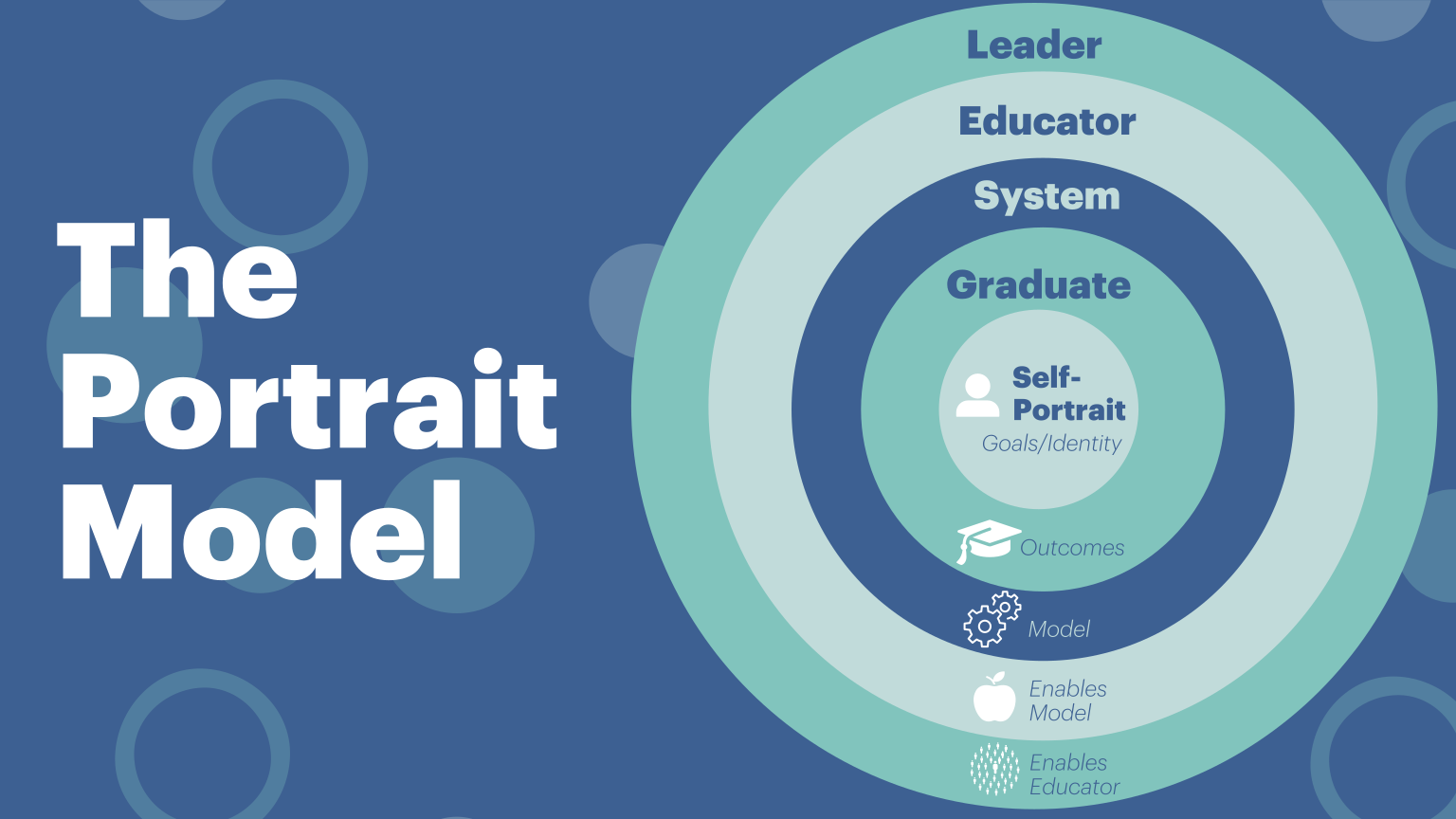
At the center of everything is the Portrait of a Learner — six competencies identified through genuine community stakeholder engagement, now woven into hiring, professional development, adventure experiences, and every classroom in the district. They are the answer to the question the transformation had been building toward: not what do we want students to know, but who do we want them to become?
| Acting with Integrity | Courageous Learner | Thoughtful Thinker |
| Communicates with Intention | Reflects with Purpose | Engages with Empathy |
These are not values on a poster. They are the architecture of the hiring process, the language of every adventure learning experience, and the standard against which all adults in the building are measured. Once the community named what it valued and those values became embedded in every system, ownership shifted. The work was no longer something the district was asking of its people. It was something the community was asking of itself — which is the only way system change becomes system culture.
As soon as you shift the focus to the portrait work — established through stakeholders — it shifts the ownership. It’s no longer us asking everyone to do this. It’s our community. It’s your colleagues. It’s your students. Everyone wants this.
Tim Hejnal
The Question: How Much Longer?
The system Lake City inherited was not broken. It was doing exactly what it had been designed to do: sort students by compliance, reward accumulation over understanding, and graduate enough of them to keep the enterprise running. Changing it required something harder than a new program or a new platform. It required the willingness to say, plainly, that a system producing those results on schedule is not a system worth preserving — and then to do the slow, unglamorous, one-conversation-at-a-time work of building something better in its place.
The question that animates that work was first posed to a staff as a challenge — and then, that same night, turned inward on the leader who asked it. It is the question that belongs in every room, every day.
How much longer do our students need to wait until they have a teacher who cares enough? How much longer does this community need to wait until they have a leader who cares enough to do what is necessary?
Tim Hejnal
The answer is not urgency. It is certainty. What Lake City is building — imperfect, ongoing, and designed to outlast any single person — is the answer to that question, practiced every day. The system was producing exactly the results it was designed to produce. So they changed the system.


0 Comments
Leave a Comment
Your email address will not be published. All fields are required.