

EduCatered: Rachelle Dené Poth
Key Points
-
As educators, in can be great to get involved in tons of different groups and activities.

We are thrilled to bring you a new podcast from Getting Smart called EduCatered: A Podcast That’s Catered to Educators. Subscribe here!
At Getting Smart, food, education, and innovation are at the heart of our recipe. This podcast mixes it all together to get to know teachers that are doing the work and making a difference.
We start with the appetizer: what makes these educators unique. Then to the main course, stories and experiences that have helped to shape their practice. Finally, dessert, some tips for what you can do next — creating a future of learning that works for everyone.
On this episode of the EduCatered podcast, we’re joined by Rachelle Dené Poth, a Spanish and STEAM educator who lives in Pennsylvania. She is also a Getting Smart Columnist and active conference goer, tweeter and the first person to jump into a new tech solution.
Shawnee chats with Rachelle about a range of topics, ranging from the importance of being involved to apple pie. She also expresses gratitude for the work of Katie Martin, a friend of Getting Smart as well! You can check out Katie’s episode of the Getting Smart Podcast here.
Let’s dig in.
On Food
I love sharing [upside down apple pie] and enjoy the conversations that get started after people eat it, like “How do you make it?”
Rachelle Dené Poth
On Diversity
I’m super involved and occupy tons of different roles every day. I have a love of learning as well as a love of being a student (and teacher).
Rachelle Dené Poth
Transcript
This transcript has not been edited for spelling accuracy.
Hey, come on in. Welcome to Educator, a podcast that’s catered to educators. I’m your host, Shani, and getting smart food, education, and innovation are at the heart of our recipe. This podcast mixes it all together to get to know teachers that are doing the work and making a difference. We start with the appetizer. What makes these educators unique? Then to the main course, stories and experiences that have helped to shape their practice. Finally, dessert, some
tips for what you can do next, creating a future of learning that works for everyone. Let’s dig in. Hey, everyone. Thanks for joining us today. I am thrilled to be joined by Rachelle Dine Pope, a Spanish and steam educator who lives in Pennsylvania. She is also a getting smart columnist, an active conference goer, Twitter, and the first person to jump into a new tech solution. Hey, Rachelle. Thanks for joining us today on Educator.
Hey, I’m glad to be here and excited to chat with you. We’re so glad to have you. How are you today? I’m great. Actually, it’s been a good day. School is crazy, but it’s a fun crazy. I can honestly say even some days where you wake up in the morning and you’re just like, oh my goodness, I wish it was Friday or weekend of the weekend. It’s hard sometimes because you’re
tired, but as soon as I get there, I just have so much fun at school with my students. I just think about it at the end of the day, all the different things that I’ve learned from them. Even if I am tired, it’s nice to have those opportunities. Today was a really good day. Well, good. I’m so glad that you had a good day. Nothing tops off a good day like a good meal. And here, getting smart, we adore food. I don’t know if you know that or not, but it may or may
not be our most used Slack channel. And to start, we always ask the same question. Rachelle, if you were to contribute to a cookbook, a recipe, what would it be about and why? Well, I can never pick just one thing. It’s so hard. I’m trying to think of a category of things. And I actually, fun fact, side note, I did contribute to a cookbook. A group of us put together an educator’s cookbook with ideas for quick recipes for all meals and desserts. But
I will limit it to my upside down apple pie. And I only make it once a year. But the reason that I would share that is because, one, it’s easy to make, two, everybody loves it. And three, there’s just something about it that I don’t know, I make it for Thanksgiving. And so even just in that time of the year, it’s there’s something about the process of making my own not store bought, but a, you know, hands on making it that people that try it, they enjoy it, and then they share it.
And I just love the conversations that get started about like, well, how do you make this? And can you make this for me? So that’s the one that I would add. I love that that is so steeped in tradition. It feels very special, very inherent to who you are and and what you bring to your family. What is what is your diversity? What is it that makes you who you are? Oh, goodness. There are so many things. And I think the biggest thing is that I, I involve myself in a lot of
different groups and activities and experiences. And whenever, and I often forget about some of the things that I do, and I play a lot of different roles every single day. And I think at the end of the day, the one thing that has kind of led me to become so many different people, it seems at times, is just my love of learning and my love of being a teacher, but also being a student and combining all of that and just continuing to push myself. And in my classroom, sometimes I forget
that I do other things like I’m an attorney and I’ll often forget about that. But when I think about it, had I not gone to law school and become an attorney, I probably wouldn’t still be teaching because in that experience, I got to learn about the importance of relationships. And then I spent more time learning about my students, sharing my own stories with them, kind of, you know, cutting back a little bit with, oh, we have to learn everything today to more about like, how are you
doing and having conversations. And I think that for me, what I really enjoy the most is I’m just myself. And I’m just whoever I am, what you see is what you get. I like to learn about people. I like to connect with people. I’d like to really get to know my students and learn from their experiences and explore new ideas. And I think that’s probably what has made me who I am today. But of course, that’s probably going to be a little bit different than who I am tomorrow,
because I’m constantly learning, constantly evolving. So you said that you have this a deep love of learning, which has allowed you to really expand and do lots of different things. You, like you said, you’re an attorney, a consultant, you’re a writer. Why did you pick education overall when you can learn in so many different sectors? But why teach? Why education? Well, do you want, do you want the real answer to that question? No, I come from, I mean, when I was
a kid, and I’ve written about this, I love playing school. I am an only child. I would come home from school, play school, my grandmother, my grandparents, my parents would always ask me questions. And I just loved learning. But I never thought that I would go into education, even though my family, I have several educators in different roles from school, school, school psychologists, sorry, counselors, French teachers, English teachers, you name it. But going through school, the things that
I excelled in, I liked helping other people with, for example, French, which is what I took initially. And then when I got to college, I didn’t really know what I wanted to do. Like many college students like, Oh my gosh, this is such a big decision. And somebody, one of my counselors just said, you’re a junior, you need to make a decision. Why don’t you try this? And so I went into education back then, long ago, still not even thinking I would have that be, you know, long term career,
but at least a start. And then that just led me into a program to become certified in Spanish. And then I went to law school. And it’s interesting now looking back, like, how all of it kind of went together to make me who I am today and the things that I’m involved in. So I love it. But like I said before, had I not gone to law school, I don’t believe I would still be in the classroom. That just completely, when people say, when did you start teaching? I almost always say
the year that I graduated law school, because I feel like that was my real true start of really wanting to be a teacher and be an education. Yeah, I love that you had so many different points in your path that you didn’t necessarily know where I was going to lead you, but ultimately led you to where you are today. And that’s so often what we try to emphasize with students, just try things and then we’ll see how it all comes together. So you’re living proof of that. What is something
that you wish every teacher knew or what’s something that you don’t think is taught enough? Well, let’s see. For my own experience, if I go back to teacher prep, like it’s so different now compared to what it was when I went through it. And it was back then, it was so focused on teaching and covering the content and everything had to be perfect and plans and all of that. And I was teaching the way I haven’t taught for years, but now I know that we need to start with relationships,
like the content and all that that’s important, but it can also wait until we build those solid foundations in the relationship with our students. And so any advice that I give teachers now, and I actually have just finished writing something about like things I wish I knew dot, dot, dot, and there’s lots of times lots of things I wish I knew, but I just wish teachers knew that it was okay to take a break from the teaching. And I think a lot of educators have learned that in this past
year and a half is, you know, I need to slow down on this content because I need to make sure the students are okay and to check in with them and build relationships, not just with students, but with our colleagues with the school community. And if I had one word of advice, I mean, we hear it so often, it’s about the relationships and building those connections. And I think that’s where we need to start because once we have that, then everything else can kind of start to flow and
get into place. Yeah, you know, sometimes, you know, we hear that about, you know, building relationships and the importance, but teachers don’t necessarily always know where to start or what that looks like. Do you have any great strategies that you’ve used to build relationships or any other advice that you can give on how to start that process? Yeah, I don’t, I don’t know that everybody, students definitely would not consider it to be great advice because one of the easiest
ways is just quick icebreakers. And I started to do that years ago, just random things I would make up and not that needed a lot of planning. They didn’t always go the best way, but that’s how we learn. I think that’s important for students to see us embracing those risks as well and trying things that are different. But just even quick conversations when students come into the classroom, I like to play random music, some of which I’ve chosen, some of which they’ve added to a playlist,
because, you know, you see the kids walking by and then their, their moods are changing or they’re like, what is this music that you’re playing? Or, hey, I remember this song and then you have conversations, like it’s just those small interactions, doesn’t have to be anything big. Or you can use some of the different digital tools that are out there to do quick surveys or have students create like an about me or share a video. So they build that comfort and confidence with their
classmates, but it can be really quick. Retroos and a lie has been one that’s been a favorite. Even my students this year said, all of our teachers are doing these like ice breakers. Is that something that you all have to do? And I said, no, it’s just, we didn’t start last school year in person and it’s nice to actually see each other and be able to have conversations and learn like we actually have things in common. Like how about that? So it sounds like keeping it
simple is kind of the best way to go. It doesn’t need to be complicated to build relationships with students. No, not at all. Okay. And so I’m sure you also pass on some of these tips to your fellow teachers and I’m sure that you all collaborate a lot. How do you lead? Well, I don’t know. On some days, I feel like many of us probably feel like, I don’t know if I really did a really good job today or that didn’t go well. But what I’ve learned, the way that I’ve
learned to lead has actually come from one, my experience in law school, just seeing those teachers and bringing that in my classroom. But honestly, I’ve learned to be a leader from observing my students and becoming more confident from them because for years, like I said, I was teaching, everything was like the same as what I had in high school in French. It was like, here’s the rules, here’s the homework, okay, see you tomorrow next day, same thing. But I started to give them
opportunities to kind of take the lead in the class and me not be the one making decisions. And that’s uncomfortable at first because you’re so used to being like, I have to be the one to decide everything. But watching them and seeing them flourish and seeing students who were hesitant to speak or hesitant, like, I don’t want to work with this, we’ve all seen it, like, I don’t want to work with this group, I want to work with my friends. But just develop these skills. And I have
the benefit of seeing them year after year as the only Spanish teacher. But I’ve learned just by watching them and their interactions and how they support one another. And so I’ve adapted some of that in my interactions with some of those same students. But then in trying to apply that into my own kind of classroom, which is with my colleagues, both in my school and then a global network. And, you know, I try to support, I look to see where I can help where I can offer where I
can ask for help, and just be somebody that students or colleagues know that they can turn to if they don’t know if they have a question, I always say, I may not know the answer, but I will find somebody. But I just try to lead with the idea like, this is me, I don’t know if I’m doing everything correctly, I’m going to take some risks, being transparent about all the process, but also getting out of the way when I know that I need to get out of the way and let students take more of a lead in the
classroom. It’s so great that you model such vulnerability and you allow students to see you as your authentic self, which increases their agency. And it sounds like you give them some really great leadership opportunities, which is ultimately what education is all about. And when you think of education, you talked about globally and having those connections and your willingness to learn. What is something that you’ve changed your mind about recently,
what’s so much going on in the world and education, and I’m sure you’ve been reading a lot. What is something that you think about differently now? Oh my gosh, so many things. The biggest, I would say, and it’s not totally recently, but just in general since when school is closed, up until now, has been the homework and the activities and things I’m having students do in my classroom. Because for years, I thought I had to
use all of these materials to go with the book and everything had to be the same. But I’ve realized it’s okay to change it last minute, even today when I laugh whenever you ask it, because I had my plan for my students to do some audio activities, then we were going to do a game, and then I was going to have them do some writing activities to kind of like build and apply in all those different formats. But I had everything on the board and then I looked at it, I went,
yeah, I don’t really like this idea. I looked at this page and I don’t think this is a really good, you know, man or good use of your time, I guess. And they just looked at me and they said, are you sure it’s in the packet? I said, just because it’s in the packet, doesn’t mean that we need to do it. Like I’ve put some activities there. So I’ve really, you know, there are some times where I feel like I have struggled this year just because I feel like at
the beginning of the year, been out of practice of that in person. So finding the balance of activities. And so I’ve really been trying to rethink how much I’m talking again, because I got away from that. I was using stations, I was letting students lead. And I started to find myself talking more of the period. And so I’ve been really rethinking like, I don’t need to talk, it can be an audio activity, or I can have them get up and read to each other, which hopefully
they stay on task, which they do most of the time. But learning needs to be social. And I didn’t realize that for a long time. And so that’s something that I continue to work on. Yeah, no, I love that. Learning is to be so social, collaborative and about the community. And when you think about your community, who is one voice in your community that you continue to learn from? And what role have they occupied in your community? Yeah, there is another with
picking the one I always try to find a way around this, like, is there a group? Is there, you know, I don’t want to just name one person because I have a lot of people who are very supportive. But I will say that the way that I’ve formed some of these networks has been through Twitter and just different groups and conversations. And one example, there’s a group of us that joined a conversation on boxer, we did a book study a couple of years ago, the four o’clock faculty book.
And when the book study ended, everybody was in the group and they were like, well, what do we do now? Do we just leave? And here we are two and a half years later. And some of, you know, the best friends that I have that are educators in some cases that I’ve not even met, are the ones who are the most supportive that check in with me, that check in with each other, and are always putting out really great content and resources. And I think, you know, if I pick one, one answer, not
specific to a person, but I think just find your space. And it might be Twitter, it might be Instagram, it might be a group, like I have a group on Facebook that I started last summer, thriving EDU, because I was seeing a lot of teachers looking for answers, some negativity, just people trying to find the right space. So I just not going to make a community. And so I love that community because a lot of people join in and I feel like I can share what other educators are doing and kind of
support that because I like sharing other stories, not just mine. And so I guess the real answer is just find one space, one activity to start to form a network because we all need to have either a full network or a few people that we can bounce ideas off of and who give us push back to whenever we need it. No, I love that. Is there someone in particular on Twitter that you will recommend others follow or interact with? Oh yeah, there it is. There’s the one. I really like
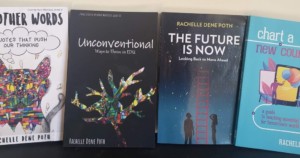
learning from Laini Raul, who she has written a book, Evolving Learner. Katie Martin is another one trying to think of who else. There are just so many that put out great blogs and information. A good friend of mine, Dr. Will, he does a podcast and he has educators that come on. So I love listening to his podcast and even like Wes and Kishnik and his wife Molly have a great podcast as well. And I could keep going. I didn’t name just one, but I’m terrible with those. But I don’t
know, just find something either to listen to, to get ideas, to drop into a chat and see if it works. And if not, there’s plenty of other spaces and networks out there. Yeah. No, well, you’re only terrible just because you’re so collaborative and you want to make sure that you amplify lots of voices. So that’s not a bad thing to be terrible about. Terrible on. So Richelle, it’s just, it’s just really been a joy talking to you today, having you on Educator. Thank you for being here with us
and on the Educator podcast and sharing your wisdom. We appreciate you. Yeah, thank you. It’s good to talk with you. Thanks for tuning in today. We hope you found this conversation inspiring, illuminating and actionable. We love getting to talk with our wide range of guests about what makes us unique, alike and connected. Know someone who will make a great guest on the podcast? Email mason at gettingsmart.com and don’t forget to subscribe wherever you get your podcasts.
It really helps to get more people around the table. Bon appetit.
Elsa Villarreal
I love to continue learning about other perspectives even though I am now a retired elementary school teacher.