


Rachelle Dene Poth on Charting a New Course
- Connections and Presence: on building awareness, connections, and responsible online behavior.
- Team Up: social and emotional learning is a team sport.
- Create and Connect: fostering strong communication skills
- Show What You Know: on digital storytelling
- Create Global Connections: developing empathy; connecting students with other students around the world
Stay in-the-know with innovations in learning by signing up for the weekly Smart Update.
Transcript
This transcript has not been edited for spelling accuracy.
You’re listening to the Getting Smart podcast, where we unpack what is new and innovative in education. I’m your host, Jessica, and today I’m excited to bring you a podcast with one of our popular teacher bloggers, Rochelle Denae-Poth. Rochelle is a French, Spanish, and technology teacher, as well as an edtech consultant.
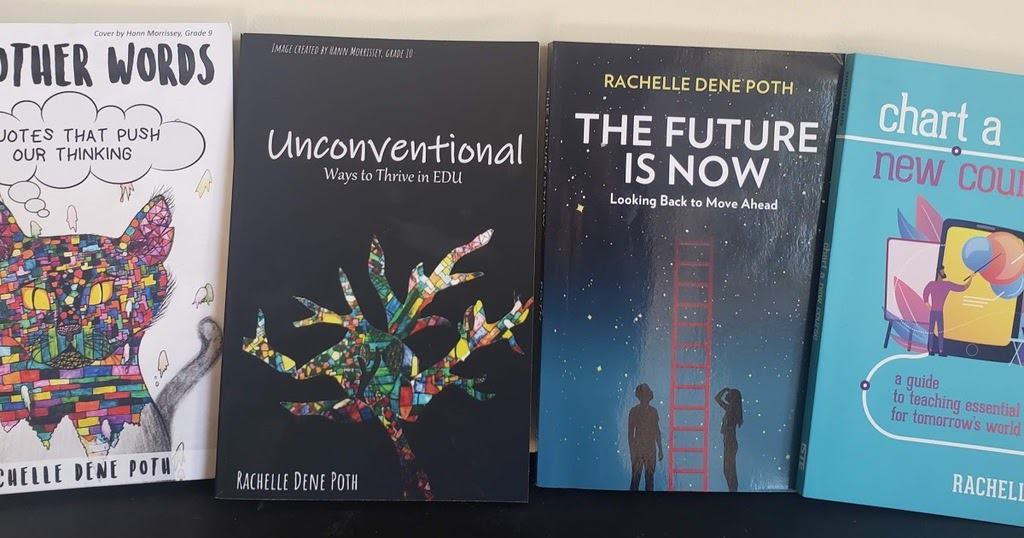
She is an attorney with a master’s degree in instructional technology and leads the ISTI Teacher Education Network. In 2019, Rochelle received the Making It Happen Award during the annual ISTI conference. She’s published four books with many more in the works, I’m sure. Rochelle’s most recent book was published by ISTI and is titled, Chart a New Course,
a Guide to Teaching Essential Skills for Tomorrow’s World. Rochelle and Tom recently sat down to talk about the book and the future of teaching and learning. Let’s listen in. Rochelle Denae-Poth, welcome to the Getting Smart podcast.
Thank you for having me. I’m excited to be here. It is such a treat to have you on the podcast. We’ve had the chance to work together for a couple of years and I guess I consider you our edtech writer.
You’ve contributed on a regular basis about teaching and learning, particularly with technology tools and we appreciate your regular contributions. Also love all the books that you’ve been writing and we’re going to talk about those today. I’d like to go in the way back and see just to find out why you studied French at Penn
State. Yeah, that is a question I’m often asked, especially when people find out that I haven’t been teaching French for the past couple of years and that I’m actually a Spanish teacher. But my interest came from when I was a kid, my grandfather, my dad’s dad had actually spent a lot of time in Paris and had some close friends there.
And so as when I was growing up, he would often speak to me in French and I of course never really knew what he was saying, but I loved the sound of it. And then the summer between my eighth and ninth grade year, my parents had applied to have a student come and spend the summer with us from France and I was enrolled to take French in my ninth grade year, the French one course I was going to take.
And so that’s kind of where it started. And then as I noticed through high school and then going to Penn State, the interest and my strengths in different areas that I was really connected to French was something that I really enjoyed and was good at and I enjoyed helping other people kind of tutoring them.
And so it just kind of evolved over time that that ended up becoming part of my major in addition to education. But I really for a long time didn’t know what I wanted to do other than I wanted to do something with the language. Did you spend any time in France?
I went two different times. One was not too long. I think two years maybe after we had the students stay with us, my parents and I went and stayed with their family for about two weeks. And then my senior year in high school, we took a trip with the French club and went and
traveled to France and Switzerland and Italy for, I think we were gone for about 10 days, but I have not been back since. I actually was in London in January at bat and had hoped to take like a day trip over to Paris, but it did not happen. And it was after I had graduated Penn State that studying abroad became part of their
program, but it wasn’t a mandatory component while I was there. When did you start speaking Spanish? Officially, I took a course. I took one course at Penn State just to see if I could learn enough of it and see if I was interested in it.
And then as a kid, I went next door to my neighbors to ride with them to school and they were studying Spanish. And I wasn’t taking any languages at the time, but I remember looking through their book. But when I graduated Penn State and tried to get a job teaching French, I couldn’t find one. And in many cases, interviews that I went on, the suggestion was that I needed to
find something else besides the French so that I had more to offer in a school. And the number one suggestion actually was history, but I didn’t see myself kind of going down that path. And then it seemed logical to me to get the Spanish. And so I enrolled in a course, a couple of courses between Pitt and a local university
to get my certification. So it’s been a while, but it was late actually, probably 1993. So yeah, many, many years ago. I think you, like today, you just wrapped up your 24th year in the Riverview School District. Is that right?
That is correct. Yes. It’s hard to believe because I was just having a conversation actually yesterday in one of my class meetings that I’ve been doing and talking with one of my students about how fast time goes. And all of the students that I have now, who I taught their parents and the years that
they graduated in, we just think, I mean, where did those 20, 23, 24 now years go? It’s amazing to see the growth in the students, but also to think back, like I taught your parents at this point. So the next origin story is how does a French and then Spanish teacher become America’s ed tech teacher?
Where and how did that interest come from? Well, my interest in all things related to technology started back probably seventh or eighth grade when Apple computers were just starting to come into the classrooms and I was an only child. I am an only child and my parents worked and were often working with computers. And so I remember staying after school, learning how to code and then going
home and being excited that I could write my own code and create programs. And that was, I guess, the start of it. But then I’ve always been interested in technology in my classroom. Boy, that’s probably been about 15 years where some of these different digital tools started to pop up that were useful in teaching a language that I could give my students a
website and they could kind of find their own path to go on and explore. But for me personally, I was looking for something to get a master’s in because I had my bachelor’s and then I had gone to law school and I never got a master’s degree. And I was really interested in the ed tech. So I got my master’s, but then not long after that, my school district created a
makerspace and for steam with me teaching French and Spanish at the time, wanted to incorporate some of the arts. And so I started with teaching students how to program hummingbird robots and wasn’t all that great at it, but that’s OK because the students were learning, I was learning from them. But then after that, I was able to pick my own course, which now has been this emerging
technology. So I guess it was kind of there all along. It’s just evolved over time. And now I get to do all of the things that I really love doing. How do you think about your role as a teacher and how that’s evolved over the 20 years? Oh, my goodness.
I I say this so often just thinking we all say if I could go back and change or I wish I would have known this or done this differently. And I know when I first started teaching, I was teaching the way that I had been taught because it worked for me teaching French. I was using the same methods and strategies that had been used by my teachers and doing
that in my classroom and not really opening up a lot of opportunities for my students. And I also wasn’t spending a lot of time getting to know my students because that wasn’t something that I was used to or had experienced in my own life as a student. And then the more that I started to connect with other educators and to build my own network, also going back to school, specifically law school.
And I’ve said this to people as had I knock on to law school, I don’t know that I would still be teaching because when I went to law school, I struggled and I had challenges and I got to be back in that that place where I was learning as a student. I was experiencing these uncomfortable moments where you don’t know the answer and all of those frustrations that can come with learning.
But I also was able to see what it means to be a teacher in a different light because of the teachers that I had at law school. And that helped me to completely change what I had been doing and focus more on building relationships and creating opportunities for students and get away from what I had been doing and also to kind of take myself out of isolation, which I had placed myself in.
So definitely have evolved, still evolving, of course. I love that answer. It’s it’s a bit unexpected because you talked about starting with relationships and we’re going to talk about your books and that comes through in everything that you’ve written and about collaborating and about being there’s a certain humility, right?
The ability to say I don’t know and to to learn along with your students. Absolutely. I’d love to talk about your writing. Just this I’m curious about your sort of productivity function. How and where and when do you write?
Is you write more than I do? I don’t know if that’s possible because I you write a lot. Are you you write on a laptop late at night sitting on the couch or what’s your what’s your writing strategy? Well, I do have a hack that when I when I’ve told people this or when they’ve seen me
doing this, they’ve even said I had a conversation with Danny Steele last summer and it was just the funniest interaction because he leaned. We were at we were in Boston working on the Education Right Now book and he looked at me and he said, I have to ask you, do you ever get stressed or, you know, you do a lot of these different things?
And I said, well, yeah, of course I do. Well, what do you do? I said, I take a break or I take a walk. And then he asked me something similar about, well, how do you write so much? And I told him what I do to help.
And he said, I have changed his life. And what I do is this, I don’t often just sit down and type and write or write ideas on paper. I will take notes if I’m reading something. But probably if I had to guess 75%, if not more of what I am writing, started by me just talking and using the voice to text and then fixing it and adding things in between.
And so that that can be a very good hack to do. So for self care, I go for a walk every day. But while I’m walking, I’m reading a blog or I’m just talking into my phone and thinking about what I did that day or reflecting on something. And when I come back next thing you know, I have 1500, 2000 words that need me to go through
and edit them, but it’s such a time saver. And so that’s how I am able to kind of write a lot in different spaces. That’s such a cool hack. And I’ve heard that you do that. And I have honestly never, never really tried that.
So I’m going to have to give that a go. It’s amazing. Let’s talk about a couple of the books that you’ve written. A couple of years ago, you published a book of quotes called In Other Words. Why a book of quotes?
Well, that one, and I’m going to attribute this to Sarah Thomas, who had this phrase about shower gems, like we have these ideas that kind of just come to us. And that was a phrase that she coined a while ago. But it was in the summer before the book came out that somebody had approached me about, oh, you should write a book.
And I was processing it and thinking about it. And then one night I pulled my notebook, my folder out, where I have all of these notes from all the books that I have read, just trying to see what are some of the takeaways or what are the things that I’ve learned after reading all of these books and my own reflections. And I noticed that most of what I had written were quotes from these books.
And so I thought, I wonder if I could write a book about quotes that, here’s the quote, how does this apply to life or education? And then what’s my take on it? Like in other words. So when I first had the title, it should have been, it was going to be quotes that push our
thinking or push us to rethink education. But once I put the book together and looked at the different stories and the experiences, I realized it could be read by anybody. It’s not specific to education. It’s just to life.
And so quotes are something that I really attached to and I remember them. And it just seemed like a good idea at the time. And so I went with it. Another book is the feature is now. I love that book and it’s it’s worth noting that that one starts with relationships, right?
It does. Yes. And it’s it’s interesting to think because talking about the writing, I was writing three books at the same time. And that was in November, December of 2018.
But I’ve told people it’s not a bad thing because if you get the writer’s blog on one of them, you can just go to the other. But what I loved about the first book, in other words, and this future is now, is it’s not just my story. I was able to bring in stories from other educators, from some of my students and share.
But I did start by focusing because now that I know better is like relationships. And for me, it was the mentor that I had that made the difference in, you know, personally, professionally that helped me to start to see the students and to build those connections and then to kind of branch out. So it goes through like, what do we need to do to build ourselves to then empower others?
And then what can we do together to prepare for the future? What is gladiating together? Gladiating together is just taking working together as we mean, having our network and pulling our forces and our strengths and everything together so that we can help others. And one example, I mean, just with edu gladiators has a chat on Saturdays, but there’s always
conversation going throughout the week. And they always ask, you know, how do you gladiate for students? What are you doing for others? What are you doing to help other people prepare for the future and support each other? The next book was unconventional, which I love because it’s really focused on learner
experience and some strategies for creating unconventional learning experiences for all students. Yes. Yeah, this one is another book that you don’t. I’ve kind of noticed a trend with my books is you don’t have to read them from cover to cover. You can, especially with the unconventional because of the different topics that I have in there for anybody who’s looking for ideas, but doesn’t have the time to go and look through all the resources
say for getting started with project based learning or augmented virtual reality or global collaborations or social emotional learning, any of those. I put together some easy ways to get started and shared all of the experiences that I had and some quick takeaways so that people can just feel confident to pick it up and that they have something tangible that they can get started with.
So your books are sampleable. I appreciate that they’re really well organized and chapters are well introduced and they stand on their own makes them really, I think, super useful. Thank you. Hey listeners, Jessica here.
I wanted to just take a quick break from today’s episode to let you know that Getting Smart offers advertising opportunities on our podcast and on our website. Do you need to get the word out about a new campaign or initiative? Want more school leaders and teachers to plan for the new school year with your EdTech product in mind? If you’re interested in sponsorship or want to learn more about ad placements, just shoot me
an email at info at GettingSmart.com. All right, let’s get back to the podcast. Anyway, we’re talking about your new book today, Charter New Course, a guide to teaching essential skills for tomorrow’s world. It’s a ISTI book that you enjoy working with ISTI on this book.
Yes, I have been involved with ISTI since I got my master’s and we had to join an organization related to EdTech. And so over the past six years now, since since joining, I have become even more involved. And so being able to write this book and work with ISTI has been an amazing experience and opportunity for me. So I’m definitely thankful for my editor and for everybody who worked with me
on this. They have a kind of a tried and true process that includes peer reviews and everything. Did you find that useful or challenging? It’s any I find it I’ve ended to be both because I’ve had to do that with all of the other books as well, where even the first two finding your own peers and sending it out and getting that feedback
because, you know, it’s uncomfortable because you’re thinking, what if people don’t like it? What if it’s terrible? What if my writing is bad? All of these things, but it makes us vulnerable. But the same thing with our students is we need to give them feedback.
We need feedback for our own growth as well. And in doing this, when it was when did go through the peer review process and getting the feedback, it’s good because it pushes you to think about what you want to put out there and how can you make it even better, but also gives you some feedback from maybe perspectives or backgrounds or needs that you didn’t actually consider because you’re not aware of those.
And so it really does help you to put together the best possible resource with materials that you can provide for other educators. And so it made a huge difference for me to have that and then to work through the feedback and then to give them the next version of it and then to build upon that. Let’s let’s take a quick lap through the book.
The first chapter is called Connections and Presence. It’s really about navigating the digital world. So this is an interesting place to start. Where you talk about building a sense of self-awareness and being purposeful about building your presence online. How would you summarize your advice on sort of building a digital brand?
Yeah, that this is something that I noticed when I took when I got my masters with the online spaces and everybody now dealing with the remote instruction is it’s so hard to make those connections online to hear that the voices and to understand tone. But for our students, especially my eighth grade students, just because they have the technology in their hands, doesn’t necessarily know that they it doesn’t necessarily mean that they know exactly how to use it, I should
say. And so helping them figure out how to interact online, how to be responsible, what they’re posting, how to establish connections with other people and create that space. But also what will other people perceive of them, whatever that whenever they read what is being put out there. And so helping students understand what their responsibilities are when it comes to posting online, being responsible. And then for teachers, looking through this, like, what are some activities that we can do with our
students to help them to build digital citizenship skills, or to engage them in conversation when we can’t be in the classroom. And these are tools that can be used, whether we’re in remote instruction now or just back in our classroom, because we can always expand the where we are learning. And so it gives teachers some ideas, some quick tools to try to get started that can help them kind of expand the space and the interactions that students are having online.
Chapter two is called Team Up and it’s on social emotional learning. Why, why I hope chapter on social emotional this is interesting, I had a conversation with somebody a little while ago about how much I have learned about social emotional learning. And sometimes even in my classroom, doing different methods or using different strategies where you don’t actually know what the name is for it. And then somebody says something to you, oh, you’re working on social emotional learning. And you think, Oh, I didn’t I didn’t realize that. But honestly, the first time I started to learn
more about it was having written a blog for getting smart a couple of years ago, and thinking about what are the activities that I can do in my classroom. But the key is what social emotional learning skills, these are skills that our students need now, but also looking toward the future when thinking about their next steps beyond our classrooms, like will they be working in the workforce right after high school, will they be continuing their education, and helping them to be able to work through and be self aware and self management and make their decisions and push through any of those
frustrations. So giving teachers ideas that they can use with students, whether they’re in the physical space, or even in the online space, I just thought it was worth putting out a bunch of ideas that could work regardless of where the actual learning was taking place. Chapter three is called create and connect and it’s on communication skills. And I think you do a great job in that chapter of giving teachers and and other readers of kind of a broader view of new communication skills, including,
including the basics, but also the new choices that really create options and creativity for young people. Yes, I one thing that I really like about some of the ideas that are shared and throughout this book, the other piece too is that I did have a few current students and then several students who had gone with me to different conferences over the years who are just finishing their freshman year in college, share what their takeaways were from using some of these different digital tools. And what I’ve learned from them is when it comes to communicating some of our students and even me, I
was like this, I didn’t really like to speak in public or speak in front of my peers. And I still say that now. But finding a way that we can hear from all of our students. And it doesn’t necessarily mean that it’s going to be all the same format, but giving them different choices where we can understand where they are in terms of learning, have them feel confident when maybe they’re making a video that they can record over and over, but then they’re fine when it’s played in class. I have had students come back and say that it makes a difference having choices, whether they want to do, say, a blog or do a podcast or just do a
short video response. It definitely enables them to kind of explain where they are and what their thoughts are and engage more in discussion. Chapter four is called Show What You Know. I thought that was going to be a chapter on competency based learning, but it was it’s really about digital storytelling and helping young people tell their story in new and creative ways, right? Yes. And it is something again, like digital storytelling was something as a language teacher, I was always looking for
different ideas for students to create with. But years ago, I would assign a project and it was basically they all had to do the same thing. And I would offer some different digital tools to give them choices. But what I find is whenever you do provide them with an opportunity to do the storytelling, it helps them to build all of these other skills in the process. So they’re practicing the content, but they’re also able to create and do things that are more authentic and meaningful to them when they have some choices. So students want to make a cartoon or do some type of an animation. Maybe they want to do sketch noting
because it doesn’t always have to involve technology. But just having a variety of options where they can show what they’ve learned in a way that’s interesting, engaging to them. The chapter five, the last chapter is an interesting one. It’s called Create Global Connections Learning Together and Exploring the World. So this one does a couple of different things. It gives teachers a lot of really practical tips about how to get started. I don’t get started, but it also puts it in sort of a global context of how as a teacher and students can connect
with the global learning community. So it was both a practical and inspiring way to finish. I love the focus on empathy and exploring diversity in that chapter. Yeah, the project based learning was something that I thought I had been doing for many years, but then I realized after reading and doing going to a conference and talking to Don Wetrick and some other educators who speak about project based learning and genius hour that I was just having my students learn based on projects. And so I made a huge effort to bring PBL into my classroom and give students a
chance to explore things that were interesting to them, but also bring in the sustainable development goals and learn more about places that otherwise we hadn’t been learning about. And so when they started to pick their own topics and share that with their classmates, it really brought in so many amazing opportunities for them far beyond what I could have been or what I was actually providing to them. And just the learning that took place was, I mean, it was amazing to hear what they would present on to see the connections that they were making with students that we were collaborating with in Argentina and Spain. And I just thought it was a great way to
kind of end as a reminder, like, we need to take learning beyond our classrooms, especially now when we are in remote instruction or even in the future. I think one thing that’s a positive that we need to look for is ways that we can connect our students with other students and classrooms around the world, because we can’t always do that. My students always want to go to Spain right away. And I would love to take them. But what can I do that might be a little bit of a substitute to still engage them in that content and to connect them with other people from other places and learn about them?
It’s a great book. Everybody should get turned a new course, a guide to teaching essential skills for tomorrow’s world. Rachelle, let’s wrap with a quick IT Tech lightning round. Will AR and VR ever lip up to the hype at least as a learning medium in schools? I hope so. I really do love teaching AR VR to my students. And the thing I love about it is that, one, you can take them on virtual trips and they can look closely at places that otherwise they may not be able to. Or two, they can hold some of these different objects and shapes and things to learn about them closely and develop their own connection to it for more meaningful learning. So hopefully staying focused on the purpose. But I
think it is a powerful way to bring in different learning opportunities. Rachelle, you talked about the desire to go to Spain. Do you use Google Expeditions and other tools like that to do virtual field trips? Yeah, the first one that we use that I always recommend people is using Nearpod because I brought that into my classroom as part of my master’s degree program. And then one of my students actually created their own lesson. And so it was a fun way to look at something that wasn’t just the picture in the book that we were reading. And they could be really curious looking around the space they were in.
What about AI and machine learning? I’ve had an opportunity to kind of explore some different AI tools and some platforms that are out there. And I know even just people will say, oh, it’s going to replace teachers, but it’s not that it’s going to replace teachers, it can take some of those tasks that take us a long time. So an example where you have a platform that students can start on the same activity, but based on their response time or their answers, it can chart their own personalized learning path. I think that’s where we will see that it’s making a difference that then frees up time for us as teachers to have those interactions and work with our students more closely. We’ve already seen pretty widespread adoption of adaptive learning tools and those often incorporate machine learning algorithms, Dreambox and iReady and the Chief 3000 are widely used in K8 schools, particularly in reading and math.
What about administrative applications? I imagine we’ll see some impact of machine learning there. Yeah, I would think so. Like your high school schedule probably. Right. Yeah, that is a very complicated process. So if anything can can help with that and something that’s kind of a repetitive task and help with the workflow, I think that would definitely be a welcome thing. Before we hit record, we were talking about the challenge that transportation will be this fall when we have to do distancing and when kids are learning remote and at school and the whole situation is quite dynamic.
Just bus routing is going to be super challenging. So lots of probably lots of back office places for smart tools. I agree. Question about coding. It’s interesting to ask a world language teacher about coding, but I’m curious if you view that as a do you think of coding as a language or is it just a job skill? It’s both, I would think. I mean, for me as a language teacher, I never until a couple of years ago, I did. I wouldn’t even think about doing anything with coding in my classes, but then I got started with hour of code and realized that I can not do that. I can work with my students in my Spanish classes as well as my team classes and help them to develop some of these skills and some people feel like it’s an overwhelming concept, but the idea is they can just kind of create.
And in my class students when we work through some of the different coding programs, I’ve seen students build other skills in the process beyond the code. They’re collaborating, the relationship skills, of course, for the future, I mean, having that ability to work with coding and create is definitely going to be a need. I see as something that’s going to increase. Are all your kids on TikTok? I don’t know. I know that there are a good amount of them that are and I personally stayed away from it. I have not posted videos, but I did look at a couple of videos fairly recently.
But they were all of animals. But I guess the broader question is like, is the world shifting from print to video? I hope not because I really like, for example, books. I like the feel of having the book and I don’t mind. I like the accessibility of having it on Kindle if I’m traveling or something. But I hope that we don’t totally make this shift away because I like things like the newspaper and the crossword in the newspaper.
I think that the digital makes it easier for other people to access or maybe it stays around longer. But I hope we don’t ever get rid of one for the other. Rochelle, the thing that I most appreciate about your books is the way that the relationship shows up in all of them. Are there particular apps that you think help create or leverage sustained learning relationships? There definitely are.
And in this time where we’ve moved to the remote teaching, remote learning, I know doing some sessions for teachers in my school, but also just other educators looking for some ideas. The one thing that everybody has said that they have missed is being able to connect with students to hear our voices. And there is so much power in that. And so I feel that when you have some different tools or apps that can use that, that you can use that to build relationships for me in my classroom. I use tools like Buncie and Flipgrid and my students or myself can record a video or they can post videos and they can look at their classmates, what they’re saying, or they can connect even we’re connecting with students in Argentina.
And just continue to build those relationships that now while we are not in our classroom space, still being able to interact and hear each other’s voices, it can help to build those relationships for when we do return back to the classroom space. Rachelle, you and a couple of million other educators have just finished the weirdest and probably most challenging year of your career. There have to be hundreds of thousands of teachers right now trying to decide whether they come back or not. And I wonder if you want to just close with a word of encouragement as educators are thinking about next year, which could be even more complicated than this year. Do you have any perspective that you could share that might encourage people to give it a go to come back and be part of teaching for the next few years?
Yeah, I know it has been a very interesting period, a couple of months here. But I feel nobody was I mean, there was no way that we could prepare for this. And now moving forward, we don’t necessarily know what the next school year will look like and even beyond that if we’ll have the same type of experience in the future. But we’ve had this experience and now we have that bit of preparation. And so the best advice I can offer is to take time to just look at where you were when you started, what are some changes that you made and why and what would happen.
I always have in your mind what would happen if at the end of the school day, which I’d say it’s today, you’re told that school is going to be closed for two weeks or longer. What would you be doing differently than what you did before and just have a few ideas to get started with because it can be overwhelming to think about. And it’s definitely scary as well. But make sure that you reach out to people and have your own plan of what worked, what could be better. And one last thing, I know this is a lot of advice, but also ask the students for feedback too, because that’s something that I did just to ask them.
It’s not just about my class, but just in general, what worked for you, what didn’t work for you and to kind of process all that and to take an opportunity to try things that are different than maybe what you have been doing and just be open to some new ideas as well. Because we’re all learning as we go. Thanks for that advice. For the teachers that are listening, thanks for all your work this year. I know it’s been tough.
We need you to come back next year. You learned a lot. You’ve built some agility and some skills in the last few months and we need you in the classroom next year. We’re Sheldon A. Poth. We appreciate your writing.
Your books are great. It’s been fun to review those today. I appreciate all your contributions on getting smart and we appreciate your teacher leadership. You’ve made this a better profession. Thanks for that and for being with us today.
Well, thank you very much for the opportunity. I enjoyed having a chance to catch up with you. A big thanks to Rochelle for joining us on this week’s episode. We appreciate her work on this book as well as all the guidance and innovation she shares on our blog. For more on all things innovations and learning or to check out more of Rochelle’s posts, head on over to GettingSmart.com.
And before you go on to your next podcast, make sure you hit subscribe so you don’t miss out on any of our future episodes. We’d also love it if you leave us a rating too. Alright, that’s it for today listeners. For the Getting Smart podcast, this is Jessica, signing off.

0 Comments
Leave a Comment
Your email address will not be published. All fields are required.