

Give Families a Window Into What Students Are Really Learning
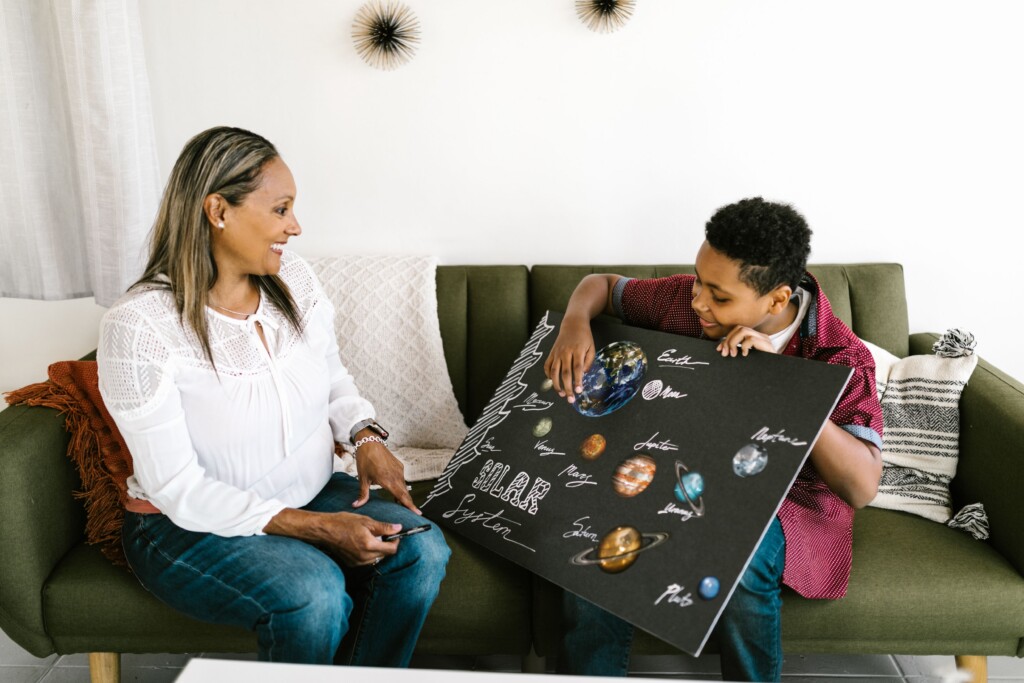
When students have meaningful work to share, families get a clearer picture of what learning looks like beyond grades and test scores.
By Ryan Sprott and Taya Tselolikhina
A report card can tell a family what a student earned. It can’t always show what that student cares about, how they think or what they can do with what they’ve learned.
That’s an important missing piece. A student explaining how they solved a problem, reflecting on a question they pursued or sharing something they created can reveal far more about their growth than a letter or number on a report card. It gives families a window into the skills, interests and thinking that traditional measures can miss.
Embedding these authentic moments into routine practice gives districts a far more meaningful story to tell. And for district leaders, it creates an opportunity to make student learning a visible, ongoing part of family communication rather than a quarterly report card reveal.
Create Experiences Students Want to Share
If schools want families to see learning, they first need to give students something worth sharing. Project-based learning (PBL) can create those opportunities by putting students in the driver’s seat. They analyze questions, work through problems, make decisions and apply what they’re learning to something that matters.
A strong project might ask students to investigate a problem in their community, explore an issue from multiple perspectives or design a solution to a real-world challenge. Along the way, they make choices, respond to feedback and explain how their thinking is changing. The result is more than a finished product or a letter grade. Students have an experience they can describe in their own words.
We once visited a school in Tennessee where students regularly greeted visitors and explained what their peers were working on. They weren’t assigned to be tour guides. They had simply developed a sense of ownership over their school and were accustomed to—and enjoyed—sharing their learning with people outside the classroom.
Just as that kind of ownership can extend beyond visitors, not every project needs to end with a formal presentation. Schools can create regular opportunities for students to talk about their work with the people who matter most: their families.
Make Student Work Part of Family Communication
Districts don’t need to reinvent their communication channels to show learning; they need to let students participate.
Upgrade existing events. Don’t build new events from scratch. Layer student learning showcases onto moments families already attend—like parent-teacher conferences, school plays, or athletic events—so student reflection becomes a natural part of the school calendar.
Turn projects into public exhibitions. A culminating presentation transforms a classroom assignment into a community experience. Whether students are demonstrating a design, pitching a solution, or presenting research, inviting families and the community experts who guided the work makes learning visible and accountable. We’ve seen everything from presentations on community enhancement projects to debut documentaries to playground designs that were recommended for funding at school board meetings.
Emphasize process over product. A finished artifact is great, but the thinking behind it reveals the growth and learning. Encourage students to explain what they tried to solve, the choices they made, and where they failed along the way. These self-reflections directly demonstrate the high-level skills outlined in most district “Portrait of a Graduate” frameworks.
Offer authentic demonstration choices. Different students express themselves differently, and families consume media differently, too. Let students document their work through written work, short videos, photo essays, or podcasts. Whether it’s a playground redesign pitched to a school board or a student-directed documentary, the medium should match the task and the student.
Put student voice in grown-up channels. District newsletters, websites, and social channels are usually written by adults for adults. Replacing administrative descriptions with short student-created reflections gives families authentic context, and can help ensure these communication channels are accessible and multilingual.
Make the learning goals visible. Families don’t need a long explanation of the curriculum. A simple connection between the work and the intended learning can help: What were students expected to understand? What decisions did they make? What skills did they practice? What did they discover? A few well-chosen details can help families see the learning behind the finished product. A great way to start this conversation is a family letter at the start of the project that shares the goals and ways to support, as well as a commitment to leveraging the insights and unique skills that families and community members can bring.
Let Families See Learning in Progress
There is another important opportunity here: sharing student voice throughout the learning process.
Reflection can be a powerful bridge between school and home. Students can talk about what worked, what challenged them, how their thinking changed and what they would do differently. Those reflections help families see learning as an ongoing process rather than a series of completed assignments.
Schools can build these moments into regular routines. A student might record a short video reflection, write a few sentences about a challenge they worked through or share a question during the project. These don’t have to become another major assignment. The goal is simply to give families a more direct connection to the learning happening in the classroom.
The same approach can work at the district level. District leaders can seek input from students, teachers and families about how new initiatives are landing and then communicate what they are hearing and how they are responding. When leaders model listening and responding, they reinforce the same sense of voice and agency they want schools to create for students.
Communication is more useful when it reflects the actual experience of students.
Start With What Students Have to Say
Families deserve to understand more than how their children are performing. They should have opportunities to see what their children are curious about, how they’re growing and what they’re becoming capable of doing.
Student work—and the thinking behind it—can be one of the most powerful ways to make that learning visible. A student explaining why a project mattered, showing a family member something they created or describing how their thinking changed after wrestling with a difficult question offers a perspective no report card can capture.
For district leaders, the opportunity is to build a culture where learning is not only something students experience, but something they can articulate, share and take ownership of. That starts with giving students work that matters, room to make choices and opportunities to share what they’re learning. This is not business as usual; it is a different way to center student learning and agency as the core of the work. As such it requires a concerted effort by leaders to flex, build, or leverage the tools and structures to make that a reality. When students can tell the story of their own learning, families gain a much clearer picture of what education makes possible.
Ryan Sprott, EdD is Senior Director of Design and Facilitation at PBLWorks, where he leads the organization’s strategy for creating and delivering world-class professional learning in project-based learning. A former public school teacher who taught in both rural and urban settings, Ryan began exploring how PBL can deepen students’ understanding of themselves, their communities, and their world.
Taya Tselolikhina is Senior Director of District & School Leadership at PBLWorks, where she leads efforts to help schools and districts implement and sustain high-quality project-based learning. A former teacher, instructional coach, principal and principal coach, Taya has spent her career working alongside educators and leaders to advance equity and create the conditions for deeper, more engaging student learning.


0 Comments
Leave a Comment
Your email address will not be published. All fields are required.