

New Grants Could Double Access to Career Academies
Key Points
-
Career academies are a scalable structure for improving engagement and readiness—pairing a coherent program of study (career clusters/pathways) with authentic work-based learning (internships, client projects, entrepreneurship).
-
- NAF, ConnectED/Linked Learning, Ford NGL, Advance CTE clusters are proven, scale-ready implementation partners and frameworks plus major investments/grants that districts can leverage to expand pathways faster and with quality.
Employers say recent graduates are unprepared for the workforce. About half of K-12 students lack engaging school experiences, and only 2% have completed a hands-on career learning experience in high school. High school career academies are a proven solution to low engagement and limited career preparation. The three or four-year courses of study are organized around a career cluster and include work-based learning such as internships, client projects, and entrepreneurial experiences.
A group of scale-ready model providers have supported the development of more than 1,500 career academies. New initiatives may double the number of career academies in the next five years, yielding graduates with purpose, preparation and work experiences.
NAF Academies
Founded in 1980 by Citigroup CEO Sandy Weill, NAF supports 634 career academies in Engineering, Finance, Health Sciences, Hospitality & Tourism, Information Technology, and other programs of study. Several of these academies use PLTW curriculum. Each academy has a business advisory board that fosters mentorship and internships and informs instruction. Internships are often paid summer positions after the junior year. There is also an online platform called KnowPro that provides access to client projects. Many of these academies are worth visiting and there is a high density of them in South Florida and North Texas.
In October, Britebound announced a $5 million investment in NAF to propel strategic growth—deepening work-based learning, expanding career exploration, and advancing educator professional development. In February, Walton announced a $15 million investment that will double the size of the network while developing new tools for educators and advancing the field of high school redesign.
ConnectED and Linked Learning Alliance
ConnectED and Linked Learning Alliance emerged from the 2009 Irvine Foundation-sponsored Linked Learning Initiative in California. Big urban districts saw improvement in graduation rates and career preparation, including Long Beach and San Diego.
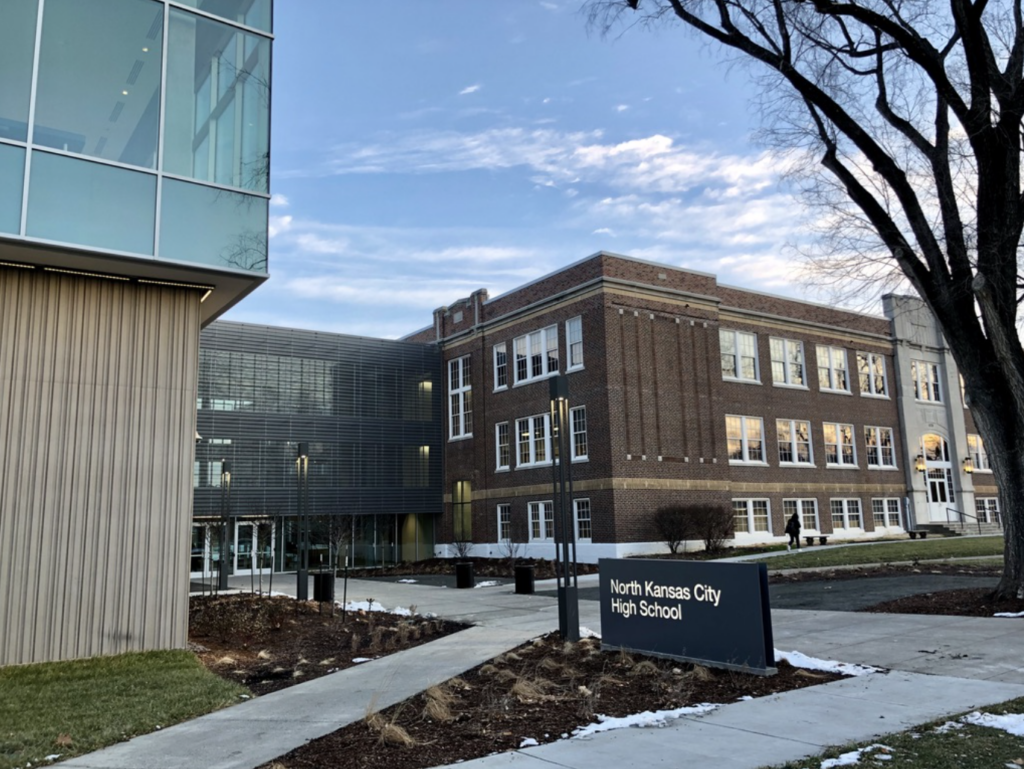
In a beautiful blend of old and new facilities, North Kansas City High was one of four comprehensive high schools to work with ConnectED to adopt wall-to-wall career academies during the pandemic. As part of the Kauffman-sponsored Real World Learning initiative, North Kansas City Schools is embedding work-based learning experiences into career academy pathways.
Linked Learning Alliance features pathways with an integrated program of study that combines:
- college-preparatory academics with career-technical education through a structured sequence of courses
- a continuum of work-based learning opportunities that provide authentic workplace experience through job shadowing, internships, apprenticeships, and more in partnership with local employers
- personalized student supports, including academic counseling, college and career guidance, and targeted interventions that prepare each student for successful transitions beyond high school.
Linked Learning and six partner school districts have been selected to participate in the $10 million California Secondary School Redesign Pilot Program.
Ford Next Generation Learning
Ford Next Generation Learning (Ford NGL) is typically a three-year academy model where freshmen spend a year in career exploration before choosing a path. Belton High, in southeast Kansas City, completed a thoughtful five-year implementation plan.
Homegrown Academies
South of the Twin Cities, there are two good examples of big comprehensive schools with well-developed career academies.
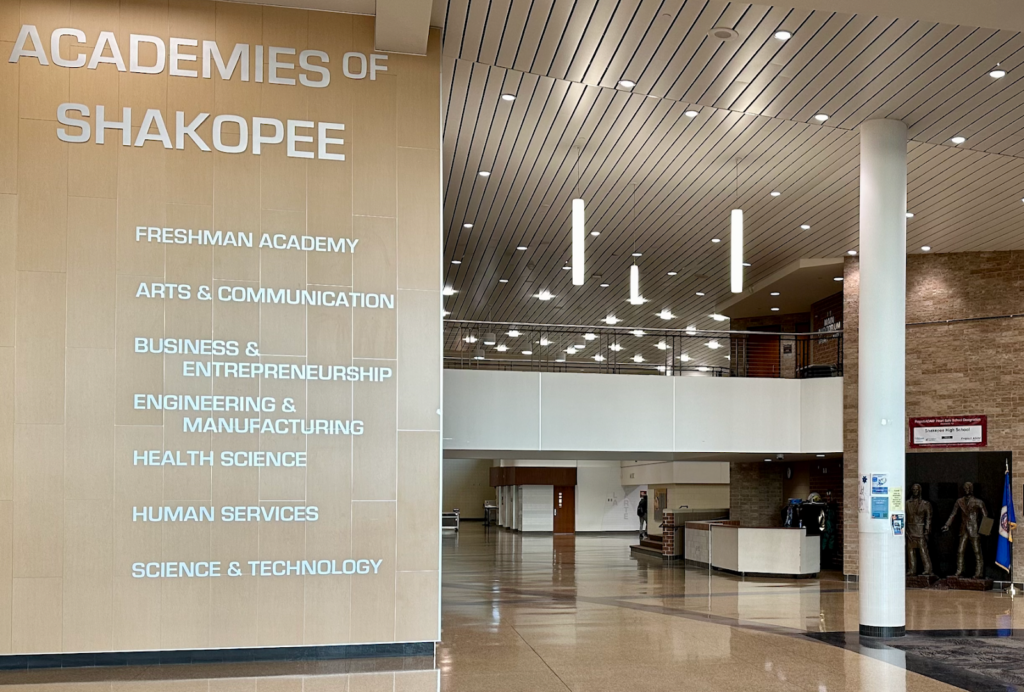
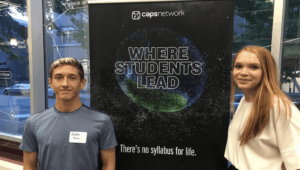
At Shakopee High, ninth-grade students take a seminar course, participate in a Career Expo, have a postsecondary experience, and pick one of six career academies. Tenth-grade students participate in the CAPS Program that immerses students in authentic career experiences with the help of local business partners.
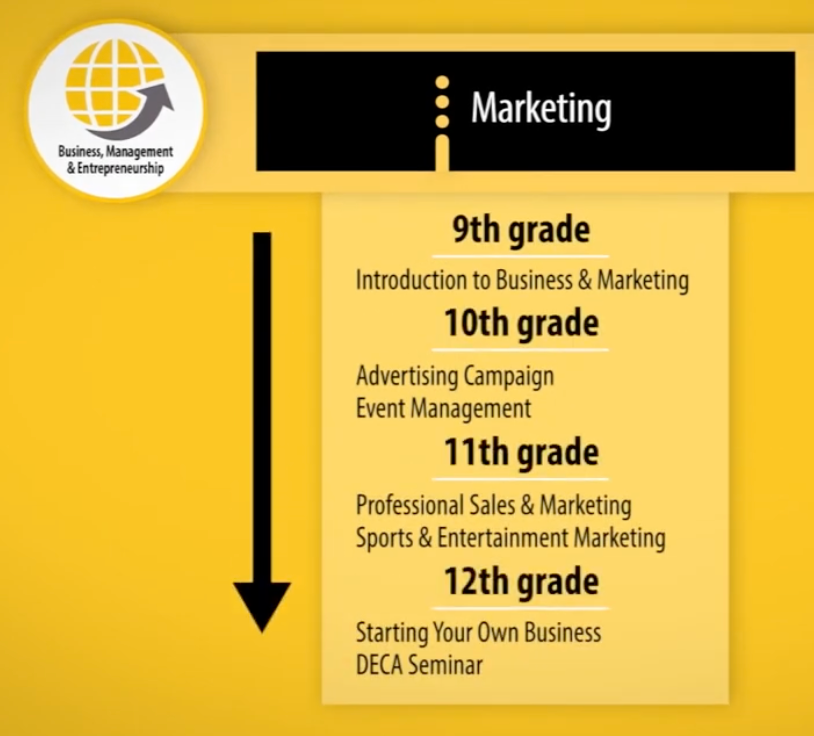
Burnsville High (featured image) offers four career pathways with many opportunities for industry certifications and college credits, including the opportunity to earn an AA while in high school. Pathways suggest course choices (see marketing example below), but Burnsville students don’t have to declare a pathway, and they are not self-contained (i.e., flexible but limited core course integration).
Advance CTE Aligned Career Academies in Tacoma
Tacoma Public Schools used the revised Advance CTE Career Clusters Framework to update its portfolio of career academies at four comprehensive high schools. Cross-cutting skills—from collaboration to critical thinking to career navigation—are the common threads across every cluster and every pathway.
Tacoma added MAP(s)–mindsets, assets, practices, and systems. Adam Kulaas said, “Using the MAP(s) framework, we intentionally design leadership around mindsets that fuel better, assets that scale impact, practices that sustain the work, and systems that make it durable.” (See his first, second, and third blogs.)
Jobs 253 connects secondary learners with access to paid, mentored internship experiences aligned with their interests and strengths and tools to map their next steps, whether college, career, service, or startup.
Kulaas concluded, “When fully activated, the Clusters aren’t about guiding students to a job. They are about building an ecosystem for lifelong exploration, preparation, and possibility. They show learners how different industries, professions, and skills are connected, and how they can personalize their own map to success.”




0 Comments
Leave a Comment
Your email address will not be published. All fields are required.