


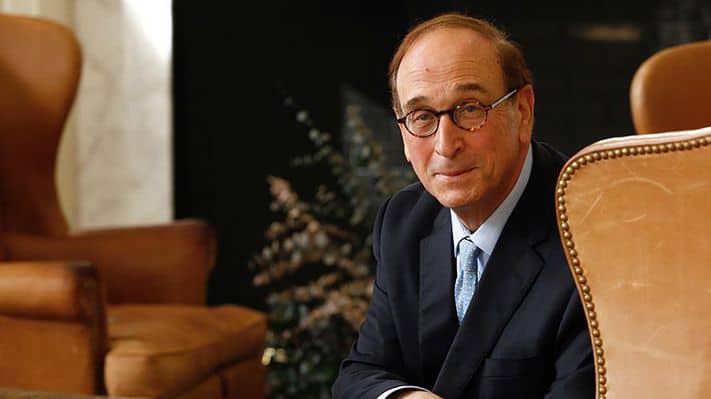
Ed Hess on Adapting to the Speed of Change
 Key Takeaways:
[:10] About today’s episode.
[:43] Tom welcomes Ed Hess to the podcast.
[:50] After twenty years in business, Ed switched to academia. Ed shares why he decided to make the shift.
[2:16] Does Ed teach executive or full-time students at Darden?
[3:58] Tom and Ed speak about their experiences teaching students.
[6:34] Ed speaks about his 2017 book, Humility Is the New Smart: Rethinking Human Excellence in the Smart Machine Age, and how he landed on that title.
[11:17] Why humility is so key for both educators and learners, and Ed’s predictions on technology advancements in the next 10 years.
[14:58] Ed defines the term “hyper-learning.”
[17:49] Personal behaviors and practices of hyper-learning as outlined in Ed’s book.
[22:20] Why daily advisory systems are so effective and mission-critical for learners.
[25:03] How to cultivate a culture in your workplace that values hyper-learning.
[32:05] Tom thanks Ed for joining the podcast!
Mentioned in This Episode:
Key Takeaways:
[:10] About today’s episode.
[:43] Tom welcomes Ed Hess to the podcast.
[:50] After twenty years in business, Ed switched to academia. Ed shares why he decided to make the shift.
[2:16] Does Ed teach executive or full-time students at Darden?
[3:58] Tom and Ed speak about their experiences teaching students.
[6:34] Ed speaks about his 2017 book, Humility Is the New Smart: Rethinking Human Excellence in the Smart Machine Age, and how he landed on that title.
[11:17] Why humility is so key for both educators and learners, and Ed’s predictions on technology advancements in the next 10 years.
[14:58] Ed defines the term “hyper-learning.”
[17:49] Personal behaviors and practices of hyper-learning as outlined in Ed’s book.
[22:20] Why daily advisory systems are so effective and mission-critical for learners.
[25:03] How to cultivate a culture in your workplace that values hyper-learning.
[32:05] Tom thanks Ed for joining the podcast!
Mentioned in This Episode:
- Ed Hess
- Hyper–Learning: How to Adapt to the Speed of Change, by Ed Hess
- Humility Is the New Smart: Rethinking Human Excellence in the Smart Machine Age, by Ed Hess
- Getting Smart Podcast Ep. 264: “Ryan Craig on Putting America Back to Work”
- Future of Work | Getting Smart
Transcript
This transcript has not been edited for spelling accuracy.
You’re listening to the Getting Smart podcast where we unpack what is new and innovative in education. I’m your host Jessica and today we’re talking hyper learning, one of the new demands of the 21st century workforce. After 20 years in business, Ed Hess has spent nearly two decades in academia teaching leadership. His new book, Hyper Learning, How to Adapt to the Speed of Change, suggests that for humans to stay relevant in the workforce, we must be able to excel cognitively,
behaviorally, and emotionally in ways that technology can’t. Let’s listen in as Ed talks to Tom about how you can implement hyper learning in your own life, your organization, or your school. Ed Hess, welcome to the Getting Smart podcast. Thank you very much for having me, Tom. Hey, great to be with you. After about 20 years in business, you decided on academia. Tell me about the shift. Well, I was very fortunate in my whole life that teachers had a big impact on me
from basically getting me a full scholarship to college to all the way through to my graduate psychology days. And I felt it was always new that I wanted to give back. And so I started teaching part-time while I still was in the business world and then decided 18 years ago that it’s time to go back and help other people because other people were the reason that I was able to come from a very humble background of rural Georgia to live a very meaningful life and see the world, etc. etc.
And so I said, let’s go see. Let’s go see full time. And I, 2000, came an adjunct professor at Guazzetta Business School at Emory University, and it was a great place to start. And then I came here to Darden 13 years ago. And so it’s been an 18 years joyous journey. And it’s allowed me to write a lot, research a lot, teach a lot, and try to try to make a difference. And I don’t know how much of a difference I’ve made, but I’ve had fun trying. Darden is a great business school.
Do you, are you teaching full-time students or executive students a little bit of both? Both. Both. I teach basically the same course. I teach an innovation course in the full-time program and an innovation course in the MBA program. I’ve taught, when I first came, I taught courses in organizational excellence. I created a servant leadership executive ed course years ago, which still is ongoing. And
I did, I did Darden’s first MOOC with Coserro, and then put a fellow colleague, created the first MBA course on income inequality many years ago, before it was in the, you know, big, it was always a serious problem, but before it got to the point where everybody was talking about it. So those are the types of things that I’ve been involved in. Leadership, high organizational performance, high individual performance. And that took me a little bit also into the education
field. My recent books were picked up by the Secretary of Education of New South Wales, Australia, and he commissioned a white paper on the, which I wrote for them on the future of education going into the digital age. And so that got me a little bit into the education side, but not like you. I’m not an expert on education. Before we started recording, I mentioned that I taught in a couple of business schools for
eight years. And one of the things that I loved about it is, regardless of what we were talking about any night, there was always somebody in the class that knew more about it than I did. And it, so it turned out to be a great way to learn, but it was also a lesson in humility that you really couldn’t blow smoke if you had really smart people in your class. I imagine you have a lot of smart, both young people and an experienced executive showing up at Darden.
And a lot of smart people. And, but the good thing is, you know, our culture is a culture of learning and a culture of caring and a culture of respect. And, and our students are very good at, at, at sort of understanding what they know and understanding what they don’t know. And, and they want to basically improve their skills. And they, they, they want to, and it’s, it’s as much skills as it is content. All right, it’s the skills of how to lead, how to, how to engage with people
in the business world on a, you know, how to, how to, if you will collaborate effectively and, you know, and how to improve your skills, how to think, how to think in different ways. And, and, you know, even, even though people have come, come in from the business world, many of them, you know, learned on the job. And so is it interesting? Yes. Does it, does the class ever go as it’s planned? No, it never goes as it’s planned. You sort of go where they need to go and take them where they are on
that day. Is it, is it, do you have to be very adaptable? But, but also, you know, you, as you well know, most all of learning occurs from a making meaning experience, either through reflection with yourself or with conversations with others. And so I’m real big on making meaning conversations. And so that’s what we try to have. Most of my classes are not case method classes, they’re workshop classes, where they’re actually doing things, active learning, experiential, once they’ve
got some basic content, which they can read. And so that, and so no class is the same. And, you know, I can teach the same content on the same day to two different groups, and it will be a very different experience because of where they are and how they come to the table and, and, and what the words mean to them, what, what the, what, what they’re trying to do. I love your approach to teaching. Ed, this dialogue leads me to a 2017 book of yours that I love called Humility is the new smart. That book
seems what was great in 2017 and just seems so relevant today for so many reasons. In part because we have public leaders that I don’t seem to embrace a sense of humility. So I want you to talk about why, why you picked that title of humility is the new smart. And then I want to dive into some of the content, but how did you land on that title focus? Well, the, the, the, the focus of the, the focus of the book was how the purpose of the book was how will people be able to excel at
doing the task or doing the work that digital smart technology is not going to be able to do. And, and smart technology is going to be able to do a lot of things and it really boils down to that humans are going to need to do the task that the technology can do. And so that’s higher level thinking, higher level critical thinking, innovative thinking, creativity, imagination, sense making, emergent thinking. And it’s, and it’s basically the, in the business world,
it’s the creating and delivering of services to other human beings, which requires high emotional intelligence and the ability to be socially engaged, et cetera. And so when you look at the science of learning, the science of learning is very clear. We’re all suboptimal learners. We, we basically are wired to see confirmation of what we believe, affirmation of our egos and cohesiveness of our stories. We, and we need others to basically help see things that we don’t see.
We basically go into the world and our perceptual system works the following way. We see what we believe. And so that led me to, okay, what gets in the way of accepting that science and what gets in the way of learning is ego and fear. So how do I deal with ego? Well, I need to define myself in a different way. And maybe what I need to do is not identify so much with what I know, but define myself by how I learn, how I think, how I listen. And so that led to the word humility.
And because in humility, humility and layman’s terms, people think it’s, it’s like meekness, but I’m using humility, if you will, as it’s defined in psychology. All right. I’ve got an accurate view of my abilities. I can acknowledge my mistakes and my limitations. I’m open-minded. I keep my accomplishments in perspective. And it’s, I have a sort of a low focus on self. And so the key thing is, is I define myself differently. And so humility is a tough word in our society.
You get to, especially in the business world, you’ve got, you know, it’s, it’s all about being aggressive and being competitive and winning and all of this. And so it was a counter-intuitive word. And, and what I ended up doing to be, to be quite frank, honest with you is, there was so much pushback in the business world to the world of humility. I had to go create a new way of, of defining humility. And that was when I came up with the concept of,
of new smart. And so the, the, the old smart is your, your evaluated by how you do on tests, by how much you know. It’s a, it’s a quantity. It’s a knowing. And new smart changes the definition. It’s, it’s not how much I know. It’s the quality of my thinking, listening, relating and collaborating. And in new smart, it says, I’m not my ideas. I can, I can, must be a couple of them for my beliefs, not my values, for my ego. Don’t define yourself by what you know. Define yourself about the
quality of being a learner so you can be open-minded, curious and stress test your thinking. And that’s basically what humility evolved in that, okay, I need to be humble. I need, I, I don’t need to be so defensive when people challenge what I think. I need to be open-minded. I don’t need to be so much all about me. I need to be able to collaborate effectively. So I got to be able to relate to other people. So it was a transformation, long-winded answer, but it was
a transformation. Now I love the book and I love the concept. Ed, it, many of our listeners are teachers and teacher leaders, folks that lead learning institutions. And it feels like the sense of intellectual humility is, is so important for us as educators today as the world becomes more and more complex. It becomes more important that we not focus on the skills that computers can do, but instead introduce young people into increasingly complex problems. And that
often, I think, requires a sense of humility of taking on questions that don’t have simple answers, questions that we ourselves haven’t ever had the chance to address. And so all of that requires really a new sense of humility as learning leaders. I agree with you 100% and, or maybe even 120%. All right? I mean, because what’s clear, what’s, what’s, what’s clear? I mean, there, there have been educational leaders and reformers for decades have been talking about the need to transform
public education and how we teach and get away from standardized testing and go more experiential and action learning and learning by doing and teaching skills and not contents. And what’s, what’s happened with the, the, the digital age and what’s going to happen over the next 10 years, technology is going to continue to advance at such a speed that, that it is going to require. All right? It’s, it’s like, we, from my perspective, the, I mean, first of all, let me
make sure everybody understands, I firmly believe our democracy is dependent upon a vibrant, effective, strong public school system. It is a must have, it is vital. All right? But it needs to be come, it needs to be able to, to send out into the world in the, in the digital age, the innovation age, whatever you want, people that are prepared, if you will, to be lifelong learners and very adaptive people from a human engagement perspective. And, and, and so the, the, the need to basically
teach kids and teach students how to go into the unknown and figure things out, you know, how to create stuff, how to make stuff, how to explore, how to manage themselves, manage their emotions, SEL is mission critical because bottom line, it’s, it’s pretty clear. Over the next 10 years, we’re looking at automating, depending on research, the research, 25 to 47% of the jobs in the United States. You and I, or anyone listening, will have meaningful work in, in the coming years, if we can
do things that technology can’t do. And that’s basically, we got to either think differently than the technology, or we have to excel at emotionally connecting and relating with other human beings in positive ways, and so that we can basically collaborate and meet their needs. Or are we going to basically be able to perform trade services that require complex problem solving, identification, iterative problem solving, and lots of manual dexterity. I mean, because the
automation is even going to hit the professions, the legal profession, the accounting profession, the architectural profession, the teaching profession. And so you got to be able to do things, and how do you, how do you learn those skills? How do you, and that’s the issue, and you learn it experientially. And that’s a great segue to your new book. Just came out called Hyper Learning, How to Adapt to the Speed of Change. Let’s, let’s start by defining hyper learning. How
are you using that term? Hyper learning is the ability to continuously learn, unlearn, and relearn. All right. And you can even insert the words high quality in there if you want. But basically, the shelf life of knowledge is generally speaking, going to end up being two to three years. The technology is going to be especially artificial intelligence, et cetera, and big data and the connectivity. The amount of, what’s the pace of change is going to be so fast that we’re going
to have to continually adapt. You know, nobody knows, but you know, there are very bright people making predictions that within the next 10 years, in fact, a Nobel laureate and an AI genius, both have predicted the same thing. Within the next 10 years, there’ll be no cognitive tasks that technology will not be able to do better than humans if there’s enough data. And so what hyper learning is saying, change is going to be continuous. We’ve got to be able to adapt. We’ve got to
basically reinvent ourselves. We’ve got to either learn new jobs, learn new skills, and how do we basically as human beings, because we are not wired to be adaptive. We are wired, okay, to see confirmation and we’re wired to be, if you will, to survive. And the way we think doesn’t lend itself to constant learning. That’s why the whole process of redefining and training people to learn, but also it’s why our societal culture of survival of the fittest is basically a non-winner,
because we’ve got to basically be a community of learners and no one excels at learning by themselves. You need others. And so you’ve got to have those SEL skills. And, you know, I’m not the only one saying this. I mean, you’ve been on the leadership side and other people. I mean, Tony Wagner was one of the endorsers of my humility book. Tony’s been on the head front of these. A lot of superintendents have been on the edge of this. The problem is, is the actual
transformation of the system, because we have a systemic problem. And from an educational viewpoint, and how do we get there is, how do we get there faster? How do we basically, because slight climate change, we only have so many years to solve this problem. And we’ve been talking about it for decades. We’ve got to go. Your book, Hyper Learning is divided into two parts. The first part really focuses on behavior and practices. I’d love to spend a couple of minutes just diving into those.
I also want to acknowledge that the book does a nice job of focusing on helping people connect and relate and handling stress. And because we’re recording this in the middle of a global pandemic, that portion of sort of recognizing and managing stress for yourself and for your immediate family seems particularly important, because if you’re under stress, you’re not likely to be a productive learner. So let’s talk about personal behaviors and practices of hyper learning.
Okay. All right. The model that I put in the book is based in science, in order to enable the highest level of learning. We have to come to the conversation, come to the table, come to the school class, all right? And in a certain way, and it’s what I call inner peace, quiet ego, a quiet mind, a calm body, and in a positive emotional state, because everyone listening knows, okay, positive emotions, enable learning, negative emotions, inhibit learning. The quiet ego part is to be open-minded,
to be curious, and not to be so defensive, to be a better listener. Well, how do you quiet your ego? And the book puts forth on each of these things practices that you can do, various forms of meditation, all right? Gratitude practices. And, you know, calming your mind, how do you go in so that you actually listen to people instead of thinking of the answer while someone is talking? How do you basically be fully, fully present? All of these things are behaviors so that I
basically can more effectively learn because of the pace of change, all right? And because of the, not only the pace of change, but the shelf life of knowledge, we’ve got to basically manage better what’s going on inside of us. And most of us never were trained to do this. To some extent, if you think about it, we’ve got to bring philosophy into the public schools, all the way back from the ancient East and West philosophy and the common values of the seven great religions.
How do I approach each day? What is the, what is my daily intentions as to how I want to behave as a human being so I can be a good learner, but also be a good collaborator, a good helper of others? And this human development side, managing self, it is mission critical. And it starts at a young age. I mean, if you think about it, you’re, you know, you’re an expert in this. I mean, if you think about when we were back in children, when we learned how to ride a bicycle and everything, I mean,
you know, I mean, kids, depending on who you talk to, what science, you know, children up to age, whether it’s eight or whether it’s 10, are very courageous. I mean, they, they are adaptable. They’re great learners. And then something clicks over. All right. And it’s probably a combination, combination of culture, combination of the, of the school system, combination of insecurities, but the things sort of switch over where we become not as courageous, you know,
we’re not willing to go try it, fall down, get up and try again, because we don’t want to make mistakes. All right. You know, old smart is who gets the highest grade in the school. Okay. New smart is who’s the most adaptable and the best learner. And that’s not only cognitively, it’s emotional and it’s behavioral. We need to be teaching the emotional and the behavior and helping people learn the behaviors that are going to make them adaptable and make them, you know, a member of,
of, you know, being able to have a meaningful life and a meaningful purpose and, and meaningful relationships instead of, okay, I know more biology than you know, make sense. I love this part of your book. And I was, I was really struck that it started with inner peace. I think it’s the only business book that has an opening chapter on inner peace. And I want to come back to this, but my, I just want to acknowledge that the, the best secondary schools in the world have a daily
advisory system where the goal is to really center yourself and to learn about who you are as a learner and to come into community with a group of learners where you can practice being an effective learner, both individually and as a group. And that is now not an extra. That is the, I think, the core purpose of school that we have to help people come to grips with. I agree with you. It is mission critical now and technology is requiring it. All right. Technology is requiring it. It’s
no longer optional. It’s no longer, that would be nice to have. If a school is not doing that in my judgment, okay, the school is failing in its mission because the world is changed. All right. We’re no longer in the industrial revolution. We’re in the digital revolution. And you know this. And, and you are exactly right. And it’s just, it’s also cultural. It’s not, you know, we’ve, we’ve got the, you know, most of any, any of the democratic capitalist countries, the most
survival of the fittest culture out there. We’ve got to get to this compassion and otherness and, and being able to, if you will, effectively relate to people in a way that is enables, if you will, higher learning by everybody that’s in the room. And, and I think that’s critical. And because the thing Tom that’s going to really, the children that are in school today, including high school, what’s going to their uniqueness going forward in the world as technology evolves
is going to be primarily emotional, primarily emotional. Because with enough data, with enough data, most of the cognitive stuff. And now it’s also going to be being able to think in ways that technology can. And that’s creative, that sense making, that’s imagination. But all of that is highly dependent upon your emotions and the emotional reactions of the people that you’re working with. Ed, let’s shift gears and talk about how, how you begin to create a workplace that
values hyper learning. Well, first, first and foremost, you’ve got to have the buy-in of the leadership. And the leadership has to go through, if you will, the same transformation that the rest of the people, because the leadership’s got to be able to role model it. So it starts at the top. And, and the second thing that has to happen is once there’s a commitment, do it. What I found in my work is that each individual interprets or reacts to this in their own way. Everybody’s
got to figure out their why. Why do I need to change? Why should I change? Why will I change? And people will have to have their, their reasons, whether it’s because they want to stay relevant in the workplace, or whether it’s my duty to my students that I do this, or whether it’s a duty to my children, or whether it’s my legacy. I want to help leave behind a better, but you’ve got to come to your why. And so you’re highly motivated intrinsically
because the transformation is not easy, because you’ve got to basically sit back and understand that I got to reprogram myself. And I’ve got to have, let’s just say, in the beginning, I’ve got to got to have a hyper learning mindset. I’ve got to have approached how I come to work each day to learn and not be defensive and to be open minded and to be patient with people and not to be so judgmental. And then where the rubber meets the road is, is in organizations, and I’ve
done this in businesses, is, you know, there’s, there’s lots of behaviors that people need to excel at. And, you know, my list of behaviors depends on the organization. But I give people generally a list of 18 key or 18 to 20 something key learning behaviors. And I have them, you know, them in effect, the leadership team as a group spend a lot of time, which are the seven most important to your business, which behaviors and rank order. And that takes a lot of collaborative
work. That doesn’t happen in a day doesn’t happen in three days. But then we go forward. All right. And let’s just say that humility is one of them or courage is one of them. Okay, let’s define what are the granular behaviors that would evidence that someone’s acting in a courageous way, seven granular behaviors defining and people do go into workshops making meaning stuff workshops. And every person does their list and then then small teams, they collaborate and
then you got multiple teams. And then as importantly, what’s, what’s seven observable behaviors that would say to you the person is not courageous. And so you have people thinking about how they’re going to behave because good intentions are not enough. It comes down to how we behave. And, and then people agree on, if you will, a, they come to a consensus, we want these behaviors and these are the seven measurements plus and these are the seven measurements and everyone chooses behaviors
they’re going to work on. And after every is part of every meeting, everybody evaluates and gives feedback to people on their behaviors and people basically have a behavioral improvement program. So you got mindsets, you got behaviors, then you put in practices and practices can be just like the practice we talked about it, some of the other schools around the world, how they start today. A centering practice before each meeting. I have a, I have a public company I work with,
it’s a global manufacturing company. So it has factory workers all the way to executives every day at the start of every shift, there is a 10 depending on the place, 10 to 15 minute centering practice, you may meditate or you may just be silent and give thanks to all the people that have helped you in your life or to think about how you’re going to be a good person that day. Every meeting they hold, there’s a centering practice, all right. There’s a check-in as to
where are you emotionally, how are you doing so that people understand where people are, who’s, you know, who we want to be caring about. And so there’s practices that listening checklist, critical thinking checklist, experimentation checklist, etc, etc. And so it’s a, the model is very behavioral. It’s how you behave and then how you get feedback to improve and everybody’s on an improvement program. And this sounds, this reminds you a little bit of Ray Dalia’s principles,
sort of radical candor. These sound like challenging behaviors to adopt, particularly providing and receiving candid behavioral feedback. Is that the biggest barrier here? Well, yeah, I’m in my Learner Dibook, I did a, I think it’s 54 page chapter on, on Bridgewater and Ray Dalia. Ray invited me in and it was before he wrote his book, it was the most exposure of his system. So I know his system well. And, and when, when, when I’m talking about
giving feedback and everything, it is, it is people seeking to learn and grow, but the emotional side is so important. You have to be cognizant about where the other person is. And there’s candor, and then there’s caring candor, all right. My book has a whole chapter on the need for caring, trusting relationships. You don’t go giving feedback to people, if you will, blunt feedback to people that you don’t have a relationship with. And so that’s why building caring, trusting
relationships is a fundamental part of this new way of working or this hyper learning model. So that I know you care about me as a person, I trust you. And we have agreed upon psychological safety that everyone is safe. And so the feedback is, is, is more in a, I’m trying to, I’m, this is what I’m hearing, is that what you’re feeling? Is that what you were doing? Or what am I missing? It’s, it’s not a, it’s not grading people. It’s not berating people. And I’m saying Ray Dalia does this,
but, but in my hyper, my hyper learning model has a lot of emotional principles. And, and, and that is a difference. Okay, from the underwater model. And so, you know, am I talking about radical candor? No, I’m talking about caring candor. I’m talking about caring. That’s a beautiful distinction. I really appreciate that. Right. I wish we, I wish we had another hour on this. This is, this is a great book. I just want to close by urging everybody to get a
copy of hyper learning, how to adapt to the speed of change. I think it applies to everybody. And this is not just a business book. This is a book that human beings need to read. It will help whether you’re a business or a nonprofit or a school. I think everybody can benefit from reading your books. So we really appreciate your contribution and thanks for being on the podcast this morning. Well, thank, thank you so much for, for inviting me. I enjoyed our conversation.
And I applaud you for what, what you’re, what you’re doing. And I mean, you’re on the, you’re on the leadership front and trying to have a meaningful impact and helping people and helping schools. And we need that. We need that. And so all the best. And again, thank you for having me. Thanks to Ed Hess for joining us on this week’s episode. For more leadership on the future of work and new career pathways, be sure to check out episode 264 with Ryan Craig about putting
America back to work. You can also check out our future of work page. And for all things innovations and learning, be sure to check out our blog at getting smart.com and hit subscribe so you don’t miss out on any future episodes. That’s it for today. Thanks for tuning in for the getting smart podcast. This is Jessica signing off.


0 Comments
Leave a Comment
Your email address will not be published. All fields are required.