

Archive: 2012

Alliance For Excellent Education Releases Report to Inform Education Leadership Challenges
The Alliance for Excellent Education released today The Nation's Schools Are Stepping Up to Higher Standards, a report that identifies four key challenges that public school district leaders must systematically address in the next two years and outlines the essential elements for developing a comprehensive digital strategy.
Student-Centered Learning Need Not Cost Districts More
A new study of the financial implications for public schools embracing student-centered learning (SCL) models reveals that districts don’t need to spend more on these schools if they fund all schools fairly, and then allow schools to make choices about how they use their resources.

Why Haven’t Districts Adopted Blended Learning Faster?
Consultants asked, "Why haven't districts adopted blended learning faster?" I answered, "Because it's complicated."

Wikispaces For Designing Common Core Activities
Are you wondering where to begin to adopt the Common Core ELA standards? While there are many individual standards to sift through, it’s important to take a step back and look at the big picture to gain an understanding of the importance of the teacher’s role in designing learning experiences to facilitate a more active classroom that supports students as producers.

System Upgrade: What Math Can Do For You
“Why do we have to learn Algebra?” was the question a student asked me one day in the middle of class. I hadn’t been teaching very long so I wasn’t entirely sure what to say. I tried to ignore it but he asked again so I came up with some lame reasons like, “you’ll need it later,” or, “lots of jobs use algebra every day,” — but the more I looked at what I was teaching, the more unconvincing this sounded — even to me.
7 Educational Uses for 3D Printing
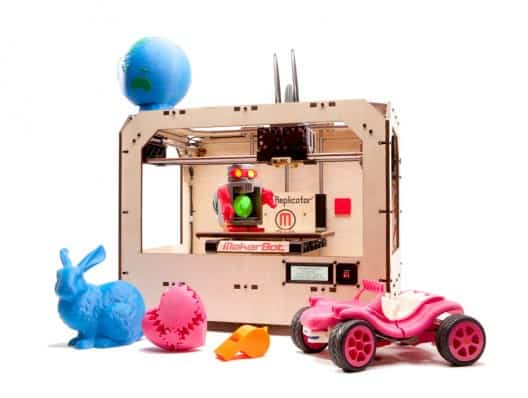
When someone says that they have a 3D printer, many people visualize a printer that produces 3D images on a sheet of paper. In actuality, a 3D printer goes beyond an image on paper and brings the object to life in real 3D. Layer by layer, the 3D printer can replicate images created in CAD programs. Any creation in supported design programs can be brought into the real world. What are some educational values of the 3D printer?

Education Pioneers’ Social Media Tips & Advice
Here are some things that Education Pioneers (EP) has learned about social media along the way and what’s worked best for us.

An Invaluable Addition to the DLN Smart Series “Data Backpacks”: APIP’s PNP
You might be scratching your head: APIP’s PNP? APIP stands for Accessible Portable Item Profile, which provides the technical framework to deliver digital content tailored to the specific accessibility needs of each student. PNP stands for Profile of Needs and Preferences, which captures those needs. You’re probably not familiar with APIP. Most people will never dig deeply into its technical guts, but they should know what it means for students: it can dramatically improve the educational experiences of so many students we are now short-changing - or worse.

Dell Foundation Gives $500k Grant to ST Math Education Initiative in New York City
The Michael & Susan Dell Foundation is providing a $500,000 grant to the education non-profit MIND Research Institute to bring its innovative, visual math education program to 6,000 New York City elementary school students in 2012, in a blended learning environment. Currently used in six of the nation’s 10 largest public school districts, students and teachers using the program have on average doubled growth in math proficiency.
What Proficiency-based Grading Means for Your Student
The new Standards-Based grading system currently used throughout the U.S. education system is significantly different from the letter-grade system that most parents grew up with. This system is designed to allow high-achieving students to progress more rapidly through the curriculum, and ensure that all students reach a certain lower bound of proficiency. Each student's level of achievement can be measured, and the over-all degree of learning advancement attained by the entire class can also be more accurately determined.