

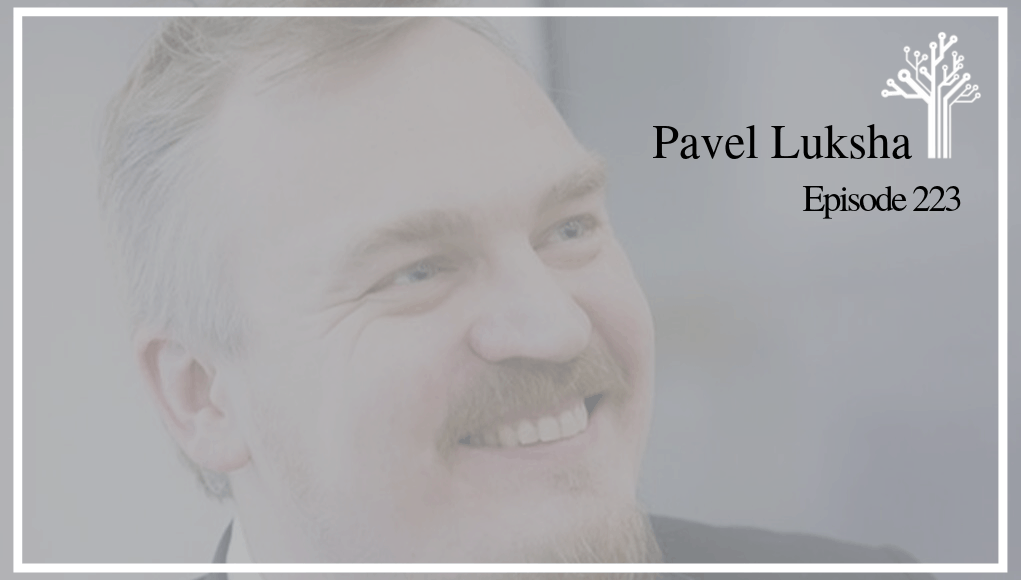
Podcast: Pavel Luksha on Educating for Purpose, Potential, and the Planet
- On Creating a University for the Planet
- Skills of the Future: How to Thrive in the Complex New World
- Student Learning for Life: New Skills for New Jobs
- 20 Year Forecast: Broader Aims, Students at the Center
Key Takeaways: [1:30] Pavel describes how he came to be a global education futurist. [5:00] Pavel expands on his earlier statement that we need to do more to ask our civic leaders why we’re spending so much on preparing to kill each other rather than raising our children. [6:15] Pavel highlights some global trends in education that are providing more meaningful learning experiences. [12:51] Pavel gives his thoughts on the opportunity for a global network like Whittle School and Studios. [16:05] Pavel shares his knowledge about learning ecosystems. [23:00] The different levels of learning ecosystems and how they interact. [27:59] What kinds of learning experiences help young people discover and cultivate a sense of purpose? [31:48] What’s next for Pavel? What is he beginning to think about with his work? [33:50] Pavel shares some information about a potential upcoming project he is incredibly excited about. [37:07] Tom thanks Pavel for joining the Getting Smart Podcast!
Mentioned in This Episode: Pavel Luksha (LinkedIn) Moscow School of Management SKOLKOVO Global Education Futures Whittle School and Studios Kauffman Foundation The Grable Foundation Remake Learning The Commit Partnership
For more on the future of work, see- Let’s Make Sure America Succeeds in the Age of Agility
- Leadership and Design Skills Chart the Future of Work
- How Will Work Change in the Coming Decades? A Pittsburgh Case Study
Transcript
This transcript has not been edited for spelling accuracy.
We’re listening to the Getting Smart podcast. Where we unpack what is new and innovative in education. This is Jessica and I will be your host for today’s episode. Pavel Lukša is a leading education futurist. He’s a professor of practice at Moscow School of Management Sklokov and director of Global
Education Futures. What drives Pavel forward is creating a world that works for everyone. Recently, he and Tom met in Europe and talked about trends driving the future of learning, about their work together advising the new Whittle School Network and an exciting new project Pavel is working on.
Let’s listen in. Pavel Lukša, welcome to the Getting Smart podcast. Hello. Pavel worked together in a spectacular place in Birkenstock, Switzerland. It’s great to see you.
We both serve as advisors to the Whittle School and Studio and we’re at an exciting meeting where the founding faculty is coming together before going back to Washington, DC and China to open their respective schools. I appreciated your comments this morning on cosmopolitan values and want to dive into that, but would love to have you start by describing how you came to be a global education
futurist. Which is the name of my organization, Global Education Futures. Very short story about the long and winding road that brought me there is that I used to work in the corporate sector for quite a long time, but I was also very passionate about academia and system studies of the world.
At some point it was around 2008 when the massive global economic crisis unfolded. I came to realize that the shortcomings of the perspective that the economy is taking, the idea that we need to look at current issues and disregard our common futures is a big problem and it’s a massive problem in two regards. One of them is the consequences for natural environment and how the humanity in their
interest of current prospects of economy getting another smartphone or getting some profits that would allow you to get a bonus in the end of the quarter. People are disregarding how they destroy their shared home. The other thing is of course the future of humanity itself and future generations and we don’t really think about the future of our kids properly.
We know that the world is changing, but we don’t really ask ourselves to where is it changing. I wanted to provide some sort of beacon for educators and to maybe combine these two things, to combine the issue of that makes sure that the present and future generations thrive and not just survive and also thrive in connection with the bigger world because it’s such a
magnificent view here for us in Bergenstock, this beautiful lake with basically drinkable water, clean air in the mountains of Alpine mountains. But I’m thinking about many other places in the world that are becoming increasingly polluted by the industrial civilization and the prosperity in Switzerland and some other places in the world is also dependent on those places remaining polluted.
That’s one of my concerns. How can we create the world that works for all? I think the answer is that we need to change the way we learn, the way we get those skills. There are skills and competences and knowledge that help us to create the world that works for all.
I think we don’t need to invent anything new. We already have all the answers as a humanity. We just need to spread that knowledge about the ability to live in peace, the ability to create magnificent things, the ability to collaborate with each other and cultivate those things.
This is the role of education. It’s a beautiful summary. In the last session that you did with Kwame Anthony Appiat, you raised a provocative thought that we need to do more to ask our civic leaders why we’re spending so much on preparing to kill each other and not what we should on raising our children.
There is a striking figure that was calculated by United Nations that if we just stop the military spending of the leading nations for just eight days, we can provide 12 years of free and quality education to all kids of the world. This is, I would say, this is astonishing. This is shocking and this is ridiculous in a way.
How come the world is so unbalanced? How come we are afraid of another war so much that we are prepared not to spend even a little bit more on the future generations that can help us live in global peace, in global prosperity, create an economy that works for all and so on? That’s an imbalance we need to address.
Pablo, you’ve written some reports that have been really important for me to understand global trends in learning. I’d love to have you headline a couple of those trends that are reshaping learning, especially those that are aiming us at more important outcomes, at producing more meaningful experiences and perhaps extending access in more equitable ways.
What trends do you see in global learning? First of all, I think that it’s important to remember that the global learning system is embedded in what is happening to our society. We cannot separate the issues of where it evolves to, from where society evolves to. The questions of how we will be impacted by technologies that reshape the future of the
world of work and whether or not our jobs will be taken by robotics and artificial intelligence, which by the way, the more I explore this with other colleagues, the more we come to a conclusion that they will not be taken, but for that to happen, we need to sort of upgrade ourselves. The models of industrial education, which was based on routinized learning and in a
ways submission to authority, will not work anymore. We need to expand human creativity. We need to expand human collaboration. There are so many beautiful ways of learning together that allow us to do it. Also, I think the question which you put in the beginning of our conversation, the question
of meaning, why we do what we do is not just a question for us, it’s a question for everyone. The question of meaning is a guiding question in reshaping education. I think the idea that education needs to become more purpose-oriented, more passion-oriented and in a way help us discover what we are as human beings, what is our potential, how to unblock it, how to uncover it, how to fulfill ourselves in the world.
This is the mission of education ultimately, especially if we consider education not to finish at the end of university. It actually is something that kind of accompanies us for the lifetime. I think this is one of the big trends. We are truly shifting to lifelong learning and the expanding opportunities a lot of educators
are providing beyond just school, I think is what prepares us for this. We will be in the world where we learn for life and we are already in this world and there are so many opportunities, both technological but also personal in terms of how we interact with other people in communities and all kinds of educational institutions through hobbies, through learning at work and so on.
So I think the lifelong learning is a big trend in general and creating all kinds of platforms and solutions that help address it. Bringing pedagogies and also under-goges that allow us to uncover our potential, to discover who we are and I think things such as project-based learning but also other forms such as play-based learning which is more focused on what is possible, what can we do right now and how
can we connect with the present reality. But the play-based learning, game-based learning allows you to explore the potentialities and even the impossible. You would never be a king of Persia in ancient times but you can play one and see what it means to be in that context.
And all kinds of things like this allow you to explore the world. So new pedagogies are absolutely important. I think that they are sort of coming up from what used to be the corners of the margins of education. We see how Waldorf education and other forms of alternative education suddenly become the
models for 21st century education. And there is so much that they have created that we can now absorb into education for everyone. And maybe one more significant trend that I find absolutely critical is that the present system is kept in its place by the forms of assessment that we are using.
Standardized testing focused on just cognitive abilities of young kids is not what we need anymore because how can we measure creativity? How can we measure relationship ability? How can we measure appreciation we have for another? One another the empathy and ability to connect with people.
So all of these things are increasingly important. Tests do not measure them but we need some way of measuring them. So assessment is greatly expanding and I think there will be a revolutionary thing happening because one of the things we need to think about is that companies such as Google or Facebook have created those forms of assessment that actually profile us with all our preferences,
with all our interests. And they create what they call digital twins of ourselves. But they use them only to sell us more of the goods that we don’t really need. And the question is can we use it for the benefit of our students? Can we use the same methodologies and really create those digital profiles and then use
them as what some call a formative assessment, the ones that help you, sort of guide you, not just tell you how good or bad you are in the society but really guide you. And that can be one of the roles of technologies that really can reshape education. That’s a great summary. We both advise the Whittle School & Studio and we’re both very interested in school
networks, how schools work together to create powerful learning experiences for young people. Whittle is interesting because it has ambitions as a global network, as a network that embraces cosmopolitan values that really wants to create global leaders that seek to make the world a better place. I wonder what your reflections are on the opportunity for a global network like Whittle.
Well, first of all, I’m really proud to be part of the advisory board for Whittle because I think it’s an incredible project, the idea to create, to begin with, 30 schools that would be built in some of the most vibrant cities of the world and not just only the western part of the world. It will be the first two schools are built in China and the US and then there will be
more schools added in places like London, Dubai, Sao Paulo and many more. And this is an opportunity that also gives me a hope that education indeed can play that role as one of the factors in reshaping and maybe in stewarding in a way the global civilization by raising a generation that takes responsibility for what’s happening but also not in a kind of felicitous way.
I think that the most important thing is that what I also enjoy about this project that it recognizes the responsibility of such project for those cities and for our world and that the knowledge that is created within the school, new methodologies, new pedagogies need to be spread widely that whenever it goes into specific city the school can play a role in shaping some of the processes connecting with learners not only young learners but also
adult learners. There is a component called studios in this model which I think is fascinating, the idea that the school can serve not only young learners but like everyone by providing hobby education, different kinds of educational clubs for all ages. And where I think it can lead to is that the school becomes one of those places where citizens,
inhabitants of a specific city can discuss what’s going on, what is their future, what they want to see in the city and then the school can help cultivate it, like bring more art festival, bring more projects about environment protection and things like that. I think this is a beautiful mission that the school can take. Pablo, you’ve been doing some research on learning ecosystems.
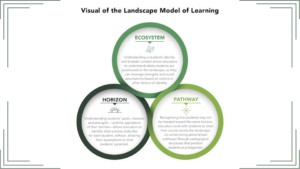
What are you learning there? So first of all I think the word ecosystem starts to increasingly come into the narrative of education around the world but a lot of people just relabel the old things like partnerships, networks or even sometimes when you have a school network or university network they say we are an ecosystem because we are present in several cities across the country so we
are an ecosystem. That’s not an ecosystem. The idea of an ecosystem is that you have a diversity of players. You have different players with maybe different purposes playing together. So it’s a more complex way of organizing human learning where independent providers and influences
of learning can start to work together and sort of weave a number of learning trajectories or pathways or journeys of learners, of young learners and learners of all ages. So that’s one thing. The idea that we need to really think more deeply about what ecosystems are. The idea of ecosystems is of course that they are more flexible than maybe the rigid national
systems that are driven by national curriculum and this top-down, authoritative way of conveying the change. An ecosystem allows for experimentation, allows for finding different pathways into developing systems and also tuning to those local needs. Each ecosystem is unique in a way.
The ecosystem here in Lucerne would be really different from one in Moscow, one in Seattle, wherever we are. So what we are coming to also find is that ecosystems unlike in nature but probably also in nature ecosystems not just arise naturally. There is a natural process of how ecosystems grow in nature but there are some roles in
the ecosystem taken by specific species that sort of cultivate these ecosystems. Some of them are called ecosystem engineers. So for instance, if you think about the beaver and how they make them and then create a pond and all kinds of species start to thrive in that specific location. And then there are also species that are known as hosts of ecosystems.
So if you think about the big tree like sequoia tree or a coral reef, they actually are hosting multitude of other species by providing home for them and providing the safe space. So we think that something similar can be done to learning ecosystems. So there are institutions and players that can play as hosts and schools in particular, especially schools such as Whittle can play that role on some of the leading universities.
They are in a way creating that space for everyone around them. Then there are also these kind of ecosystem engineers. So we discovered there is a particular role of an ecosystem organizer, someone who is not appointed by the ministry, who is not appointed by university to do it, but they more often come from NGOs or sometimes come from educational innovators within one of
the institution. They realize that in order to create opportunities for lifelong learning and opportunities for kids and adults to develop holistically, there is no possibility to just provide it with one single institution, one single curriculum. There is a need to connect.
Many of them may be grown new institutions. So they take a role of what we call ecosystem gardeners. So in a way they kind of plan these project, plan these opportunities. Also they take a role of weavers, kind of weaving together different parts of this disconnected system back again into a tapestry.
So these two roles, these two archetypes in a way, are what these ecosystem organizers are taking. And we find there is increasingly, there is a growing, let’s say, number of these people around the world that want to step into this role. And again, it’s not a role that somebody appoints you.
It’s a role that you take and the role that is much more serving than leading. So you actually begin to create space for others to thrive. It’s not about your own success. It’s about the success of a system as a whole. And we find it fascinating.
Some kind of trend that shows us the way how education is modeling the kind of change we need to world in general. It’s a beautiful description. It made me think of many different early players in different parts of the United States that are organizing ecosystems.
In some places, you can point to a university as an early mover. In some places, it’s in Kansas City, Coffin Foundation is an important player. In Pittsburgh, the Grable Foundation and Remake Learning is an important player. In Dallas, there’s a new nonprofit data infrastructure called Commit Partnership. And they’re incubating early learning initiative, a free college pathway initiative.
And they launched an advocacy initiative. So it’s a multifaceted service organization that’s seeking to enable others to do better work together. So it’s a beautiful set of observations. And you’re seeing this around the world beginning to play out. Yeah, I think it’s definitely not unique to the United States.
It’s not even unique. I think it’s more common in, let’s say, Western-type democracies. But even in places like Russia or China or in the institutional context of Africa or Latin America, we see increasingly a number of people and organizations that start to take this role. Sometimes kind of under-aider of these authority institutions.
Like in Russia, a lot of these things are happening under-aider, but they’re happening. And I think they’re transforming societies from within. Pablo, when you think about ecosystems in different levels, earlier you talked about people and places and more planetary view. Talk about the different levels of ecosystems and how these different levels interact. So actually, it’s a very interesting question that we also, when we explore the purpose of why people are doing these ecosystem projects.
So what is the purpose of them in the end? One of the context is, of course, that there is always a place-based purpose, which is usually about the idea that we need to help a local economy become more resilient. We need to provide new kinds of skills for the economy and society. We need to connect educators that work in this region and so on.
So that’s like place-based purpose. And then there is a planetary purpose. Like people start to see themselves as a part of this bigger movement that helps transform education and helps connect education with the actual needs of our societies and address the challenges that the modern civilization is facing. So a lot of these projects are about bringing the sustainability values, empowering young people or creating opportunities for women in places like Indonesia,
where, let’s say, the traditional culture does not allow them so much to lead successful and maybe more independent lives. So ecosystem actually enabled them to do it. But there’s also another aspect which I find really very important. It’s about having a personal purpose in this. So it’s kind of creating the environment that would allow you to thrive on a personal level, to live the life you would like to live.
Not in terms of having more opportunities for more luxury, but more about having that deeper human connection with everyone, leading meaningful life, doing meaningful things and connecting with other people that do meaningful things. So it’s kind of awakening to a personal purpose of yourself and then connecting that with everyone. Because I think that one of the reasons why we use the word ecosystem is about the idea that we need to bring life into, again, into a more machine-like civilization that we have become.
And of course, the notion of industrial education is very common. The idea that the schools are modeled after factories that many people discuss it, so I don’t repeat it. But the only antidote, so to say, to this machine-like way of treating yourself and other humans is to awaken the life in you and awaken life in relationship. And remember that we are part of this beautiful tapestry of life where everything is living around us and we are part of this living planet. And that is why ecosystems bring that pattern.
They bring that type of relationship, the more humane, more lifelike, more organic, more evolutionary-like. And one of the arguments that we suggest is that the project of any ecosystem begins with a relationship building that happens on a very, on a pretty much on a micro level, level of a classroom, a level of a single school, the level where people just need to begin to cultivate these different types of relationships, not, let’s say, a transactional relationship, but a true deep human relationship, recognizing the other as a valuable and very interesting living being that is a complex, holistic living being,
not just like my colleague in that particular role. And I think this is where the journey begins. We want to awaken the hotels back to who we truly are. Yeah, that’s a beautiful sentiment. You talked about that this morning in your speech.
It’s interesting for you and I having been in the private sector and now been thinking about education futures for the last decade, that you and I both circle back to the power of relationship, that most human beings are sparked to learn, were motivated to learn by relationship when we often grow in community. And you talked about that beautifully this morning. What kind of learning experiences help young people discover and cultivate a sense of purpose?
Hmm. Well, actually, I started to mention those already. So I think that actually the only way, well, not the only, but the main way to understand is to try and then listen to yourself. So I think one of the biggest shortcomings of industrial education is a predefined curriculum that, so to say, one fits all, one size fits all type of thing.
The idea that we need to move beyond, the idea of personalization, I think is deeply connected to finding that passion. But finding that passion requires something else. So apart from giving it a try, that’s the all kinds of pedagogies that put students into more proactive role, like play-based, game-based, experience-based, project-based and so on. So anything that kind of awakes your potential to do things, something and see how the world reacts.
It also requires another ability, which I think is insufficiently cultivated in the modern education. It’s an ability to listen to yourself. So it’s that self-observation capability. And it’s, I think, it’s a little bit more than just, although that is an important part of it, is a contemplative kind of thing, such as being able to observe your state.
And I think the idea that we need and we can start our schools with a short meditation, which kind of brings kids into more focused, more connect, brings them, makes them more connected, bring them into more connection with what they’re learning. That’s part of the story. But I think there’s, we need to cultivate this ability to self-reflect and to perceive yourself.
And that cannot be done also if you do it alone. So that requires a relationship. That requires cultivation of both the self-observation capability, but the ability to observe other, relate to them. So this ability to empathize and to understand yourself through others, through dialogues,
through seeing the other as a kind of mirror for yourself. But also someone else who gives you a perspective that you kind of lack. But it can be kind of, it gives you, tells you something about yourself. So this dialogue culture, the culture of mutual reflection, I think is a very, very important component of it.
And empathy is a foundation of this. That was beautifully stated. The core layer that goes with this, beginning to discover yourself and your sense of purpose is cultivating a mindset of contribution, of serving others, of spotting opportunity and delivering value.
And it’s really powerful when we can combine these two of contributing with a sense of purpose. One of the things that we both appreciate about community-connected project-based learning is that young people at the opportunity connect with real audiences and deliver products of value to others and see the reward in serving others. And then, as you said, the sense of the ability to reflect on that experience
and understand whether that experience is really part of your personal purpose is a powerful thing. What’s next for you? What are you beginning to think about? Well, for us, let’s say, for me and the group that I’m leading, there are two kinds of situations we’re facing. So there is one one hand, what you call the legacy.
Our work on the future as a legacy, in a way, is all of these exploration that we did about the future of skills, the new models of learning and so on have become some two sets that we are trying to put into the world and let’s say free ourselves of them so that people just simply use them. So we created maps of the future, we created all these methodologies.
There was a lot of work on future skills that we now connect with the organization called World Skills. It’s like an Olympic Games in the world of jobs. And it’s one of the leading organizations that helps spread the international top professional standards and new ways of professional education globally. And we are cultivating within that organization an initiative called Mission Talent,
which brings the idea that professional education needs to become human-centered, lifelong and emphasize this proactive component, what people call sometimes existential skills, these qualities of a character that allow you to thrive in different contexts. And of course, a lot of work on learning ecosystems,
cultivating that role of ecosystem leader together with some other international players, including a lot of people from Ashoka Foundation. We created an institution called Weaver Academy, which is like an educational institution for these ecosystem organizers. But those are things that we consider legacy.
Now, what truly inspires me is a potential upcoming project. It’s a recognition that basically we are in a situation right now where all of these beautiful things need to happen and will continue to happen, but we need to accelerate our recognition of the impact that we as a civilization are making on the planet and on ourselves. Because if we don’t really accelerate that ability to see,
not only young people, not only next-generation, but adults, like everyone, and if we don’t engage sufficient number, what is not the critical mass of people in helping to reshape the pathways of our civilization, we are doomed. And we are talking about really very short time scale. We are talking about next 20 to 30 years that will be decisive.
If we just continue on the pathway we are taking, evidence shows that within 100 years the planet may become inhabitable for us. And there is no way to mend it with whatever technology we have, because the complexity of the planet is much beyond our comprehension. There is one calculation that shows that the complexity of biosphere is 20 magnitudes higher
than all the technosphere that humans have created. So it’s 1 and 20 zeros times much more complex. And it’s an incomprehensible figure that human civilization is not able to overcome in any meaningful amount of time. We just simply don’t have that time. So the only way to go forward is to begin to learn how to be more modest,
to begin appreciating that we are part of this much bigger system that has a life and an increasing value of its own. And learn how to reconnect with it and learn how to mold our ways so that we are not harming it. And so our initiative is called the University for the Planet.
And the big dream we have is to create an educational institution that helps begin with some people that are more active role, but giving them those necessary skills that help them connect with our common future and also creating a system of what we call hubs, learning centers for lifelong learning around the world
that will be focused on just any city skill that you need to have. But also we’ll do that kind of transformative work and engage people in the globally responsible citizenship. So that’s a big dream and I hope that we will begin prototyping it already this year. It’s an exciting vision. It sounds like a place where you could really encourage
interdisciplinary exploration because we clearly need together scientists and sociologists and ecologists and political scientists to attack this in as many ways as we can. So I love the vision. It’s always a thrill to be with you. Thanks for being on the podcast.
My pleasure, Tom. Thank you very much. A big thanks to Pavel for joining us on today’s episode. His ambitions for a planetary university are exciting. If you want to learn more on trends in learning, check out episode 183 where Tim Taylor talks about succeeding in the age of agility.
That’s it for today, listeners. Thanks for tuning into the podcast and as always, make sure you’re subscribed and leave us a review so we can keep improving and more innovators can find us. Everything we talked about is in today’s show notes and on the blog,
so check them out and keep on learning. For the Getting Smart podcast, this is Jessica, signing off. Thank you. You

Patti Shade
Yes, yes, and yes! “ We need to expand human creativity.” #CreativeAgentsofChange