


Jean-Claude Brizard on the Center for Learner Pathway Innovations
Key Points
-
Design pathways as “unbounded” and co-created: Build systems where learners have real agency and visibility into options—without being locked into narrow tracks or regional constraints.
-
- Modernize credentialing to recognize all learning: Districts should capture and verify learning from internships, projects, and out-of-school experiences (e.g., via learner records/verified experiences) so students can communicate value to employers and colleges.

Shownotes





In this episode of the Getting Smart Podcast, Tom Vander Ark talks with Jean-Claude Brizard, CEO of Digital Promise, about the launch of the Center for Learner Pathway Innovations and what it will take to build New Pathways that are truly “unbounded.” They dig into the barriers that keep learners from seeing and accessing opportunity (visibility, value, and recognition gaps), why pathways must be co-created with learners and communities, and how credentialing and learner records can better capture skills and verified experiences—from work-based learning to out-of-school learning. The conversation also highlights regional pathway design (including an Alabama cybersecurity example), lessons from P-TECH, and how emerging technologies like AI can support powerful learning grounded in agency, purpose, curiosity, and connection.
Outline
- (00:00) Introduction
- (2:30) Barriers & Unbounded Pathways
- (5:39) Co-Creation & Credentialing
- (13:58) Cybersecurity Pathway & Alabama
- (16:07) Powerful Learning & Emerging Technology
Introduction
Tom Vander Ark: Digital Promise recently announced the Center for Learner Pathway Innovations. It’s an update to the way they’re organizing their work to support learner pathways. And here to talk about that is Digital Promise CEO, Jean-Claude Brizard.
Jean-Claude Brizard: Tom, always good to see you.
Tom Vander Ark: I’m Tom Vander Ark. This is a Getting Smart podcast, and it is great to have Jean-Claude back as a repeat guest. Digital Promise has been supporting school district innovation for 15 years. That has included pathways. So the center is really an update to the way you’re thinking about pathways and the way you’re organizing your support for pathways.
Tell us about it.
Jean-Claude Brizard: Absolutely. First of all, we turn 15 in the fall, so it’s only 15. I’ve been at this for over 30 years, as you well know, from my days in NYC Public Schools, being the principal of a CTE school. We’ve always had learner pathways or programs, and we’ve always had this Inclusive Innovation Center.
So we combined the two and really created this idea of a Center for Learner Pathway Innovations that takes what we know about inclusive innovation, centering communities; what we know about the progression of young people, or people, throughout their career; and frankly, work we’ve done in parts of TX around these ethnographic studies that look at the journey of people, and really understanding that no one has a linear path to success.
We all meander. To really bring all that together and say, how do we really begin to strive to find ways to solve what so many of us have been at for such a long time?
Tom Vander Ark: I love that. And I noticed in your announcement and on your website, you did this beautiful job of articulating some of the barriers that you’re trying to address: not only low visibility, which has been a long-term problem, but the silos between the traditional college track and CTE.
But you also called out the value gap, the recognition gap and uncertain outcomes. If we could talk about some of those gaps that you’re trying to address, or help districts address.
Barriers & Unbounded Pathways
Jean-Claude Brizard: Yeah, so you have a two-prong issue. And visibility, for example, right? One, in terms of the system really understanding the journey of an individual. At the same time, individuals themselves don’t often have the full visibility of what’s available to them, right?
If you mention to a high school kid aviation, they think pilot. Meanwhile, there are so many other jobs or careers available in aviation that they don’t have a sense of. When I was at the Gates Foundation and Sarah Allen’s team did an amazing piece of mapping kids and looking to see who they were around in their social network, what we found was something very simple: if a child wants to be a nurse, I guarantee there’s someone in their family, in their circle, that is a nurse, and they’re basically mimicking that.
So the question quickly became: How do you expand a child’s social circle to really understand what is available to them?
So that is part of the effort. We also know that workforce tends to be regional, so that can be defined in different ways. You go to the Rio Grande Valley—four counties—and what they’re doing, right? So how do you think about that kind of regional structure?
And we all know the work on Pathways to Prosperity that was done at Harvard a while back. They created regional pathways to prosperity. That was the understanding that workforce is regional.
So how do you bring that kind of view to a young person while not limiting them to the particular geography that they are in? So it’s a complex set of issues that we think can be solved by looking at the dynamism that must exist among systems.
For example, how does industry inform the work of K-12 or higher ed, and inform the work of young people themselves, knowing how to navigate those kinds of access and systems, right?
If I go back to this idea of no one has a linear path to success—we all meander—the question becomes then: How do you create informed meandering? How do you really help someone understand?
We asked that question of a bunch of superintendents: How many of you 15 years ago thought you’d be doing this job right now? No one raised their hands, right? So how did you get here? How do you create that kind of support for young people, and understanding how to navigate systems to be who they want to be down the road?
Tom Vander Ark: I love that you’ve called these unbounded pathways. I like that description because historically, one of the challenges of pathways is kids felt limited by a narrowly defined pathway that, in a well-intentioned way, tried to integrate application and integration opportunities.
But the downside was that it was narrowly bounded. And you’ve developed a set of design principles that are very cool. They’re very similar to the Getting Smart pathway design principles: accelerated, future-forward, responsive, co-created and credentialed. Those, I think, are responsive to the barriers you just talked about.
Pick a couple of those to talk about. You mentioned being responsive. Co-created is kind of a new idea. What does that mean?
Co-Creation & Credentialing
Jean-Claude Brizard: Yeah, so Tom, that comes from the inclusive innovation construct that Kim and Vicki Young built a few years ago. It really was looking at: How do you bring the challenge as close as possible to the community, or to the learner, him or herself? And then having that grounded set of experiences and development that must exist.
So it is created not by a system top-down, but the learner, or the individual themselves, is part of the design. So that leads to this question of agency, right? What agency do you have in your own development vis-a-vis what the system is pushing at you?
But at the same time, what’s really important in this construct is that when you have co-created structures, it allows for that dynamism I was just talking about, which leads, frankly, even to the credentialing system, right?
Because yes, some credentials tend to be somewhat static. Like you have an MD—an MD is an MD. The content may change. But in today’s world, we have to evolve, and the credential itself has to evolve, and that takes a lot of effort to make happen.
So industry informs credentials, right? Credentials inform the development of curriculum and pedagogy in schools, and frankly what is happening—what a child perhaps desires—needs to be pushed back. And again, not to create a chaos system, but it needs to be done in a way where that person has agency in navigating the world they want to navigate.
I think it was Tom Friedman who wrote in the New York Times maybe a couple years ago: If you want a job created—that kind of entrepreneurialism that we talk about in our world—no matter what job you have, you have to have that sense. That skill, that capacity needs to exist.
So how do you bring that out in the pedagogy and the curricula? And that, frankly, allows someone to grow with a job.
David Coleman told me once, when I was at the College Board helping him with his career initiative, he said, “We have to teach young people how to change jobs.” And that means grow with a particular career, or change careers, right?
So how do you develop a kind of capacity in a young person? And that has to come with this idea of inclusive innovation, and frankly, this idea of co-creation.
Tom Vander Ark: I love that. I was hanging out last week with a group of college deans all committed to entrepreneurial mindset. And I think that’s what you were describing: we have to invite kids into an innovative, an entrepreneurial mindset. Charles Fadel says the job of the future is entrepreneurship. So I appreciate that thinking is built in here.
You mentioned credentialed. That’s both industry credentials, but it’s also rethinking pathways and the goal, which may not necessarily be a four-year college degree, right?
Jean-Claude Brizard: Exactly. So we don’t honor a ton of learning. Let me give you a concrete example.
Three years ago—anyway, it was 2021—I was at the Aspen Institute in Aspen, and we had a session on Web 3.0. I mean, dating myself perhaps a little bit. And someone says in the room, “Can you explain what that is?”
And a 16-year-old stood up and raised his hand. I was leading a session, and this kid explained exactly what that was. And then we had the woman who created Care.com say, “Once you learn all this stuff,” she goes, “not in school,” you know?
So during the pandemic, this young person basically went on their own and developed an understanding and capacity, yet no one recognizes that credential. It will not show up on his or her transcript. Nowhere.
So how do you recognize all learning and make sure it is part of the LinkedIn profile with verified credential kind of a system?
We’ve been working on this for a while, this idea of the Comprehensive Learning Record, right? All these things have to be built in such a way that we are recognizing learning that may not be within the four walls of the school. And I would argue the future has to accept this in a way that we are honoring all learning for it to make sense—part of one’s portfolio at the same time.
This is where the agency comes in: if you see a job—again, I’m going to go back to aviation—when these winglets came to be part of airplanes, right, which we know save a ton of fuel, if you are an aircraft mechanic, you see the handwriting on the wall. You get yourself certified to do that because you know you’re going to get advances in your job.
So teaching young people, or learners, or earners, how to see around the corner—see what’s coming in your own profession or different profession—and build the competencies and earn the credentials so they can get access to the next level of a job. All the kinds of mindset that we have to develop in young people, and we know we can teach that.
Tom Vander Ark: On the subject of credentialing, we have a hunch that we could do a better job of capturing and communicating the value of powerful experiences: work-based learning experiences, paid employment, client-connected projects.
We’re heartened by the fact that more pathways include these really valuable experiences, either in the pathway or adjacent to the pathway, but we’re still not very good at capturing and communicating that value.
And we’re looking forward to progress there. Some of our partners call these verified experiences, where you’re capturing the metadata around an internship or an apprenticeship to help the learner really fully communicate the value.
Accelerated is in there. Reminds me of P-TECH, which started in NYC.
Jean-Claude Brizard: NYC, yes, it was.
Tom Vander Ark: Should every student be in a P-TECH, or be able to create their version of P-TECH, that includes dual enrollment and work-based learning?
Jean-Claude Brizard: So, yeah. I created five P-TECHs in Chicago, and of course I was part of the creation of the first one in NYC. It’s an amazing experience.
I don’t know if you need to physically create the same structure everywhere. TX has done a great job, as you know, creating P-TECHs across Dallas, etc. But that kind of experience needs to exist across the board.
And that means: How do you bring real-world experiences to the K-12 environment—at minimum the 6-12 environment—where the curriculum allows that? Where do you need to bring in the community experiences that can be part of a school day?
I was at a meeting in Nashville a couple weeks ago with Forge Futures. The Grable Foundation organized about 150 of us in the room, and we talked about innovation in education. And it challenged us to create a school day.
The group I was part of—we had some folks who we would know in our group—we went rogue. We said, “We’re not creating a school day,” because you can’t do this in a school day. So we built a week. And frankly, when we built a month, we didn’t have enough space to do that.
So the question became: How do you think about the postsecondary institutions, the community, the industries, all being part of the development of this comprehensive set of experiences for young people?
How do you move from kids getting answers to kids asking questions that are relevant, and the questions are problem-integrated?
One of my board members, Dr. Yong Zhao, is an expert at this, right? We talk about problem-based learning, where the group of kids develop a construct or question.
By the way, we saw examples in China doing this. We saw examples in KS, in Melbourne, where curriculum is being redesigned to include the entire ecosystem to a question that really brings on all these extensive experiences. And you are getting a full gamut, perhaps, of not just access to understanding the world of work, but connecting curriculum.
You are learning content across the board, but the challenge, of course, remains: How do you credential all of that to really capture the totality of that kind of experience?
So I’m going to argue we need to redesign, at minimum, high schools—or even middle/high schools—to mimic what we see in P-TECH. I think that is really the solution here.
Tom Vander Ark: We’re talking to Jean-Claude. He’s the CEO of Digital Promise, and they recently announced the Center for Learner Pathway Innovations.
Jean-Claude, I was excited to see that you’re applying some of these new design principles and tools to the cybersecurity pathway in really interesting ways. Tell us about some of your partners and what they’re doing to update their cybersecurity pathways.
Shorts Content
Cybersecurity Pathway & Alabama
Jean-Claude Brizard: Yeah, so I have to tell you, it is the ingenuity of a lead funder, the Walton Foundation, who’s funding efforts across the state of Alabama.
And one of my favorite school districts became the lead for this: Talladega County in Alabama. And the idea is not different from what you’re hearing on the Center for Learner Pathway Innovations, which is creating dynamism in the system where the governor’s office is involved, the state office of education, regions of school systems.
The K-12 system is the entry point to this. Yes, there is a pathway on cybersecurity, but the curriculum, the credentialing, the postsecondary involvement—meaning community college—it’s dynamic where, again, it is regional in nature. Yes, there is a statewide effort, but regional in nature, and it is co-creation.
I met a young man from Talladega who was a part of this. Look, I wanted to hire him. I’d give my job. He reminded me of what I used to see in FFA, Future Farmers of America: this case of developing a set of non-academic competencies where they can stand in front of, I don’t know, 170 superintendents and hold a room.
We’re talking about a high school senior, and they carry the room. That you can’t necessarily teach in a math class. It can show up in the math class, but these are the non-academic developments that really beget lifelong success in a workforce, in an environment.
So Alabama is demonstrating this. And for us, we are hopeful we’re going to be able to replicate this in the heartland of America, and especially in places where you don’t see the urban centers, right—the rural parts of America. We have to keep doing this for our young people, especially those who are living physically in rural America.
Tom Vander Ark: Your pathway work is an extension, I think, of work that you launched a year ago called Powerful Learning, and it was based on four principles that I really love: agency, purpose, curiosity and connections.
I really appreciate this focus on designing and equipping teachers, and inviting students into co-design of powerful experiences. Is it fair to say that that’s baked into the new pathways center?
Powerful Learning & Emerging Technology
Jean-Claude Brizard: Tom, that’s been my obsession the five years I’ve been here: how to create a continuum at Digital Promise to solve fundamentally issues around economic mobility. But we know it starts in early learning, right? It starts in what’s happening in our schools.
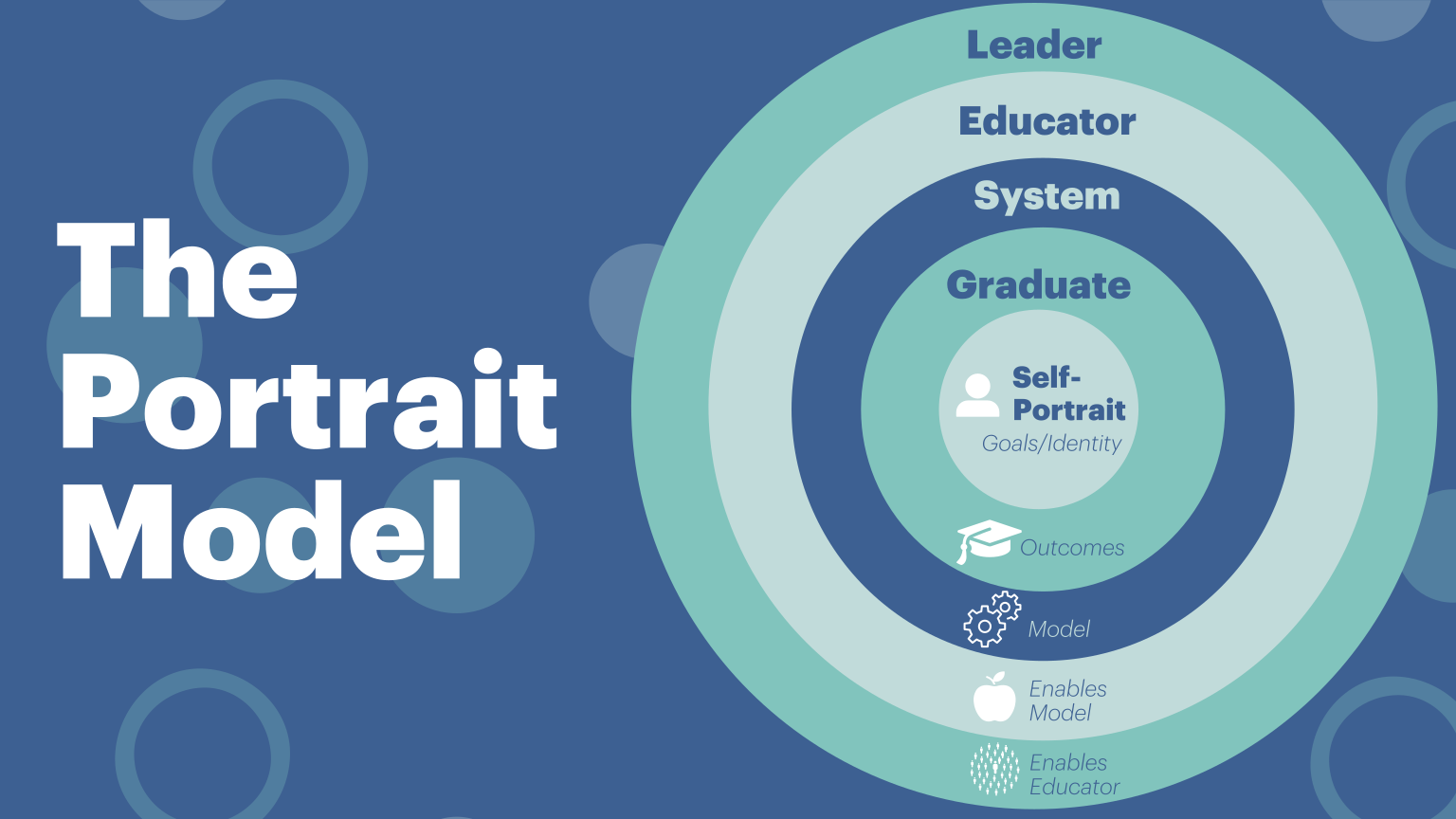
So this concept of Powerful Learning aligns with the portraits of a graduate that we see mushrooming across the country, which is looking to redefine success. Yes, the academic core is critical, but we see it as a necessary but insufficient condition for success.
So how do you create agency, purpose, right? Not different from the rigor, relevance and relationships we talked about many years ago, right? But the fact is that these four are big in the science. So they’re aligned to the Deeper Learning Dozen skills framework, but fewer, much more scientifically grounded.
And when you think about this idea of purpose, right—this idea of action, choice and voice—when you think about this idea of agency and curiosity, and connection, especially things like collaboration across difference.
I did a talk for 300 architects in NYC. I talked about school design—physical building school design—and how that supports Powerful Learning. And one person asked me, “So what does that look like?”
My answer was, “What does your work environment look like as a multinational architectural firm? How do you work?” And they described this room with hybrid structures, etc. I said, “That’s exactly it.”
I said, “Can you have five young people sit around a whiteboard and argue a strategy, and the five are from different parts of the world, different cultures?” That is collaboration across difference. That is the action of connection of content to purpose, to something greater than they are, right?
So these four, we think, sitting embedded in the curriculum and the pedagogy, can lead to what we see on a portrait, could transcend the issues of what we see in artificial intelligence on menial jobs going away, to put young people, frankly, for maybe careers we don’t know that will exist, but they’re prepared because they’ve got a level of tenacity and understanding.
Tom Vander Ark: This leads to another report that you just put out recently where you applied that Powerful Learning framework to learning with emerging technology. The report’s called Framework for Powerful Learning with Emerging Technology, and that is really a beautiful description of the new work of designing powerful learning experiences with co-intelligence, with AI, right?
Jean-Claude Brizard: Yeah. We see lots of folks focused on AI, on efficiency workflow. Yeah, wonderful. That needs to happen, right?
But at the same time, we think there is a power here in emerging technologies really supporting this idea of elevating pedagogy—elevating what we do in the classroom with teaching and learning—and leveraging that kind of technology to really move us forward.
There’s lots involved here beyond thinking about how we measure some of these four pillars, right? How we really get to the curiosity.
I visited a school in Beijing as part of our trip to China, and the whole school was focused on creativity. We asked the founder, “How are you legal?” He goes, “I wasn’t for five years.” He goes, “Now I am. I got 500 parents who are begging to enter my school.”
You think about this again—we mimic my kids’ school here in CA. When you think about this idea of curiosity, how do you foster that? By allowing young people—are we moving to grading, or frankly elevating issues like productive struggle to a different level?
That’s what we think emerging technology can do: support young people where they’re asking different questions.
I remember, as a physics teacher in NYC, where the graphing calculator was banned by the NYC Board of Regents because it was a cheating tool. Then all of a sudden, years down the road, I became head of high school. I had to go out and buy a whole bunch of TI-83s because the tool—the graphing calculator—became a tool for the assessment. And one thing changed: “Show your work.” That was the change in the assessment.
So the question becomes: How do you foster creativity? How do you foster agency by leveraging emerging technologies to allow young people to lift above and become masters of technology, masters of their own craft?
That is the connection for us between AI or quantum computing—what is coming, frankly—and what we see at Powerful Learning.
Tom Vander Ark: Jean-Claude, is it fair to say that all of this work that you’re doing is in part implemented through the school networks that you support, including League of Innovative Schools, which is coming here to Seattle in a couple weeks?
Jean-Claude Brizard: Yes. We can’t wait to be in Kent, in Seattle. I think we just got the Seattle school superintendent to actually come as well, too.
But the network of our League—and we also have a Global Cities Network—the League is the centerpiece of our work here because we are a research-to-development-to-practice shop. We love the idea of designing, developing and demonstrating, and these superintendents and their teams, frankly, are demonstrating what is possible.
We also talk about this two-way translational bridge, right, where the practice informs the work we do in research. It can’t be a one-way bridge. It has to be a two-way bridge.
But this League, they’re the ones who help us develop the constructs. They want to demonstrate what’s possible, and frankly, we also produce assets for the sector so they can see what is being developed. They can implement it in their own place as well, too.
But we love the League. They are the flagship. Arne Duncan—that was his brainchild back in 2011. And I’m very grateful for the work that the former secretary has done for us.
Tom Vander Ark: There’s a lot of paradox out there, Jean-Claude. It’s a super challenging time to be an edleader, and yet there has never been more opportunity for learners and leaders to do work that matters. So it’s confusing and also exciting, and for those reasons, we super appreciate you and Digital Promise. Your leadership is unparalleled in terms of shining a light on the path forward for edleaders. So thank you.
Jean-Claude Brizard: Thank you, Tom. Always. Thank you.
Tom Vander Ark: Thanks to Jean-Claude Brizard from Digital Promise. Check out the Center for Learner Pathway Innovations. Check out the League of Innovative Schools. They’ll be here in Seattle in a couple weeks. And until next week, keep learning, keep leading and keep innovating for.
Guest Bio
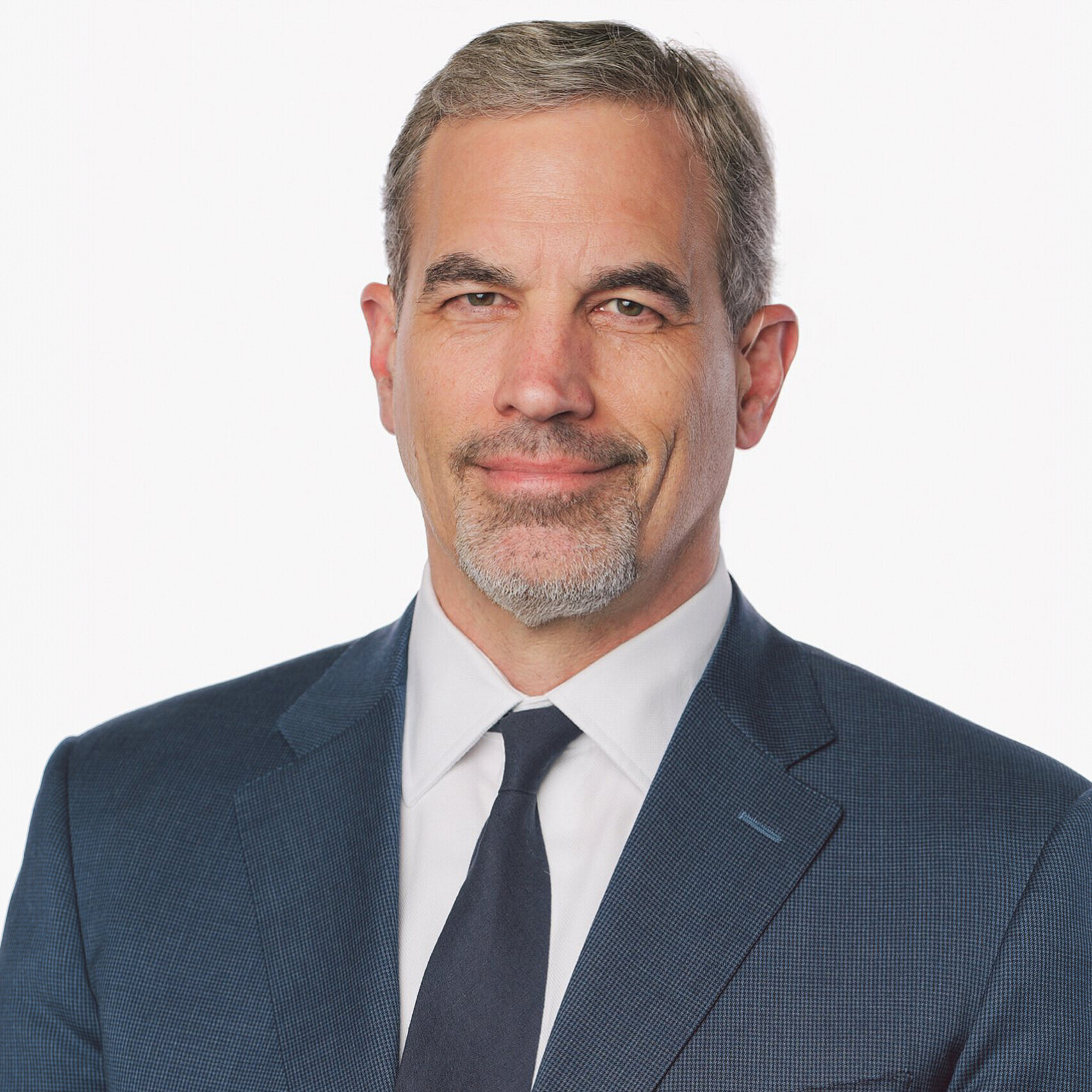
Jean-Claude Brizard
Jean-Claude Brizard is President and CEO of Digital Promise Global, a global, nonpartisan, nonprofit organization focused on shaping the future of learning and advancing equitable education systems by bridging solutions across research, practice, and technology. He is former Senior Advisor and Deputy Director at the Bill and Melinda Gates Foundation where he focused on PK-16 education. He also led several strategies supporting Washington State’s educational system. The Carnegie Corporation of New York honored Brizard in the 2023 class of “Great Immigrants, Great Americans,” a prestigious honor celebrating naturalized citizens who have enriched and strengthened our society.
Links


0 Comments
Leave a Comment
Your email address will not be published. All fields are required.