

Diane Tavenner on Futre
Key Points
-
Schools need tools like Futre to provide equitable, student-centered career exploration opportunities that integrate with real-world experiences.
-
Platforms like Futre empower students to make informed career and life decisions by exploring diverse pathways with transparency and dignity.
Shownotes





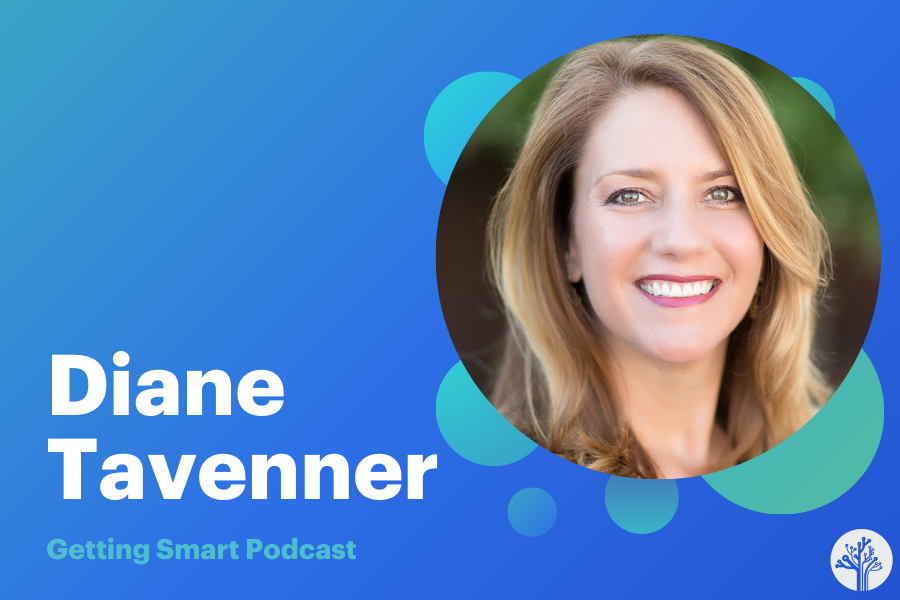
In this episode of the Getting Smart Podcast, Tom Vander Ark sits down with Diane Tavenner, founder and CEO of Futre, and Marshawn Brown, a student user of the platform. Together, they discuss how Futre empowers students to explore diverse career pathways with transparency and dignity. From personalized career exploration and work-based learning integration to long-term tools for student success, this conversation reimagines the mission of education. Learn how schools can support students in navigating post-secondary options and preparing for meaningful, purpose-driven futures.
Outline
- (00:00) Introduction to Futre Platform
- (09:02) Career Discovery and Exploration
- (13:33) Work-Based Learning Integration
- (22:35) Student Experience and Recommendations
Introduction to Futre Platform
Tom Vander Ark: Diane Tavenner said that across the country, schools are intuitively shifting our approach to more inclusive, postsecondary preparation. They’re moving from a “college for all” to a “pathways for all,” and this shift is subtle but important. The focus moves from college admissions to career and life launch.
You’re listening to the Getting Smart podcast. I’m Tom Vander Ark, and we’re talking to Diane Tavenner today. She’s the founder and CEO of Futre. Welcome, Diane.
Diane Tavenner: Thank you. It’s good to be with you, Tom.
Tom Vander Ark: I love that summary of where we are and what’s happening. It’s, I think, a great backdrop for why you started Futre. We’re also joined by an early user of the Futre platform, Marshawn Brown.
Marshawn Brown: Thank you. Thank you for having me.
Tom Vander Ark: This year or last year?
Marshawn Brown: I use it both years, actually. I started last year during my Next Prep class when it was first introduced.
Tom Vander Ark: What did you think?
Marshawn Brown: So we first started it in our Next Prep class. We were doing a project, actually, and we were talking about a career that we wanted to go into. So we would go into this new app—it’s called Futre Me—and we started looking through it and found different careers. It was actually all sorts of things: text, pictures. It told us the annual salary, benefits, and more. I remember seeing this one thing when I clicked on it—it was electrical engineering—and it talked about what your life would look like if you were in this job a couple of years from now. It would have you answer questions like, “How much time do you plan to spend with parents, your friends, etc.?” It kind of gave us a breakdown of, “Are you going to work this long?” and more.
Tom Vander Ark: Had you had any career education or career exploration at Kairos before that, or was this kind of your first introduction to careers?
Marshawn Brown: So my freshman year, we still had the Next Prep program, but we did not have this app in particular. I knew what I wanted to do early on, but having this app kind of helped me get a feel for what I really wanted to do. We had a class—it was still a Next Prep class—but we were doing site visits. But with this app, it tells us, “Okay, what is it really going to be about?”
The first graduating class would be this year, and a lot of the people I talk to are planning on going to college. A lot of the things that have helped them find that is Next Prep and Futre Me.
Diane Tavenner: Yeah.
Tom Vander Ark: So did the Futre platform expose you to different options than you would have known about?
Marshawn Brown: Yes, the Futre platform has told me about a lot of different jobs. It has careers just like this. I’m really good at math in particular, so I always wanted to go into that engineering kind of field. When I clicked, I saw a whole bunch of different engineering careers, which opened my eyes to more options. Futre has a part where it shows careers, and there are a lot of careers on there—a lot that I hadn’t even heard of. Clicking through, it shows careers just like it.
Tom Vander Ark: Do the opportunities on Futre have anything to do with the St. Louis geography, or are they just general?
Marshawn Brown: Actually, both. It shows by St. Louis, by state, and by the United States.
Tom Vander Ark: That’s cool. So are you more likely to go to college or less likely? Or are you more likely to take an alternative? I guess you have a better sense of what you want to do after high school.
Marshawn Brown: I’m more likely to go to college. I’m doing a 4+1 college program, and Futre actually helped me learn about that. When I was researching my career for a project, it told me a lot of the information I needed. So I’m planning on going to college after high school.
Tom Vander Ark: Diane, for the few people listening who don’t know your background, you’re just one of America’s great school network leaders. You spent 20 years building Summit Public Schools into one of America’s best school networks. And in doing so, I guess, like me, you sort of helped implement the “college for all” movement.
Diane Tavenner: I did. I call myself a recovering “college for all” advocate.
Tom Vander Ark: You know, I’m thinking back to 25 years ago. The tagline of our strategy at the Gates Foundation was “all kids college-ready.” But that very quickly turned into “college for all,” and really great networks like Summit… The good news is we pushed a few million more kids to graduate and go to college. But then we found that not as many finished college as we thought. Was that part of it?
Diane Tavenner: That was a big part of it. While we were doing what we were doing, we would talk among ourselves each year about sending young people to four-year colleges and having a bit of a pit in our stomach because we kind of knew that wasn’t the right fit for that particular student. But we didn’t know what else to do, and we thought that was the best option and opportunity we could give them.
So the work around Futre is about how we give, directly to students, the power in their own hands to really be exposed to, discover, and explore all the possibilities like Marshawn is talking about. We want to explore all the pathways and show them with equal dignity. What I don’t want to do is have the first choice be a four-year college, the second choice be community college, and the third choice be a trade pathway because that’s not true or real.
Tom Vander Ark: …and really great networks like Summit. The good news is we pushed a few million more kids to graduate and go to college. But then we found that not as many finished college as we thought. Was that part of it?
Diane Tavenner: That was a big part of it. While we were doing what we were doing, we would talk among ourselves each year about sending young people to four-year colleges and having a bit of a pit in our stomach because we kind of knew that wasn’t the right fit for that particular student. But we didn’t know what else to do, and we thought that was the best option and opportunity we could give them.
So the work around Futre is about how we give, directly to students, the power in their own hands to really be exposed to, discover, and explore all the possibilities like Marshawn is talking about. We want to explore all the pathways and show them with equal dignity. What I don’t want to do is have the first choice be a four-year college, the second choice be community college, and the third choice be a trade pathway because that’s not true or real.
And, you know, I’d love Marshawn’s opinion on this, but we’ve really taken a career-first approach to this. It’s about asking, “Who do you want to be? What’s the life you want to live? What is the work you want to do that aligns with the life you want to live?” As Marshawn said, some of it is about imagining what life looks like outside of work. What am I literally doing every day in these careers? Most young people don’t know. They don’t know what you actually do every day in these jobs. That’s a big part of the platform—helping people understand that and offering all those pathways as pathways with dignity. It’s really just about finding the right fit for each individual.
On the educator side, these decisions become so much more complicated. Before, it was about preparing students for four-year colleges. Now, educators have to think about 17 different pathways into 800-plus careers. No human can hold all of that in their mind. So how do we enable educators to feel confident and comfortable that they’re advising and guiding young people to a pathway that is real, meaningful, and a good fit for them? That’s really what’s under it.
Tom Vander Ark: Does a lot of this involve aptitude? How do you uncover that?
Diane Tavenner: Let’s have Marshawn answer first, and then I’ll come in. Marshawn, do you want to talk about how you get into the platform? It’s been a while for you, but maybe you can explain the general interest quiz and the specific interest one.
Marshawn Brown: When first getting into the app, you take a survey. It’s like a rating scale. It asks questions like, “Do you like helping people?” or “What would you do in this situation?” After answering, you can click on a career, and it will show you results categorized as reds, oranges, and greens. Typically, if you have more greens than oranges and reds, it’s a good fit for you. The survey asks a whole bunch of questions about the type of person you are, and that helps determine if a career would be good for you.
Career Discovery and Exploration
Diane Tavenner: Our thinking behind that is informed by a lot of work with Dr. David Yeager and other learning scientists. What we don’t like about traditional approaches to career exploration is that they often involve tests or assessments that feel like a black box to young people. You take a long test, answer a bunch of questions, and at the end, it spits out five careers you should consider. But you don’t know why.
For us, transparency and control are key. We want young people to see everything they’re being asked, how it lines up with careers, and then make their own choices. We’re not telling them who they should be or what they should do. Marshawn, does that come across to you when you’re in the platform? What do you think about that?
Marshawn Brown: Actually, that is something I think about. When I’m on other sites, I’ll see a list of careers that are supposedly “best for me,” but it feels like there’s more to it than that. On the Futre app, it doesn’t tell you what career is best for you. Instead, you explore careers that you think you might like, and it tells you your aptitude for them. Based on your answers, it shows how well a career might fit you. But it doesn’t decide for you—it just gives you the information to make your own decision.
Diane Tavenner: That’s exactly what we’re aiming for. We want career discovery, exploration, and selection to be a journey rather than an event. One of the things I see happening in schools is that we went from “college for all” to this rigid timeline: on November 1, everyone makes their college list; on December 2, everyone submits their applications. But that’s not how you discover the life you want to live. It’s a journey and a process.
You learn some things, then you go out into the real world and gain experiences. You come back, integrate that learning, and discover more. Futre is designed to stay with you for a long time. Marshawn and his classmates asked us early on, “Why would I use this if you’re just going to take it away from me?” So one of the things we’ve done is make it a 10-year license. Students get to keep it no matter where they go or what they do for 10 years. It’s a journey to get to the life you want, and we want the platform to support that journey in a circular and recursive way.
Tom Vander Ark: I love that. I’d love to have both of you talk a little more about work-based learning—actually getting to do an internship, a job shadow, or a project related to a community partner. Is that connected to Futre? Do you do that kind of stuff at your school, Marshawn?
Marshawn Brown: Yes, actually. One big flaw Futre had in the beginning, during my first year using it, was that we had to do site visits on a whole different tab. But now it’s integrated. On the Futre app, you can see the different site visits, what they’re about, and reflect on them afterward. At first, it wasn’t an app—it was just a website. But they made it an app, so it’s more accessible. If we’re out, we can use it on our phones instead of waiting to get to a computer. It doesn’t feel like something you have to rush through; it’s something you genuinely want to engage with.
Diane Tavenner: Yeah. It literally was directly in working with Marshawn and Kairos and a bunch of other schools because that’s how we build—we go and we see, hear, and ask, “Does this work for you? What do you like? What do you not like? How do we make it better?” One of the things that surfaced was the need to integrate real-world experiences with career exploration and discovery. It has to be very active. It has to be very relevant.
We’ve built out the ability for schools and communities to put all of their offerings—their in-person offerings—on the platform. Young people are guided through a process of how to prepare for these experiences to get the most out of them, what to do while they’re there, how to reflect afterward, and how to summarize and codify those experiences so they can use them in interviews and applications. That’s all built into the platform now. You can also see the careers that relate to those experiences. But all of that came from literally working with our community partners, school partners, and youth partners telling us, “This is what we need.”
Tom Vander Ark: Diane, this is so complicated. The need is gigantic, and the current incumbent apps in this space are lacking, to maybe say the least. This is a combination of a variety of things, right? It’s interest and aptitude assessment, career exploration, work-based learning coordination, and with the exponential change in the nature of work, all this stuff is really dynamic. There’s probably a question in there. This is super challenging, and it feels like a tough entry point. Do schools know they need this? Who’s the customer? Is it a high school principal? I guess, what’s the go-to-market strategy for Futre?
Diane Tavenner: Yeah. Well, we are in a tough industry, as you know, because for me, I’m working in many ways for Marshawn. Marshawn is my number one customer. I’m working for him. He is the person I care about. I want to make sure that he gets to the life he wants. But he’s not the person who’s picking the technology or deciding what’s happening in his school.
We’ve really tried to walk this line of spending a lot of time with the young people who are really going to use it. And I’ll be curious in a moment, Marshawn—we should ask you—it is complicated, but we try really hard to make it not feel complicated. So I’ll be curious to hear your take on that.
It’s also about the adults and the educators. It needs to be valuable for both. We’re giving data to schools that I think they don’t have access to, but they know they need. They don’t know how to see it or understand it, and they don’t have mechanisms for that now. We’re giving them confidence in pathways and some really important tools that don’t exist. I mean, we went to all these schools and literally watched people running around with computers and spreadsheets, trying to figure out which student is going to this internship, who’s going to the career fair, and who’s going to this event. They were literally running around a building trying to get students, and it wasn’t integrated.
So we’re trying to meet all of those needs in a sleek, simple, fun-to-use platform. That’s our goal. Do schools know they need it? Yeah. I don’t talk to anyone who doesn’t know they need it. The big question is, where do we use it? Where does it fit, and how? Right now, we have some very generous philanthropy from the Carnegie Corporation of New York to enable schools to pilot this. We’re trying to build a set of case studies around where it fits in schools, how people use it, and where they use it. We’re also building a community of practice around that. If people want to join, we’ve partnered with Summit, which is really good at running communities of practice to bring educators together. I don’t think anything like this exists right now. It’s the thing I wanted as an educator, and it’s new. So we have to figure it out together in order for it to exist.
Shorts Content
Work-Based Learning Integration
Tom Vander Ark: So it sounds like this could show up in an advisory if a school has a well-structured advisory. I’m here in California, where a lot of big comprehensive high schools have voted out their advisory. At a time when students need a home base more than ever, a lot of schools are getting rid of it. So it could sit in a counseling center, it could sit in a career exploration course. I guess it’s an advisory, the best-case scenario where you have a daily touchpoint, both with an app and an advisor?
Diane Tavenner: I love that scenario. You know I’m a big believer in advisory, but we have tried to make this as flexible as possible so it could sit in all of those places. Honestly, it can literally sit directly with the student too, because I just want to be mindful that some students don’t have access to anything.
Tom Vander Ark: Shout out to our mutual friends at ASA—American Student Assistance. They’re trying to go direct to students, direct to middle school, with career exploration just for that reason.
Diane Tavenner: Yeah.
Tom Vander Ark: So I appreciate the interest in serving multiple entry points. It does make go-to-market and app design more complicated. Do you see school systems signing basically a SaaS license, a multi-year license for the product?
Diane Tavenner: Actually, and again, this comes from feedback from students like Marshawn, it’s a 10-year license. I actually see schools sort of, if you will, gifting this license to a young person. So Marshawn has his license, and he’s going to keep it for 10 years. He can graduate, go to another school, and he will still have it. Ideally, he’ll have it until he launches into his career.
The benefit to the school is that they get the data about their young people for all that time and have a much better window into what happens to their graduates once they leave and go on. As a school leader for a long time, trying to manage budgets, I think it’s easier to raise the funds, if you will, to gift the new class this tool that will be theirs. What we heard from students is, “I’m not going to invest in this if I don’t know it’s going to be there for me next week or next year.” The school keeps giving me technology and taking it away, and I don’t trust that.
Tom Vander Ark: This is a random addition, Diane, but I feel the same way about learning employment records. We are going to have to have, I think, state leadership to make sure that every high school student graduates with a learning and employment record—a digital credential wallet that stays with them for life. So I appreciate your thinking about the long-term use for students. We have to do the same thing with digital credentials. Maybe Futre will become a digital credential. Is everybody at Kairos using the platform, Marshawn?
Marshawn Brown: Actually, everyone at Kairos is using the Futre platform because we all take a class at Kairos called Next Prep, and Futre actually works hand in hand with our Next Prep class. So it’s kind of like required, in a sense.
Tom Vander Ark: That’s a great example of a useful entry point. Diane, you’re at the stage now where you’re really trying to pilot with a number of schools and build these sorts of use cases, right?
Diane Tavenner: Exactly. And there are all sorts of interesting conversations and experiences that we’re having—everything from some microschools that are really pushing what schooling looks like, and Futre is a big part of that daily experience, to comprehensive high schools, to these ecosystems where we have schools, community partners, and employer partners all coming together. So, yeah, we really are trying to partner with as many people as we can in different parts of the country, with different models, and build this library of use cases and case studies. We’re learning as much as we can so we’re literally building the technology that schools and young people need. Because I just didn’t feel like I had that when I was in a school, you know?
Tom Vander Ark: Right. And Diane, while this was a great idea five years ago, now with AI just changing our sense of the future of work, this is more important than ever. So this is so timely. Are you open to more pilot schools? And if so, what should people do, and how can they get involved?
Diane Tavenner: We are definitely open. We would love to connect with folks who are interested in what we’re doing and want to sort of join the movement, if you will. Our website is futre.me—beware of autocorrect, so our Futre does not have a second “u.” It’s F-U-T-R-E dot me. Please hop on the website and check it out. You can actually send us a note from the website. You’re also very welcome to email me directly at [email protected]. We’re excited to work with anyone who sees what we’re seeing and wants to create a new way of thinking about this.
Student Experience and Recommendations
Marshawn Brown: Yes, I would personally recommend it to other schools. And it’s not just because I’m being asked, but because I genuinely believe it. It actually taught me a lot about job careers. Like, when I first got on the app, I had no idea what a job outlook was or job projection. Seeing that kind of information also motivates me. It’s like, “Okay, in 10 years, this is how many jobs will open up, and I could possibly be one of those people.” It brings in a lot of new information and a lot of new things to look at, like, “Oh, is this job or career really for me?” So I would personally recommend it to other schools because I think it’s a good platform.
Tom Vander Ark: Beautiful. We’ve been talking to Diane Tavenner. She’s the CEO of Futre—that’s F-U-T-R-E dot me—and one of the early users, Marshawn Gregory Brown, at Kairos Academy in St. Louis. Diane, take us out with any thoughts on what’s next for you and Futre. Any final words?
Diane Tavenner: Well, I have overwhelming gratitude for the folks in St. Louis, the folks at the Opportunity Trust and Next Prep, and Marshawn and all of his classmates. Literally, this has been a partnership. That’s also been true for a number of other organizations. We’ve been all over the country working with people—certainly Summit in California and Washington, Making Waves Academy, Valor, and we started in Ohio at the Union Local School District. So many other people have contributed. I’m just very humbled by the collaboration and the vision. So I’m very, very grateful to so many folks.
Tom Vander Ark: Awesome. This is really exciting. The need is huge. I love the progress that you’re making because you’re really not just deploying an app—you’re reconceptualizing career and college readiness. You’re rethinking youth development. You’re sort of rethinking the mission of education, and that’s what’s behind this. It’s exciting to see progress. Marshawn, we super appreciate you giving us a firsthand view.
Guest Bio
Diane Travenner
Diane Tavenner is co-founder and CEO of Futre.me. Prior to this role, she was CEO of Summit Public Schools, a leading network of public schools that operates 11 schools in California and Washington, as well as a free program that enables schools across the U.S. to implement Summit Learning, its nationally recognized personalized approach to teaching and learning.
Diane founded Summit’s flagship school, Summit Preparatory Charter High School in 2003, with the mission to prepare a diverse student population for success in college, career and life, and to be thoughtful, contributing members of society. Summit quickly earned the reputation for being one of the nation’s best public high schools, and overwhelming community demand lead to the opening of 10 additional Summit schools, as well as the creation of the Summit Learning Program. Summit is also recognized for its commitment to continuous improvement and collaboration, establishing pioneering partnerships across industries, including renowned learning scientists and researchers, universities, technology companies, teacher preparation programs, foundations, and community organizations.
Prior to founding Summit, Diane spent ten years as a public school teacher, administrator, and leader in traditional urban and suburban public schools throughout California. Diane holds a bachelor’s degree in psychology and sociology from the University of Southern California, and has a master’s degree in administration and policy analysis from Stanford University.
Marshawn Gregory Brown
Marshawn Gregory Brown is an 11th Grader from Kairos Academies, from St. Louis.
Links


0 Comments
Leave a Comment
Your email address will not be published. All fields are required.