

David Dimmett on AI Literacy & Career Readiness in STEM Education
Key Points
-
Schools must include AI literacy to prepare students for the evolving workforce. It’s not just about technical knowledge but ethical reasoning and the responsible use of tools.
-
Project Lead the Way’s Career Advantage initiative integrates career exposure, industry credentials, and work-based learning, ensuring students are equipped with durable and transferable skills for the future.
Shownotes





In this episode of the Getting Smart Podcast, Tom Vander Ark is joined by Dr. David Dimmett, CEO of Project Lead the Way, to discuss the critical importance of AI literacy, STEM pathways, and career readiness in today’s rapidly evolving world. They explore how Project Lead the Way is preparing students and educators by integrating AI tools, ethical reasoning, and durable skills into learning experiences. Dimmett emphasizes the role of applied humanities in creating tools that serve humanity and discusses initiatives like Career Advantage, which focuses on career exposure, work-based learning, and industry-recognized credentials. Tune in to hear how education leaders can navigate this dynamic landscape while equipping students with the skills to thrive.
Outline
- (00:00) Introduction & Planning Season
- (01:44) AI Breakthroughs & The Future of Work
- (10:08) AI Literacy Course & Framework
- (18:37) Career Advantage & Skilled Trades
- (25:16) AI Pushback & The Path Forward
Introduction & Planning Season
Tom Vander Ark: You are listening to the Getting Smart podcast. I’m Tom Vander Ark and joined by repeat guest Dr. David Dimmett. He’s the CEO of Project Lead The Way (pltw.org). Welcome back, Dave.
David Dimmett: It’s great to be back, Tom.
Tom Vander Ark: Happy New Year! We’re in January, so edleaders around the country are beginning their planning process, starting to think about the budget and imagining what could be different and better about the 2026-2027 school year. In that spirit, I thought we could make a couple of observations about what is happening in the world, particularly in STEM pathways, and then specifically talk about some new things at Project Lead The Way that are relevant. How does that sound?
David Dimmett: Sounds fantastic. You know, this time of year, I think back to one of my favorite roles ever as an educator—being a high school assistant principal. I know once we turned the corner into the middle of the year and got into January, I was really living in two different years. A lot of it was trying to make sure we did everything we could to end the school year in the best way possible, get our seniors graduated, and prepare for the end of the current year. At the same time, there were all the things you have to do around master scheduling, budgeting, hiring teachers, building the vision, and getting adoption for key elements of the next year. It is an exciting time of year—that’s the positive way of framing it.
AI Breakthroughs & The Future of Work
Tom Vander Ark: And as a district administrator, you know that February, March, and April are busy times for planning—thinking about staffing, master schedules, curriculum adoptions, and any professional learning that goes along with that. I hope you had a couple of days off during the Christmas and New Year’s break. But it’s so interesting that a lot happened in December in the world of work. We had some big model announcements. OpenAI came back with a model launch of ChatGPT 5.2, which performed really well on professional work tasks. Earlier in the year, they had set up this evaluation system called GPT-Vale, looking at 133 tasks across 44 occupations. At the beginning of the year, with GPT-4, they had done moderately well—not quite as well as Claude—but it was a good description of professional tasks widely done. In December, they came back with this new release, and now they were at the top of the ranks, outperforming experts in 71% of cases on key tasks in most occupations. A really important benchmark. Then, a couple of days later, on Christmas Eve, Anthropic released Claude Opus 4.5, and immediately people started whispering about AGI—that we had just hit this threshold of really smart machines that, at least in coding, are better than most experts. It feels like 2025, particularly the fourth quarter, was a threshold for the beginning of the automation of knowledge work, STEM work, and the work you help prepare young people for—particularly computer science, but shortly behind that, engineering and health. I’d love some reflections from you. Was that a big deal? Is it a threshold that’s important for the nature of work in STEM pathways? And what should we do about it?
David Dimmett: Well, I don’t know that I can say exactly what we should do, but we should pay attention. We shouldn’t sit on our hands. We need to be very thoughtful about the foundation we’re helping school leaders, classroom teachers, and students build so they can navigate not just what’s happening today but what’s on the horizon. We can expect more change for sure. You may remember a year and a half ago, our executive team engaged deeply with you and your team. That was a catalytic moment for us at Project Lead The Way and put us on a path we’ve been on for about 18 months—deep learning and practice with a range of AI tools. I typically use Gemini and Claude most frequently, but I also use NotebookLM, MidJourney, and other tools for image creation—just to understand how the tools work. A lot of it came out of looking closely at Ethan Mollick’s work, and you encouraged us there.
Our team has taken that charge seriously. Everyone at Project Lead The Way understands that the expectation is to treat AI as a colleague, as a team member. But we have to know enough to apply judgment, understand ethical boundaries, and consider all the different aspects—not just how we use the tools but especially when we think about educator-facing and student-facing applications. More than ever, we have to be true learners. I’ve always thought of Project Lead The Way as a learning organization. We have to be really good at not just learning but applying everything we learn back into the work we do together as an organization and in how we support the 100,000-plus educators we serve across the country. They’re counting on us, and they trust us. How are we going to help them navigate this moment? It’s more important now than ever. We’re working with 2.5 million students. The future is bright. I have three kids of my own who have been in Project Lead The Way and are now getting launched into the world. The skills they build—what we call durable skills—are critical. Toyota, a longstanding partner, refers to them as professional skills. I love what Tim and the team at America Succeeds have done, thinking about durable skills. I often drop in the term “human” now that there’s so much non-human work happening in our area. What are the skills that will be essential?
Yes, we work in three mission-critical pathways: engineering, computer science, and biomedical science. There’s a lot of deep content in there, including cybersecurity and AI. We have a new AI course I’d love to talk about. But more important than the technical knowledge are the skills students build—working collaboratively on projects designed by our industry partners. One other thing I’ll add: as a former English teacher, I think this is the moment for the humanities. I think about the work happening at the Cosmos Institute—how do we create technical tools that serve humanity, as opposed to thinking about how humanity serves technological tools? In a way, it’s a scary time for some folks, but it’s also a very exciting time full of opportunity.
Tom Vander Ark: I appreciate all of that. On your last point, the humanities are clearly more important than ever—understanding what it means to be human, being thoughtful about how we express ourselves and our aspirations, how we build collective aspirations, and how we live together in a thoughtful society. Those are the humanities, and they are clearly more important than ever. We probably agree that they have to be more applied than ever. It’s about how we bring those to bear on the new context and, at least occasionally, use new tools to explore that context and express ourselves. I appreciate that plug for the humanities. It feels like Project Lead The Way has been super thoughtful about where the world is heading. As you suggested, it feels like your pathways—being relevant, engaging, collaborative, skill-focused, and applied—are more important than ever. It feels like the two initiatives we’ve both referred to, the AI initiative and Career Advantage, are super timely responses. Let’s talk about those. It feels like AI literacy is an absolute must for every school system. You can decide to ban it from classrooms or some classrooms, but at a minimum, we have to be addressing AI literacy. Tell us what you’re doing on that front.
Shorts Content
AI Literacy Course & Framework
David Dimmett: That’s great. AI literacy is the first pillar in our four-pillar framework around our work with artificial intelligence as it stands today. To me, that’s the foundation. For many folks, AI is this thing that just popped on the scene in the last 12 to 24 months. But artificial intelligence has been around for a long time. We want to build this foundation for students, educators, and really all adults. It starts with AI literacy. The course we’ve developed now is being used in several states and regions at their request to help lift up the educator workforce so they can serve students more effectively in this regard.
AI literacy is at the heart of that. I go back to this one-semester high school course we’ve developed. There are a couple of things I think are really important. One, we talk about the history of AI and machine learning. We talk about why data is so important, how large language models are trained, how they behave, and the differences between models. Why do we think those differences exist? We look at all of that—quality of data being a big part of it—and data analytics. We also talk about ethical reasoning. Ethical reasoning has been one of the skills we’ve developed in Project Lead The Way for a long time. I’ve thought about it, for example, in our engineering work. If you’re building a bridge but suddenly have a 10% budget reduction, what are you going to do? Buy cheaper concrete? Cheaper steel? Will the design be less aesthetically pleasing? Where are you going to get that 10%? Ethical reasoning has been at the heart of our work for a while, but now it’s even more important.
We think about that. We think about the environmental impacts. I’m in Indiana, where there’s a lot of work happening—data centers coming online and small nuclear reactors becoming a big part of the energy solution across the country. Understanding the range of impacts is critical. That’s the first half of the course. In the second half, students actually build, test, and use AI as a tool to solve a real problem—a real industry or career-connected problem. I think those things are really important.
The ethical piece, though, is something I keep coming back to. In our personal lives, we keep encountering AI in different ways. I was talking to a colleague this week who had been on a service call. It took them probably seven or eight minutes to figure out that the person they were talking to was actually a human. They said the reason they figured it out was because the agent talked about their kids after my colleague mentioned his own kids. I said, “Well, what if the AI does that? Is that unethical?” In some ways, it was comforting to my colleague, and maybe that’s one of the goals—to resolve the challenge successfully and for the customer to feel good about it. That’s a win. But if the AI is misrepresenting itself as a human with kids because it resonates with your persona, is that okay? That’s one of a thousand different ethical dilemmas on the table right now.
That’s pillar one of what we’re doing. The other parts of it include AI as a curriculum that extends out of our current Principles of AI offering. There will be more AI offerings to come; the team has that on the roadmap. Then there’s AI in practice. Think about our biomedical science courses that already exist. How do we update and enhance them? If we’re talking about cancer detection, we can’t not talk about the effectiveness of AI in helping diagnose and treat cancer, for instance. I’ve said this before: the burden on teachers is too high. How can we use AI as a tool inside the classroom to help support educators in doing their very best work?
Tom Vander Ark: Dave, where does this AI literacy show up? Is it a course? Is it a middle-grade course or a high school course? Or is it also embedded?
David Dimmett: It’s infused in the AI content we’re developing right now. The student-facing part of that is specifically this Principles of AI course. The other thing we have—and I’ve talked about how we have so many great partners—is a partnership with AWS. They’ve helped us develop some content that is teacher-facing. We have a one-day and a two-day course for educators called Demystifying AI. A lot of it talks about how to use AI to solve problems in the classroom, the challenges of using AI, how it works, and the potential upsides, downsides, and risks. A lot of it comes into this professional development offering we’ve developed for educators.
Tom Vander Ark: I love the difference-making and ethical reasoning that you’ve woven into that. Katie Hern, your Chief Impact Officer, talked about that on your very first podcast, which you launched recently. I really appreciate that. Where can people find that podcast, by the way?
David Dimmett: Thank you for that. The Inspired podcast is a monthly podcast at this point, though we’re probably going to look to increase the frequency. It’s on all your regular podcast channels—YouTube, Spotify, Apple, and Google. It features great conversations, some of which are a peek behind the curtain, talking to our team members. There was a great episode with Katie. We also had Joel Stein, our Chief Product Officer, talking about the vision for the offerings we put in front of students and how we support teachers. We recently did an episode at Masterminds, a conference we hold for our master teacher network. We held it here in Indianapolis with 300-plus master teachers—the best of the best. You can hear directly from them about the challenges they’re facing today in the classroom, how they’re navigating them, how they’re supporting each other, and the excitement they feel.
Tom Vander Ark: Dave, those 500 master teachers you have are your secret weapon. That’s an extraordinary army for good.
David Dimmett: They are. I catch myself, especially at that event where a big number of them were in the room together, thinking, “If we had to go back and try to recreate this, I don’t know how we would do it.” Their passion for what we do together, their commitment, and the things we’re learning from them all the time are invaluable. They trained something like 7,000 teachers last year. That’s the group working directly with teachers to help them get ready to teach in a project- and problem-based way and navigate all the challenges associated with that.
I frequently get text messages from some of our master teachers—not just about the celebrations happening in their classrooms but sometimes feedback on something they’d like us to think about or something they want us to know about another master teacher who needs support. That’s the power of human skills. We can’t forget that the teachers in classrooms today are navigating a range of challenges—really human challenges. The more they can support and lift each other up, the better the quality of our classroom experiences will be.
Career Advantage & Skilled Trades
Tom Vander Ark: Let’s talk about Career Advantage. In 2025, we saw the beginning of what looks like a softer tech employment market, particularly for new graduates. Simultaneously, there are 3 million jobs open in fields like manufacturing. So we have shortages and a soft employment market. At the same time, these new tools allow high school and college students to step into value creation immediately. It’s a confusing employment market, and I think that suggests we have to start a career conversation even sooner—maybe in the middle grades. You’ve introduced Career Advantage with even more career awareness, career exposure, and career planning at every level. Is that right?
David Dimmett: It is. Our content and the work we do start in pre-K and go through high school. In some ways, you could look at what we do and say there are a couple of big buckets. One is curriculum, two is teacher training, and three is providing schools with a one-stop shop for the things they need to deliver a project- and problem-based learning experience for students. But it’s a lot more than that.
A lot of it is about skills. We’ve talked about durable human skills and transferable skills. Our partnership with Toyota came out of their identification of these professional skills in our graduates. The diploma, in many ways, has become less and less of a signal. So then we start looking at what tells us that this student has what we’re looking for at Company X. Toyota saw that in our students, and that’s really important for us.
We use these three pathways—engineering, computer science, and biomedical science—and we’re looking at expanding pathways. That’s a very important part of our work right now: thinking about what other pathways and courses make sense. Within these courses, we’re including around 300 career profiles and connections at the elementary, middle, and high school levels. We’re exposing students not just to real problems in the classroom but also to people who solve problems like these every day as part of their jobs. Then we talk about their path to that job—what their education looked like and what kinds of experiences they had. That’s been a really important part of Career Advantage.
We’re integrating industry-recognized credentials across all of our high school offerings. Work-based learning is another key component. In many cases, our classroom experience—especially the senior capstone—counts as work-based learning because it’s directly tied to industry. We’re also working with a lot of partners, both for-profits and nonprofits, that go deep into work-based learning. We refer our schools to those providers for a deeper experience.
Another exciting development is the introduction and integration of skilled trades into our middle school offerings. A lot of this is based on feedback from schools and our business and industry partners. When we look at workforce needs and the opportunities we want students to have, that’s how we go back and look at our roadmap. All of this becomes part of what we call Career Advantage.
There are a couple of other things on the horizon that I think will be really good for students in terms of signaling both to higher education and employers. For example, we’re exploring digital portfolios or backpacks of credentials. I see us aligning closely with that work so that when students walk out of a Project Lead The Way classroom, they already know what opportunities are available to them.
Tom Vander Ark: That’s beautiful. I’m glad you’ve added some visibility to the skilled trades. As you suggested earlier, every field is becoming computational, and that includes the trades. The trades are also becoming an important entrepreneurship opportunity for young people. These can be an accelerated path into high-wage employment that offers growth and entrepreneurial opportunities. They’re increasingly computational, so they’re very much related to the engineering and computer science pathways you currently support. That’s great progress. Anything else edleaders ought to be thinking about for next year?
David Dimmett: I think you just mentioned it. Another place where I see us getting more engaged is around formally promoting and supporting entrepreneurship in the Project Lead The Way classroom. Whether that becomes a standalone course or integrations in courses we already have, that’s an open question for our team right now. But all the skills we’ve talked about—collaboration, communication, ethical reasoning—tie into an entrepreneurial mindset.
We see that happening organically in the courses we have. We see students in Project Lead The Way experiences getting patents and starting their own businesses. We’d like to offer an accelerant to that and formalize it. I think that entrepreneurial mindset will serve students well regardless of what pathway or career they choose post-high school.
Interestingly, this has come up in conversations we’re having with state departments of education. They’re looking at new career clusters and considering cross-cutting entrepreneurial thinking or entrepreneurial mindset across all career clusters. I’ve also heard this from schools of education. I’ve talked to a couple of deans in the last month who are viewing entrepreneurship as a key element of their pre-service educator preparation. That’s emerging work, but it’s something I’m excited about as well.
AI Pushback & The Path Forward
Tom Vander Ark: David, some polls and experts point to a bit of an AI pushback in 2026. It might be piling on the “techlash” that we’ve seen growing, and it feels like it’s adding to the valid concerns about social media and the phone bans that have gone national. Do you worry about that?
David Dimmett: I think it’s a great question. My son is in a school now that has implemented a limited phone ban. It’s up to each classroom, and I’ve seen other reports of schools taking a more significant approach to this. The results are not negative. I think this is all about the appropriate use of technology.
The reality is, if we allow students to leave the classroom and walk out the school door unprepared to use these tools effectively, those schools that are doing that will put their graduates at a significant disadvantage compared to students who have learned how to effectively use AI tools to solve meaningful problems. This is a powerful tool, and business and industry will continue to use it. We have to make sure this is part of being career-ready, job-ready, and life-ready.
We’ve done a bit of an experiment with this in our household, too. We’re using AI not just as an enhanced search engine but to help us think through challenges we navigate as a family. Then we apply judgment—there’s no substitute for judgment. I think we can’t lose sight of that. But we have to lean in and get the very best of the applied humanities. That’s exciting. There are now universities offering degrees in applied humanities.
At the same time, we need to look at how we can leverage these tools for good to solve the problems that are front and center for us—whether that’s clean water, food safety, or energy. There are plenty of problems that need solving, and using the best tools available is the right thing to do.
Tom Vander Ark: You reminded me of my favorite impact book of 2025, The Disengaged Teen by Rebecca Winthrop. In it, she discusses four learning modes, with the goal of getting kids into explorer mode. Dave, what I appreciate about Project Lead The Way is that you are the national leader in getting kids into the explorer mode of learning.
David Dimmett: I’m a former English teacher, so I’ve long believed that fiction is really good for us—fiction and science fiction. I read a couple of really good fiction books recently. One is The Correspondent, which has gotten a lot of attention. Another is Dark Matter, which delves into quantum physics. Those were great escapes for me.
I’m also going back and digging deep into nonfiction. I feel like there’s a reason why the best AIs are trained on as much data and information as possible. How can I do my best version as a human to put quality inputs into my brain to help me be a better thinker, CEO, husband, father, and friend? I’m constantly looking for great recommendations. I’ve also been reading a lot of philosophy lately. Some of this is an outgrowth of what I saw at the Cosmos Institute and thinking about philosopher-builders. I’m currently exploring the intersection of stoicism, transcendentalism, and humanism, which is a really exciting place for me right now.
Tom Vander Ark: That’s a place where a few other leading thinkers are hanging out. We’ve been talking to David Dimmett, the CEO of Project Lead The Way. David, I appreciate that you’re a learning leader. I love that you’re a voracious reader. I appreciate the way you’re an AI learner and that you, with your team, are learning out loud. You’re humble, curious, and a terrific role model for edleaders around the country.
Today, we’ve been celebrating some of your new initiatives—the AI initiative and Career Advantage—which are timely responses to a confusing world full of opportunity. Thanks for being with us, David.
David Dimmett: Absolutely. Thank you, Tom.
Tom Vander Ark: Thanks to our producer, Mason Pashia, and the whole Getting Smart team that makes this possible. Until next week, keep learning, keep reading what Dave Dimmett is reading, and keep innovating for equity.
Guest Bio
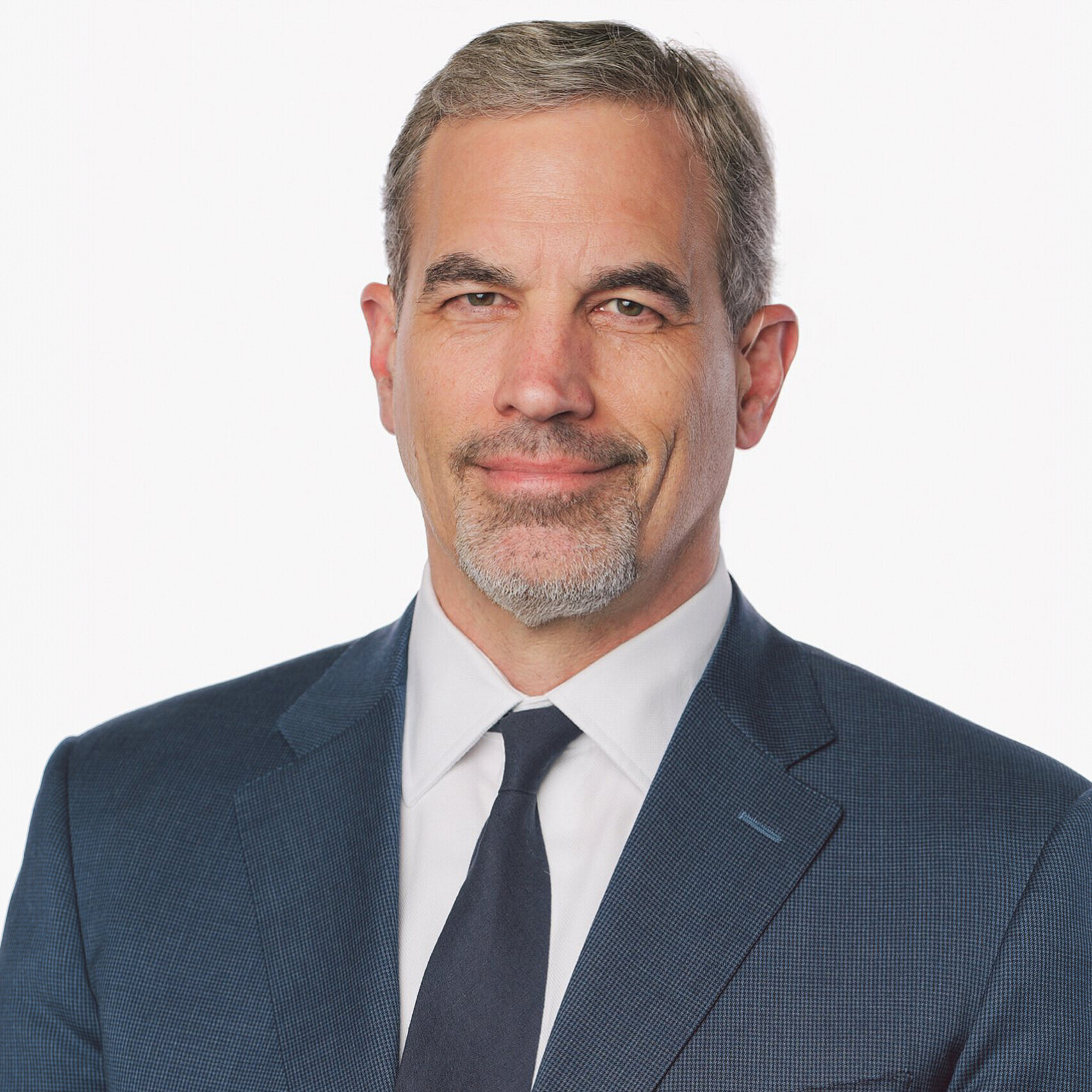
David L. Dimmett
As the President and CEO of Project Lead The Way (PLTW), I lead a nonprofit organization that provides transformative learning experiences for millions of PreK-12 students and teachers across the U.S. I have over 26 years of experience in the primary and secondary education industry, with a doctoral degree in educational leadership and policy studies, master’s degrees in curriculum and instruction as well as business operational excellence, and a bachelor’s degree in English.
My core competencies include strategic planning, partnership development, fundraising, advocacy, coaching, and instructional design. I am passionate about empowering students and educators to develop the skills, knowledge, and mindsets that are essential for success in the 21st century and beyond. I collaborate with a diverse network of partners, including schools, districts, states, corporations, foundations, and universities, to advance PLTW’s mission of preparing students for the future of work.
Links


0 Comments
Leave a Comment
Your email address will not be published. All fields are required.