


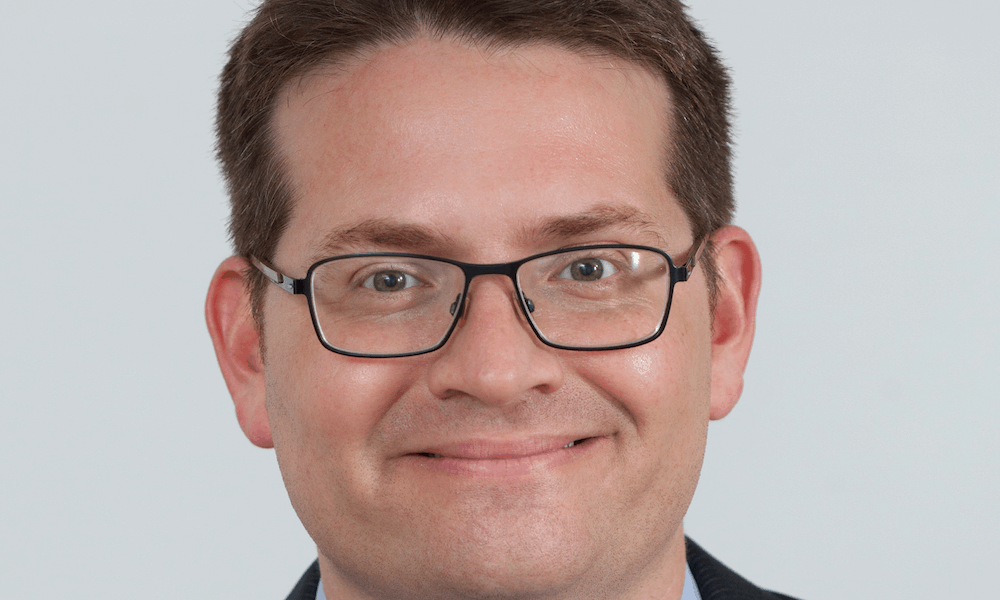
Podcast: Eric Tucker on Reopening Schools with Equity in Mind
- Organize and mobilize. “The work of response to families in need has been a huge focus at the LAB.” That’s why it was important for everybody to create a team that serves as nerve center during the crisis.
“We’re newly aware of the need to provide childcare. May professionals are balancing caregiver responsibilities and work. And being effective at childcare, with a different mix of goals, requires that we prepare differently.”
- Develop reopening scenarios. “Reopening with distancing is difficult or impossible in buildings fortified to prevent shooting.”
“We’re looking at A/B days or morning/afternoon shifts as well as place shifts.” In addition to time and place shifting, he anticipates the need to operate remote learning.
“Many students have medically fragile individuals at home so any plan can’t just focus on the student–it’s a life and death matter.”
Tucker talked about the importance of preparation for screening on entry and contract tracing. “Success will be a function of how effective our collective public health response will be.”
- Embrace financial stewardship in the face of uncertainty. Tucker encouraged Creative thinking while preparing for devastating budget cuts. He’s keeping in mind that equity doesn’t mean the same set of resources for every learner.
“We’ll try to match resources to goals and avoid balancing budgets on the back of the most vulnerable students.”
- Staff and schedule for flexibility and differentiation. “Staff and facilities are our main expenses–and we will require more staff and more facilities next year.”
Tucker stresses the need for frequent and direct communication with all stakeholders during the crisis.
- Reconnect and reassess. “Reconnecting is critical in the context of profound trauma. This has been a taxing period physically, emotionally, and in terms of personal safety”
“We’ll be using diagnostics to assess where students are and taking lessons from Turnaround for Children and CASEL and guidance from National Center on Learning Disabilities. As we diagnosis learning gaps, we’ll keep in mind learner variability.”
- Practice agency and prioritize engagement. “Some things matter more in virtual learning including agency, self-management, and good decision making.”
- Make use of data and systems to improve educational continuity. “Accessibility of technology matters.”
Tucker stressed the importance of the interoperable exchange of data when learners are moving from one setting to another.
- Reimagine approaches to core school systems. “Schools should consider moving to mastery and competency grading and allowing the revision of work.”
“Schools will also need to rethink talent systems.”
- Iterate and communicate. “Schools need to communicate and prepare for the possibility of periodic resurgences that could continue over the next couple of years. We must develop strategies, including reinstituting mitigation measures, to ensure the protection of educators, students, and families when the disease surges.”
- Consider the worst but model the best. “We must acknowledge the humanitarian disaster underway, apply all of our best thinking and problem solving to provide consistent access to food, health care, stages of grieving,
“Modeling the best entails recognizing the once in a generation opportunity to rethink what one people
Key Takeaways: [2:22] Where did Eric’s appreciation for debate come from? And when did it start? [5:30] How and when did Eric end up at Oxford getting his master’s in education research methodology and his doctorate in measurement? [7:23] After leading the National Debate organization and doing a few other things, Eric had an idea of starting a new kind of school in the heart of Brooklyn. Eric tells the origin story of Brooklyn Lab. [10:44] Now a well-known school, Brooklyn Lab serves a diverse group of students. Eric touches on this fact and elaborates on the unique needs of the student population. [15:44] Eric speaks about how they make 1:1 and small group tutoring a priority at Brooklyn Lab. [18:15] Jessica shares an important resource with listeners: the Getting Through microsite. [18:55] Eric provides some reflections on what’s currently happening at Brooklyn Lab concerning the COVID-19 pandemic. [25:50] Eric begins to speak about their 10-point plan for reopening schools with safety and equity in mind. [30:14] Eric highlights some of the permutations that they’re looking at, at Brooklyn Labs, in terms of potential reopening scenarios. [34:49] Eric summarizes their approach to budgeting and staffing when it comes to reopening schools. [39:42] Eric speaks about what the first week back at school might look like and what he encourages school leaders to be thinking about. [43:29] In the 7th and 8th point in the plan, they speak about using data to improve continuity as well as reimagining approaches to core services. Eric further elaborates on these points. [47:52] In the last two points of their 10-point plan, Tom and Eric encourage school and system leaders to iterate and communicate and to consider the worst but model the best. Eric elaborates on what he meant by “consider the worst” and gives his thoughts on how we should think about future possibilities and factor them into our plans while continuing to forge ahead.
Mentioned in This Episode: GettingSmart.com/GettingThrough Brooklyn Laboratory Charter School “How to Reopen Schools: A 10-Point Plan Putting Equity at the Center,” by Eric Tucker and Tom Vander Ark i-Ready WAMAP National Center for Learning Disabilities (NCLD)
For more see:- America’s Edu Power Couple On Balancing Innovation and Execution (2017 podcast with Eric Tucker & Erin Mote)
- How to Reopen Schools: A 10-Point Plan Putting Equity at the Center (Eric Tucker & Tom Vander Ark)
- To Reopen, America Needs Laboratory Schools (Eric Tucker & Erin Mote)
Stay in-the-know with innovations in learning by signing up for the weekly Smart Update.
Getting Smart has launched the Getting Through series to support educators, leaders, and families on the path forward during such an uncertain time. This series will provide resources and inspiration as we face long term school closures, new learning environments, and address equity and access from a new lens. Whether you are just getting started with distance or online learning, or you’ve had plans in place and have the opportunity to share your work and guidance with others, there is a place for your voice and an opportunity to learn.
Transcript
This transcript has not been edited for spelling accuracy.
You’re listening to the Getting Smart podcast where we unpack what is new and innovative in education. I’m your host Jessica and today we’re talking with Dr. Eric Tucker, the co-founder and executive director of Brooklyn Laboratory Charter School. In this discussion with Tom, Eric recalls how debate changed his academic trajectory,
how he overcame learning disabilities and earned a doctorate at Oxford. They also discuss how Brooklyn lab responded to the closure of school and their 10 point plan for reopening schools with safety and equity in mind. If you want to get right to the 10 point plan, just go ahead and jump forward to minute 20. All right, let’s listen in.
Eric Tucker, welcome to the Getting Smart podcast. Thanks for having me. Eric, I didn’t recall that you went to Brown and among other things you studied African American studies. Why is that?
I grew up farming in a small town in Iowa and initially thought when I arrived at college that I was going to study environmental studies and work on issues of environmental justice from the environmental studies department. Right across the street ended up in my first couple of days connecting with a professor who was asking questions about teaching and learning, about philosophy and ultimately
about human dignity and what does it mean to be human? Those questions about how ordinary working people come together to influence history with a lens of equity and a lens of racial and economic justice were central to the curriculum in Africana studies and ultimately based on relationships with a handful of faculty members, based on the human community that was growing up around an African American studies program
that was being made into a department. Attracted me as a student and it was the set of peers and the set of faculty members that I loved working with. Eric, did you have a deep appreciation for debate? Did that start in high school and did it continue at Brown?
Yeah, so I’m somebody who in junior high in particular struggled with boredom. So school felt like being surrounded by students who were disengaged and one day a worksheet would be passed out, it would be collected the next. And so school was alienating, it was disengaging and there wasn’t much connection between the stuff that I loved learning and what was being offered.
But in middle school, my English teacher assigned us a debate and I remember distinctly the experience of the classroom and the teacher kind of being the coach on the side that ultimately our job was to work hard to prepare to understand evidence to clash with each other and our peers and the teacher and outside experts that they invited in would listen and would assess and would provide feedback.
So in middle school, I kind of was interested in debate and filed that away. In high school, I started debating competitively or in an interscholastic way and quickly fell in love that there was an opportunity for kind of political reasoning and thought for evidence-based advocacy and to make the case for both how badly the adults at that time had broken things and how critical it was that we choose another path forward, whether
it was kind of US foreign policy to China or our immigration policy, our education policy or our criminal justice system. In high school, I was interested in having a debate in high school provided an outlet for my voice to be heard and an opportunity for me to kind of dive deeply into issues that I was passionate about and emerge on the other side, having kind of channeled my immature competitiveness in a way that was like so ruthlessly academic
that I learned more by mistake than I ever might have kind of intentionally enrolling in a course and trying to study the same topics. When I got to Brown, I started working to build debate programs in urban public schools, first in Providence, Rhode Island and Atlanta and Baltimore. And then later on in my undergraduate years, I helped get an organization off the ground
to start debate programs in urban public schools around the country. So with those two data points of appreciating debate and your interest in social justice, how and why did you end up at Oxford doing a master’s and then a doctoral degree in measurement? I had worked my way through undergraduate and learned a lot about how prisons and schools in Rhode Island worked and had a strong commitment to learning how to build schools that better reflect the needs of young people and their families.
I ultimately still wanted the opportunity to have, might have been a more traditional undergraduate experience where I got to spend time reading and writing and thinking and doing research and was blessed to kind of apply and be invited to go over to Oxford to study with a mentor of mine. And over the course of a couple years, looked at two things. One was how the relationships and networks that facilitate access to resources and to kind of collective action form. So what are the kinds of practices that allow for the formation or deformation of relationships that facilitate action?
And two, how do we better develop measurement tools across the social sciences and think about kind of tools that are more relevant, practical, usable by practitioners and by experts? That connects the dots. We may have met before Brooklyn Lab, but after leading that national debate organization, doing a few other things, you had almost eight years ago, you had this idea of starting a new kind of school in the heart of Brooklyn. Maybe give us the quick words and story of Brooklyn Lab. So I worked for about a decade and a half as first a teacher and then an instructional leader starting debate programs in city school systems around the country, and then moved to Brooklyn, you know, right about 10 or 11 years ago now.
During the last financial crisis, I was supporting the Federal Reserve system, the Bank of New York to think through its response to the financial crisis and, you know, in some of its involvement with the public sector and with public schools. And at that point met my now wife, Erin Mote, and she and I were kind of thinking through where, as our relationship grew, we were thinking through where we would want to build a family, where we would want to contribute professionally after she left Obama’s White House and I left the Federal Reserve Bank of New York. And Brooklyn Lab grew from those initial conversations and conversations focused on what was the type of public school that we would want to send our own children to, what were the opportunities that children growing up in the neighborhood that we lived in for green and downtown Brooklyn needed but for which there was kind of disparate or unequal access. And what might be the ways that a public school in downtown Brooklyn could prepare all learners to have access to a public education that worked each day to prepare them for a meaningful and purposeful adult life. One of the insights was that the kind of future of work was evolving much more quickly than it had for previous generations. And that downtown Brooklyn had companies like Etsy or Amplify or 2U or MakerBot alongside, you know, kind of long term public housing complexes and multi-generational poverty.
And the question was, you know, in a world where only a couple hundred yards separated the young people we now serve from an economy that really embodied the future of work, the future of design. How might we build connections, you know, so that young people had access to those charging stations for learning, embodied by kind of future-leaning employers, by universities, and by youth serving nonprofit organizations and cultural institutions. So today Brooklyn Lab is a famous school, well-known school. You serve a very diverse group of young people that bring a lot of complex needs to school. That when I think about what’s distinctive about your school, it would be a distinctively wonderful but challenging population that you’re serving. And I’d love to have you reflect on the beautifully diverse group of young people that you serve and maybe note a few of the things that are unique about Lab’s response to that group of students and in your location.
Yeah, so Brooklyn Lab is nearby because it’s in downtown Brooklyn, it’s proximate to lower Manhattan. It’s nearby a set of selective public schools that, you know, for their incoming freshman class, the average SAT scores is, you know, a perfect score, right? So Brooklyn Tech, Stuyvesant are kind of world-class public institutions that screen based on an entry test and only serve young people who perform exceptionally well in the eighth grade. There’s also world-class schools, you know, Brooklyn Friends, Collegiate, Packer, nearby that offer a world-class education to young people who can pay 40, 60, or 80,000 dollars a year to attend, you know, an elite private school. We believe that Brooklyn and this country are capable of providing a world-class college preparatory education that genuinely prepares each young person for success in adult life, not only for those who can afford to pay or for those who are fortunate, you know, to be exceptional multiple-choice test takers. But ultimately for the range of young people who live in Brooklyn, which, you know, is the fourth largest city in America if you kind of just take Brooklyn, it’s a larger school system and a larger city than, say, Houston.
And so what we learned when we took the position that all learners deserve access to a quality public education is that that was a kind of curious and unusual position for public schools to take, that in New York public education is less a private good or a public good and more often what you might call a positional good. So depending on who your family is and how sharply they throw elbows, depending on who your family is and how sophisticated they are in navigating, you know, kind of entry processes and application processes, you know, the same student might end up at a dramatically different middle school or high school. When we took the position that we were committed to being a world-class school that served all young people, what we learned is that there were many young people in Brooklyn who were not made to feel welcome in the schools that they had previously attended. And so we serve young people who are curious and who are wonderful and who have ambitions for their lives and for their families, but also, you know, the same young people who have strengths and, you know, gaps, you know, in their previous learning. Ultimately, every child is, you know, born with strengths and gaps and develops them over time. I have a doctorate from Oxford and I read it at first grade level. I was able to kind of work my way through an Ivy League school, but I also was almost entirely disengaged at my public junior high in Iowa.
And so the same student can perform dramatically different in different contexts and each student has a jagged profile with some strengths and some weaknesses. We serve, you know, a whole range of students at Brooklyn Lab, including complex learners who, you know, due to kind of previous experiences with learning in school come to us with considerable gaps, but also come to us with a desire to prepare for college and prepare for adult life. One of the things that you do that I appreciate is a lot of one-on-one and small group tutoring. You make that a real priority and you’ve got a unique staffing model to make that happen, right? Yeah, so for instance, next year we’ll have 40 tutors, you know, small group instruction fellows who work with our partner organization, Innovate EDU, and who provide small group instruction either, you know, in reading interventions or math interventions, in homework support or kind of reviewing student writing and providing feedback. We kind of early on had the insight that our country doesn’t take kind of teacher education with a level of seriousness or care that it deserves. And so we asked the question, what would it look like to invest in educators with the same level of intentionality and care that our country invests in,
say, neuroscientists or insurgents? And a part of that is a multiple year residency. So we have, you know, emerging educators, you know, participate in a small group instruction fellowship for a year. We follow that with two years of the school paying for graduate school in education for both the content area that the teacher wants to teach in as well as for special education. And I’ve just found that by investing in professional learning and opportunities to practice by committing to professional growth and opportunities for professional advancement, we, you know, have been able to build a faculty in a teaching core that is reflective of the community that we serve, and that ultimately doesn’t put artificial barriers in the way of, you know, kind of folks in their 20s, 30s, 40s or 50s who want to be educators, but who just haven’t had, you know, a kind of pathway to the profession. Hey listeners, it’s your host Jessica. I wanted to just take a quick break to share an important resource with you. Recently, our team launched the Getting Through MicroSite to support educators, leaders and families on the path forward during this unprecedented and uncertain time.
There’s something there for everyone, whether you’re just getting started with your transition to distance learning or you’ve had plans in place for a while and now have the opportunity to share your work and guidance with others. We hope this gives you a place for your voice and an opportunity to learn. We know we will get through this together. Check it out at GettingSmart.com slash Getting Through. Okay, now back to the show. Eric, I’d love to dive into some of the great things that you’re doing at lab, but we’re talking today during a pandemic, a global pandemic, a global health crisis. We just finished the month of April, which was the worst and weirdest month, I would argue, in American history, where we’ve had 30 million people thrown into unemployment, another 30 million people that probably tried to register for unemployment and were unable or have been furloughed or have had their hours docked.
And so you’ve got basically half the American workforce out of work and the others in a frenzied set of new protocols trying to stay safe and do portions of their old job. And Brooklyn Lab, like almost every other school in the country, is now closed. And you and I over the last few weeks have had the opportunity to begin thinking about how and when schools like Brooklyn Lab will open in the fall. And we deeply appreciate your thoughtful approach on this. You took the initiative to begin to jot down some notes that became a 10-point plan that we published recently. But before we walk through that plan, maybe just some reflections on what’s happening in your Brooklyn Lab community, because I know it’s been deeply affected by this pandemic. Yeah, so we communicated the week before, the March 8th week, and then on March 16th, we closed physical brick and mortar operation down for what we then assumed would be a matter of weeks.
And we began remote learning home instruction for our scholars. And so we have like 57 million other K-12 students around the country. Our students have transitioned from brick and mortar to online and virtual learning. And we have worked to be kind of conscious of our role as a public school in this time, meaning that we are the primary channel of communication with Brooklyn Lab scholars and families. We are the primary source of information for many of our employees and how we respond as an institution matters tremendously. We’ve been pretty hard hit by the pandemic, and that is both in terms of the losses that we’ve experienced as a community. We’ve had students and faculty members lose, loved ones who they live with, family members were blessed not to have had any students or staff pass away.
But many kind of long term members of our school community have gotten the COVID virus and it passed away as a result. So in many ways, COVID has laid bare the kind of existing inequity and inequality in our society. And in our case, that means kind of disparate impact like the disparate kind of allocation of health care and jobs that would allow you to work more safely. The disparities in terms of who’s writing public transportation, who is most impacted by job insecurity, etc. So from a public health perspective, COVID has been devastating for the Brooklyn Lab community. From an economic perspective, we’ve had a lot of members of our extended families lose their job. We’ve been fortunate to be able to commit to not, you know, kind of downsizing during this school year or terminating anybody as a result of budget shortfalls.
But we, you know, have been hard hit by the economic downturn. And we’ve frankly been told to prepare for what it would look like to be 20% down from a budget perspective, or 30% down or 40% down. And so from a budgetary perspective, from a public health perspective, it’s been a pretty harrowing, you know, two months. And as we begin to look towards next year, it’s clear that there’s a level of complexity and kind of seriousness to what kind of brick and mortar public schooling will likely mean going forward, that the preparation for reentry has become a very central focus of our day to day life. In short, I think schools around America can assume that they’re going to have a small to substantial, it’s going to be a little bit different in every state and community, but somewhere between two and 20% drop in their budget and simultaneously every, every version of next year that you and I have investigated costs more money to operate. And that’s the dilemma that you and I tried to address with our, our guide to reopening that it’s inevitable that schools are going to have less money and be dealing with more complexity and more costs, making the
2021 school year perhaps the most difficult, most challenging, most complicated that any educators have ever experienced. And that’s why you reached out and we began this work. So I’d love to just have you talk about a couple of the points in this plan. We started the plan out by encouraging people to get organized and to mobilize and and if they have the capacity to perhaps have a person spearhead planning for next year that’s not running the day to day schools this year because it we have a group of teachers and teacher leaders fully immersed in trying to deliver services in a brand new way and simultaneously planned for something that looks like it’s very complex. So we encourage people to try to mobilize a cross functional team to look broadly at health, wellness, safety, budgeting, transportation and staffing issues for next year. Any other thoughts on this task of organizing and mobilizing. Well, one of the things you highlighted right up at the beginning is incredibly important. There’s the work of response today. So how are we ensuring that families in crisis families who have basic needs and are in the midst of trauma and adversity that’s caused by the pandemic and the core and the downturn have the support they need.
And a huge part of our focus at Brooklyn lab over the last several months has been how do we make sure that we’re responding to the emergency. Right. But even as we respond, we recognize that we’ll be inviting kind of more trouble and frustration if we don’t begin simultaneously keeping an eye on what recovering and indeed reinventing what our core work is at a public school. So, you know, we would encourage everybody, you know, every public school around the country and every public school system to create a team that can serve as a nerve center. And what’s important about this is that historically, you know, schools have been responsible for learning and for ensuring, you know, some amount of care that’s being provided to us. We have been responsible for character development and kind of human development for the first students. We are equally responsible for student learning and growth, as we have been historically, but we have a new responsibility to safeguard health and wellness in the face of this pandemic. So, kind of, I think, newly aware of our responsibility to provide childcare. And, you know, and we’re it’s kind of commonplace to talk about public education as preparing the workforce of tomorrow. And it’s become increasingly clear that another role that public schools place or play is ensuring that today’s workforce is able to be engaged professionally and not, you know, not simply providing childcare throughout the day.
And so, it’s been many professionals that are kind of balancing between their responsibility as caregivers and their responsibility at work. And being effective at childcare, being effective at health and wellness safeguarding and being effective at advancing student learning is, you know, a different mix of goals than we had this time last year. And so, we need to prepare differently. As I said earlier, the pandemic has highlighted the degree to which existing inequity is built into how we do public education. And one of the things that we highlighted in our 10 point plan was the importance of taking steps to ensure that all students of all background can fully benefit from the plans that come out, you know, of these these kind of school and system based planning teams. And I think the second point on our plan was just to outline some of the potential reopening scenarios that that turns out to be quite complex. I mean, what are some of the permutations that you’re looking at at lab.
Okay, there was a podcast I listened to this weekend that asked whether reopening schools in an era of social distancing is just difficult, or actually impossible. And more that you dig into what it looks like to serve lunch or run a physical education program to host school assemblies, or even frankly just to kind of open, or you know, to arrive in dismiss students in, you know, in public school that have been fortified in response to, you know, another epidemic the school shooting epidemic. There are real complexities to kind of thinking through how do we maintain social distancing for early childhood for middle school for high school right there’s a ton that happens in school that makes social distancing seem pretty darn unrealistic. You know, at Brooklyn lab we’re looking at whether a days and b days would allow for fewer total students, you know, to be involved you could think of that is kind of staggering another way we’re looking at staggering time would be a morning shift in an afternoon shift. There’s ways to kind of place shift in terms of, you know, kind of not you know one classroom transitioning, you know, in the hallway at a given time, you know, or cohorts of students staying in a particular
classroom and adults transitioning between classrooms. There’s been proposals that you know students should report to a homeroom and then participate in virtual learning from there. One thing that is important to highlight is that we have a lot of students at Brooklyn lab and around the country, whose immune systems are already we have a lot of students who are a part of multi generational families that have medically fragile individuals in them. And any, you know, plan that we come up with operationally can’t just kind of focus on the medical well being of, you know, the students under our care, but also needs to account for who those students are going home to. And for, you know, our families that have members that, you know, were childhood asthmatics, or who are recent cancer survivors have weakened immune systems for one reason or another. It’s critical that we treat social distancing as a life and death matter. And the reality is public schools are not today terribly well set up to tackle things like contact tracing or screening upon entry, kind of monitoring of personally protective equipment supply chains, or kind of communicating with the public health authorities and directly updates from public health authorities. So there’s a lot of challenges around what the kind of specific operational scenarios might look like. And those are all happening against a backdrop of a fair amount of uncertainty about how effective our collective public health response will be
and how effective our kind of the response of our politicians and public institutions are to some of the economic and social implications of the pandemic. So the question is complicated and costly and and again just to reiterate the dilemma that you if you’re operating with 20% smaller budget and trying to do things that are extremely expensive and complicated it unbelievably challenging. That brings us to the third and fourth category Eric. This is around budgeting and staffing. Any, how would you summarize your approach and what you’re advising others as they think about budget budgeting and staffing model for next year. So one of the things to say out of the gate is that equity doesn’t mean that every student has exactly the same set of resources devoted to them. Equity means that we’re so committed to every student having a shot at having a successful transition to a meaningful adult life. And because every child deserves a shot, we need to match resources to our educational goals and ensure that every young person has the opportunities and the supports that they deserve.
It doesn’t break a sweat to contemplate balancing budgets on the back of our most vulnerable students. One of the things that our piece highlights is the importance for kind of creative thinking to answer the small thinking or the siloing of resources. It calls on us to recognize that it’s not acceptable for instance to have a student who has a full time one to one classroom aid or a student who needs occupational therapy physical therapy speech services or counseling to have fewer resources than they need. Just because we’re in the middle of you know a medically induced coma for the global economy. We as a public school take that equity imperative very seriously. We recognize that it’s a critical time to cut expenses, but that you can’t cut your way out of this situation. It’s a critical opportunity to invest in new opportunities to connect with families to engage students to invest in the professional development and learning of staff and to think through what are those new programmatic elements that might better allow that you’re you know our school to weather the next leg of this journey to weather this next round. You know of this of the storm. We believe that you know every school should be kind of looking through what the potential scenarios are. You know whether you’re talking 10% down or 20% down or 40% down.
And what the priorities that are most linked to mission and most linked to student learning safety and you know and well being are. We don’t have great answers here, but one of the reasons that you kind of go through planning processes is to make sure that as reality changes, you’ve already gone through, you know, some of the the kind of evidence based fact based exercises of what it would take to respond. Staff and facilities are, you know, the two main expenses that we have as a public school. And, you know, if we’ve heard anything, it’s that this is going to require kind of more staff to respond and more facilities. And so, while it’s not popular. That means that public schools need to engage in direct communication with their stakeholders with, you know, the state with families with with their faculty about what would be nice to do. That’s not today possible, because we have to do less to make sure that we’re in a situation to do a smaller set of things at an exceptionally high level. But even as we prioritize in order to make sure that our academic and developmental ambitions for young people are realized.
We need to, you know, acknowledge that that from schedules to staffing from kind of the blend of brick and mortar to remote, you know, school is going to look different and feel different this fall, the fall after this fall. And, you know, potentially we’re in the kind of moment of sorting through what the new normal is. Eric, the fifth and sixth part of our plan really talked about the beginning of school and some things that we’re encouraging school leaders to think about. We talked about what that first week might be like, how we reconnect and reculturate and reassess. And then, however, we’re operating, look for ways to practice agency and engagement. How are you thinking about those first few days back, however they occur? Reconnecting is critical because we’re building relationship and school culture within the context of profound trauma. Students might have lost family members or have family members who have lost jobs or stability.
It’s been a taxing, you know, period of time physically, emotionally from an identity and safety perspective. And so, you know, we’re looking at lessons from organizations like Turn Around for Children or CASEL to understand both the social emotional and the mental health challenges that we’re preparing to meet. We are using diagnostics like IREDI, NWA MAP, the College Board in order to be prepared to assess where our students are returning to us at and what the gaps that we might need to address are. We are getting great guidance from folks like the National Center for Learning Disabilities about how to effectively diagnose learning gaps and make sure that there are robust, multi-tiered systems of support to address them. And we have the kind of notion of learner variability at the center, that there’s kind of evidence-based factors and strategies about how to best meet the needs of young people. One of the things that became clear very quickly, and this is the sixth point in our plan, is that there’s a set of things we need to spend time practicing and reinforcing as a school that matter in a brick-and-mortar context, but that matter that much more in a virtual context.
And that includes cultivating the agency, the self-awareness, the self-management, the decision-making skills of all of our students. And it includes ensuring that a baseline level of digital literacy and fluency is in place. We hope that we return to school and a vaccine is quickly available, and our full school community is able to fully participate in physical gatherings and connection as a school community. We are preparing for some students to need remote options for much of the coming year and potentially the year thereafter. Because of that, it’s critical that we kind of understand the research-based steps that can be used to support students to become more effective at executive function, more effective advocates for their own learning, and managers of their own learning experience.
In the seventh and eighth points in the plan, we talked about using data to improve continuity. One thing we know for sure, every school in America is going to need a better continuity of learning plan. If they haven’t already adopting a digital platform and ensuring one-to-one take-home devices, strengthening efforts to ensure that every family has access to broadband. And then beyond the basics of continuity of learning, regardless of what mode we’re operating, we talked about the need and opportunity to really reimagine approaches to core services that we deliver. Anything you’d like to point to there on the opportunities to reimagine how school could work? So I’ve been grateful for the leadership of Digital Promise in creating space to interrogate the accessibility of courseware and tools for learners.
Because there are learners for whom the kind of standard approach to online learning will work fine, and there’s a whole set of other learners who deserve accommodations, who deserve differentiation and support. In ways that we are still learning to do well, and in ways that the newly formed Educating All Learners Alliance is supporting the country to approach. So first, the accessibility of technology matters. Second, the seamless exchange of data between secure platforms or the seamless and secure exchange of data is really important. Too often schools stand up data infrastructure without being fully attentive to data interoperability.
And what might not be clear in a brick and mortar context, but is painfully apparent in a virtual context is that most schools have operational data one place, attendance data another, family communication data in a third system, formative assessment in one system, interim and summative assessment in another, the grade book, you know, or the results of courseware, you know, in even yet another. The way that we build our data infrastructure in order to ensure that we have access to information, you know, about students and that students, parents and educators have access to the data that they need in order to plan and set goals, and in order to track progress against those goals is absolutely critical. Privacy, you know, is the flip side of the interoperability coin that in a world where we don’t build robust data infrastructure, we end up having, you know, people downloading CSV files or PDFs and they’re being a kind of, you know, a, you know, a wash of personally unenifiable information. Privacy is even more important data interoperability is even more important in the accessibility of tools matters tremendously.
We’ve also seen at Brooklyn lab to address point eight the reimagination of core systems that there is even more demand for conversations around things like mastery and competency based grading and feedback and revision of student work. There’s even more demand for the important role of talent systems, you know, and of next generation assessment, you know, in what role those school those those types of approaches can play in the future of school. In the last two points we encouraged school and system leaders to iterate and communicate and to consider the worst but model the best. I guess Eric, if the one thing this is taught all of us is this experience is so far outside the forecast envelope of anyone in the economy and education is just evidence that we’re living through a time where novelty and complexity will continue to astound us. This new future is the kind of world that are we’re leaving for our young people when the unexpected becomes the norm.
You, you added the words consider the worst. Say more about how we should think about future possibilities and factor those into our into our plans but but continue to forge ahead with doing the best that we can in the context that were that were given. So considering the worst means acknowledging that there is a humanitarian disaster, a humanitarian crisis that is underway that it will take all of our best thinking and all of our kind of shared problem solving to address. It includes ensuring that there’s consistent access to food and health care and stable housing. It includes ensuring that families have access to mental health services and a childcare and that we acknowledge that the recovery process, you know, is going to mirror the stages of grieving and recovery from loss. Modeling the best for me entails recognizing that there’s a once in a generation opportunity to rethink what young people deserve today.
And so we have the XQ, which is a key partner for Brooklyn lab and is a network of schools that that inspire our educators and our family tremendously is fond of reminding us that classrooms today look very similar to what they looked like 100 years ago. And so we have to do schedules right but so do you know kind of the Carnegie units that add up to high school diplomas. And so there’s a way in which as educators, we have, you know, denured or delayed thinking seriously about what kinds of systems will actually be available at the center, what kind of systems will privilege equity and excellence and make sure that young people are set up to to succeed. And there’s a moment now where we have six months where physical operation will not be the primary thing that schools are doing. And it’s critical that we recognize whether we’re talking about data systems or facilities about staffing plans or academic intervention, you know, approaches. This is a once in a generation moment for us to plan and then open our doors this fall. And then as fall and winter come to continue to plan and continue to make adjustments so that we end up with a system three years from now, and 30 years from now that acknowledges the darkness and the trauma of this moment, but also honors that at this time in history, facing this extraordinary
challenge, educators and families and students are banding together and looking for ways to honor the unique strengths, interests and abilities of young people. Dr. Eric Tucker, we really appreciate you taking the initiative to launch this this 10 point plan. Eric, we appreciate you and Eric your leadership to the Brooklyn lab community to to New York City to and through the XQ community and your work is really a national importance and it continues through these kind of outreach efforts so we deeply appreciate your work and your your thoughtful approach in these really difficult times thanks for being with us Eric. Thank you. It’s in these challenging times, your leadership is making a difference you launched a site called getting through, you know, out of the gate and that kind of reframe for us in Brooklyn matter a lot the thought that there was a physical and a health component to getting through and a mental health and a kind of social emotional well being part of getting through the reflection that this is going to be a process, and that if we kind of band together and share insights and share inspirations, share frustrations and setbacks but commit to what young people deserve that we can get through together.
Thank you for your leadership during these times this 10 point plan would not have come into formation without the kind of generosity and the collaboration, you know that are kind of reflected in in kind of pulling it together to as a team, and we appreciate the work you’re doing in these trouble times and and look forward to continuing to work together. Well as item nine says iterate and communicate so we’ll keep the plan updated and keep learning with all those in our community. Eric Tucker thanks for being on the show. Thank you so much. A big thanks to Dr Eric Tucker for his leadership and the work he and the team at Brooklyn lab are doing to serve learners. For more check out our discussion with Tom Rooney and Scott row on how their California and Illinois districts are making the best of remote learning. And before you go listeners, don’t forget to rate and review the podcast and of course hit subscribe so you don’t miss out on any weekly or bonus episodes. That’s it for today. Thanks for tuning in for the getting smart podcast. This is Jessica signing off.


0 Comments
Leave a Comment
Your email address will not be published. All fields are required.