

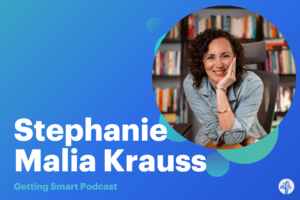
Can’t. Will. Did.: How One Teacher-Mountaineer Is Bringing Social-Emotional Learning Outdoors
Key Points
-
SEL sticks when it’s embodied and social. Outdoor, place-based experiences make competencies like teamwork, self-management, and decision-making real—not abstract.
-
Representation and access matter. Kimber’s adaptive-athlete lens and Summit Kids model how schools/programs can widen belonging in outdoor learning for diverse learners.
By: Zach Varnell
In August 2021, on the West Ridge of Mount Stuart in Washington State, Kimber Cross was running out of time, water, and altitude. Off-route in 97-degree heat, her heart rate had climbed to 180 beats per minute. Her climbing partner — a trained EMT and firefighter — pressed the SOS button on their GPS tracker. What followed was a 15-hour rescue involving two teams, 20 rappels, and an airlift. Kimber made a full recovery. And the experience never left her.
Not because it was the worst moment of her climbing career, but because of what it revealed. Getting down that mountain took teamwork, patience, adaptability, and courage — the same skills she had spent years trying to teach five-year-olds in a kindergarten classroom in Tacoma, Washington.
“Those social-emotional learning skills are not meant to be experienced in isolation,” Kimber reflects. “They’re meant to be experienced collectively.”
A Teacher Who Climbs. A Climber Who Teaches.
Kimber Cross holds an unusual dual identity. She is a nationally board-certified kindergarten teacher with 20 years in education, a master’s in curriculum, assessment, and instruction, and more than a decade in the classroom. She is also a professional mountaineer, ice climber, and alpinist currently on the Mountain Hardwear team, with past sponsorships from the North Face, Arc’teryx, and Subaru. She has climbed in Alaska, Nepal, and across the Pacific Northwest. She was born with one hand.
These two identities have always informed each other. In the classroom, Kimber brought in athletes via Zoom who looked like her students — diverse kids from around the world who skied, climbed, and surfed — to show children that the outdoors belonged to them. Outside, she carried the lens of a teacher, watching how discomfort, challenge, and community shaped character in ways a controlled classroom rarely could.
“You learn teamwork. You learn patience, confidence, adaptability, courage. I found myself as a woman in her late twenties growing in character in ways I hadn’t planned — all because I signed up for a mountaineering course.”
Kimber didn’t take her first mountaineering course until her mid-twenties. She didn’t start backcountry skiing until she was 31. She is now skiing off volcanoes and leading ice routes in Alaska. It’s never too late, and the mountain doesn’t care where you started.
Can’t. Will. Did.
At the center of Kimber’s educational philosophy is a three-word framework she developed while building a custom prosthetic ice tool with climbing legend Conrad Anker: Can’t. Will. Did.
The idea began with her own journey as an adaptive athlete. When she reached the alpine ice module in her intermediate mountaineering course, she was certain it was impossible with one hand. Then she saw a photograph of another one-handed climber using a prosthetic on ice—so she did too.
But Kimber is quick to point out that the process is rarely linear.
“Sometimes you’re at the ‘will’ and you’re not going to accomplish the ‘did’ for whatever reason, and you’re back to ‘can’t.’ What you experience, what you go through, that grit throughout the ‘can’t’ and throughout the ‘will’ — that’s what shapes you for when the ‘did’ does happen.”
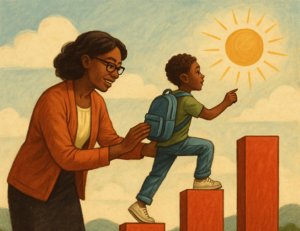
In her classroom, the framework became a touchstone. A child learning to read, navigating a conflict with a friend, or building the courage to speak in front of the class — each was moving through their own can’t-will-did cycle. The framework gave students language for perseverance that wasn’t about arriving, but about the process of getting there.
The Whole-Child Problem
When Kimber first began teaching, her focus was academic: reading, writing, math, science, and presentation skills. But over the last decade, she watched the classroom shift. More and more, she found herself needing to address the foundational skills that came before academics could even begin.
“I have to teach to the whole child. I can’t teach the math lesson if these kids can’t even focus on being in a classroom and getting along — their interactions with each other, their ability to believe in themselves. I didn’t go to school to be a therapist. I know curriculum, assessment, and instruction. But that’s just not the reality anymore.”
Washington State’s Office of Superintendent of Public Instruction (OSPI) responded by developing K–12 social-emotional learning (SEL) standards, which many districts — including Kimber’s — adopted into curriculum. Students now have dedicated SEL blocks in their school day, tied to the CASEL framework of competencies: self-management, relationship skills, self-awareness, responsible decision-making, and social awareness.
Once Kimber leaned into this shift, she found it transformative. The SEL block became one of the most powerful parts of the school day. And she began to see what outdoor experiences offered that classroom instruction simply could not.
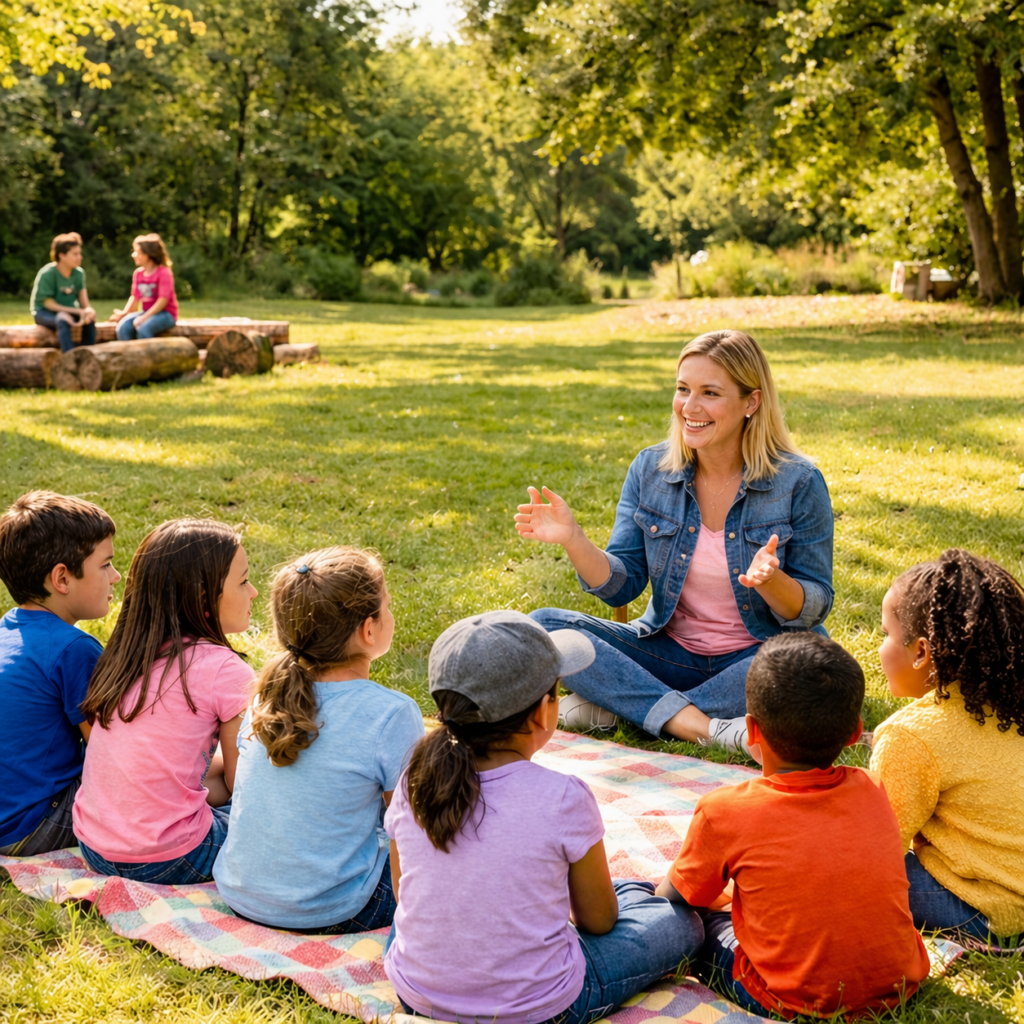
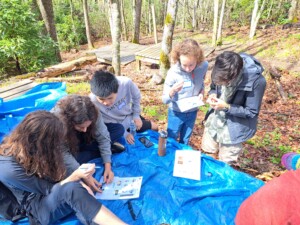
Place-based education — using the local landscape, culture, and natural world as an authentic classroom — is gaining traction across the country. Schools like the Teton Science School in Jackson, Wyoming and the Science and Math Institute in Tacoma sit inside or alongside vast natural environments and structure learning around engagement with the real world. In Washington State, an outdoor education grant once supported high-need schools in getting students outside, though that funding was removed from the 2025–27 state budget.
Kimber knows the truth of this approach. Sitting in a classroom and reading about grit is not the same as carrying a 40-pound pack up a mountain. A rope connecting two climbers is not a metaphor for teamwork — it is teamwork, with real consequences.
“Children don’t learn best by sitting still. They learn by doing — by feeling the consequence of a choice in their own body. When a child reads about swinging an ice tool into a frozen waterfall, sensorimotor networks in the brain activate the same pathways that physical experience would.”
For students who grow up in urban environments where the outdoors feels inaccessible — where the nearest green space may only be safe during certain hours — this connection is even more critical and more absent. Kimber speaks often about equity: every kid deserves a place in the mountains, regardless of where they come from or what they look like.
She also points to what happens when children are separated from technology. Educators at programs like SAMI’s backpacking trip have observed students returning from three days without devices with a kind of mental clarity they’d never experienced before. For a generation tethered to screens since age four or five, simply being present in nature — hearing a creek, sitting under stars — can be transformative.
Summit Kids: SEL Through Story
After 13 years in kindergarten, Kimber is leaving the classroom to better expand her reach.
She is writing Summit Kids, a six-book children’s series that ties each of the six CASEL competencies to a specific outdoor adventure. The books follow an eight-to-ten-year-old girl with a limb difference who explores mountains, glaciers, forests, and campsites — meeting a diverse cast of new friends and facing authentic outdoor challenges in each story. Her husband Jared, a UX designer and illustrator, is creating the artwork.
The series is designed for classroom read-alouds, outdoor education programs, school counseling settings, and nature-based learning initiatives. Each book teaches a CASEL skill through embodied experience — not a poster on the wall or an abstract definition, but a story that shows the skill in action:
- Book 1 — Summit Kids Learn Grit: Ice climbing (Self-Management)
- Book 2 — Summit Kids Learn Teamwork: Glacier walk (Relationship Skills)
- Book 3 — Summit Kids Learn Patience: Camping trip (Self-Management)
- Book 4 — Summit Kids Learn Confidence: Skiing (Self-Awareness)
- Book 5 — Summit Kids Learn Adaptability: Mountaineering (Responsible Decision-Making)
- Book 6 — Summit Kids Learn Courage: Rock climbing (Self-Awareness + Social Awareness)
Kimber conceived of the series in part because she grew up without models who looked like her in the outdoors. No adaptive athletes. No women mountaineers in the media she consumed. It wasn’t until her thirties that she saw another one-handed climber and understood it was possible. She wants a child today to see that at five.
“I want them to feel like they have a place in the mountains. They belong there. It doesn’t matter where they came from. It doesn’t matter what they look like.”
The Next Summit
Kimber’s own can’t-will-did story is still unfolding. She is still working toward a first disabled ascent of the Moose’s Tooth in Alaska — a goal she had to abandon mid-route after her prosthetic malfunctioned in the cold. She has modified her equipment, rehabbed her shoulder, and is planning her return.
Summit Kids itself is also in the will stage. Proposals are being built. The books are being written. The illustrations are taking shape. Kimber describes the project as “a different kind of mountain” — one she is applying the same mindset to that carried her up every other.
For educators, school counselors, outdoor program leaders, and anyone working to help young people develop the inner skills to navigate a complex world, Summit Kids offers something rare: a series built by someone who has spent two decades in the classroom and a decade on the mountain, and who understands, in her bones, that the two are not separate.
“If you don’t quit, you win. Whatever the final outcome is, there’s so much to be had in the middle ground — in the process. That’s where the money is.”
0 Comments
Leave a Comment
Your email address will not be published. All fields are required.