

Braided Learning: How AI Can Enhance What Educators Already Do Well
Key Points
-
The integration of educator expertise with AI tools enhances personalized learning experiences, allowing teachers to focus on transformational teaching.
-
AI can assist in preparing for learning, tracking student progress, and making learning visible by handling tedious tasks like transcription and data organization.

Sarah teaches AP Environmental Science. Last week, after a field study at the local creek, her students recorded video reflections on their phones about what they noticed, what surprised them, and what questions emerged. In previous years, Sarah would have watched all 28 videos in one exhausting evening, taking notes and planning follow-up conversations she’d never quite have time for.
This year, she tried something different. She used a free AI transcription tool to capture what students said, then asked an AI assistant to identify themes across the reflections, looking for patterns or misconceptions. Within minutes, Sarah had a summary. Six students noticed equity issues around creek access. Twelve connected water quality to the policy unit they’d studied in the fall. Four expressed frustration with data collection methods and wanted to redesign their approach.
Sarah didn’t hand this summary to students as “the answer.” She used it to inform the next day’s seminar. She asked the equity-focused group to lead a discussion. She connected the policy students with the local environmental council’s youth board. She gave the four frustrated learners time to redesign and retest their methods.
The AI didn’t replace Sarah’s judgment. It gave her something she rarely has: clarity about what 28 students were actually thinking, in time to do something about it.
This is braided learning. Not AI instead of teachers. AI woven together with what educators already do well (noticing, connecting, responding) to create something stronger than either strand alone.
Three Strands That Strengthen Each Other
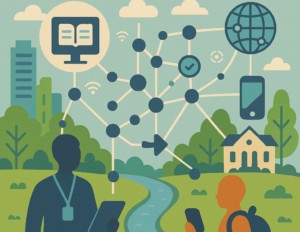
Think of braided learning as three interwoven strands, each essential, each amplifying the others.
Strand One: What Educators Do Best
You already notice things AI cannot. The student who suddenly engages after weeks of silence. The moment when a skill clicks and transfers to a new context. You build relationships, create psychological safety, and help students see themselves as capable.
These human capacities (empathy, pattern recognition across time, responsive teaching) are irreplaceable. They can also be constrained by time, energy, and the reality of working with many students simultaneously.
Strand Two: What AI Does Easily
AI excels at tasks that are tedious for humans: transcribing conversations, organizing information, identifying patterns across large sets of data, suggesting connections between ideas. It works instantly, tirelessly, without judgment.
AI can transcribe 28 video reflections in minutes. It can track which students have demonstrated specific skills and which haven’t. It can flag when a student’s writing suggests frustration or confusion. It can surface connections between a student’s creek study and their earlier policy research.
But AI doesn’t know your students. It can’t read the room. It doesn’t understand context the way you do. It suggests; it doesn’t decide.
Strand Three: What Emerges When You Braid Them
When you weave AI’s organizational power together with your expertise, something new becomes possible. You spend less time on logistical tasks and more time on the high-value work only humans can do. Students receive more timely, specific feedback. Patterns that would take you hours to notice become visible in minutes. Learning becomes more connected across contexts because you have the cognitive space to help students make those connections.
This isn’t about AI transforming education. It’s about AI handling routine cognitive tasks so you can focus on transformational teaching.
A Practical Cycle: Where to Braid AI Into Your Current Practice
You don’t need a comprehensive AI strategy or new infrastructure. You can start with one phase of learning you already facilitate. Here’s a simple cycle showing where AI might enhance what you already do.
Preparing for Learning
- What you already do: Activate prior knowledge, set learning intentions, help students prepare mentally and emotionally for challenging work.
- Where AI could help: Generate discussion prompts tailored to individual readiness levels. Provide adaptive practice that adjusts to student responses. Transcribe student goal-setting conversations so you have a record of their intentions.
- What students experience: More personalized entry points into new content. Clear connections between what they already know and what they’re about to learn.
Example: Before a unit on data analysis, students voice-record their current understanding of statistics and their anxieties about math. AI transcribes these reflections and identifies common concerns. You design your introduction to address those specific worries, and you follow up individually with students who expressed the most anxiety.
Learning in Context
- What you already do: Create opportunities for students to practice skills in authentic situations like projects, discussions, field work, and presentations.
- Where AI could help: Observe and document what happens during application (when you can’t be everywhere at once). Track which skills students demonstrate in different contexts. Provide real-time resource suggestions when students get stuck.
- What students experience: Less waiting for feedback. More awareness of which skills they’re using. Better documentation of their learning process, not just final products.
Example: During a group project, students document their process with photos and brief voice notes. AI organizes these into a timeline showing collaboration moments, problem-solving strategies, and skill demonstrations. You review the timeline and notice one student consistently mediating conflicts, maybe a leadership skill she hasn’t recognized in herself yet. Your feedback helps her see this pattern.
Making Learning Visible
- What you already do: Ask students to reflect on what they learned, how they learned it, and what it means for future learning. Help them recognize growth and develop metacognitive awareness.
- Where AI could help: Transcribe reflections so you can analyze themes across multiple students. Identify emotional language that suggests frustration, breakthrough moments, or confusion. Track growth over time by comparing current reflections to earlier ones.
- What students experience: Conversations about their reflections that show you actually engaged with their thinking. Surprise and pride when you show them how much they’ve grown since earlier reflections.
Example: After completing projects, students record video reflections. AI transcribes them and flags moments when students express pride, frustration, or uncertainty. You notice eight students expressed frustration with the same aspect of the project. In the next class, you address this directly, validating their experience and teaching a strategy you realize you hadn’t made explicit.
Planning Next Steps
- What you already do: Help students set goals, choose new challenges, connect current learning to future opportunities.
- Where AI could help: Synthesize a student’s demonstrated skills and interests to suggest relevant next opportunities. Connect current work to future contexts where those skills matter. Create a running record of competencies students can use to advocate for themselves.
- What students experience: A clearer picture of what they can do and where they might go next. Connections between seemingly separate projects or skills.
Example: A student has demonstrated strong data analysis in science and written compelling arguments in English. AI surfaces this pattern, analytical thinking across contexts, and suggests she might be interested in the school’s policy debate team or the city council’s youth advisory board. You have a conversation with her about how her skills could translate to civic engagement. She applies, using documentation from both classes to show her readiness.
Starting Small: A First Experiment
You don’t need to braid AI into all four phases at once. Pick one place where you’re already stretched thin.
- If grading reflections feels overwhelming: Try having students submit voice or video reflections instead of written ones. Use free AI transcription, then have AI summarize themes across all students. Use this summary to inform a class discussion rather than grading each reflection individually.
- If tracking skill development across projects is difficult: At the end of each project, have students identify which skills they demonstrated. Collect these self-assessments in a shared document. Ask AI to create a simple matrix showing which students have demonstrated which skills across time. Use this to spot gaps and plan differentiation.
- If students struggle to connect learning across classes: When students complete significant work, have them briefly describe what skills they used. Periodically ask AI to look across these descriptions and identify patterns—which skills appear repeatedly, which contexts bring out different capabilities. Share these patterns with students to help them see themselves as transferring skills, not just completing assignments.
- If you want better discussions but need help preparing: Before a discussion, have students submit one question or observation. Ask AI to group similar ideas and identify interesting tensions or disagreements. Use this structure to design the discussion arc, ensuring you’re building on what students are actually thinking about.
What to Watch For: Braiding vs. Offloading
As you experiment, you’ll notice when braiding strengthens your teaching and when it starts to replace essential human judgment.
| Braiding looks like: | Offloading looks like: |
| You have more time for the students who most need your attention. Feedback becomes more timely and specific. Patterns you suspected become visible and actionable. Students receive more personalized support. You feel less overwhelmed by logistics | Students receive AI-generated feedback without your review. You trust AI insights without checking against your own observations. Learning feels more standardized, not more personalized. You spend less time actually talking with students. Assessment becomes about what AI can measure rather than what matters. |
The goal isn’t efficiency for its own sake. It’s reclaiming your time and attention for the irreplaceable work of teaching, the noticing, the relationship-building, the magical moment when you help a student see what they’re capable of.
An Invitation, Not a Prescription
This isn’t about adopting a comprehensive new system. It’s about finding one place where AI could handle a routine cognitive task so you can focus on what you do best. Try one small experiment. See what you notice. Adjust based on what serves your students.
The future of education isn’t AI versus teachers. It’s AI woven together with teaching expertise, creating space for more of the human work that transforms learning. The strands are stronger together than apart. Start with one thread. Then another. Then another.



0 Comments
Leave a Comment
Your email address will not be published. All fields are required.