

AI, Learning Differences, and the Seed of Possibility: Moving From “Wait to Fail” to Precision Support
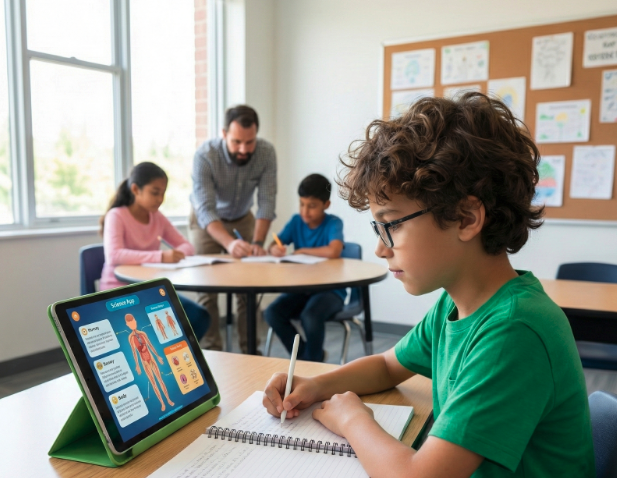
In the American education system, appropriate and sufficient support is too often a destination reached only after a tragedy. For students with learning differences, we rely on a “wait to fail” model, a system that offers tailored intervention and meaningful opportunity only after a child has fallen significantly behind their peers. We treat assessment as an autopsy of failure rather than an early warning system for unlocking potential. But for students with disabilities, assessment is not merely a measure of academic status; it is the central architecture of their civil rights and education plan. Measurement is the mechanism for screening, the tool for establishing eligibility, and the engine for calibrating then monitoring the specialized instruction mandated by federal law.
As we stand on the brink of a new era in educational technology, the integration of Artificial Intelligence (AI) into educational measurement (and inferences about learners more broadly) offers an opportunity to shift this paradigm. By leveraging the learning sciences and the emerging capabilities of general-purpose AI, we can move from reactive categorization to proactive, precision support. We can finally realize Dr. Edmund W. Gordon’s vision of ‘Assessment in the Service of Learning,’ where measurement is used ‘not only to identify what is, but to imagine and cultivate what might become‘.
The Human Architecture: The Journey of Isabel Diaz
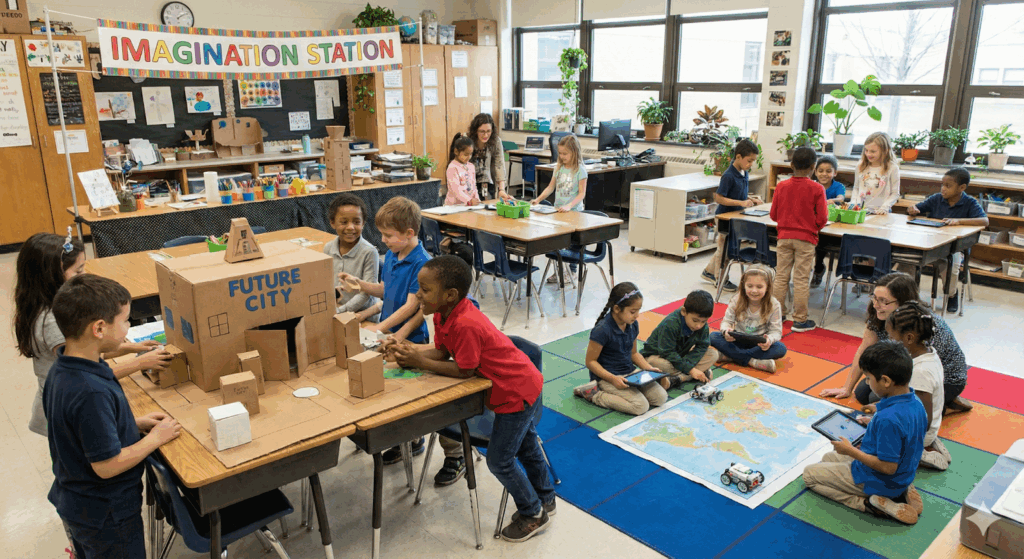
Consider Isabel Diaz, a third-grade student sitting in the back row of her classroom. She is quiet, compliant, and effectively invisible. Though not failing yet, she is drifting. In a traditional system, she remains invisible until a September letter reveals that an April test identified that she is reading two years below grade level. By then, the gap is a chasm, and (more than likely) her reputation within the classroom is tarnished and her confidence is shattered.
However, in an upgraded, AI-enabled assessment ecosystem, Isabel’s journey looks different.
Phase 1: The Signal (informing referral)
In September, Isabel engages with a digital reading activity recorded on her tablet. The AI-driven system analyzes her process—not just her wrong answers, but her hesitation on specific phonemes and the cadence of her words. This “light-weight insight” acts as a critical gateway. It flags a discrepancy between her high oral vocabulary and her low decoding and fluency.
Phase 2: The Diagnosis (determining eligibility)
Isabel moves into a comprehensive evaluation. This is the civil rights engine of assessment. The AI aids a school psychologist by synthesizing data across contexts, helping to distinguish specific differences in her processing, parsing opportunities to learn and language barriers. This phase determines her eligibility for services, unlocking the federal protections under the Individuals with Disabilities Education Act (IDEA).
Phase 3: The Game Plan (planning & calibrating)
Now identified, Isabel’s teachers need more than a generic “reading disability” label; they need a map of her Zone of Proximal Development (ZPD). The assessment system calibrates instruction, suggesting specific interventions that target her phonological deficits while leveraging her high verbal strengths. It moves the system from static classification to dynamic planning, ensuring she receives the “appropriate and sufficient dose” of support.
Phase 4: The Safety Net (monitoring progress)
Isabel begins Tier 2 interventions. The assessment system shifts to monitoring progress in real-time. It detects that while her accuracy is improving, her fluency is stalling. Instead of waiting for a quarterly review, the system flags this plateau immediately. This feedback loop prevents her from languishing in an ineffective intervention and prompts a timely escalation to Tier 3 support.
Phase 5: The Adjustment (informing development)
By mid-year, the data shows Isabel is disengaging; her response times are slowing, and her error rates are climbing in specific contexts. Her team refines the intervention to include personally relevant texts that align with her interests, re-engaging her sense of agency.
Phase 6: The Guarantee (informing accountability)
Finally, the aggregated data of Isabel’s journey serves improvement. It informs accountability, ensuring the school is held responsible not just for her test score, but for the quality of support she received.
The Historical Mandate: Restoring the “Pedagogical Transaction”
Isabel’s journey sounds futuristic, but the conceptual insights driving it are over seventy years old. To build the future of assessment, we must look back to the early work of Edmund W. Gordon and his collaboration with educator Else Haeussermann in the 1950s.
Working with children with neurological impairments, who were often dismissed by the educational establishment of the time as “unreachable”, Haeussermann rejected assessment as a tool for mere sorting. She insisted that a child’s performance must be interpreted “not merely to sort or classify, but to understand,” and that this understanding must directly inform instruction. She treated assessment as a “pedagogical transaction“, an experiment designed to find the specific conditions under which a child could succeed.
Dr. Gordon, the inspiration behind the Handbook for Assessment in the Service of Learning series, recognized that Haeussermann was looking for the “seed of possibility” in every learner’s struggle. However, Haeussermann’s methods were clinically brilliant but labor-intensive, making them difficult to scale to every Isabel in every classroom.
This is where AI changes the equation. New technologies allow us to scale the clinical observation and “rich description” that Gordon and Haeussermann envisioned. We can now automate the collection of fine-grained evidence that was previously visible only to the most expert human observer.
AI + Educational Measurement: From Compliance to Precision
AI-driven assessment innovation transforms measurement from a tool for ranking into a catalyst for learning. By integrating three specific capabilities, we can move from compliance-based testing to precision education.
1. The “Black Box” of Process: Traditional tests measure the product (the answer); AI lends insight on the processes. By analyzing clickstreams and hesitation, AI reveals how a student solves a problem. This allows educators to distinguish between a lack of knowledge and a processing error, targeting root causes rather than symptoms.
2. Removing Barriers: AI can remove Construct-Irrelevant Variance. Emerging Automated Speech Recognition handles variations in speech patterns, ensuring students with dialects or motor impairments are scored on comprehension rather than pronunciation, operationalizing Universal Design for Learning at scale.
3. Precision Diagnosis: Akin to precision medicine, AI analyzes interaction patterns to identify specific cognitive phenotypes. It operationalizes Vygotsky’s ZPD by adjusting task difficulty in real-time, ensuring assessment becomes a learning experience with timely, actionable feedback.
Guardrails: Rights, Risks, and Representation
However, precision requires caution. The integration of AI into assessment is a double-edged sword. Any AI-driven assessment framework must explicitly ground itself in existing civil rights protections. If an AI tool creates ‘algorithmic discrimination’ or fails to accommodate a disability, it is a civil rights violation under IDEA and Section 504, not just a technical failure. We cannot accurately measure what we have not modeled. A major threat to valid measurement is AI trained on skewed data. Assessment vendors must demonstrate that their algorithms are trained on representative datasets that include students with a full range of disabilities and linguistic backgrounds. Without this, models risk reverting to the “average” student fallacy.
The Precision Imperative
We no longer have the excuse of technical impossibility. We increasingly possess the tools to move from “assessment as autopsy” to “assessment as architecture” for student success.
If we have the capacity to see the “seed of possibility” in a student like Isabel Diaz—to identify her needs before she fails, to calibrate support to her profile, and to hold the system responsible for her growth—we have an obligation to use it. As Edmund W. Gordon reminds us, the future of assessment must be judged by its ability to “inform and improve the very processes of teaching and learning it seeks to illuminate”.By embracing this vision, we do more than upgrade our testing systems. We validate the need of every learner to be seen, understood, and supported. We move toward a future where assessment is no longer a gatekeeper that sorts students out, but a GPS that guides them to their full potential.

0 Comments
Leave a Comment
Your email address will not be published. All fields are required.