

Shauntel Garvey on EdTech Impact Investing

 Garvey is most excited about startups that build connections and foster authentic relationships. She is encouraged by the rise of middle-skill pathways that lead to high wage employment without requiring a degree (but may require a credential).
She hopes to see public investment in infrastructure challenges to help ensure that all learners have access to devices and broadband.
Key Takeaways:
[:10] About today’s episode.
[:45] Tom welcomes Shauntel Garvey to the podcast.
[:53] How did Shauntel get to MIT?
[2:50] Why did Shauntel decide to go to Stanford and pursue a dual education MBA?
[4:01] Was Shauntel aware of how many extraordinary people have gone through this same program when she was going through it herself?
[4:49] Shauntel shares about when she first learned about NewSchools Venture Fund and what led her to become involved.
[6:35] How and when Shauntel and her co-founder (of Reach Capital) decided to branch out from NewSchools and start their own venture fund.
[8:22] About the second fund they’re currently investing in with Reach Capital.
[9:04] How Reach Capital has evolved from NewSchools, going beyond K-12 funding.
[9:55] Can you run a viable venture fund, looking for both impact and return? How does Reach Capital try to maximize both of those?
[11:38] The meaning behind the name “Reach Capital.”
[12:08] How Reach Capital is looking to bring more diverse founders into edtech and why Shauntal believes it is so incredibly important.
[14:40] Shauntel walks listeners through the venture process in a typical investment.
[18:26] What does it mean to lead deals? And do they like to lead deals at Reach Capital?
[19:00] After making the investment with a company, what does their relationship look like going forward? How do they continue to support them?
[20:54] How many companies in Reach Capital’s portfolio is Shauntel actively involved in?
[21:26] The hardest part of Shauntel’s job currently.
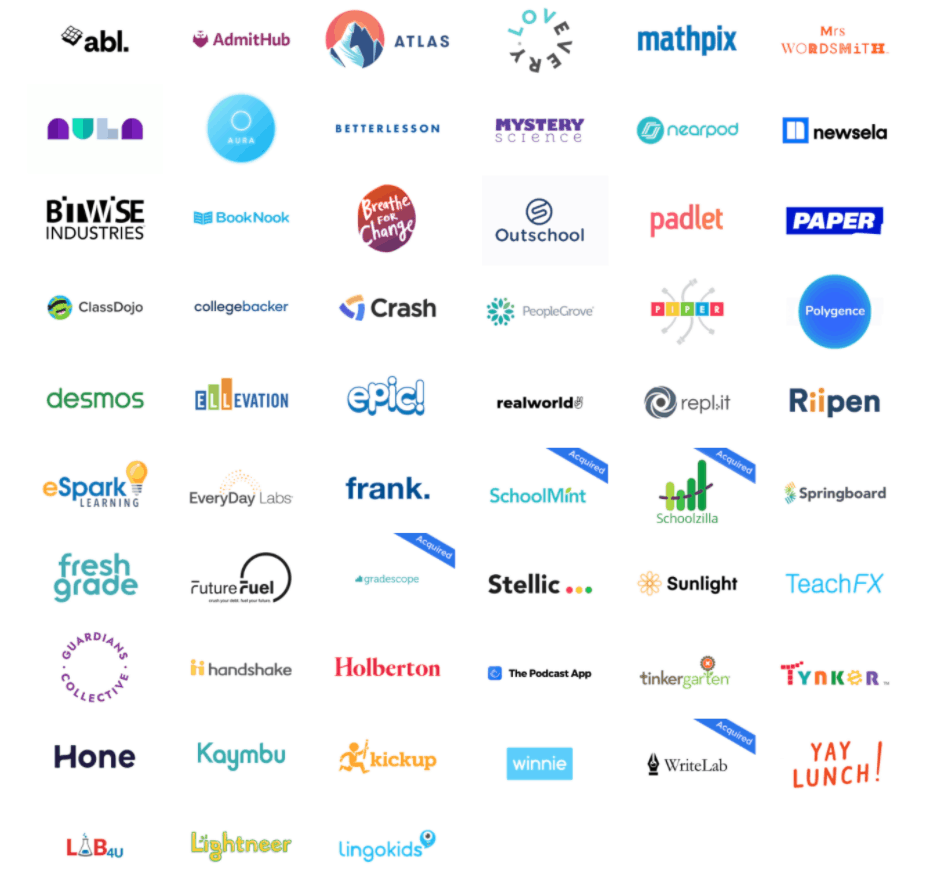
[21:50] Lightning round of the cool companies in Reach Capital’s portfolio! Shauntel speaks about the incredible work of Abl, BetterLesson, ClassDojo, AdmitHub, Desmos, Ellevation, Hone, Newsela, PeopleGrove, Schoolzilla, Tynker, Nearpod, Outschool, Epic!, and Riipen.
[32:12] The gaps Shauntel is currently seeing in education where there’s an opportunity to make a big difference
[35:34] With Reach Capital, do they try to create spaces that can bring together public and philanthropic investments as well as private investments?
[37:29] Infrastructure challenges and the inequities that have been amplified during the pandemic.
[38:30] Tom thanks Shauntel for joining the Getting Smart Podcast!
Mentioned in This Episode:
Garvey is most excited about startups that build connections and foster authentic relationships. She is encouraged by the rise of middle-skill pathways that lead to high wage employment without requiring a degree (but may require a credential).
She hopes to see public investment in infrastructure challenges to help ensure that all learners have access to devices and broadband.
Key Takeaways:
[:10] About today’s episode.
[:45] Tom welcomes Shauntel Garvey to the podcast.
[:53] How did Shauntel get to MIT?
[2:50] Why did Shauntel decide to go to Stanford and pursue a dual education MBA?
[4:01] Was Shauntel aware of how many extraordinary people have gone through this same program when she was going through it herself?
[4:49] Shauntel shares about when she first learned about NewSchools Venture Fund and what led her to become involved.
[6:35] How and when Shauntel and her co-founder (of Reach Capital) decided to branch out from NewSchools and start their own venture fund.
[8:22] About the second fund they’re currently investing in with Reach Capital.
[9:04] How Reach Capital has evolved from NewSchools, going beyond K-12 funding.
[9:55] Can you run a viable venture fund, looking for both impact and return? How does Reach Capital try to maximize both of those?
[11:38] The meaning behind the name “Reach Capital.”
[12:08] How Reach Capital is looking to bring more diverse founders into edtech and why Shauntal believes it is so incredibly important.
[14:40] Shauntel walks listeners through the venture process in a typical investment.
[18:26] What does it mean to lead deals? And do they like to lead deals at Reach Capital?
[19:00] After making the investment with a company, what does their relationship look like going forward? How do they continue to support them?
[20:54] How many companies in Reach Capital’s portfolio is Shauntel actively involved in?
[21:26] The hardest part of Shauntel’s job currently.
[21:50] Lightning round of the cool companies in Reach Capital’s portfolio! Shauntel speaks about the incredible work of Abl, BetterLesson, ClassDojo, AdmitHub, Desmos, Ellevation, Hone, Newsela, PeopleGrove, Schoolzilla, Tynker, Nearpod, Outschool, Epic!, and Riipen.
[32:12] The gaps Shauntel is currently seeing in education where there’s an opportunity to make a big difference
[35:34] With Reach Capital, do they try to create spaces that can bring together public and philanthropic investments as well as private investments?
[37:29] Infrastructure challenges and the inequities that have been amplified during the pandemic.
[38:30] Tom thanks Shauntel for joining the Getting Smart Podcast!
Mentioned in This Episode:
- Shauntel Garvey
- Reach Capital
- NewSchools Venture Fund
- ClassDojo
- Ellevation
- Nearpod
- Newsela
- Abl
- BetterLesson
- AdmitHub
- Desmos
- Hone
- PeopleGrove
- SchoolMint
- Schoolzilla WriteLab
- Julia Freeland Fisher
- Tynker
- Outschool
- Epic!
- Riipen
- Getting Smart Podcast Ep. 264: “Ryan Craig on Putting America Back to Work”
- Raise Your Hand Texas
- NSBA
- Getting Smart Podcast Ep. 274: “Rachelle Dene Poth on Charting a New Course”
Transcript
This transcript has not been edited for spelling accuracy.
You’re listening to the Getting Smart podcast where we unpack what is new and innovative in education. I’m your host Jessica and today we’re talking education venture funding with Chantel Garvey. Chantel is a partner and co-founder of Reach Capital, an impact-focused edtech venture fund that was spun out of nonprofit New Schools Venture Fund in 2015.
They have deployed about $95 million in 61 investments, including some well-known startups you might recognize, ClassDojo, Elevation, Nearpod, and Newzella, all while maintaining a focus on education and workplace innovations. Let’s listen in as Chantel and Tom chat return, growth, and impact. Chantel Garvey, welcome to the Getting Smart podcast.
Thank you. Pleasure to be here. Hey, it’s great to have you on. How did you get to MIT? Well, I can point to two people who really influenced my two directories at MIT and also
in majoring in chemical engineering. That would be my mother and my high school chemistry teacher. My mom, she’s a professor and she always emphasized the importance. Of what? What she’s a professor at?
She’s an accounting professor at Elon University. And she always emphasized the importance of education in our household. So summer break was not a break for me. It was summer school for me. It was always critical that we were at least one year ahead.
So I was studying around the clock. And through my studies, I really took an interest in math and science specifically. So when I got to high school, my AP chemistry teacher also saw and noticed that I had this aptitude for chemistry. So during the year, she really encouraged me to actually pursue chemical engineering
in college. She thought that I would really actually like more the applied version of chemistry. And then another thing that happened in her class was that I really started to see the relevance of chemistry and science in our everyday life. We had an assignment where we had to go home, look up the ingredients on the back of different
household products and write out the chemical formulas. And I was like, wow, all this chemistry I’m learning in school is actually relevant to everything I’m doing every day and relevant to everybody’s lives. And that also took me on a trajectory at MIT, took me on that trajectory to chemical engineering, and also eventually to working at Procter & Gamble, where I ended up making laundry
products that household use every day. No kidding. I’m also an engineer. I came very close to working at PNG. That’s very interesting.
And then why Stanford and the dual education MBA? Yeah, so I’ve been working at Procter & Gamble for about five years. And I’d always had a passion for education. So I did a lot of education programs on the side. I did a lot of tutoring and mentoring.
So really started to see that’s where my passion was and wanted to make a career change into the field. I liked the intersection of education and technology. So thought about how could I, again, insert this kind of a tech field. I looked at different programs.
Stanford had a program, a dual degree in both business and education. So I thought, hey, you can’t beat that. Two degrees, two years. Great opportunities for me to try to make this transition into this new field. I had a great experience.
It was great to actually start to see the overlap and the intersection of business and education. So I took courses like the economics of entire education or entrepreneurial approaches to education reform. So really started seeing how I could apply the skills that I was learning in business school to actually improving education outcomes.
Did you know at the time how many extraordinary people have gone through that program? Somewhat, yes. They have a great alumni base. I talked to a lot of those alumni as I was considering different programs. And so that was part of the decision to go.
You know, I think, did you know that Kim Smith went through that program? Yes. I knew that she had actually written the business plan for Newport Venture Fund while she was at Stanford program. And Jim Shelton was another early alumni.
So it’s really produced some important leaders in this sector, including yourself. So it’s a terrific program. Thank you. Did you learn about New School’s Venture Fund while you were at Stanford? I did.
And the way that I learned about it was actually through one of my courses. So I took a course at the design school called Education Entrepreneurship. At the time, it was being co-taught by who is now my co-founder and partner, Jennifer Carolyn. And she at the time was working at New School Venture Fund on their early stage at Tech
Speed portfolio. So during the class, she would bring in different Tech entrepreneurs. They would talk about their work. So I reached out to her and said, after school, I would love to be working in an Tech company.
Can you connect me to these different entrepreneurs? And she said, why don’t you actually come work for New School instead? Go to the founding side or the funder side. And at the time, I said, absolutely not. Going to Stanford, my plan was always to be on the operating side, either start my own
Tech company or go join an Tech company. And I just had this thought that funders weren’t as close to the impact and I wouldn’t be able to do the work that I really wanted to do in the field. That being said, got a lot of advice that it was a great opportunity. And even if I went there for a couple of years, I would still have a great experience that
I could take with me to other places in my career. So decided to go to New School. And again, the plan was, OK, two years, I’ll have a master level view of the sector and then go back to the operating side. And we fast forward eight years later.
I’m still here. Still on the funding side. So they let me forward and then now at reach. And Chantel, were you there for two or three years before you and Jennifer decided to spin, reach out as a standalone?
Correct. So they’re three years before we spun out. What kind of advantages were you looking for? What did you see the ability to do as a standalone fund? Was it just access to capital?
Yeah, I think it’s a couple of things. Obviously access to capital and being able to build a larger fund. So we had a smaller $10 million dollar-ish fund under the New School umbrella that allowed us to do these small early stage checks and to do companies, but not really follow them. So not really do follow on rounds and really follow them as they continue through the trajectory.
So we wanted to be able to do that and do that you need, you know, obviously larger funds I did. So it allowed us one, access to your funds to follow these companies. And three, just structurally, it was a little bit challenging, you know, doing for-profit investing under a nonprofit umbrella.
So it just really makes it to be a standalone venture entity. I want to acknowledge in case Kim Smith is listening to this that as far back as 2002 when I was at the Gates Foundation, she wanted to launch an EdTech fund and I never supported it. I really appreciate her instincts and leadership.
I think it was an early part of the New School’s plan. And so I’m thrilled that you landed there and that you and Jen launched it first at New School’s and then spun it out to form Reach Capital. Today you guys are on investing your second fund, is that right? Yes, I’m busting on my second fund.
And about how much have you deployed today? About 95 million if you include, you know, what we did at New School’s, our Reach One fund and our Reach Two fund. That’s really terrific. Reach is one of the three or four funds that I recommend to impact focused investors.
So I send people your direction probably once a month because I really, really appreciate your leadership and your focus. One interesting thing, Chantel, in my research, I guess I had thought of you guys as a K-12 fund but you’re now about 45% post-secondary in terms of higher ed and lifelong learning, right?
Correct. And you have some early learning as well. Exactly, exactly. So that was an evolution from our New School’s day. So New School’s, while we were there we were 100% K-12.
When we got to Reach One we started doing more activity in higher ed and now Reach Two we do the entire spectrum. So we’re doing early learning which includes parent education all the way up through post-secondary, college alternative, workforce training, corporate training and just really seeing those opportunities across the entire education spectrum.
Chantel, I mentioned your impact focus but on your website it says we invest in education because we believe it’s our most valuable resource. It has the power to influence our course, contribute to our dreams and strengthen our communities. Can you really run a viable venture fund and really look for both impact and return?
Do you really try to maximize both of those things? How do you think about that? We do. We try to maximize both and actually we believe that the most impactful companies will have the highest financial returns when those two things blend together in the right ways.
We start that by looking at mission-driven founders and so people who really are in it to have an impact and really improve what we would consider access and opportunity. Then we look for strong products and products that, one, our backed by research have strong pedagogy behind them and really even have evidence of efficacy. We have strong products.
You’re going to definitely attract strong and loyal customer base who if you’re working in a large market then obviously that will continue to grow. We look forward to these mission-driven founders who are building strong products who are again focused on impact and then operating in large markets where there’s enough potential customers to build a large viable business.
With our impact lens, we’re also looking at scale. For us, scale is important to have the largest impact and again as you scale that leads to those stronger financial outcomes. I thought on the subject of scale, I thought there’s a really interesting word play on your website where you talk about reach.
Reach as in reach beyond the classroom, reach as many people as possible and then reach across the divides. Nice way of explaining what you do. Yeah. Great, great name.
I’ll put one to those. Chantel, like the tech sector, edtech has been pretty white. Diverse founders in the last 10 years are white guys. In my experience, it’s a lot of guys whose sister was a teacher and they heard complaining at Thanksgiving so they coded an app and became a founder.
So I appreciate that you guys are looking for more research-backed products but I know you’re also looking to bring more diverse founders into edtech. I guess what are you doing there? What are you seeing that’s productive in the sector? Yeah, and this is starting to reason why we think this is important.
Obviously, diverse teams have shown to prove greater outcomes but also being a tech and being a sector, we really want the founders to reflect the broader community and the broader demographics that they’re trying to serve and we believe that they’ll be able to better serve this market with that unique and diverse background. So I think it starts first with your own team.
We’ve been really intentional about building a diverse team from the get-go. So there’s myself, African-American female, we have Latino male, we have an Asian female and a white female, that’s our founding kind of general partnership. So already with that diverse team, we’re bringing diverse perspectives to our investment process and we’re also bringing unique networks that we can source different type of entrepreneurs
with diverse backgrounds. So I think it really starts with a team and then even on once you start to look at investments, you also start to think about what kind of biases we may have in our investment process. This is a reflection that we’ve been doing continually over the past couple of years and just understanding do we have certain biases through pattern recognition where we are not
surfacing or investing in more entrepreneurs of color or with more unique backgrounds and diverse backgrounds. So that’s the other piece that we’ve been very intentional about in terms of being able to kind of create and have a diverse portfolio. Sean Tell, most of our listeners are really not going to be familiar with the venture process. Could you walk us through the process?
How do you hear about investments? Like where do they come from? What’s that first contact look like? And maybe before COVID, what did that first pitch look like? How long does the process usually take?
Kind of walk us through a typical investment. Sure. So from a sourcing perspective, there’s two buckets. There’s what we call inbound and outbound. So inbound sourcing is where people are coming into us and they can come from a variety of different ways. Most often that is referrals.
So referrals from other investors or referrals from people like yourself who know our work and have come across companies and send them our way. So co-investors, people in our network sending us deals, that is one way. We are very also open to just people who may not have connections with us, being able to reach us and us evaluate them.
And so we actually have an open application form right on our website. So that’s another form that we use to intake entrepreneurs. That’s great. I appreciate that. That’s unusual. That there’s a lot of people that are sort of cloak and bagger and you can’t figure out how to get in. So yeah.
And what we find is that typically that typically impacts again. Oftentimes the entrepreneurs of color who don’t necessarily have connections into this world. And so really we can ensure that we are opening up the funnel to as many of the entrepreneurs as possible. So there’s that inbound. And again, part of it too is just us being in the field for a while and people kind of know our brand and what we invest in.
The other way is outbound. And so we also create thesis areas, areas that we’re particularly interested in, that we will co-actively go and look for companies. And that can be through conferences, through entrepreneurs will read that thought leadership piece. And then again, that’s another way that they will come inbound to us.
So that’s kind of a forcing perspective. And then how long does it take? So you get a pitch and seems interesting than what happens. So first not everyone gets a pitch. So that’s the first meeting.
So we will evaluate, you can look at a pitch set, a blurb and the first filter. And that first filter is usually is the fit for us, the right stage, is the right sector, is there enough evidence there of what they’re building and the potential impact. I forget to ask you this on stages. Can you do pre-revenue and you go really early?
We do go early. We can go pre-revenue. So we do seed stage and a couple of opportunities with series A and B stages. So if you do make it to the pitch, so that’s usually a first 30 minute call. We’re digging into your team.
We’re trying to understand the market. We’re trying to understand what brought you to this work. Then if you get past that, you go to what we call our weekly investment meeting. And we’ll kind of again get more input from a broader team. And then that can either go towards diligence or additional digging.
And depending on how comfortable we are with the market, that can be maybe four to six weeks of doing reference checking. Again, meeting with the team, getting comfortable with the team and the founders. And potentially also talking to customers. That could be a four to six week process.
And unfortunately, sometimes we can’t just meet the process. So sometimes deals are going faster. So we may have to turn around things in a week or two. Right. Do you’d like to lead deals or follow?
We are leaders and that’s been an evolution. So again, when we were at new schools, we were writing smaller checks. And so we were typically not the lead in actually trying to hustle and find this indicate now we like to lead our deal. So we should explain what that means.
So you’re the one that would be negotiating the term sheet with the startup, right? Correct. They’re negotiating the term sheet and also taking typically the majority of the round when you’re leading. Okay.
So once you’ve made the investment, then what’s your relationship look like? How do you support your companies and do you always serve on boards? What do you do? Yeah. And again, this varies from fun to fun.
I would say we, because we’re early, we’re very a very handbomb fun. And I’d say a support can be bucketed into both individual support and then what I’d say fun level portfolio wide support. So on the individual side, we do take board seats. And so there’s kind of the board, the board role.
But beyond that, you know, we’re always there to work with our founders on strategy, on kind of hiring, building their team. We do a lot of thought partnership with them. And then sometimes just, obviously, sometimes a shoulder to cry on as they’re going through the crisis, right?
And they can really kind of lean on us to help to help work through some of the challenges with their company. And then from a portfolio perspective, what’s nice is again, we have, you know, over these over 60 investments in the space. And so we, you know, we really believe that a lot of the learning can be between each
other. We do a lot of convening. So we do a once a year founders day, we bring the whole portfolio together. Well, they’re coming together and we’re invested package from each other. And we’ll also bring in different experts right now during COVID.
We’re running an ask me anything series with different thought leaders who are just providing insight on, you know, what’s happening with education right now during this time. So that’s something that’s happening again every week where we can be in the founder over Zoom. And then we do a lot of benchmarking.
So again, we have a lot of data on companies, trajectories and kind of where they should be at certain stages. And so I’m really benchmarking themselves with that data to understand how they’re performing against kind of similar companies. So I’m curious how many companies in your portfolio, how many companies out of the 60
are you actively involved in a dozen? Yeah, something like that. Yeah, yeah. That’s a lot. That’s a lot to keep up with, right?
And you’re spending some of your time screening new deals. So. Exactly. What’s that? Yeah, you’re screening new deals.
You’re working on existing deals. And I also do some people’s of fund management. So you have to balance kind of all those three things. So you’re doing a lot of Zoom calls right now. I am.
And the hardest part of this job is prioritizing and knowing where to spend your time. You know, for us, obviously the current portfolio is always top priority. Supporting our current entrepreneurs. And then again, at the same time, we’re still responsible for forcing new deals for making sure our funds, you know, sustainable.
All right, Chantel, I want to do kind of a lightning round. I want to run through your portfolio. And give you and me a chance to give a shout out for companies in your portfolio. I think folks that have done surprisingly well are doing surprisingly cool stuff in the in the midst of this.
I’m looking at your website. And so I have the advantage of seeing an alpha list. I’m going to start with able, which is a very cool San Francisco scheduling software company. Most people don’t realize what a nightmare a high school master schedule is.
And able is building solutions for that cool company, right? Correct. And what most of them don’t realize too is that that scheduling right now is typically done by hand. And so if you’re usually a teacher that’s doing sticky notes, you schedule and now
you bring in software to do the optimization. Right. But what’s interesting now in the time of COVID, can you just imagine now the complexity of what schedules are going to look like? Yes.
Talk about different days, different cohorts. And again, having a tool and software to be able to deal with that complexity, huge value out right now. New CEO, Howard Bell, is that right? Correct.
Yeah. Great guy. Um, you have a couple old names, um, you know, from the very beginning of ed tech, um, better lesson and class dojo. Those are guys that have been around almost 10 years.
Yeah. So going strong. Yeah. Better lesson is, is doing great work in, um, in curriculum leadership. Anything you want to add on them?
Yeah. And something that they’re currently doing now is, is more on the coaching side. So taking all of the great curriculum content that they developed and helping that be a lever to do continuous feedback and, um, PD for the teachers. I missed it in mid hub, but was at mid hub, one of your earlier higher ed investments.
Correct. That was one of our first higher ed investments out of reach one. Um, so they’re a chat bot that really answers every student’s question that they may have as they’re entering college. So they really tried to address the summer melt problem.
So summer melts when students get accepted, doesn’t show up on the first day. A lot of it is friction around, you know, my FAFSA, can I bring my dog to the dorm? They built a chat bot that will answer all of those questions and really show that it does decrease that summer melt. So they did a randomized control challenge to show that.
And then if you think about the time in COVID, um, they’ve also, you know, been very instrumental in keeping communications happening between universities and, and their students. Um, so building a tool where you can keep that communication up. Our students are not on campus.
Um, and all three of this, I think really illustrate your impact focus. I mean, these are great companies going after the thorny real problems. Um, particularly in high schools and colleges, uh, dojo has been around for 10 years. That was really an early leader in, in connecting parents, teachers and kids. Um, yeah, via texts, they’ve moved into SEL and are doing really terrific work there.
Desmos is a super cool math visualization tool. They have a great team. That’s another one that’s been around for 10 years and is chugging along. Yeah. And they, you know, they started in the kind of a graphing calculator space.
So form a tool. Um, and they now are working on, um, math curriculum. That’ll be really exciting and taking those learnings to create a very engaging math. That is a super exciting. Um, elevation is a really great, um, English language learner platform.
Um, isn’t that doesn’t the founder who said Josh, that came out of new schools? A founder is Jordan Moranis. Jordan. Yes. He, yes.
And he came from new schools and founded, um, elevation. So he’s really an important part of the Boston, um, ed tech hub. So we really appreciate the work he’s doing there. Um, home. That’s a brand new investment for you guys.
Did you lead that one? I did. And this is in the newer area for us, which is an area of corporate training. So you can think of home as a virtual leadership and manager training. And what’s really interesting now is they also are providing training around how
do you do this well remotely? How do you say being a strong manager in a remote environment? Uh, so I think that’s really important and also providing additional training around, um, diversity and inclusion and being able to do that well with an, with an organization.
Um, New Zealand. I’m going to take credit for this one. Sean tell, um, I talked to Matt gross eight years ago, told him, you guys were starting a fund. I think I sent him your direction.
This is a terrific English language arts, um, social studies app that gets kids to read, um, um, using the news, uh, as an app. Using the news and at their level, I think this is coming in. Teachers were trying to do themselves where you’re trying to kind of differentiate for different reading levels within their classes.
And now we can do this on the platform and it also removed that kind of signification around, okay, you’re, you know, you’re a lower reading level. You get the, uh, you know, the dummy book or something. We’re all reading really high interest news articles, but at my individual level, so that was great innovation.
Uh, I love that. Um, people grove. I just got an email from them a couple of days ago. Um, remind me of what they’re doing. They, they’re just standing up a very cool new network.
Mm hmm. Um, so, you know, originally people grow was really trying to connect, uh, alumni with current students and really trying to think about social capital and this mentorship. So if alumni mentor current students with that, you know, um, kind of help, uh,
elevate their, their career trajectories. Uh, and what they’ve done is now that they have those strong connections. If you think about the time in COVID, a lot of students have, have lost, uh, their internships, they’ve lost their full time, um, placement. And so what they’ve done is they’ve reached out to those alumni networks to
also provide project, uh, based experiences for current students. And that’s what they just, uh, recently launched and it’s going quite well. Yeah. That’s very, very cool. We appreciate the, uh, it’s one that Julia Freeland Fisher would appreciate
in terms of the social connections in the real world learning experiences, uh, that it’s creating. Um, you guys have had a handful of exits, four or five of them, uh, that have been acquired school meant school, Zilla, um, right lab was acquired a year ago.
That was a writing lab that started there in the, in the East Bay. Did that go to turn it in? Yeah. Actually with the check, that way to check. Yeah.
Who was looking to kind of balance out their, their tools. And, um, yeah, that one went to, went to check and that was a writing product, um, it got started out of, um, University of Berkeley. Right. And thinking about how do you embed, you know, taking AI to really embed
writing feedback right into the writing process. Right. I, uh, I remained very excited about, uh, writing feedback systems and, um, right lab at a, uh, a terrific, a terrific app. Uh, Tinker is a great example of, uh, another hands on learning company
in your portfolio. That’s a great team that must be doing pretty well in, in pandemic. Yes. A lot of people looking for, you know, alternate supplemental education and they really focus on, on coding.
So helping students get on boarded the coding from even a very early age. Wow. It’s a, it’s a very cool portfolio. Anybody else you want to give a shout out to? Some of you will get in trouble if you don’t mention them.
Yeah. So a couple, um, some from the early stages, you know, you know, near problems with one of the first, you know, when I got to do school, uh, you know, and at the time they were solving for this, this iPad problem where all these iPad were going to class and the teacher didn’t know what to do.
So I called them kind of the operating system for the one to one classroom. Yeah. As you can imagine doing very well right now as a solution, really, um, uh, support distance learning. Uh, the other one, getting a lot of, um, attention right now would be out
school. So out pool is, um, you know, live online learning courses, you know, stay started in the home school market. But as you can imagine right now, tons of parents are looking for a couple of different opportunities.
And again, these are certified teachers bringing kind of strong interest based, um, courses that, um, families are finding out for. And I guess the last one, that’s really pop. That’s super hot space right now. Super hot space right now.
And then the other one I’d mentioned, um, uh, ethics is another one I’m popping right now. You can, you can think of ethics as almost a Netflix for ebook, um, you know, access to 40,000 titles again in the time of COVID students, you know, parents looking actually looking for a safe space of, um, great content of
you know, ebooks, videos, uh, how to videos, um, also doing very well. And then what I most recently did is a company called ripen. Uh, so this is a company actually based in Canada and what they’re doing is connecting universities and colleges with some employers to do project-based experiences.
And so again, you know, given COVID, they actually launched a virtual internship product and seen a lot of that where career services, um, offices were saying, you know, we need help helping our students give these experiences, getting placements again, students not, uh, being able to, um, use our traditional internship experience.
And this is a way to get connected with a number of different opportunities. That’s awesome. I’ve looked at that, uh, love that idea. Um, earlier you talked about sort of outbound where you guys develop a thesis and where you’re looking for companies.
Um, I’m, I’m curious, maybe slightly more broadly than that. When, when you think about the, the invention opportunities that exist out there, what are the gaps, the chances for people to make a really big difference. Um, that you’re, that you’re most interested in today. Yeah, there’s a couple of different gaps.
Um, so one gap that I’ve been looking at, and I think this is with the onset of a lot of the remote learning is how do we make this, um, remote learning also, you know, be, uh, suitable for building authentic relationships. We know that education is so much more than the academic.
So, you know, so how do we, in this kind of virtual environment, um, have built tools and inventions that really allow you to build that connection. And so looking for tools that do that, because I do think, you know, this remote learning, some type of hybrid remote learning will be the future. Um, so really looking for tools that, um, enable that.
In the other area I’ve been doing some digging in and what I call middle skills. And so this is middle skills are pathways where you don’t necessarily need a four year degree, but you need more than a high school degree. So some type of, um, uh, credential usually, uh, in the space, you see a huge
need for, um, more talent. There’s a lot of talent shortages, uh, yet, um, not a lot of training programs and tools to kind of support pathways in these middle skills. That’s very interesting. We had Ryan Craig on the podcast a month ago.
Yeah. Ryan just launched the chief partners really to, to bring, uh, capital to that space. And interesting Chantel yesterday Infosys announced an interesting partnership to move into this space.
They’re taking a bunch of their internal curriculum and creating an open public, uh, platform and they have four or five very interesting, uh, partners. So I agree that this space is, um, there’s a big need, but there’s, uh, there’s a lot of interest and we’re seeing a lot of corporate content move into
this, uh, creating, creating these, uh, often tech pathways, pathways to technical jobs that may not require a degree. And in many cases you’re able to work and learn simultaneously. So it does feel like, uh, a very ripe area. Yeah.
I think, I think this is, you know, it’s, it’s, it’s where I think about, you know, um, what could accelerate some of this work and some of the space. I do think we need, um, additional support from the public sector and potentially more public, private, um, collaboration. So if you think about even just as middle-field space, one of the, like you
said, one of the great ways to, um, train a lot of these, uh, pathways would be through an apprenticeship program. Um, and we know, for example, that 70% of students in Switzerland actually do apprenticeship versus only about 5% here in the U S. And that’s largely due to, you know, lack of government policy support,
support for internships. And so you could see a world where, um, really, uh, you know, incentivizing more companies to do this type of programming. And I wonder if you want to say more on this subject, we’re in a space where you don’t, even if you have a really cool product that’s invented, it won’t
necessarily be quickly adopted into the sector because our sector is so structured around historical practices and policies. And so it often takes a combination of, of a set of public incentives, whether those are philanthropic or public and new tools. And so do you guys think about trying to create spaces like that that can
bring together public and philanthropic, uh, investments as well as private investments? Yeah, I think that’s important. And like you said, I think you need the public side oftentimes to enable some of the innovations that, that you really want to see. Um, so, you know, one example would be this, this idea of kind of state
adoption lists, right? So you have to be on this adoption list for a lot of curriculum, their content to be adopted. And again, we’re seeing where, you know, those types of policies are being changed where now it’s easier for, um, states and districts to adopt different
learning content that’s just really not in the map, your adoption list. That’s, that’s an example. Um, you have a, you have a handful of blended learning apps on here. So I’m thinking of, there’s been a couple of great blended learning, um, grant programs in Texas, RazorHand was one of them.
The state has another blended learning program and that has created openings for people like Better Lesson and Elevation, uh, and Desmos and, uh, New Zilla. So they’re, they’re structuring a, a set of grants that change practices that create openings for, for companies.
And it’s this combination of the investments that you’re making and philanthropic grant programs that often move the sector forward in a, in a productive way. Yeah. I’d also say, you know, we still see a lot of infrastructure challenges.
And again, this is another area where I think philanthropy, um, can, can support here, it’s randomly in the public sector, but you know, even during this pandemic, we’ve seen such huge inequities just being amplified, right? A lot of students who, uh, don’t still don’t have access to a device. So have access to internet to really even participate in, in remote learning.
And so that’s another area where, you know, these partnerships could again provide infrastructure, uh, to enable you innovations to really reach all learners. No, I appreciate that. Yeah.
And we’re recording this on the 23rd, a couple of days ago, the NSBA led a big national push, um, around the need for broadband for all. So another good example of advocating for infrastructure investment that’s really going to help move the sector forward, uh, in a coordinated way. Yeah.
Uh, Chantel, thanks for joining us today. It’s, uh, we, we love the work that you guys are doing at reach. You do it, uh, thoughtfully, intentionally, um, the, the people in your portfolio really appreciate you and, uh, and the work you do and, and how you do it.
And we appreciate the impact that, that you and Jen and, um, and, and your colleagues are making. So thank you for your work and thanks for joining us. A big thanks to Chantel for joining us on this week’s episode. For more information on ed tech and skills for tomorrow’s world,
check out episode 274 with Michelle Denay Poth. The link is in the blog and in the show notes. And for all things innovations and learning, be sure to check out our blog at getting smart.com and hit subscribe to the podcast so you don’t miss out on any future episodes.
That’s it for today. Thanks for tuning in for the getting smart podcast. This is Jessica signing off.





0 Comments
Leave a Comment
Your email address will not be published. All fields are required.