

Podcast: Getting Smart on the Innovation Opportunity
- Blend the core academic program. If you don’t have one, pick a learning management system to manage tasks and assessments whether at school or at home. Add collaboration communication tools as needed. Update faculty agreements on blended learning protocols.
- Update your remote strategy. Some and occasionally all learners may learning at home next year so make sure everyone has a device and do your best to improve access to broadband (provider discounts, take home hotspots, community partnerships).
- Build a social distanced onsite solution. With a combination of time- and place- shifting be ready to practice social distancing at school in the fall. Prepare for testing and tracking and tracing and lots of hygiene.
- Start or partner with an online school. Some learners and teachers will need or want a full-time online solution that can be delivered at home or in a hybrid model (2 or 3 days a week at school or in a cooperative learning setting).
- Thriving Humans: Social and emotional learning (SEL) including self-awareness, self-management, and the ability to relate to and work with others. Students want to be seen, heard and valued more than ever. This means putting SEL at the front and center of learning
- Work that Matters: More interest-based learning and chances to do work that matters to students and their community. That means more project-based learning (PBL).
- Meeting Learners Where They Are: Students will come to school with big gaps, some ahead, most behind. Rather than advancing everyone into the next grade level content, there is a chance to meet learners where they are. There is also an opportunity to help high school students develop new forms of evidence that help them pursue post-secondary plans. Many call this competency-based education (CBE).
Key Takeaways: [2:11] Tom and Rebecca acknowledge the struggles that have come along with the current pandemic. [3:08] Tom reads a relevant and inspiring Parker Palmer quote. [4:05] Tom and Rebecca outline what they will be covering in today’s episode. [4:55] Tom and Rebecca give their thoughts on the currently available learning platforms and blending your core academic program. [7:45] Tom and Rebecca discuss the gap regarding competency platforms. [8:25] The good news and the bad news. [8:41] Challenges in the fall and the upcoming need for schools to update their remote strategy. [9:40] The importance of access and what that means. [10:57] Tom and Rebecca discuss what the new look of schools may look like, once they reopen. [13:28] Tom and Rebecca explain the importance of deeply considering starting or partnering with a remote school in your district. [16:50] Tom summarizes the four key basic infrastructure pieces that they encourage schools and district leaders to think about. [17:17] Switching gears, Tom and Rebecca transition to the second topic of today’s episode: the three distinct, important innovation opportunities that can be approached in the coming year. [17:38] #1: Thriving humans: important success skills. Rebecca describes what they are and how we develop them. [18:53] Jessica shares an important resource with listeners: the Getting Through microsite. [19:31] Rebecca speaks about agency and how educators can help learners develop it. [20:08] Rebecca highlights some of the specific ways that educators can incorporate agency and social-emotional learning more fully into the culture of a school. She also speaks about what ‘teach-again learning’ looks like inside of a school. [21:24] Tom and Rebecca discuss how if a school or district does not have a broad definition of what success looks like, that it is now the time to do. [22:55] Rebecca suggests some next steps to take, regarding developing report cards, transcripts, and helping learners tell their stories. [24:38] #2: Work that matters. Rebecca shares some examples of what interspace learning looks like. [25:08] How educators can go into the fall by incorporating more interspace learning and be more artful about adding more voice and choice while simultaneously packing projects with important skills? [27:35] Tom and Rebecca highlight how to take a space towards work that matters, no matter your role. [28:18] Rebecca outlines the opportunity this fall to better meet learners where they are. [30:25] Rebecca shares how we can learn more into competency-based structures and learning come this fall. [33:50] Tom and Rebecca summarize what they discussed in today’s episode. [35:07] Jessica thanks the teachers and leaders once again for all that they do and gives some recommendations for further listening and guidance.
Mentioned in This Episode: GettingSmart.com/GettingThrough Rebecca Midles Parker Palmer Google Classroom G Suite Microsoft Classroom Microsoft Teams Canvas by Instructure Schoology EMpower Brooklyn Laboratory Charter School Portrait of a Graduate Lindsay Unified Getting Smart Podcast Ep. 250: “Tom Rooney and Scott Rowe: Buildings Are Closing, Learning Goes On!” Getting Smart Podcast Ep. 255: “Dan Gohl on Leading in Crisis”
For more see:- Future Ready: The New Version of School
- Pandemic Spike in AI Learning–and What it Means for Schools
- Perfect Storm: Toughest Year Ever Ahead for Schools
Stay in-the-know with innovations in learning by signing up for the weekly Smart Update.
Transcript
This transcript has not been edited for spelling accuracy.
Hi listeners, this is Jessica. I just want to acknowledge that this episode was recorded prior to the murder of George Floyd and that the team at Getting Smart recognizes that this unsurpasses even more layers of discussions needed in order to fix the systemic injustice and racism that exists in America. For the last several months, our Getting Clear series has been exploring leading for equity and you’ll continue to hear more about that in blogs and podcasts to come
as we listen, learn, and share. You’re listening to the Getting Smart podcast where we unpack what is new and innovative in education. I’m your host Jessica and today we’re bringing you an episode on the innovation opportunity ahead. As we all try to make sense of the health, economic, and education crisis we’re experiencing, our team has been participating in dialogues with educators from around the world about how to make the best of a bad situation.
We know that educators and leaders have spent the last 60 or more days scrambling to meet the immediate needs of learners in their community. Thank you to each and every one of you for everything that you’ve done to make the best out of a terrible situation. Now that the end of the school year is here, we’re shifting our Getting Through series from stories and advice to support remote learning or long-term closures to the now complicated and challenging work of reopening schools in the fall.
In this episode, Tom and Rebecca Middles, our vice president of learning design, outlined the new infrastructure schools will need in the fall to operate on-site, remote, and online programs. In the second half of the episode, around minute 18 or so, they lead into the innovation opportunity to help children thrive, to meet them where they are, and to engage learners in work that matters to them and to their community. Let’s listen in.
All right, Rebecca Middles, welcome back to the Getting Start butt guest. Thank you. How are your kids doing, Rebecca? Our State Home, Home School, and Experience has its peaks and valleys, as I’m sure many of us are experiencing. We have highlights that we’ll put on social media that we like to share, and we have experiences that we don’t put on social media that we would like to not share. But it’s been a challenge, as I know it’s been for a lot of
folks trying to figure out how that all fits into our lives. I think they’re doing well, and I’m fortunate enough to have a setup that can support that right now, and I want to acknowledge that I’m fortunate enough to have that, but it does come with a lot of challenges. Yeah, nice acknowledgement to start with that. Tens of millions of families are really struggling with what they’re going through right now. Rebecca, you and I have been participating in
dialogues with educators from around the country, actually around the world. We’ve been talking about how to make a bad situation better. I do want to acknowledge, as we have in the last couple podcasts, that we’re going through the worst health and economic and education crisis that we’ve all experienced. The American economy has basically shut down, and we have 30 million people that have applied for an insurance, and probably another 30 million that either weren’t able to apply, or
have been furloughed, or have seen their hours cut, basically half the American workforce thrown out of work, and the other half working frantically under really bizarre new circumstances. So, completely unprecedented and really challenging, if not dangerous, circumstances for tens of millions of families. All of that reminded me of Parker Palmer, I know. Parker, in his work, has been really meaningful to you, and not really all of our team, but Parker said,
hope is holding a creative tension between what is, and what could be, what should be, and each day doing something to narrow the distance between the two. So, that’s what we want to focus on today, trying to help educators create reliable hope about the path forward. I think I also would like to highlight that when I think of Parker’s words, I’m also thinking about that tension between our inner self and our outer self, as we are in a
situation that creates more space for dialogue, and to have time to think about that tension and that alignment, and creating opportunities for that dialogue to continue with those at home, and those that we work with, and remembering to be kind and thoughtful to each other as we’re on that journey. So, Rebecca, for the next 12, 14 minutes, I want to focus on, I’m calling it the new infrastructure. These are decisions that school and district leaders, probably in dialogue with
their state leaders, need to make in the next, let’s say 60 days. They’ve got about 90 days before we think school will start in the fall, and so in the next month or two, we think they’ve got some basic infrastructure decisions to make. The second part of the podcast, we’re going to talk about innovation opportunities that sort of build on top of the infrastructure decisions that we’re going to talk about first. So, let’s start with the idea of blending your core academic program.
Most of the 100,000 schools in America have been moving this direction for 12, 13 years, but if you’re not there, if you don’t have a learning platform in place, and a pretty well defined blended learning program, now is the time. And that starts with picking a learning platform, that’s probably a learning management system, an LMS. And recently, I think most of us have concluded that adding to that set of collaboration tools and
communication tools that include texting and now video, two things that we wouldn’t have included five years ago, make up the core tech stack. The good news is, as we think about these learning platforms, there are a couple free platform ecosystems out there. Google Classroom comes with G Suite, a lot of you use Drive and Google Docs to write and to collaborate. Microsoft also has a really robust ecosystem with Classroom and 365 and Teams. We’ve seen a lot of schools make pretty
good use of that. I want to acknowledge that both Google Classroom and Microsoft Classroom are not really full LMS. They’re just a lightweight platform. They don’t have a big robust grade book that would come with a typical LMS. But because they are integrated with communication collaboration tools, it has become a real viable option for many schools. So thoughts on those platforms or other options? Those can also be pulled into learning management systems if those are in
place already. Many of them will incorporate those. We should probably say they’re not LMS structures yet. It sounds like both organizations are sprinting hard to really full LMS capabilities. Other widely used platforms out there? Canvas and Schoology, we will hear a lot about. Canvas is part of Instructure now, Public Company. Schoology is part of PowerSchool. I think within your competency-based systems, there are others out there to choose from.
One of the ones I’m more familiar with is in Power. You saw that Get Off the Ground in Alaska 20 years ago and brought it to Lindsay with you 10 years ago and to Grand Junction five years ago. There’s a team of us, but yes, it has been involved with a lot of competency-based systems. The good news is I think we’re going to see a couple highly capable competency platforms introduced to the market this year. I’m really looking forward
to that. It’s a gap. We’ve both made some public rants about the fact that there just aren’t good ways to manage competency-based learning just to track competencies for schools that have a broad profile of a graduate. I think that challenge will remain as long as we are still doing time-bound core structures as the frame. Great point. The good news is tools are going to get better. The bad news is you don’t have time to wait. It’s time for you to adopt a platform
and to begin planning for maybe summer learning, certainly for fall learning. Number two, it’s time to update your remote strategy. What’s going to be challenging about the fall is that you have to be ready to go back to school as planned, but you also have to be ready for remote learning. It’s possible that some schools will open regularly and then shift to remote. It’s also looking quite possible that some learners won’t feel comfortable coming back to
school. Some teachers won’t feel comfortable coming back to school. What we’re seeing across Europe everywhere that has reopened schools is this combination of on-site and remote. It seems quite possible that many schools, perhaps most schools, will need to operate both on-site and remote sometimes simultaneously. It’s really critical that you put plans in place for that. High-level optionality and personalized.
Rebecca, earlier you talked about the importance of access and that especially means Wi-Fi at home for everybody. Yeah, and I think it even comes up when we were talking about learning management systems. Thinking about the access points that all your learners will have and if they’re using cell access or if they have internet access, what are the tools that you have in place for that? Would it be possible even for you to consider in your remote strategy? Are there times where
learning can be downloaded and then used at home offline? Those are all parts of access points that need to be considered with technology support. Yeah, that’s a great point. Ideally, you want every household to have strong access to consistent Wi-Fi. If you can’t do that, community hotspots, mobile hotspots, and then finally, if you just have really severe connectivity problems that aren’t going to get solved by fall, then factoring this into your platform decision and making sure
that you have really good download capability so that you can download a lot of asynchronous courseware that can keep learners busy for days at a time, between times that they have to connect at school. Which would support different time schedules of parenting and involvement as well? Number three that we’ve talked about on a couple of podcasts is the new look of school. It’s very likely that we’re going to have to open schools with partial or full social distancing and that’s
going to be super challenging. In most schools, it’s going to require a combination of time and place shifting. So, time shifting would be AB days where a group of kids would go to school Monday, Wednesday, Friday. Another group would go Thursday, Thursday, Saturday. Another time shifted strategy would be a morning schedule and an afternoon schedule. Four days a week with one day remote. Yeah, there’s been lots of different options. Place shifting means taking over community
space. It might mean turning a gym into a classroom. It could be putting up a tent. We’ve seen that in Denmark where they’re adding temporary space outside the school. So, we think schools are going to have to use a combination of this time shifting and or place shifting and or onsite plus remote to just knock down the number of adults and children in school. And this is really something every school is very likely to need to make a school specific plan on the best possible way
to social distance at that facility. That of course considers transportation, childcare, access to community, right? All of those pieces would have to be a part of that. Yeah, what I’m afraid most parents and most public commentators don’t understand about public schools is the extent to which buses really drive the schedule. What most school districts are trying to do is get three cycles in the morning and another one at lunchtime or another three
cycles in the afternoon with their buses trying to get their bus utilization up so that they don’t have to run a bus levy to buy more buses. Serving multiple buildings, that’s why. Right. And so, schools are going to have to, communities are going to have to understand the busing needs and how that factors in. And if you have to social distance on a bus, that knocks down by at least half the number of kids that you can put in the bus. And so,
that’s going to factor into the time and place shifting options that you have available. So, all in all, this is really complicated logistical planning that we think almost every school district in America is going to have to go through in the next 90 days. The next infrastructure that’s worth thinking about is if you don’t have an online school in your district or if you haven’t already partnered with one, this might be a good time to
think about it. You may have already seen families leave enrollment, leave your school, or leave your district for one of the existing statewide online schools. And if you want to keep families that have had some level of success with remote learning and who are now want to be more involved in education, want to have a little more flexibility in their learning, maybe want at least a hybrid structure where they
have a couple days at home and a couple days in a school, we think there’s going to be substantial demand. I was in a Twitter fight over the last 24 hours. Some people have said that we’re not going to see lots of families flock to online schools. I’ve said, I think there’ll be a half a percentage point increase. That’s 500,000 young people moving into online hybrid and micro school options over the next 18 months, partially out of frustration with
all the challenges that we’re talking about. And so for school districts to be competitive, they really need to be in this game with a high quality online school that can also offer hybrid options. Yes, I would say that including that conversation, a lot of families are thinking about the content areas they’re not strong in for online and then where they can provide. So even a hybrid about content specific support. Just this morning, we were having an exciting conversation
about a regional online school, one that could be associated with a regional employment bank. So one of the interesting challenges is going to be how do we take care of staff members that might be older, that might have underlying health conditions and how do we help them find productive placements? And then how do we match those with families that are looking for different options? So we think a regional online school with a regional employment strategy,
probably with districts that are bartering both time, student hours as well as faculty hours, could be a really useful way to deliver the sort of options that families are looking for with the sort of placements that will keep staff members safe. Including teachers that may have family members at home, they’re also vulnerable and can’t bring those experiences home. Absolutely, it’s super important. I love how Eric Tucker from Brooklyn Lab talked about this, that we can’t
just think about teachers and we can’t just think about individual learners, that those are connected to families and families almost always have a set of complex needs, people that are playing multiple roles and this is going to be very dynamic for at least a year. So how to be really thoughtful about young people and teachers that are sort of moving in and out of risk conditions and how can we best meet their needs. So that’s the basic infrastructure that we’d
encourage school and district leaders to think about. Number one, blend the core academic program. Number two, update your remote strategy to ensure equity. Number three, build an effective social distance on site program that really reflects your school and community assets. Number four, start or partner with an online school. And then we want to shift gears and talk about leaning into the innovation opportunity sort of on top of the infrastructure that we’ve been
talking about. We think there are three distinct and important innovation opportunities that we can approach in the coming year. The first one, Rebecca, I’m calling thriving humans the success skills that people I think have really come to appreciate during this pandemic. But in this category of thriving humans, we more frequently talk about social and emotional skills. Why don’t you describe what those are and how we develop those? I think the larger view that you shared is
important. I mean, these are skills that we want to empower learners to have agency as they move into an uncertain future and that they feel like they have skills that they can rely on. We know that coming back from such an experience, they are going to want to be seen and be heard and valued more than ever. It’s always been there, but that will definitely be heightened. This means putting what we call social and emotional learning at the front and center as well as really focusing on
ways for learners to feel safe and honored, but also a way to shape what they would like to see come out of their schooling at your experience and as they move into the future. So ways that they would access and pursue things they are interested in as well as things that are important to them. Hey listeners, it’s your host, Jessica. I wanted to just take a quick break to share an important resource with you. Recently, our team launched the Getting Through Micro-Site to support educators,
leaders, and families on the path forward during this unprecedented and uncertain time. There’s something there for everyone, whether you’re just getting started with your transition to distance learning or you’ve had plans in place for a while and now have the opportunity to share your work and guidance with others. We hope this gives you a place for your voice and an opportunity to learn. We know we will get through this together. Check it out at GettingSmart.com,
slash Getting Through. Okay, now back to the show. In this category, people often talk about agency. What does that mean to you and how do we help young people develop a sense of agency? In the simplest terms, I describe agency as the promise that we give to all learners when they enter a school system. I believe that’s what we promise them to leave us with and that’s the ability to lead their own life based on what they believe to
be important and not based on fear of what they don’t know how to do. I think that is what agency means. I think a lot of folks would also add to that that they are able to have a voice and have some choices in how they lead learning for the rest of their life, not just now. So as educators that are listening and thinking about this fall, what are some specific ways that we could incorporate agency and social-emotional learning more fully into the culture of a school and then what teaching
and learning looks like in a school? Yeah, I know that a lot of us have always asked learners what they would want out of their school, how they wanted to feel, how they want to be seen. All of those questions are still important and I think really shaping that in in context of our current situation as well as the vision we have for learning that has not changed. We still want learners to leave with a lot of these skills so asking them as they come back
with this new context of how you would want to define schools including families and communities given that the pandemic moving back with safety concerns, how else do you want school to be described? How do you want it to feel day to day and what are the concerns that you may have and how we can address those? I think having that aligned as best you can, the way you’re going to shape your culture moving forward is the way you’re going to build trust and you’re going to have a true
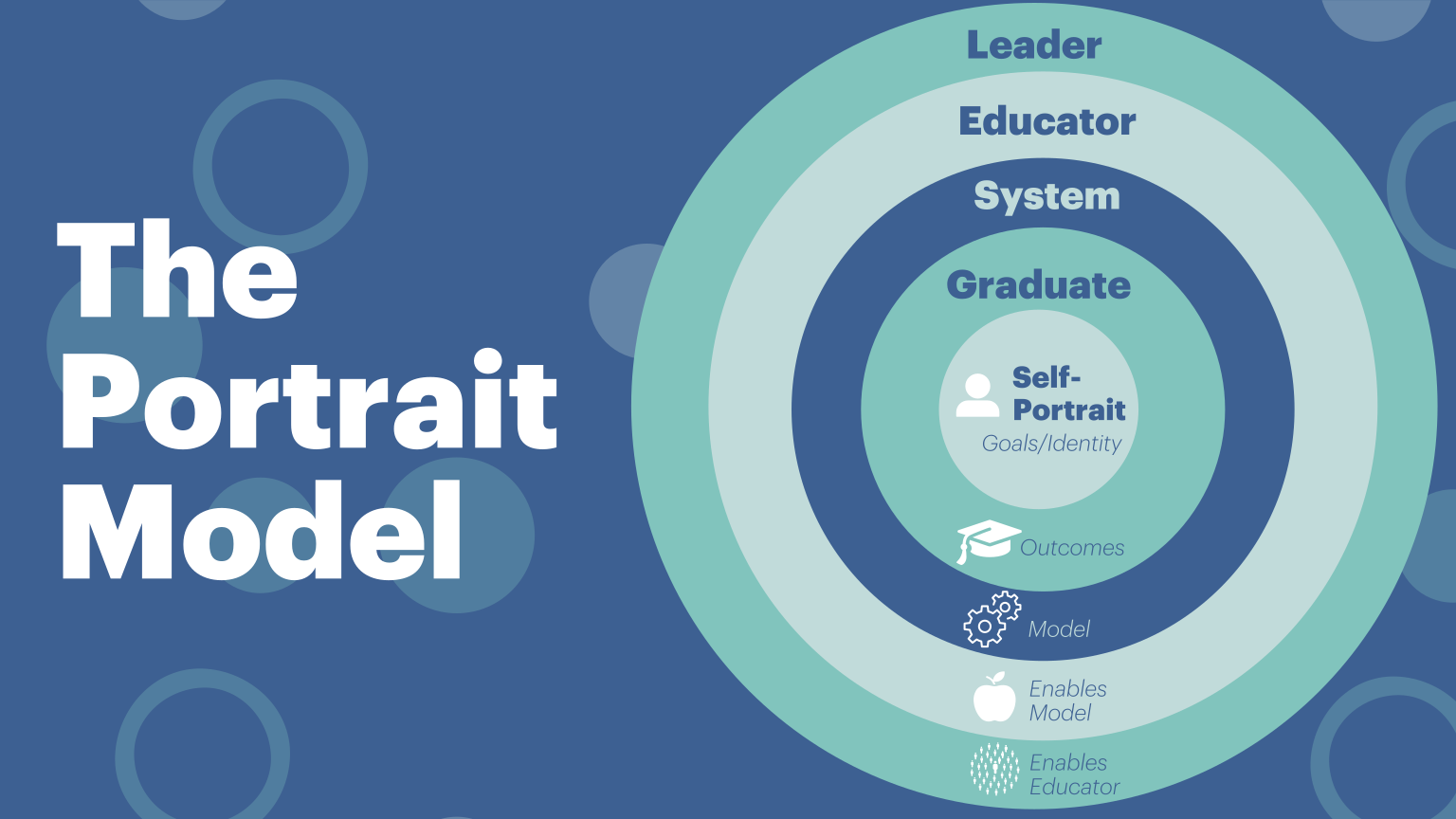
learner-centered system. Rebecca, we often talk about a portrait of a graduate but this, you know, if a school or a district doesn’t have a broad definition of what success looks like that includes self-management, self-awareness, the ability to create and manage positive relationships with others, the ability and confidence to act on the world, that idea of agency. If you don’t have a broad set of goals with really specific grade level look-fors that describe quite
specifically what those skills look like, boy the next two months would be a great time to update your goal statements, right? And defining how you want those graduates to, what you want them to leave your system with is more important now than ever because you’re giving the context of new meaning for them to have a voice in that. Well and then really thinking about how to make that visible in the hallway, in the classroom, for secondary schools, how to
make it central to the advisory system, how to incorporate it into the discipline system so that instead of punishment you’re really focusing on redirecting behavior in a positive way. Focusing on growth and very clear and transparent expectations, where they maneuver in that space, where they have a say, where they can help solve the problems. I mean one of the things that the pandemic is giving us an opportunity to feel is that there’s a
flattened feel about how to move forward and that their voice is right there alongside of us as we decide that together. Rebecca we have been working with schools all over the country this year on developing a conference of learner record and new report cards and even new transcripts that they can send to prospective employers and to colleges that on an asset basis help kids tell their story and help illustrate ways that they’ve grown in some of these features. Anything you’d want to add
there or what any next steps you’d want to suggest for people before the fall? One of the easier ways to think about this too is in the terms of an extended transcript and ways that would show up in what we would call a page two in that you could show the whole journey of a learner that is beyond what you would consider a normal transcript with very strong academic experiences which are also important but other ways that could show up whether it’s through micro credentialing or badging but
ways that you could honor a lot of what we call college and career ready or social and emotional learning skills that would directly align to your graduate profile. How would that show up on a transcript how could that be honored and I think in context outside of universities since a lot of students will be delaying entrance into college this next year how that can be used with businesses and career opportunities. Great point we’re going to see some universities down 10 or even 20 percent
in the fall and so there’s going to suddenly be a new sense of openness for college admissions counselors to have a conversation and to consider new forms of evidence so we think helping young people tell their story is I think there’s never been a better time to add that to your innovation agenda. Second category of innovations that we want to talk about is work that matters. Some young people have had the opportunity to do a little bit more interest based learning
have you seen that at home Rebecca? Yes you know I have yes and I think that as a lot of us know when the interest is piqued so you get a better outcome and ways that you can then bring that interest into other areas they would normally have been interested in you can play off of that really moving forward. So how might we go into the fall and incorporate a bit more interest based learning more authentic learning how could we be more artful about adding more
voice and choice and simultaneously packing projects with important skills so taking leveraging a student interest but then inviting them to do research inviting them to write. This reminds me of a trip that I took to to Crosstown in Memphis where young people did a tour of their community back when we could do bus rides together and and then the school invited each of them to pick a theme a clause that they were really passionate about that had been brought
to life by that bus ride and then they turned it into a project and each of them had a deep research project and they produced a bibliography and then they used some design thinking to build design solutions and then they wrote a paper and they got several rounds of feedback from their English teacher and then they made a presentation so there you have an interest based community connected project but one that had really deep writing researching and and presenting skills
so a great example of standards based and interest based simultaneously so that they’ll remember for the rest of the life remember that topic for the rest of their lives absolutely no question I think well crafted questions provide opportunities for learners to bring in their interests when they answer that as well so really well crafted interest and inquiry based units are going to be very important on this question of uh of driving questions we you know we love
new tech network and appreciate that even I was thinking of a picture of a second grade classroom that I walked into with driving questions where together they investigate a question that turns into a project that turns into a product that becomes public for their community so love that idea of keeping driving questions in front of a group of learners it leads to that piece that I know we both feel is important in the sense that learners feel they can be part of the solution
curiosity leads to those good questions and helps kids be feel empowered that they have a place in that conversation so everybody can take a small step in this category of work that matters if you’re a a teacher add a project to your syllabus for the fall secondly find a colleague do a team-based project together what what else there also a great technique for when you know you’re going to have in and out of school experiences those are pieces that can be launched virtually
or together physically but then can also be carried forward in remote opportunities so I think having some of that piece and having learners get together to talk about their interests in within that project is a great way to keep that learning feeling fluid so in addition to social emotional learning SEL and community connected project learning pbl I want to close out by having you describe the opportunity this fall to better meet learners where they are I can play off one of the examples
we just gave so I think knowing that you’re going to have multiple pathways this next year with your learners and in a learning setting having those transparent competencies or transparent expectations laid out for you provide the most thoughtful way to systemically instruct and support and gather evidence of learning as you’re moving forward that has a continuity to it that allows other stakeholders to be involved including our most important which our families right now
and having an understanding of what those expectations are and how you can work together as a team moving forward I think that will become increasingly important it will also be important when learners return so having some clear understanding of what you would want to start the year off and where your learners are at where some have maybe thrived in the scenario and maybe only thrived in certain areas and where some have gaps or only have gaps in certain areas what is going
to be your protocol for finding that out and then how can you address that in a meaningful way I think competencies will be very important boy at a minimum thinking about how to make your system more nimble recognizing that there’s going to be bigger than ever learning gaps when young people come back in the fall some are going to come back accelerated maybe just accelerated in one subject and behind in another subject or even accelerated with a gap right that reflects what the
support they got at home in my case other kids will have had six months of really traumatic experience and will have regressed so I don’t think we can just assume that we’re going to put young people into the next class or the next grade or the next course and see success so or meet them at the door with a pre-assessment so ways we’re going to check in on what they know where we’re going to make them feel safe and heard but also thoughtfully gather evidence of
learning that we can then meet them where they’re at and move forward one thing you did in Lindsay with really a super talented team was to move to more of a competency-based structure where especially in English language arts and mathematics that you you move to a blended and personalized and competency-based structure where a lot of learning took place in small groups that were dynamic and so it was quite easy to meet a second grader who was reading at fourth
grade level and doing math at a first grade level so how can people do more of that in the fall yeah I think a lot of strong competency-based systems across the nation found that they were able to have more of a fluid response to this time because they had really meaningful data at their fingertips with where learners were at and what their goals were moving forward so that definitely helped I think having those transparent expectations while students are at
home and they’re working towards that also continues that experience I think the fact that some folks will be receiving learners and thinking they’re teaching third grade I think most educators are aware that that concept is going to have to be altered and you’re really as most elementary and most teachers always know we’re teaching learners first and then content and so what would that look like as we embrace those learners coming back to us and what will be the transparent expectations
that we can continue to help move learners through not necessarily get them to the same point in the same day and return back to what we know but how can we meet them where they’re at and provide productive learning struggle opportunities for them moving forward I’d love to have everybody take a look at a podcast that we did a few weeks ago it’s episode 250 with Tom Rooney from Lindsay and Scott Rowe from Huntley School District in Illinois it’s
really a terrific deep dive into the particularly the elementary strategies in Lindsay and the high school strategies in Huntley I love the sort of earned autonomy that exists in Huntley where they have a really thick supported set of high school classes but as students develop success they can move more quickly and more independently I think we’re going to need to see more of that in the fall I also love that Scott Rowe created a competency pilot inside his high
school so he has 200 students he’ll have it at 100 next fall where they’re really experimenting with students showing what they know and progressing on mastery so a great example of a competency-based innovation that other people could try right inside an existing school yeah I think I would like to highlight that we know that there are some secondary schools that are thinking about that in the Kansas City area as a micro school opt-in competency-based process
for families who have asked for a different experience coming back I’d also like to highlight from that podcast with Superintendent Rooney that you’ll also hear about the commitment if not there explicitly but in other conversations and articles that we’ve covered how they have provided Wi-Fi for all families in the community by strategically having technology posted around the community so there’s access for all learners with their school login so really
having a strong commitment to access for all of their students so we’ve talked about innovation opportunities sometimes I go by the acronym SEL BVL CBE what we’re really talking about are schools that that give this gift of agency which Rebecca you called just the ability to lead their lives right to to take control to have the confidence to act on the world we’re talking about schools that are more humane schools that equip young people to thrive that
build the sense of agency that allow them to experience their rewards of making a contribution to their to their family to their community seems to to go back to Parker Pomla doesn’t it yes in ways that we honor the adults that serve those learners every day in this process it does we open by talking about hope as a creative tension between what is and what could be and each day doing something to narrow the distance between the two we hope our discussion today
has given you a few thoughts on the infrastructure you’re going to need to succeed in the fall and some inspiration about innovations that you could add to that thank you thanks we’d like to take the opportunity to again thank the teachers and leaders who have been working so hard to make the most out of the last few months to keep learning and exploring what will be needed as learners head back to school this fall check out our getting through series you can find it at
gettingsmart.com slash getting through we also recommend listening to episode 255 with Dan gall from Broward County I’ve got it linked in the show notes and on the blog if you want to listen to that one next the team at getting smart would love to help your school community think about the opportunity going forward if you’re looking for guidance and support reach out to taylor at gettingsmart.com and we’d love to learn more that’s it for today listeners thanks for tuning in
for the getting smart podcast this is jessica signing off

0 Comments
Leave a Comment
Your email address will not be published. All fields are required.