

Podcast: Kristi Dominguez & Ellen Dorr: Leading Central Systems Through COVID-19 with Optimism, Hope & Love
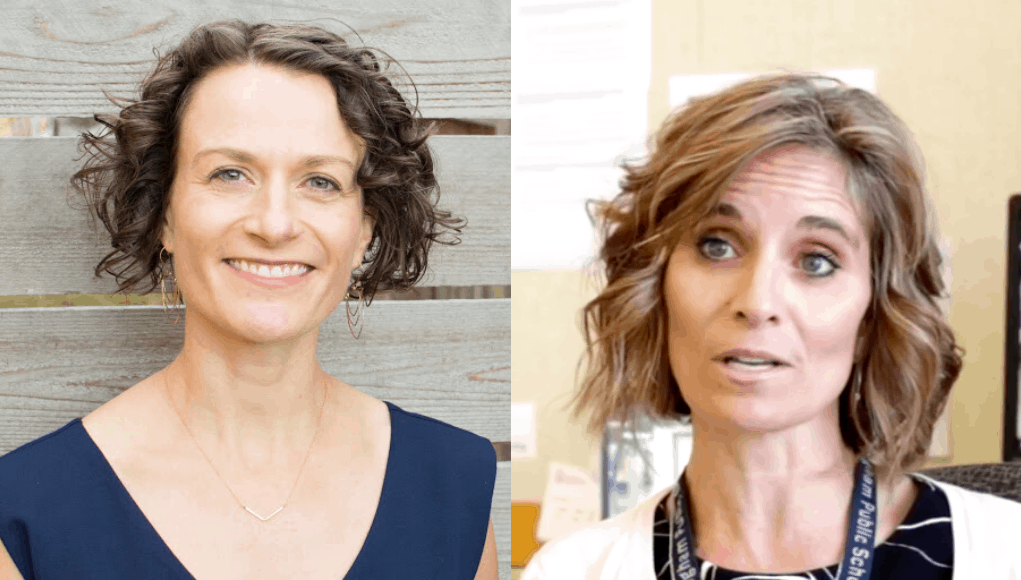
Key Takeaways: [1:53] In the midst of a pandemic, what really matters right now? [4:55] In Kristi’s and Ellen’s central leadership roles, have they talked about the impact around test scores, college readiness, and grade level proficiency amid the coronavirus pandemic? [7:08] How have Kristi and Ellen seen their team members care for each other during this crisis? [10:44] What are some ways that Kristi and Ellen are seeing different kinds of connectivity in the community happening? And what are some of the gaps and needs they are currently working on addressing? Additionally, what are some partnerships and collaborations that they would like to see continue, even after the crisis is over? [16:47] How are their teams continuing to nurture students’ connection to learning amid a crisis where schools are shut down? And how are they working with and communicating with the teachers and parents? [22:34] Jessica shares an important resource with listeners: GettingSmart.com/GettingThrough. [23:15] Kelly, Kristi, and Ellen continue their conversation about nurturing students’ connection to learning amid the coronavirus pandemic. [25:42] What are the new possibilities that come from settling into a new normal? And how do we learn from each other? What new openings have been popping up now that never occurred in the previous structures? [29:17] Have Kristi and Ellen given any thought to what returning to school will look like? How might things be different? [35:28] Learning and school are not synonymous. Kristi and Ellen highlight some of the key ways this pandemic has illustrated this. [38:02] How, as district leaders do they plan on ensuring that the momentum they’ve built with the pandemic continues even after it has ended? [42:43] Kristi and Ellen give their closing thoughts and advice to other district leaders, educators, and parents.
Mentioned in This Episode: GettingSmart.com/GettingThrough Bellingham Public Schools Renton School District
For more, see:
- Getting Through: Leading with Optimism Hope and Love
- The Growing Need for Online Teachers
- 5 Ways to Enhance Teacher Super-Powers During COVID-19
Stay in-the-know with innovations in learning by signing up for the weekly Smart Update.
Getting Smart has launched the Getting Through series to support educators, leaders, and families on the path forward during such an uncertain time. This series will provide resources and inspiration as we face long term school closures, new learning environments, and address equity and access from a new lens. Whether you are just getting started with distance or online learning, or you’ve had plans in place and have the opportunity to share your work and guidance with others, there is a place for your voice and an opportunity to learn.
Transcript
This transcript has not been edited for spelling accuracy.
You’re listening to the Getting Smart podcast where we unpack what is new and innovative in education. I’m your host Jessica and today we’re bringing you another bonus episode as part of our Getting Through series. Our team launched the Getting Through series to support educators, leaders, and families
during this uncertain time and extended school closures. We’ve curated and created resources and inspiration around new learning environments and we are addressing equity and access from a new lens. Today we’re bringing you a recent conversation with Kelly Nichols, our Learning Design Manager here at Getting Smart, and Kristi Dominguez and Ellen Doar, two leaders from Washington
State. Let’s listen in to hear more on leading central systems through COVID-19 with optimism, hope, and love. Good afternoon everyone. This is Kelly Nichols from Getting Smart and I am really pleased to facilitate a conversation
between two key district leaders for our Getting Through series and specifically around how can central office leadership really coalesce its talents and insight and wisdom to do what’s best for kids in the midst of unprecedented challenges and really thinking about that thoughtfully, centering equity and centering student access and really just the future of humanity in some ways and not that that’s too much of a responsibility for central offices
but it’s also the integrity of central offices as being the center of systems that serve kids. So I am super excited to introduce Kristi Dominguez, who’s Executive Director of Teaching and Learning in Bellingham Public Schools, and Ellen Doar, who is Chief Technology Officer at Renton Schools, to talk with us today about how to lead in the times of crisis.
And so in the midst of a pandemic, ladies, tell me what really matters right now? I like the framing that we’re just responsible for basically humankind but no pressure. But like connecting to that, I really think that it’s super important that even in a crisis we’re leading with hope, optimism and love. Hope, optimism and love.
Tell me about that. Well, I think one of the things that happens a lot is thinking about compliance and guidelines that we know we have to adhere with like new guidance from OSPI last night had all of us scrambling today to be like, okay, what does this mean legally? And we have to be able to step back to say what do our students need?
What does that really look like? What can we be hopeful about? Where do we have opportunities to use this to demonstrate love? And I would add on that, that’s funny you said that Ellen, because I actually keep reminding my team members that our greatest resource right now is hope.
It’s the one that’s going to get us through it. It’s the one that we can deliver to families every day. It’s the one that helps us think creatively in how we serve children. But I have had a total shift. I think Kelly, your question about what really matters.
Last Tuesday I shot off an email to the executive team saying, you know, school districts are traditionally set up to be about teaching and learning. And this is not, we have to redefine what that actually means. You know, the idea that we have children who are in homes that are not safe. We have children who don’t even have homes.
We have children whose families are experiencing a high level of social isolation, which causes some unsafe situations for both the family and the child. Last week our food bank had to shut down for a few days. We had to turn one of our high schools into a homeless shelter. I mean, it is to the point where teaching and learning, we’re teaching people how to
be good humans right now. And at some point along the line, it feels like maybe we lost that. And so that’s part of it is bringing us back to what really matters for children in the long run. What are those things that are going to help them to be the best adults they can be?
I think that’s a super important point. One of the things that has been really interesting with this shift is that people think school’s closing means, okay, now you make learning, you put learning online or you make learning remote and schools are so much more than just the learning pieces. Of course, those are crucially important, but I think schools provide a foundation for
community wellness, health and wellness. And I mean, you named a bunch of places, a bunch of ways in which schools do that. Yeah, so I’m intrigued by this. I mean, knowing we’ve known that schools do so much more than teaching and learning. When you think about the narrative in terms of public understanding of schools, it’s really
centered around test scores and achievement and college readiness. In your central leadership roles, have you guys even talked at all about this impact around test scores, college readiness, this academic achievement or ranking of students or grade level proficiency? Does that come up in any way over the last few weeks?
Maybe in the hallelujah, we don’t have to worry about some of those things right now. You know, more of a celebration. There’s a bit of a reprieve, yeah. Yeah, like those things that we’re told we have to comply with. So we do them as part of a mandate, but not because I think we felt good about it.
You know, I have a philosophy in education that if you teach the heart of the child, the mind will follow. And I think this has been a good reminder in bringing us back to that grounding of community and what that means. You know, a test score doesn’t really tell you anything about a child.
It’s a snapshot of a moment in time. But yet we’ve put so much weight on that and this whole thing has really lifted that up. Now what I have found interesting is how some of our families are worried about it. But we as a system are not worried about it. Yeah, I think that’s a hard pressure, right?
Like especially when you think of our seniors where families are like, well, they have to have these grades, they have to have completed these courses, they need to have, you know, they need to have taken these AP exams. And it’s really hard to be like, well, we’re pausing on a whole bunch of things because we need to focus on some other things.
But I think there’s huge opportunity in that like one example is we were talking today about community service and how students still need to earn those hours. And we’ve shifted to say like, so you’re at home babysitting or you’re taking care of your family, that counts. Like that’s, we wouldn’t normally, I guess, say that that counts.
It certainly does when we’re in a pandemic and everybody has to figure out how to survive. Mm-hmm. So, and then when we think about like what matters amongst your teams, how have you seen care for each other? I mean, there’s people who are afraid.
There are people who are literally sick. There are people who are working in a capacity they’ve never had to work in a capacity for or with. There’s ways in which we communicate or don’t communicate within the shifts of this pandemic. What are you seeing that’s really risen about what matters in terms of your teams and what
really matters around how people in schooling function together? What’s hopeful? What’s brought you optimism? What are some examples of love? So with my technology services team, I’ve been so impressed with just the different ideas
that the team has like two or three weeks ago, I started putting a notebook together to say like, hey, as we shift, what do we need to be thinking through and how would we still continue to support students, families and staff? And my team has come up with so many different wonderful ideas that we have to figure out how to execute on.
And I really appreciate that that’s their mindset and framing that rather than, you know, being upset that their job responsibilities are changing. And of course, like there is work with our bargaining bargaining units, of course, but they they’ve been really focused on like, what can I do? What can we do?
And we’ve we’ve been working with, you know, every person on our team as humans. Like, what do you need because you’re really anxious or you have a child who’s immuno compromised? What do we need to do so that you can be safe and contribute in the ways that makes sense for where you and your family are right now?
And I would say I I love my job in the fact that a large part of what I do is student services on a regular basis. I support our teen parents in Whatcom County. I have I oversee early learning. I have all our McKinney-Vento students.
And so where I’ve seen our community tie in, especially around child care. So one of the calls of the governor was that all districts would ensure that child care is happening for first responders. Well, we’re not as a school system, not set up to run child care for school age children. There’s licensing laws.
There’s lots of pieces to it. And in the end, we need to make sure that we have a workforce in our birth to five world that’s sustainable and able to continue on after this is over. And so in partnership with a community agency, I put out a call and I just said, you know, their resources, this school age program is strapped.
What can we do? My nurses show up there every morning and take the temperatures of children. My food service is putting together packages, making sure every child who attends this care is eating two meals a day plus a snack. Two of their workers got sick.
I had three pairs sign up and they’re going in as subs. It’s just this beautiful sense of community that we’re all in this together. And so it’s not just necessarily the children and the families who are feeling the love, but the community agencies who really have been often behind the scenes, often not seen as the mechanisms in education that school districts are.
And they’re being elevated in this whole thing for all the work they do on a daily basis to support children and families. No, that’s great. OK, so this is a great segue around like connection because I feel like schools are much more explicitly and school districts are much more explicitly working with community
partners and meeting community partners in a way that we didn’t before this crisis. And I’m also wondering about this way of connectivity with students and families when we’re grappling with things bigger than just like report cards, right? And so I’m curious about what are some ways that your scene connection happened that’s different from ever before that’s inspiring?
What are some gaps or needs that you’re seeing in connection that you’re hoping to work towards to fill those gaps as we have a known period of disconnection, I guess, in terms of the physical buildings? And what are some partnerships or collaborations that you just really want to talk about in terms of like that are really being productive that you would like to see continue even when
things get back to some sort of new normal? I would say the community piece, I think I’ve said this often to other educators as I, you know, engage in different bodies of my work, but K-12 systems and not to offend anybody. But historically, I think we’ve been pretty arrogant, like, hey, give me your kid,
give me this child, I’ve got it figured out. And when I’m done, we’ll pass them back. And that’s not really what happens. And I think this has highlighted the fact that we are just one small sliver of a much larger landscape that supports children and families on a regular basis.
I think two schools are the hubs in many ways in a community and can serve as a place to collectively bring agencies together and serve maybe as a physical space in order to do that. But to think we have all the answers is unrealistic and it’s not supportive for our children. It’s not supportive for our families. So this has highlighted that in a way that I think not everyone has always had to think about,
that we can’t go this alone. This we’re only going to get through this as communities if we elevate everyone and everyone’s joining hands around every particular child and family. And I think the fact that we had a mission that could not practice social distancing for the members and just an increased number of families who were needing shelter at night.
And so our high school is a public building. It the mayor called and said, can we use Bellingham High School as a shelter? And it now is serving as a homeless shelter for different members of our community. That is the kind of thinking that this has pushed us to do that wouldn’t have happened even a month ago. You know, there would have been an uproar in our community.
But email after emails coming in saying, thank you for doing that, that needed to happen. We appreciate it. And so it’s breaking down that barrier that all all individuals are valuable members of this community, no matter what, and any one of us could be there. Yeah, I think there is definitely that we’re in this together perspective that people are gaining
very quickly and adopting. And I think what’s tricky is that with all the physical distancing we have to do, it’s hard to stay connected, especially for marginalized families and populations. One thing that I’ve seen our teaching staff really take on is using more and more digital resources to think about how to stay connected.
We had a middle school where the principal has been recording herself reading a book each night and like posting that so that students can be read to. There are some really beautiful things that are happening in terms of connecting through different mediums. I would add on to that too, Ellen. That is great.
And thinking about who are the families who aren’t able to access that. And I’ve seen districts being pushed to think that way. Like who needs the phone call? Who might need the stop out on the sidewalk outside their front door? And differentiating that connection model.
I think, I think Ellen, it was you and I who were laughing initially when people were putting out a link. If you don’t have technology or internet, please click on this link and apply to what you need. Yeah. And we’re like, that’s actually maybe not going to work.
And then we’re doing that a little bit because we’re trying to assess need, but it’s, I mean, it’s complicated. We did it. Yeah. We did it. I looked and like two days after we did it, I was like, darn, I knew that was the wrong thing to do.
And we still got caught up in it because it’s the easiest way to push it out fast. So just being mindful of who is not accessing it. Who do you know is going to need interpretation? And who just frankly over time, were you having a hard time getting through the front door of a school? Those are the ones you have to think differently about.
And I think it puts a lot of pressure on principals who, I mean, the role of the principal is to incredibly important and they know their community. So they, what we’ve been really thinking about is then how do they and their teams, their instructional teams really follow up with specific families in different mediums. I also want to caution that I don’t think just providing people with digital access is the solution. Like there are a lot of other, you know, different ways of thinking about it.
And I think that’s a question that I don’t think just providing people with digital access is the solution. Like there are a lot of other equity considerations to be made there. Of course, we are working on providing that and that is a start. But just because we’ve given a kid and their family a Chromebook and a hotspot does not mean that we are, you know, actively supporting that student and family in the way they need to be supported. So I want to talk a little bit about that because when we talk about like connection, there is this social emotional connection and community and that’s really pivotal and necessary, especially in times of crisis where people, you know, hold that space in really different ways.
And then there’s also this connection to learning, right, and this connection to like your identity as a student and as a learner and connection to content. So how are you guys talking about this or thinking about this dynamic of and I really appreciate you bringing this up is just because I have all the connectivity tools still doesn’t mean that I’m going to suddenly be able to learn and grasp content in any meaningful way, right? Like there’s that’s not a direct correlation. And so I’m curious as how your teams are thinking through that and what kind of questions your teachers and principals and parents are asking as we think about, yeah, how do I nurture this connection to learning when what the boundaries or the structures that students, you know, went to to engage in that are no longer available. Oh, I love that. I think, you know, one of the things that we were talking about at the high school level today is, is, you know, making sure that what we are, you know, because of the new guidance from OSPI last night that said you have to provide learning and there has to be assessment and monitoring and feedback and all of those pieces that are really important. We were we were talking about like how do we still ensure though that the learning that is happening is rigorous is engaging is relevant for students is culturally responsive.
And so with alignment to standards we want to think about how do we incorporate project or problem based learning how do we start with an essential question that kids can be really curious about and or how do we support, you know, different curiosities or ways that families say they want to learn. They want to be learning or what students say they want to be learning about. I think there’s like great opportunity for learning that really matters to students that they will keep with them as learners. Yeah, we just had that conversation last week when we were trying to unpack what this was going to mean and I had a little bit of an aha moment. The birth to five world in education functions very differently than the K 12 system and it functions in a way that it really honors the parent as the first teacher. So it’s really about adults coming together supporting one another and thinking through how do we collectively wrap around the child, but the parent is really the one who’s guiding the instruction.
And this idea that I think sometimes we have instructors, not just in Billy Ham everywhere, you know, right, like it’s the sage on the stage where I’m going to deliver it’s I have the knowledge I’m going to market and put it on to you and you’re going to learn it. And this really does push us into that idea that, you know, I’m a great example. I’m working during this crisis from seven in the morning till six at night. I take maybe a 15 minute lunch break and that’s it. And I have a son who has yet to open up his laptop, because I can’t sit with him and you talk about connection right like I don’t have capacity to work with my own son. And so I’m we’re trying to figure out as a family how do we create a learning environment while mom is busy working in the home and he’s being expected to, you know, do these different tasks and so, and I have every means possible to make that happen. He has technology he has all the resources you know he has to highly educated parents.
I mean, there is nothing that should be standing in his way, except he doesn’t have that connection because we’re so busy. And so we’re trying to figure out and if that’s happening for me, I just think about families who are stressed about housing, food insecurity, language barriers, and how are we thinking about empowering our parents as the teachers, you know, what are the lessons that they want their children to be learning at this time. And what are the barriers to accessing that for them and how do we make that possible so how do we shift this thinking that we’re a partnership with the family instead of the ones delivering something to the family as experts. Yeah, I love that I think that earlier I had said like we’re not providing the right supports for students and families. And I think I even want to I want to add to that, like we’re not honoring them either. And I think we need to be doing that more and and honoring the time and space that we’re in as well so like if my nephew just plays fortnight with his friends all day. I don’t, that’s not necessarily bad. He’s pretty connected. They’re figuring things out. They’re working as a team. Like there’s a whole bunch of stuff that’s happening there that’s valuable that we just haven’t named as valuable.
Yeah, I think that doesn’t fit our narrative of value. Right. And I think there is pressure especially I keep thinking back to high school around I mean when credits have to be earned and that so many people have this very strong like nostalgic connection to high school it is so hard to be like well we’re going to try and do something a little different. They’re like no no that’s not how it happens you take the AP class you read the book you write the essay. And there’s opportunity to do that differently. Hey listeners, it’s your host Jessica. I wanted to just take a quick break to share an important resource with you.
Recently our team launched the Getting Through MicroSite to support educators, leaders and families on the path forward during this unprecedented and uncertain time. There’s something there for everyone whether you’re just getting started with your transition to distance learning or you’ve had plans in place for a while and now have the opportunity to share your work and guidance with others. We hope this gives you a place for your voice and an opportunity to learn. We know we will get through this together. Check it out at GettingSmart.com slash Getting Through. Okay, now back to the show. I think that’s a really good point around well a nostalgia right like this is the way I’ve experienced it this is the way that I was taught so that must be the way that you’re taught right or because this mattered when I was in school it needs to matter when you’re in school.
I also you know this idea of the responsibility of a parent to be a teacher or to be able to deliver content or supervise kids or answer their questions while they’re I mean it’s presumptuous it’s this really interesting paradox of okay you know like so I see like hashtags on Twitter like I’m not a parent teaching or you know teaching from home or you know now I’m my students teacher and it’s I’m like no you’re not like you’re their parent right and you can facilitate some really important learning and now students are home and they’re your kids and and we’re new to this like you know I know with so much change and Washington has you know was the first state to really hit be hit with this pandemic and so we’re I think a little bit more along than other districts are and states are but you know we’re still really new to this and so you know how do we give ourselves some grace and patience to kind of reassert our identities and responsibilities right like how what’s my responsibility is a five year old at home. You know what’s my responsibility as a parent and you know even though I might be well educated which literally I am I also know that I’m not going to take on this responsibility of supporting a 10th grader in geometry, because I don’t remember 10th grade geometry and I don’t know what the student has learned in their right like so I’m letting that go because I’m not that students teacher.
And that it’s okay that that 10th graders going to work on whatever they’re going to work on or not right because we’re in the middle of a crisis and so it’s like this this complexity that I feel many times. We want to control right we want to fix and we want to like contain and we got to get it together and he’s organized and we need to you know measure it and demonstrate it. Because that’s what school systems do and I think we’re kind of put in a place where it’s like oh well that doesn’t really apply anymore. Or that’s not relevant in these sets of circumstances. And so yeah what are the possibilities what are the new births that come from settling into a new normal and a new existence and how do we learn from each other right and what are some things that you’re seeing kind of pop up as openings that just were never allowed to before.
In the previous structures. I think for me where we’re at it’s still a little too early to know what’s going to pop up what I’m seeing with my teachers is this a little bit of a loss of identity. Like if this isn’t what I do then who am I what’s my value in the system. And so in talking to a lot of them is there having to reimagine one connection and how do they connect with their students and their families. They’re seeing collaboration differently with families that idea of family engagement is taken on a whole new meaning.
And what is their role in this. And so you know we’re just we’re pretty new into the learning piece we just pushed just started pushing out some thinking some ideas. And so it’s really in a shift in the adults that I’m seeing right now but a possibility for them and a little bit freeing for them. Like I don’t I’m not accountable to these test scores right now I’m accountable to my students and their individual needs. And that’s what teachers really for the most part I think want to do and aren’t always given permission to do it.
So a little bit freeing I think. We talked about that today too. Just that you know our teachers really do they care about their students they want their students to be successful they want their students to learn they want their students to feel valued and valuable and powerful and some of the guidance with like removing some grading allows for some space to do that. And I think it allows for creativity which I think is really exciting. And a redefining of success right.
How do you define success in this new norm. Yeah. It’s another tension though I feel like some of it is around like how much structure and routine do we want to put in place so that people feel comfortable. You know that’s been that’s been a push. Like recommendations around like make a schedule and it’s this many minutes and I get that like you do need some like you do have to get up today.
Maybe you don’t have to change out of sweat. So I don’t think you do. I haven’t tried that yet. Yeah. That one’s not required.
Like you know we don’t have to have the like first period is this time to this time we can we can move away from you know some of that thinking. Yeah. Yeah I love this idea of you know freedom and creativity and you know focusing on our care and connection. It sounds like we’re currently a much more human centered system and not like a compliance centered system which I think kind of in the silver lining aligns this hypocrisy of what we say matters and then what we do that matters right. And now it’s like what we’re saying and doing is aligning to those values of care and love and and really wanting the best for our kids.
So thinking about the fact that a this pandemic will lessen. I don’t know how I don’t know the scientific terminology this way but we will overcome the. That’s a resource of hope. This too shall pass. And then and then we and then we kind of have to like reorganize right and and and come back and I’m curious about how your teams are thinking about this return and not that in the hyperbole you know sense of hopefulness that you’re idealistic and and you know that there’s timelines and you know here’s what’s going to happen but.
How are you really thoughtfully and systematically thinking about the return and and this the first steps towards like this this new way of being post pandemic. Two things that I’m really excited about is the idea that we would continue to collaborate in the way that we’re being forced to collaborate now. Like you cannot work within just your role right now and you have to work across so many different teams on different in different ways with different projects and I think that that’s super important. So I’m hoping that that stays and I’ve seen our teachers doing it as well like connecting with other resources other teachers etc. And using a lot of digital tools which I’m excited about because you know like I think they’re very helpful and oftentimes people are like I don’t have time to learn that and so recently we were like here directions for zoom Google Meet.
Skype and people are like cool I’m in I’m doing all this stuff right there’s a need so they’re figuring out how to do some things that are are really helpful for them. I think that’s one of the pieces and then the other thing is I like this idea that we can be a little more asynchronous like schools not just this hour to this hour. If we if students have direct access to different learning materials and different learning activities they can they can work at different times like. You know Saturday afternoon because they have like a little more space to think about something like there’s opportunity for focusing more on the learning and the demonstration of that rather than the compliance of it. Yeah, I agree with that and I keep thinking we can’t go backwards right like we’re not going to recapture what we were and we shouldn’t.
That’s the silver lining of this it’s forcing us to reimagine education beyond what we would have ever just probably done on our own there was probably pockets of it happening but this is going to be national worldwide. I think about the part where the reorg we had to do last week was I was on a call about how to implement childcare throughout the county and you know I had two members of our school district on that call and it was mostly the community and then I was on a call around students who. Qualifies McKinney bento again like three of our district folks and then mostly community agencies and then the same thing for our family engagement team right like all these students service type things were really limited district resources. Then I get on a teaching and learning call and it had close to 50 people. And I was like, no, we’ve got to reshift our resources like we have to think differently about what our core purpose is right now in this time and so we we created a new org chart and things that principles didn’t necessarily see as part of the wheelhouse they would have loved to but that wasn’t necessarily what they were tasked to think about.
All of a sudden became some of their primary responsibilities and so that idea that even the definition if you look at our state definition of basic education. Nurses counselors all of those pieces aren’t in there and my hope would be that those. This is going to be a chance to redefine what basic ed is what are all those components that are required in order for a child to be their full self when they show up to school. What does it mean to really engage with a family in a way that they’re truly seen as a partner in the work of supporting a child that it doesn’t. You know it’s not this I’m going to pass the child off and I’ll pass them back when we’re done. It really becomes more of a communal effort.
Right schools are there are a community, they’re part of community services it’s not just educational pieces. And this is highlighting that so so much in fact what were the first two calls that every district was told child care and food. Yep. They were the first two things that we heard that our main responsibility was, but yet both of those are not seen as part of the basic right like there’s loopholes to that there’s barriers to that in the in the old model and so forcing us to look outside of that and redefine what education is about. What I think is interesting about that too is that people have been impressed with like wow it’s amazing that districts figured out food that quickly like no we do this all the time and we have summer feeding programs like that was that was a quick shift for almost every single district.
And our nutrition services team is like, and I assume they’re this way in every district they’re super amazing about how they’ve done this approach this work. Yeah. Yeah, I think there’s, you know, what I’m hearing both of you say is that you know our schools are community centers. There are community center that specifically you know houses some academic priorities, right, but we’re a center for the community and a variety of ways beyond just those academic priorities and now the world is really able to see how fundamentally dependent we are on public schools as community centers and not just a place where we send our kids to for teaching and learning right and I, I think you’re also talk about how learning and schooling aren’t synonymous right and that there’s opportunities for us to be creative and more open around
learning opportunities in a ways that the previous model or understanding of schooling doesn’t have to perpetuate and we can really expand opportunities of learning and access to learning, and that we can open up this idea of an institution of school is less about the compliance to school but more around being part of a community and and really being of service with partnerships beyond you know the boundaries of academics. Yeah, it makes me think about like sometimes people are limited by their experience right so they think like we’ve always done it this way like we will have all of this to point to to be like but remember when we did it all. Yeah, we were able to do that we were able to do things that way. Yeah, and without this happening would that have taken place I don’t think so I mean I just think about some of the, you know, a very white centered narrative. You know our education system has been built upon, and this is really pushing on some of those past practices, and I call them past practices because we just can’t go back to them.
Yeah, I think there’s a real there’s a real significance to your point Ellen of this. This is what we do or this is how we do things or this is how it’s always been done and we, we really haven’t had time right because what the way things have been done are very time consuming right. And not necessarily functional, but at the same time very functional right like it’s this is you know you you know how you functioned six weeks ago six months ago. And there really wasn’t a need right to think about why should we do it differently right and there wasn’t time to really think about well how could we do it differently and then we have this situation where it’s like, we can only do it differently I mean there’s no other choice. That’s kind of, you know, created these non negotiable circumstances for people to get out of that system like I kind of liken it to like a hamster and a wheel and you’re just going and going and going and going and going right and you just don’t see or know anything else. And then suddenly you’re off the wheel and you’re like where am I and what’s going on here.
And then it’s like oh well maybe I don’t have to get on that wheel again you know or maybe there’s a different way I can exercise and be entertained. And I so there is some opportunity, I think, for us to think about that, and I think it’s also, yeah, how do you as district leaders ensure as Christie as you said we can’t go back. Well how do you ensure that right how do you build that momentum and and and really show people like, and not that you have the answer of what the future will be but that we don’t have to go back to what was in order for us to be successful or order it for to be right or in order for to be school. Right it’s making me think about
making space making time to be reflective about this as it’s happening like I was thinking about even like a SWOT analysis so like, you know, with with how we’ve had to pivot now what’s what’s a strength like what’s working really well like what’s important and I think we would surface some of those things around community care. And then that can help us remember what our real goals and real values are so that as we, you know, iterate what school is we keep that as a grounding place for our thinking. Like prioritizing the value the needs of families, like really listening to student voice I can imagine that as schools reopen having having like conversations with students around like what do you really need from school what did you miss what what did you not miss like what is it that we need to shift together so that this is a good place for all of us and is supporting us well. And I kind of wonder I’ll be that student voice piece I was talking to my oldest daughter about that we were both speculating that students are finding their voice in this because they’re giving time and space to do it and so I just wonder if they will not expect to have more say an ownership in their education because really in a lot of ways they’re designing it. With some guidance, you know they’re getting some lessons or suggestions or check ins with adults, but you know, because everything’s over, you know, a zoom connection or a teams page or email, they’re having to put their voice in the space, unlike some kids have had to in the past or felt they could in the past so.
Yeah, I’m really excited to see the capacity of kids and adults that you know as we re enter into the space of schooling right is just how they’ll be changed and empowered. I think how they’ll be more centered and what really matters to them in a way that you know they they hadn’t been before and and I am really eager to see what their asks are right like what what do they turn to what are they most eager for first right and and yeah and then what do they want and need now. And you know you always think about like how your kids return after a summer away or even like after like a holiday break you know like kids and just how much they grow over school year. And I mean here we are in that exact same kind of space and also like the challenge of being alive right now and just how significant that will shift and empower our kids. Right.
Right, like so I mean it normally in school cycles, but then it’s like but this is like a cataclysm of you know that would really that will really bring our kids back to us different. And, and in a way that I think is really exciting, and and could really just open up so many opportunities for them to help lead us like to the future right right. Right. That’s I was a middle school language arts teacher for a long time so I’m thinking about like the writing prompts I would want to be giving to students around like you know like what really matters to you and your family. Like how does how does that show up in your life. Yeah, what matters for your community like.
Yeah, I want them I want them leading that they are they are completely capable of leading that and I know that they’re ready to leave. We have to listen. Yeah, and yeah, that’s the shift I’m seeing and then structures that I’m talking to and working with though, I think they’re seeing it to, and it’s that organic shift of what is my role. I don’t have to stand and give, but I can partner with my students in a way that’s different so I’m hoping they’re starting to see that the power of student as well. Yeah, that’s super exciting.
Okay, so is there, you know, we’re kind of ending our time. Is there anything else that you are really holding or thinking about as you’re kind of getting through this Coronavirus closure, or things that you would want to kind of offer into the space for other district leaders and teachers and parents to think about as they are also navigating and getting through this space. Yeah, I guess for me what I am wrestling with and I’ve talked, you know, with different folks about is what we aren’t figuring out and I hope that we get to a space is this idea around equity. And what does that really mean. And as we’re, you know, in some ways we’re feeling a pressure just get going and get kids learning. And it’s okay. The resistance that I’m seeing kind of that uprising I’m seeing at least in our state of, but we can’t leave kids behind. And, but what does that really mean and how do we do that and I just hope that as we move, you know, through this because we’re going to that that level of energy around
getting equitable outcomes for all kids and equitable opportunities for all kids stays that energy stays because you could see pockets of it but now I feel like this overall arching rise and I’m hopeful that we’re not going to solve it through this, but I hope it remains that energy. Yeah, I love that. I think the other thing we need to give ourselves grace. I mean this is really hard and people are scared. And, you know, we’ve received many lengthy emails with ideas of all the things we could do better. And we are working so hard. So I think like give ourselves grace. And then I think also like we need, we need to give ourselves permission to to determine what is really important for with, like, you know, determine this with families and students but set priorities instead of always like bowing to, you know, we have to we have to comply with laws but I think we have to be able to say like, and this matter is enough that like we’re going to see how we can work toward a different outcome with this piece. Yeah, change the law. Yeah, right. Like working towards if the compliance isn’t working then let’s change it. Yeah. Yeah.
And have the bravery to do it, you know, to be like this is the right thing for kids. Yeah, so we’re willing to take on something that might be easier to just comply with. And that’s the energy I’m hoping we are able to keep that push on that. Yeah. Well, thank you both. I really appreciate your time. I know as we’ve discussed there are many priorities out there and for you to to kind of take some time and help tell us about your experience and give some insight for those of us who are all navigating the space and getting through this time. It’s just been really helpful. And I just appreciate your time and energy and expertise. I definitely feel more concretely aware of areas of hope and optimism and love in central office leadership and ways that systems and families and communities can really execute those three values towards a better future. So thank you.
Thanks, Kelly. Thanks for hosting us, Kelly. Yeah, it was fun. Yeah, that’s great. A big thanks to Christie Dominguez and Ellen door for joining Kelly on today’s podcast. If you’re looking to learn more and access additional resources around how to best support learners and their families during this challenging time, check out our getting through page at getting smart.com slash getting through.
We have lots of great blogs, podcasts and other resources from thought leaders and education to help guide you and your team. And for more on all things innovations and learning, be sure to check out our blog at getting smart.com. That’s it for today listeners. Thanks again for tuning in. And thanks for all that you’re doing day in and day out to support learning. For the getting smart podcast. This is Jessica signing off.


Craig Schieber
Fabulous conversation that is a breath of fresh air in honesty and courage among all the hype in so many discussions. Thank you for being such a steady voice for us all.
samantha cousens
Kristi speaks about connection. This is at the heart of our the story we are living right now. Connecting kids, parents and teachers in meaningful ways. As a teacher of the Bellingham School District, how do we make this a time to genuinely come together and support our families? As a parent of two teenage boys, how do I support their home learning while building student agency.