


Rhonda Broussard on One Good Question
Key Points
-
There is a true power in asking good questions and centering joy every day.
-
Student agency may be the most important thing to focus on right now.
This episode of the Getting Smart Podcast is sponsored by What If.
On this episode of the Getting Smart Podcast, Tom Vander Ark is joined by Rhonda Broussard, founder of Beloved Community, veteran educator, student of the world and author of the upcoming book One Good Question.
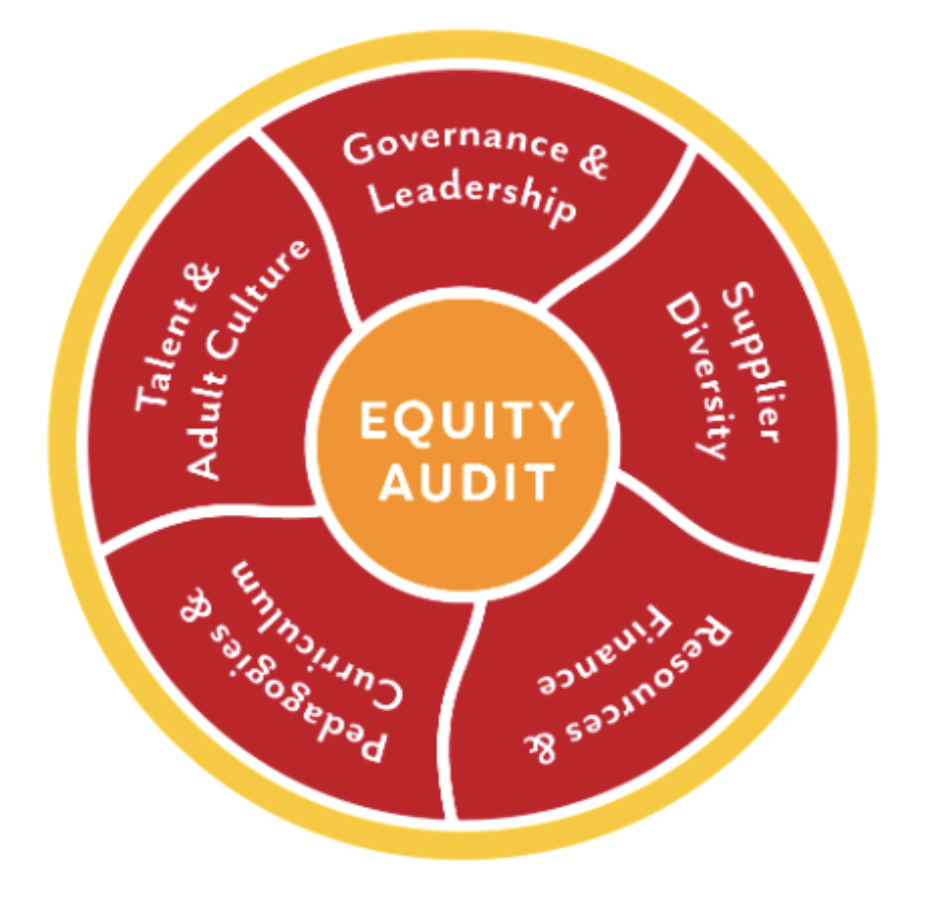
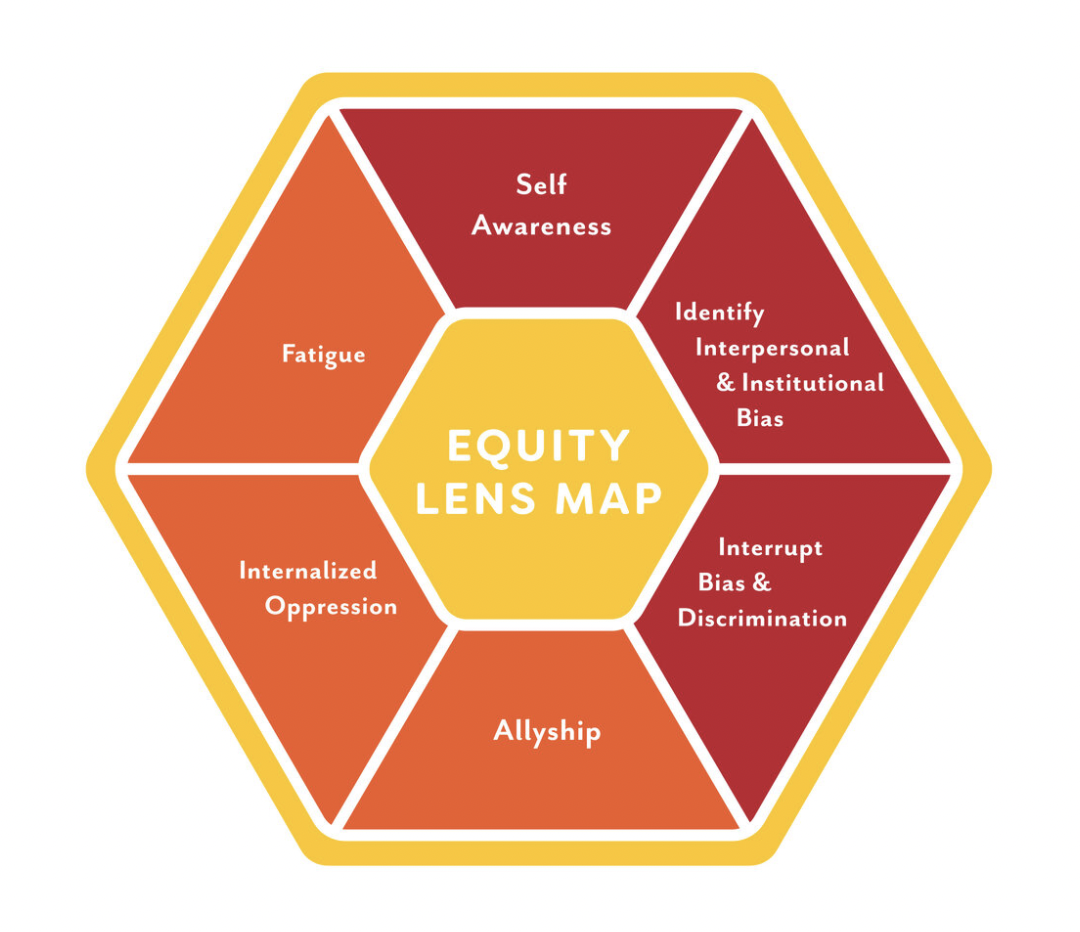
Let’s listen in as they discuss agency, education in 2030, equity audits and much more. Two equity audit graphics from Beloved Community are below:
I think agency might be the most important thing to focus on right now.
Rhonda Broussard
When you ask ‘is a good school enough’ what you’re really asking is does the neighborhood/community have the infrastructure to enable their people to thrive.
Rhonda Broussard
One-Two-One
One person who shaped Rhonda’s understanding
- Her grandmother
- The former director of United Nations Women: Phumzile Mlambo-Ngcuka
Two insights from the work for educators
- Equity is a systematic solution
- There is a true power in asking good questions and centering joy every day.
One “What if?” question
- What if every young person got to name what they needed, had access to those resources and were able to chart their own course with safety, support and love?
Transcript
This transcript has not been edited for spelling accuracy.
Before we jump in today, we wanted to tell you about a new campaign and newsletter from Getting Smart. It’s called What If, and it’s all about encouraging educators and ed leaders to think differently about education and learning. Every week we will send you a What If question about the future of learning, leading, and
community. This campaign is all about engagement, so we’d love it if you’d sign up and share your thoughts on Twitter, or send them to editor at GettingSmart.com. Sign up for the list today at GettingSmart.com slash What-If. You can’t wait to see what you come up with.
All right, let’s jump in. You’re listening to Getting Smart podcast. I’m Tom Vanderhoek, and today I’m speaking with Rhonda Bressard. She is the founder of the beloved community. She’s a veteran educator, teacher, and school leader, student of the world, and author of
a beautiful upcoming book called One Good Question. Rhonda, it’s so good to see you. Tom, same. I still remember the first time we met in Kansas City, and I’m happy that we’ve been able to keep this thread in our intellectual curiosity moving forward.
Rhonda, I think we discovered that our sort of life paths probably intersected 20 some years ago. You were teaching in a small school in New York. It was the beginning of that small school’s movement where New York City was really a leader in creating new high schools and seven, 12 schools.
That’s really where you got your teaching chops, right? Yeah. Teaching in New York was such a gift, and I taught all over the country. Tom, you know I’m from Louisiana. I started teaching in New Orleans when I was 17.
I taught high school in Ferguson. I taught dropout recovery in Long Beach. I taught really fluent suburban high schools in Connecticut. When I got to Brooklyn and got to teaching this really small community-based school where most of the teachers were from Brooklyn and most of our students lived within like a 10
block radius, it really did change my perspective on what community school could mean. I deeply wanted to be able to walk to my school to see my students on the weekends, to see them out in community, and that time meant that. I would get on the bus in the morning to work, and there were kids getting on the bus with me.
We would stop and get fries after school, and there were kids getting fries at the same corner store. It just helped. As a transplant to New York, it helped make my Brooklyn a lot more intimate and my understanding of how school and community and that specific neighborhood in Fort Greene work together.
Yeah, those are really good learning. Yeah, it was community school in two respects, right? It was a school that fully embraced a community, and then because it was a small community, you created a beautiful sense of community within that school. Absolutely.
This is the first school that I worked in that had a health clinic facility in the building. During the day, you would see young people going down for physical health, for mental health, for social support services. It’s the kind of thing that I’d read about in books like, oh, you can have a school that has more services in it than just education.
I think it really did make a difference for how young people saw their holistic health, holistic education. Rhonda, I loved your one good question blog, and I was so happy to participate in that. I’m thrilled that it turned into a book, and we’re going to talk about that today. Before we do, I would love to dive into the work that you’re leading at Beloved Community.
I would say the leading nonprofit consultancy in equity, at least in education. I know you work more broadly than that, but you are really known for the equity audits that you help organizations, schools, and communities conduct. I’d love to know more about that. Why are you doing that work?
How do you do it, and toward what end do you conduct equity audits? Yeah. At any other time, this is something that we didn’t set out to do as a Beloved Community, but it became a really clear need when we started working with our first groups of schools in New Orleans, that when organizations, schools in particular, named their pain points around
equity, they’re often naming community engagement, student engagement, talent, recruitment, and retention. There are lots of strategies out there to support those. We said, yes, we can help you advance those things, and we actually need you to understand the interrelatedness between your governance, your finance, your operations, in addition
to your programming, your pedagogy, your people-facing side. There is a clear business part of this, and we need to be able to bring your operations folks into the conversation early on. Too often we send the part-facing team members out to fix the people, but we know from an economic equity perspective that we need your COO to be as engaged in the equity audit as
your program’s officer or your academic officer. What we built, and AWA is the newest iteration of that AWA is the platform that brings all of our equity audits together, we built an opportunity for mutual accountability within schools. Looking at how do we understand equity, diversity, and inclusion for all of our stakeholders,
and what it looks like to shift it for our student population, our parent population, our community partners, our teachers, our staff, our building administrators. If we have some fee-based programs, how do we understand our fee-based programs? If we have some scholarships or teacher awards or employee assistance benefits, how do we put an equity lens on all of those things and really make space for that mutual accountability
to take root? We can build any kind of equity work plan, and you know this, as consultants, we’re going to leave. The people who are there to hold your feet to the fire are your actual stakeholders in the building, and so this tool gives some space for them to do that and say, what does
it look like for student experience? What does it look like for parent experience? What does it look like on the pedagogy side? So we’re excited to see more and more communities use the tool and really think about what it means for them to embed the questions in everything that they do.
We really believe if you ask these three questions in any setting, it will change the conversation. So one, so what extent is blank population representative of our community? And so if you’re talking about it in schools, you could be looking at your gift and talented program. What extent are the students in that program representative of our student demographics?
You could be talking about your teacher leader program. To what extent are the teachers who are being trained to be building administrators representative of our population? On the equity side, to what extent are program outcomes predictable by people’s demographics? And we know a lot of the answers already, right?
Oftentimes district leaders will say, Ron, I can tell you right now our teachers aren’t representative of our student population. We already know that. We need the audit to tell us. And what the audit will do is say, where do we actually diagnose the need?
So where do we start the work to correct this inequity or lack of diversity or lack of inclusion with our school communities? And then that inclusion question, to what extent, when you invite me to the table, to what extent is my voice empowered? To what extent am I respected?
To what extent do I feel like I matter and the decisions that impact me? And that’s true from your youngest people through those who have the most positional power. Rhonda, that’s a great process. And we appreciate the framework that you bring to communities because it really is a comprehensive
framework. We’ll include your graphic in the show notes so that people get an appreciation for all the dimensions that you look at. Do you help people build a plan on what to do, how to do it, going forward? Yeah, absolutely.
So there’s a multi-year equity work plan. So we start off with the institutional audit that I was just talking about. There’s also a professional development component, the equity lens map. Oftentimes folks will say, OK, we know we need to do some education and we’ll offer the same trainings to everyone.
And in the same way that we differentiate young people in the classroom, we know that everyone is at a different place on their own journey to being equity champion. So there’s an assessment that helps you understand what the folks in your district building grade level team, et cetera, actually need to move forward. And then we use those two pieces of data and then can help build out a multi-year equity
work plan. All of that is a part of the OWLA software. In that multi-year plan, you’re choosing three to five goals. What are the priorities that you’re actually going to name? What are the metrics that you’re going to measure?
Who’s going to own them? How will you look at interim progress? What’s the continuous improvement process that you’re going to use? So you’ll go back to community and say, hey, is this still working? Do we need to make some changes?
And what we really encourage folks to do is to think about all of the other data points that they can bring into the conversation. The audits themselves give you one set of data points. But if you compare these with interviews, focus groups, site visits, observations, you know this, it makes it easier for folks to understand what the actual opportunity is
for change. The audit is really robust. So there are almost 200 indicators. You can’t take 200 first steps. You’re going to have to sit down and say, what are the things we can move the needle on
now? What’s already, what could be a quick win? Right? So there’s some change that doesn’t require more funding. It doesn’t require more staffing, but that you can make changes in a process that’s going
to have more equitable or inclusive opportunities. What’s something that you might already be doing, right? You’re rolling out a new literacy curriculum. You’re rolling out a new science protocol, new science lab protocol. How can you make sure that when you’re rolling out this new thing, you’ve embedded an inclusive
lens in it. You’ve embedded a curriculum audit into it. And then the rest of the answers might be things that are going to take you longer to figure out. They’re going to take you, you have to marshal some resources to get there.
And you have to plan that out, right? You’re like, okay, well, this is what our next budget cycle is. This is what’s going to take us to do blank. Let’s start planning for it. And then we really encourage folks to name what we call enduring conversations.
The audits are going to lift up some things for you that are hard and that you, the leadership team, stakeholders, you might not have a very clear path forward for, but you know that you need to bring more people into the conversation. And so what will it look like for you to talk about X for the next three years and really understand more deeply different perspectives in your community before you all make a decision
about how to move forward. So Equity Work Plan helps you map out all of those types of actions and get to something that you can then, again, bring back to community and say, this is where we’re headed. How are you going to help us stay accountable to this? Rhonda, I’d love to dive into the book.
One good question, but remind me of the origin story of the blog of the same name. I think you started that blog six years ago. I started the blog. Yeah. Was it six years?
I started the blog in 2015. And I had had, I had just come back on my Eisenhower Fellowship and I give all of this credit to Michael Horn, who’s a prolific writer. And he had this, I’d written this blog series on my fellowship that Michael appreciated. And he said, Hey, why don’t you come and write, do an interview with me for my Forbes
column. And it was an interesting process. And I’m like, Oh, okay, this is, this is what writing looks like and what that, what that publication process was. And he really encouraged me to keep writing and keep telling my story.
And I was like, well, let me figure out what that is. And I had some space, right? So I was like, I don’t know what’s next for me, but I do have all of these amazing contacts in education around the globe. And I am intensely curious.
Let me spend some time just talking to folks and understand what’s happening from their perspective. Well, I sat down and thought about what was the question that was driving me. And looked at some of my professional networks at the start and said, Okay, who are folks that I want to talk to?
And some of these are folks that I knew and had worked with. Some are folks that I met as a part of the conversation. Some folks were cold calls. Every time I would go to a conference, this was still pre COVID times, you go to conferences and meet people and like, Oh, this is great.
So like, there might be three people from a conference that I had not met before. And now they were interviews in the blog. And so for two years, I published, maybe by monthly interviews with folks and really love the process and just getting to be curious and not have my own end goal. I didn’t think this was going to become a book.
Well, a lot of us got to take part in that journey and we’re really attracted by the idea of a good question. So thanks for that. And we all love the fact that it did turn into a book and we appreciate how it’s organized thematically.
So I want to dive in and ask you a couple of questions about a few chapters. Chapter six deals with college. Rhonda, and I think back 20 years ago, it was pretty clear college was the equity issue. We wanted to help more kids go to college. But today work has changed.
Life has changed. College got a lot more expensive states disinvested in college education. As a result, a lot more families took on a lot more student debt. There’s a lot of new alternatives that are out there. How do you think about college and equitable pathways to valuable employment and citizenship?
Yeah, it’s so complicated for me, Tom, because as a black woman growing up in the South, college was the answer. We have our stories of who were the first folks in our families to get to college, who were the first folks to finish and graduate. I still remember going to my dad’s graduation when I was in first grade.
When I look at my own children, 16 and 13, it’s hard for me to imagine a next step for them that doesn’t include college, just because it was so ingrained in us that this is the path that gets you to stable career. This is the path that gets you to leadership opportunities. Taking space to say that might not be true for everyone, but then particularly for black
and brown folks in this country, what it looks like to have multiple degrees and still not get advancement in your career, or what it looks like to have an engineering degree and still not get hired by the new tech firm, there is this misnomer about what college is doing. I have questions and no answers, Tom.
The questions are, what is it about the network of the institution that’s propelling you forward? When I get to this institution, am I going to get that same network? Will it produce the same types of results for me over time? If the thing I think about learning about education, I can question, I can push back
on text and context and history, stays true, at which point does that turn into a marketable skill and where does my life experience intersect with that? Things that I think are interesting in the college decision, and this is something that just came up, has nothing to do with the book, but there are career paths that young people see for themselves that folks in my generation, I’m 46, don’t even know exist.
There are ways that a YouTube generation, a TikTok generation, and Amazon generation perceive of earning money that have nothing to do with your educational degrees. I’m still trying to learn what they are because college for some young people becomes an event or a social experience, and it doesn’t for them look like this is my pathway to career in the ways that it did for folks in our generation.
The big question is who gets that freedom? Who gets the freedom to use college in the ways that they want and still have the social safety net, still have the access to housing and living their most vibrant lives in the ways that they choose? If my kids are listening, I still want you to go to college.
Take a gap year. You can go to college in the states or abroad. All of that’s on the table. But I think there is something that’s still interesting about having a scaffolding place. Yeah.
I think our friend Michael Horne would say, but go when you’re ready and you know why, when it’s for you and you’re clear that you’re going someplace for a good reason. Why do you figure out the cost piece? You mentioned this before, the cost of college in the United States is exorbitant. The debt that happens, and again, particularly for folks who are starting university and
not completing, so you’re not getting to the degree that in theory is going to help you earn this money to pay for the debt, is a real problem in our country. I have infinite respect for the student affairs and college completion specialists who are counseling young people about where their grades are, what completion looks like, and if this is the right time to take on that kind of a debt for where they’re headed.
I don’t think we have enough of those hard conversations with folks. Yes. Now, I appreciate that you had honored the complexity of that question. I think it’s very difficult to both be creative and expansive about the new options that are available and to hold firm to equity and make sure that we’re not just creating new forms
of inequity in post-secondary. Chapter seven deals with agency. And Rhonda, I think we at Gettings-Farn have come to believe that agency might just be the most important outcome of learning and development, this notion of really knowing yourself, understanding your gifts and your challenges and the causes that most speak
to you, knowing how and where to act on the world might be the most important thing. And chapter seven really deals with that. How do you think about agency and equity today as a result of your interviews? Yeah, I think to your point that agency might be the most important thing for us to focus on right now.
The conversations that we had for so long about education were the student’s vessel and then shifting, remember this in the mid to late 90s, shifting around teacher as coach models and how do we really take this approach as opposed to student as single vessel. But when we look at the questions that are showing up for our young people now, again, what does personalized learning mean for me?
You can’t get to personalized learning without some sense of agency. As adults in the education space, if we don’t believe young people have and should have agency over their learning, we can’t advocate for a strong personalized learning model. You could get in the trap of thinking that these young people, because they have blank supports at home, because they have this type of test score, because they come from this
type of neighborhood, actually deserve some agency, deserve some choice in their own lives. I remember this as a young child in Louisiana where I had access to the gifted and talented program and my uncle, who’s three months older than me, we went to the same schools and he was not in my programs.
And I was like, why? Why do I get to go into a classroom where there are couches and microscopes and we’re doing all these projects and he is doing worksheets? That doesn’t make any sense. We’re going to be on the same playground at recess.
In those systems, they thought, this group of students can make choices for themselves. And this group of students still needs the adult to make all of the choices. I think that’s the biggest paradigm that we have to shift when we think about agency. And it shows up. I mean, in the book, we talk with folks like Nicole Young, who’s saying young people can
be involved in education policy development. Go beyond what’s happening in my direct classroom and how do we bring you into a policy conversation with folks who are thinking about what the incentives are for teachers and students to develop their own agency in the classroom. Peter Howell talks about this from an international school’s perspective, but are we even making
space for our teachers to have agency in the ways that they’re showing up in terms of pedagogy and curriculum development and student engagement? Peter Howell asks a provocative question of, is a good school enough? How do you think about that today? Nicole Young Yeah.
Tom, I’ll tell you. It’s, whoo, is a good school enough? You know, after seeing all of these schools around the country and then getting an opportunity to visit so many schools in other countries, I don’t think a good school can ever beat enough if the greater society is lacking that social safety net.
In the U.S., we ask our schools to do more and more. And even when we have more resources, like in a COVID pandemic, we have more resources at the school level right now than we’ve had in decades past. But schools can’t fix COVID. And the idea that if we just put more resources, that same institution can take over for public
health. That same institution can take over for behavioral health. That same institution can take over for housing and transit needs, can serve as an employment center for families, can serve as a social service center for young people is unfair. It’s unfair to the education institution.
It’s unfair to the educators themselves. I think moving forward, and we talk about this, we have an opportunity to talk with folks who are leading in schools and really clear that here’s what all of the partnership requires for us to provide enough safety for our young people. At the time of the interviews, Ana Ponce was still leading communal level in Los Angeles
and the ways that they did integrated supports with health care and immigration services. And behavioral health is what made the difference for young people. When you talk to Derwin Cisnet, and he’s talking about housing and education, right, we can build the schools. But if all of our families are moving or being pushed out of our neighborhoods, then who
is the school there to serve? We have to make housing affordable and desirable for folks in the neighborhoods where we’re from. And so I think the most innovative things that are happening in schools right now are really pushing on some multi-sector solutions.
Wow. And they’re working. I just, the school by itself is a misnomer, right? When you say is the school, is school enough, is a good school enough? What you’re really saying is, does this neighborhood where the school is located have all of the
infrastructure it needs to thrive? Do the young people who are coming into this building have all of the supports that they need to thrive? And then school can provide their primary function of education, co-curricular, social and emotional learning, because they know when the students leave every day, they’re
getting everything else that they need. Rhonda, you open chapter one. It’s about education 2030. And your book includes leading American educators as well as a number of international educators. And I noted that all the international educators that you asked about 2030 referenced the UN
sustainable development goals, but I don’t think any of the American educators did. But what do you draw from that? Do we, as Americans, need a little global competence? You know, Tom, the hilarious thing to me about this was that before I started this blog series, I was a world language teacher.
I had run international schools. And so I thought of myself as pretty worldly and had a pulse on what was happening in global education. I had just finished a global education fellowship study. I didn’t even know when I started the series that it was happening at the same time that
the new sustainable development goals have come out. So I felt like, OK, if I think I’m fairly globally competent and I didn’t know what’s happening, how are all these other educators who are in more traditional US education systems even understanding that this exists? All right.
So when I started the conversations with folks, every global leader I spoke to referenced the sustainable development goals. They all talked about what it meant for their country, what they thought it was going to mean for us over time. And so this is 2015 when the goals came out.
Virtually none of the American leaders referenced it. And even those who were in more global education spaces weren’t using this as their guidepost. And so I think part of the reason that writing the book was important to me was making this very specific connection with American educators. It says the things that we’re working on, the things that we’re grappling with in our
systems in the US are not that different from what people in other countries are trying to work on. There are opportunities for us to learn from what they’ve built, opportunities for us to learn from the ways that they’re approaching the challenges. It’s a different equity conversation to say, when we talk about parity, we mean, can girls
actually go to school? Like that was a baseline expectation for the UN is getting more girls into school. In the US, we’re not struggling with that same specific question, but we have our own equity questions around access and who gets to go to preschool, who gets to go to post-secondary. And so I just think the opportunity for American educators to pick their heads up a little bit
and say, oh, you’re actually trying to solve this same thing in Peru that we’re trying to solve in goodness that we’re trying to solve in New Orleans. Maybe we could learn something together. I love and appreciate that observation. Rhonda, we in our last book, Difference Making, suggested that the global goals plus a couple
other big challenges and opportunities really ought to be the secondary curriculum or at least ought to be threaded through the secondary curriculum because we think they’re the most pressing issues of our day and young people deserve to see the Earth Hunters manual before they graduate from high school and have a sense of the challenges that we’re leaving them. Yeah, yeah, I totally agree.
And I think the idea of the SDGs as the curriculum is really eye-opening because it makes space for young people to really connect with what are the challenges that I’m experiencing right now and how does that impact what these long-term goals are for our planet. And how can I start to connect with either other young people here in my neighborhood, in my community, or folks who are halfway across the globe on that solution end?
Like I think there are ways in which technology has really united youth culture, but it’s still staying on this fairly surface pop culture connection. How could we use that same thing to get deeper into understanding deeper into solutions? Rhonda, I want to close with a segment just called one to one. And the first question is I’d love to have you name one person that has really shaped your
understanding, somebody that you have a real sense of gratitude for today. Maybe it was somebody you met as a result of this book, but one person that really helped shape your sense of the work and the path forward. I mean, the person who comes to mind, two people come to mind right away. And so the first person is my grandmother, the grandmother who raised me, Jesse,
Mila de Celestine. I always anchor in the ways that she raised us and what it what it looked like for her to have opportunity and pain and joy and culture. The fact that I raised my children and friends today is because I wanted to be in my grandmother’s language with her.
And that really put me on this path around global education. Right. I don’t think I didn’t think as a teenager that my life would have any anything to do with traveling the world or engaging in multilingual, multicultural career sectors. And yeah, I think if I’d been born somewhere else and raised differently, I probably wouldn’t
have had the same the same perspective when my grandmother really inspired that in my life. And the other person that I would name here, I know you said one, two, one, I was probably only supposed to give one person, but I’m going to say this anyway. Dr. Fumzile Mlambo Nguka, who was UN Executive Director for Women at the time of the blog. And I got to meet Dr. Fumzile a few times in that time period and her perspective on what it looks like for really
building in the intersectionality of women leading and women succeeding as the way to move our entire planet forward. It’s just inspiring, right, that there’s no way to disconnect the work of women and the support of women from a larger societal goal. Rhonda, there’s there’s two insights that I take from your your work, both that beloved community and your book. The first is just the power of the question that for teachers and teacher leaders for community leaders, the power of asking good questions is so vital. And you did such a beautiful job of illustrating that.
The second is that equity is systemic. That we have to look comprehensively, systematically at the level of the community. Systematically at equity. And I think your equity audits do that. And I think each of the chapters gets at that.
And I think these two insights of equity is systemic and asking good questions are are intimately related. Those are the two big takeaways that that I bring from our time together. What would you add to that? I don’t know. I don’t know this shows up in the book explicitly, but I know it shows up for us in our work at Belova Community. And and I mentioned it when I talked about my grandmother, centering joy in our daily lived experience absolutely matters.
You know, the the work of dismantling inequitable systems, dismantling white supremacy, rebuilding inclusive systems, equitable systems in its place. Is generational work, right? It took a centuries to get here. We’re not going to fix this the next five years. We’re not going to fix this with an extra strategic plan. How do we keep focused on long term generational change and make space for joy in our daily lives? Make space to recognize the pain, recognize the struggle and the very critical needs of our young people
and not divorce that from the fact that they can still experience joy with us and alongside of us. That’s beautiful. I wonder if there’s a question if we if we close with a what if question what do you have a what if question on your mind? What what if what if every young person really got to name what they needed? Have those resources available to them and chart their own course in safety, right?
Chart their own course with support and love. Yeah, that’s a beautiful question. I love that. What if they got to name what they needed, had those resources provided and got to chart their own course? Rhonda, it was that calling that I began to sense in in 1992, that notion of giving every kid that gift of what they needed so that they could imagine their own path forward. So I love that question.
That sense of possibility behind it. Rhonda, we we’d love to hear from you. Rhonda, we we’d love for your book. We’d love your work. We really appreciate both as a contribution. We appreciate you being here today. It is great to connect. I want to thank my colleague Ashley for producing today.
This blog is or the podcast is possible because of the whole team at getting smart. Thanks to Rhonda Broussard for joining us. She’s CEO at the beloved community. She’s the author of One Good Question. Every parent and educator ought to get a copy of that book and enjoy it. Ponder the questions that are there.
In the meantime, keep learning and keep innovating for equity. We’ll see you next week. Thanks for tuning into the Getting Smart podcast today. We want this podcast to be actionable and insightful and a great way to learn about what’s next in learning. In order to stay on the cutting edge, we need people in the field to tell us what they’re hearing, what they’re wanting and what they’re needing to learn more about. Got a topic or a guest in mind?
Send your recommendations to me, Mason at GettingSmart.com. And if you like what you’re hearing, don’t forget to leave a review in Apple Podcasts or subscribe wherever you listen. Feel free to share the podcast on social media using the hashtag GSPodcasts. Thanks so much.


0 Comments
Leave a Comment
Your email address will not be published. All fields are required.