

Podcast: Byron Sanders on Closing the Opportunity Gap in Dallas
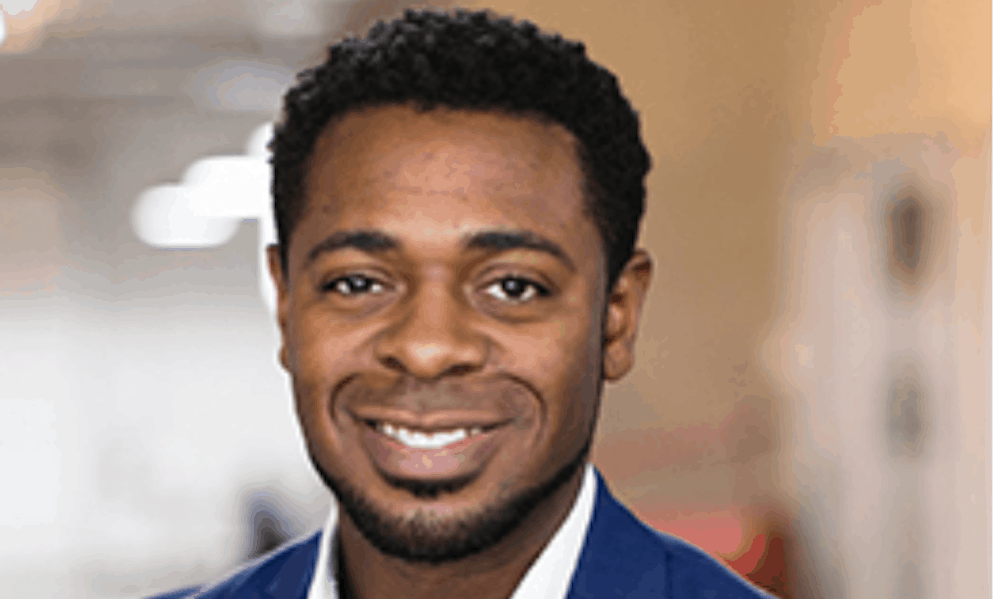
Key Takeaways: [:50] Jessica gives a quick announcement in regards to the coronavirus pandemic. [1:35] Tom welcomes Byron Sanders to the podcast. [2:01] Byron speaks about what it was like to grow up and go to school in Dallas. [6:05] Byron speaks about how his mother inspired his organization, Big Thought. [9:54] Byron shares what he learned about building a business as a young man. [13:00] How to facilitate the innate capacity for growth that a student has. Byron also describes why they prefer that term opportunity gap as opposed to the achievement gap. [16:00] Jessica chimes in to let listeners know about the Getting Through microsite by Getting Smart. [16:40] What led Byron to lead the nonprofit organization, Big Thought? [21:52] What does Big Thought do? [25:33] Byron describes their programs at Big Thought. [29:11] Byron describes DaVerse, a program at Big Thought that was created in partnership with Journeyman Ink. [31:21] Tom and Byron describe Deep Ellum in Dallas, Texas.[32:02] Byron describes what Dallas City of Learning is and what its goal is. [35:03] Byron speaks about their Learning Partners program. [36:20] Byron describes Striving Minds, their award-winning afterschool program. [37:52] Is Byron’s work largely in Dallas County these days? [39:19] Tom and Byron give some plugs for all the other good things happening right now in Dallas County! [42:45] What else does Byron hope to come to fruition in Dallas County? [47:40] Tom thanks Byron for all the work that he does and for joining the Getting Smart podcast!
Mentioned in This Episode: GettingSmart.com/GettingThrough Big Thought Byron Sanders Destination Imagination Journeyman Ink Dallas City of Learning Dallas County Promise
For more, see:
- Why PBL Can’t Wait
- What Will it Take to Achieve Equity in Education
- Improving Curriculum Mapping through Collaboration, Stakeholder, Voice and Resources
Stay in-the-know with innovations in learning by signing up for the weekly Smart Update.
Transcript
This transcript has not been edited for spelling accuracy.
You’re listening to the Getting Smart podcast where we unpack what is new and innovative in education. I’m your host Jessica and today we’re talking to Byron Sanders about the opportunity gap in Dallas, Texas. Byron grew up in Dallas observing differences in opportunity.
He remembers his mother scrambling to find enriching activities for him. Now he’s doing the same thing for the youth of Dallas County. As CEO of the 30-year-old nonprofit Big Thought, Sanders and his team serve 150,000 students at more than 400 locations with creative enrichment. The work is about closing the opportunity gap and building agency, hope, and creativity.
Let’s listen in to learn more in his recent chat with Tom. Hey listeners, Jessica here. Before we get started on today’s episode, I think it’s important to note that this interview was recorded prior to the COVID-19 pandemic. We acknowledge that educators, leaders, and students are in an incredibly trying time
as they continue to provide and learn outside of the school building. And we hope that these interviews contain helpful tips and ideas that can still be used even in this defining time. Soon we’ll dive into an episode with Byron Sanders, CEO of Big Thought. Since the pandemic, he and his team have been proactively developing ways to continue engaging
youth, families, and the broader community, including distance, auditory, and tactical learning solutions. Thank you for your understanding. Now let’s get to today’s episode. Hey Byron Sanders, welcome to the Getting Smart podcast.
Thanks, Tom. It’s exciting to be here. It’s great to reconnect. I was looking at my calendar. It’s been like 10 years since we connected and did some work while you were in the tutoring
business. Yeah. Yeah. I have a whole pre-teen now. Wow.
Yeah. Well, it’s been too long. Let’s take a trip in the Wayback Machine and tell us about growing up and going to high school in Dallas. Cool.
Yeah. So Dallas kid, I was born in Houston and I don’t remember it because I was very young by the time we got up here to Dallas. I grew up in Southern Dallas and for those not familiar with the city, Southern Dallas, it’s about 60% of the land mass of the city, but about 15% of the tax space.
So we’re imbalanced economically. But growing up, we moved around a little bit, got a little bit more stable as my mother had some, you know, advancements in her career. She’s an educator. And it was very interesting because every step along the way, I got a unique cultural
experience as well. So elementary school, all black school loved it in Oak Cliff. And I would say even today feels more like a family than a school. And it was fantastic. We got one white kid when I was in sixth grade.
And I thought this was what Dr. Martin Luther King was talking about. Yeah. And then I went to a magnet school in middle school and that school, a school within a school, the community was largely Hispanic. So it was my first time being in a non-black community and, you know, around a mostly Hispanic
community, but made a lot of friends. But again, different cultural contexts. Then I met a mentor who told me about this school called Green Hill. I didn’t know about the concept of private schools. Matter of fact, I didn’t know I was at a private school until my first day of class.
But I had to go through, take all these tests, all that jazz. And this school was on the other side of town, largely white and certainly largely socioeconomically on the higher end of the spectrum. And so that in and of itself, I’m always kind of the person who was really open to trying, new and different things.
I wasn’t necessarily scared to go, but it was a different world. I got baptized into a different set of expectations, but also a different amount of resources around young people so that those expectations were entirely reasonable and almost in fact expected. So that really shaped my outlook toward education. And I got this great experience out there at this private school, but I was always patently
aware every time I drove back after theater or basketball, I had to cross the Trinity River. And there’s even a smell that comes with crossing the Trinity River. So I was just aware. I run on the Trinity River when I’m in Dallas.
And so I know it. I think that big sort of no man’s land, right? So you… It is. Right.
But it’s, you know, actually there’s some really cool projects where it’s, I think we’re about to really make good use of it as a uniting project. But I always remembered that and also knew that I was one kid who had the right mentor at the right time with the right nonprofit structures around because I would ride the bus from the Boys and Girls Club.
You know, I’d have to get up at five o’clock in the morning in order to make it at 6.30. You know, we ended up get there relatively on time. That’s not a sustainable way for young people to have access to opportunities to live their best lives. And that’s why I always knew I wanted to do something in education to make my kind of
experience less of an anomaly. It’s what an interesting background. You’re going from mostly black school to Hispanic school to a white school in different neighborhoods, seeing the impact of these really ecosystems, right? Where kids had expectations and supports or they didn’t and being able to experience
for yourself the difference that that makes. Yeah. I think because today you talk a lot about the opportunity gap and it feels like that you experienced different versions of that early in life. Very much so.
And you know, the organization I’m with now, Big But, we’ll talk a little bit more about it, but my mother essentially replicated what we do for young people at scale. You know, she didn’t, this was before the internet was a thing and she was extremely resourceful about finding free or low cost stuff for my brother and I to do. Whether that was obviously of the mind now called destination imagination, which is
a creative learning experience or theater, community theater at St. John’s Missionary Baptist Church in South Oak Hills. Football, track, model United Nations, like we were always doing something. But the interesting thing is a lot of that came from my mother kind of finding out what to do, but a lot of the drive came from me wanting to do something.
And we talk about this, you know, adverse childhood experiences, ACEs, trauma, childhood trauma. Oftentimes, we put a picture on what a youth who has been traumatized or dealt with significant trauma looks like. It doesn’t always take on the visage of the normal, you know, that child looks angry and
is acting out. I was actually always looking for something to do because I grew up in a house where there was domestic violence. And every time something was ending, I needed a new thing because I recognized from a very early age that if I could bring home a medal or a report card or a trophy or a sticker
or anything that was positive, I would run in show my dad, Hey, dad, look. And when dad was happy, mom was mostly safe. And when I’m at rehearsal or at practice, they were not at home. And I recognize that that was how I was going to protect my family, which is kind of a ridiculous load for a six year old to carry.
But it took a lot of work in order to find the cracks and seams between the lack of opportunity to find opportunity. And my mother was a master at that. Yeah, what a what a beautiful picture to be able to recognize the gifts that she created. Yeah.
For you, sometimes scraping together free and low cost experiences, but because she knew it was so important for you to have these rich learning experiences. And and now for for that to be a model for the work that you do today is a beautiful thing. Yeah. And I’m excited to throw my name in the head.
Yeah, we I want to come back to that. But you I think you probably met our friend, Carl Dorville at SMU. And then 10 years ago, as a young man, you had the opportunity to build a big business, a big tutoring organization that served a lot of kids. And tell me about what you learned in in building a business as a young man.
Yeah. So group excellence was the mentor and tutoring company that we actually started when we were undergraduates at SMU, Carl Dorville, me and my eventual wife. We were riding in a car on the way home to my mother’s house. I think it was for laundry because we ran out of quarters.
And Carl talked about this idea. And I was like, yeah, perfect. Sounds like a great nonprofit. And he’s like, no, this is going to be a business. And I’m pretty sure we can get opportunities to be paid to help students first starting
off in Dallas Independent School District. I thought he was crazy. But lo and behold, we told my mother, who was actually working in the math department at the time, she’s like, actually, that’s not that crazy of an idea. So we put together a business plan and do a generous grant to Dallas ISD.
They were able to bring in our company under the algebra initiative. And that’s all she wrote. The news that we worked with had these huge gains in passing at the time. It was the TOS test, I believe. And that was the beginning of group excellence.
So fast forward, we grew all over the state. Every major city, except for El Paso, had a group excellence office or at least significant operations. And about 200,000 students total between middle school and high school, we were able to work with in about four years or so.
And in 2011, we were the fifth fastest growing education company in the country. What I learned in that space was that this is before social enterprise was a commonly known terminology. And one of the things that we always had to explain whenever we showed up, everybody thought that just because of the nature of our work, we had to be a nonprofit.
We would explain that we’re actually a business. And for a lot of people, it didn’t commute and it was a bit of a barrier. But once people got it, it was like, oh, wow, doing good and making money. That’s interesting. And of course, because it’s a bunch of early 20 euros, it had this extra story
of youth agency firing up. So when you talk about why I am where I am today, it’s because I lived what happens with young people, get lit up about something and can be the primary agents of change in other young people’s lives. That’s a story I’ll never forget and have seen it happen over and over since then as well.
That’s really powerful. I guess we’ve been studying this subject of difference making and it’s really powerful when you can help another person. The skills you build, the agency you experience is so important. And for struggling kids, we often think that we’ve got to double down on the math.
But sometimes what they really need is to be empowered to make a difference for another person because it really does have magical benefits. It’s so funny because we do this intuitively whenever the chips are down. Right? Like when disaster strikes or there’s some sort of event that happens that really
strips away all of these silos that we have or these labels that we put on each other to differentiate, people come together and some amazing things happen. You also can replicate that and capture that if you contextualize why another person needs to care about another person. And I think sometimes we overthink it.
We get super tactical. We’re like, OK, no, it has to be new math or it’s this unique type of pedagogy. But honestly, it’s relationships, heavily relationships. And if we can deploy relationships in a way that acknowledges it’s not our job to implant greatness in a person, but that greatness already exists in those people,
young and old, then the question changes in the tactics change to seeing what we can do to facilitate the growth of that innate capacity that was already there. It’s a different conversation. Yeah, and that’s what we like the term opportunity gap as opposed to achievement gap, because it acknowledges that the people who might not necessarily be performing.
It’s not it’s not because they’re not trying or they’re not smart enough. It’s because the conditions around them have not created the likeliest scenario for them to be able to live to their best and fullest potential. It’s also starting with assets instead of gaps. Right. It’s seeing the good.
Hey, listeners, it’s your host, Jessica. I wanted to just take a quick break to share an important resource with you. Recently, our team launched the Getting Through microsite to support educators, leaders and families on the path forward during this unprecedented and uncertain time. There’s something there for everyone, whether you’re just getting started with
your transition to distance learning or you’ve had plans in place for a while and now have the opportunity to share your work and guidance with others. We hope this gives you a place for your voice and an opportunity to learn. We know we will get through this together. Check it out at gettingsmart.com slash getting through.
OK, now back to the show. After group excellence, you had a couple of interesting stints in philanthropy and banking and those look like they were amazing, broadening experiences that got you ready to do the work that you’re doing leading a big youth serving organization in Dallas called Big Thought.
Yeah. So you’ve been there two years. What why Big Thought for you? What was the connection and the opportunity that that seemed like it was the right next step? Great question.
So I have a mission statement and my faith is a big driver of who I am and in a part of my identity and I had a quarter life crisis in my first job out of college. Interestingly enough, I actually went into Big Corporate before I went to group excellence, then I came back to group excellence.
I was at Pfizer and pharmaceutical sales and I was doing good, checking all the boxes and I would come home and I’m like, oh, man, what did I just do? Even if it was a good day, right? So I wrote a mission statement after this big soul parsing search and it’s the love my guy with all my heart and soul
to be the husband, father, son and brother, according to what pleases him and to work diligently and daily in my most sincere efforts to pursue my appointed purpose. And so that’s my no star. That’s my blueprint in every decision that I’ve made has been framed
through that lens and the step that I had after group excellence, after we sold was to go into an opportunity that brought me a little closer to my my own city. Dallas Education Foundation was the foundation that supported Dallas and the school district and I stepped in as the executive director.
We relaunched it. We got it going, raised some good money for some great strategies. Superintendent Mike Miles was here at the time. And some of the things that they’re doing today, we made some initial investments to get it going.
And so we’re really proud of that work. But then I moved into banking and people are like, OK, that’s probably a weird detour. But I moved there on the investment management side. And I got to be an institutional client advisor
because I had context for philanthropy, but I wanted to learn a bit more about the finance side of how the world works. And so I was able to go in and, you know, successfully be able to manage some universities, museum endowments, essentially doing investment management for those assets,
as well as philanthropic advisory support. And that’s where I was a board member on the board of Big Thought. We had a phenomenal leader who was here for 27 years of those first 30. And she took a really cool opportunity at the Wallace Foundation, which, you know, left an opening.
I was actually the chair-elect to come in to the organization and was part of the CEO search. But as we were going through the process, and I would continually have to answer the question when they asked, when the candidates asked you,
what’s your vision for Big Thought? And I kept saying it out loud. The more I did, the more I knew I needed to make this make this move because Big Thought is almost the culmination of everything that I’ve done before. This would be a really cool spot in the in the Byron movie
when you turn to your board members and say, I think it’s me. That’s right. That’s actually not that far from what happened. We I was actually having coffee with a friend who was on the committee. And we were sitting talking and really just dreaming
about what was possible with with Big Thought. And he looked at me. He looked at me and said, now, why aren’t you applying? Right. Because at that point, the the lighting comes up and it’s obvious in your face that you’re the one.
You’re the one, you know, you see the path forward. Man, and it was one of the coolest epiphanies to have happened. I thought about it earlier. As a matter of fact, the predecessor, my predecessor actually came and directly asked me. And I was like, nah, I’m doing my banking thing.
You know, I just got here. But man, when she asked that question, it was all of that all of that purpose that came crashing, crashing down. And I said, you know what? This is it. Let’s take a swing.
So what does Big Thought do? Big Thoughts. We are an organization that creates creators. And here’s what I mean by that.
We are North Star. It’s the creative world where all youth in marginalized communities are equipped to imagine and create their best lives, their best world. And we do that with a forward facing outlook on what young people are going to need
to be successful in the 21st century world. The the core assets that the market is telling us young people need in order to be able to make kind of resources that give them options are very different from how RK 12 and higher ed systems have been built. Because everything’s changing so fast,
we can’t predict what the world is going to look like. 20, 30, 85 percent of jobs don’t exist today. The ones that will be available 10 years from now. So what futurists, macroeconomists are saying is that we need to be teaching skills that build what we used to call soft skills,
but now are calling critical skills, creativity, being the number one, two or three, depending on which survey or report you’re looking at, because youth need to be equipped to step into that ambiguous tomorrow and create the jobs as we’ve known it are either going away
or fundamentally redefining what’s necessary due to automation, artificial intelligence. And so if we haven’t built skill sets, even people with degrees and certifications might be ready for their first job. But once that job gets disrupted, what what are you offering that makes you
marketable and allows you to have sustained opportunity? We’re saying build the creative skills now so that they’re moving into the rest of the world with that lens and that frame of reference. That’s what all of our programming and our systems are built to do. It’s it’s not only this creative problem solving.
It I guess it starts with problem finding, right? I’ve been able to spot an opportunity we’re taking on. Then it’s to create a problem solving of of knowing how to organize to deliver value. And both of those take a sense of agency. And I know that’s important to you as well.
Right. It starts with a sense of I can do this. I have the ability to act on the world and deliver value for a group of people. Yeah. And you know, that that’s actually a fundamental definition of the word hope. You know, that tomorrow can be better than today. And then my acting upon it makes it so.
That’s hope. And that’s a hope index. GALP did an entire report on that a few years back. It said that that’s the fundamental difference between people who make it and people who don’t of all age brackets, all socioeconomic socioeconomic spectrums, all races, tendons, that hope index.
And what we’re focused on is is making sure that young people recognize that they have the sauce to to to make tomorrow what they see it should be. And then it really does connect back to some of those earlier conversations I was saying that I saw way back at group excellence. It’s recognizing that young people have something to say and they have power to to make it so.
And that’s what our work really does lean into. Hey, let’s let’s do a quick rundown of some of the programs that you have. What is our creative solutions? Creative solutions. So we have three different ways that we do work. One direct to youth programs to systems work where we’re essentially the backbone agency
for an entire ecosystem collective impact. And then the third is Big Thought Institute, which is our consulting practice. Creative solutions falls in that first bucket. And it’s the work that we do alongside the juvenile justice system. So we’re taking kids who are on probation and they come to us seven weeks in the summer
and they are paid working artists. It’s a jobs, arts and trauma informed program. They pick two tracks, performing arts, visual arts. And at the end, they do either a big musical production or a really nice gallery display.
And it’s so powerful because through creating people get to wrestle with the trauma that that that got them to where they are. And it has the lowest recidivism rate in the county and one of the lowest in the state. Typical program gives you about 38 to 42 percent recidivism in our program, even though we don’t even screen for offenses, like we’ll take all kinds of offenses.
Aggravated assault, we’ll take sexual offenses. Our last summer was four percent recidivism rate. And it’s a beautiful iteration of what can happen when you embed creativity and learning and you recognize and build trauma informed systems. And it just teaches all sorts of amazing skills, right?
It teaches agency, but you also get project management. Yep. You are collaborating with a diverse group of people. You’re dealing with technical issues. Exactly. Yeah.
And then you you get this magical experience at the end where just a few weeks before you’re saying there’s no way I can do this. And and then you’re on display in public with with what might be an initial demonstration of mastery and just experiencing that that learning curve and often doing it in a small community is it’s magical.
It’s far and now that some people remember for a lifetime. And what we’ve done to further that is that used to be kind of the end of it. You know, we had an alumni group, but but but for most intents and purposes, the programming was done. But what we’ve recently done is added a new position called the Opportunity Advisor.
The Opportunity Advisor’s job is to now help them channel all of those resiliency channeling skills to a goal attainment plan based on what do you want to do in life? Who do you want to be in connecting them to the next resource? That’s going to help them further that that plan.
And so that’s been the latest iteration because through our strategic plan, we recognize we really need to be tailoring ourselves toward long term youth outcomes. So kids aren’t falling off a cliff because there’s some very real challenges that don’t stop just because you now, you know, love yourself and believe in yourself and think that you have something to add.
What is diverse? Yeah, diverse. It’s a partnership with Journeyman, Inc. Will Richie and Alejandro Perez. We started at
is this our 15th? This will be our 15th year together. And it’s a the best way I can describe it. It is a place of radical healing and self love. Young people all across the city are in these clubs on at their schools. After school and they’re they’re either teacher or some designated diverse
instructor brings them through an experience where they learn how to write and not just write, but write about the things that are going on inside, things that matter to them. And then five to six times per year, all of those youth from all over the region come together at a place
in it’s called Life in Deep Elm. And they do those. They perform their pieces on a stage, live band, drums, the guitar, the there’s some beautiful wind instruments, read instruments.
And there’s a unique song that’s playing every time a young person gets up and does a piece and everybody’s clapping. They send them love. My voice has power to speak my truth and share my life. That was created by Will Richie and Alejandro.
And so Big Thought partners with Journeyman Inc. In order to create these experiences and these things pull out 500 kids every time. We have buses running all the way in and it’s middle school and high school kids listening to affirming each other and loving every person who gets up there. It is one of the most beautiful things I’ve ever seen.
You have to take me to one of those events. Oh, man, it’s happening. Don’t you worry about that? So Deep Elm, for those folks not familiar with Dallas is it’s an old warehouse district just north of town that is now kind of the
the funky restaurant and club part of town. Yeah. It’s very cool. So this is a really great experience for young people. Absolutely. It’s actually a historic black part of town
and it’s it’s seen a revitalization in this new iteration. And this is one of the one of the mainstay experiences. That’s beautiful. What what is Dallas City of Learning? That is our premier ecosystem where we serve as the backbone agency to pull
together and no kidding, over it’s actually 700 plus partners now. The whole goal of this ecosystem is to make sure that no matter where a young person lives in this city, no matter what zip code you’re in, you have access to a high quality, free learning experience outside of a traditional class. The the the first I would say proof point was summer.
We were trying to see can we start the summer slide by creating this ecosystem? There’s a website where you go to find where all these experiences are. The different partners upload their programs so you can search and find what’s close or what aligns with a theme that you’re interested in as a kid. And then what we do is we capture all of that data.
And it’s analyzed by Southern Methodist University Center on Research and Evaluation. And we get to see what did what happened over the summer do for a young person entering to the new year. And what we’ve seen in this latest round of analysis is we’ve seen that there is a correlation between Dallas City of Learning,
relative to youth who did not have access to Dallas City of Learning, to increases in standardized test scores, attendance, social emotional development. It’s it’s it’s one of the best living proof points of a large scale system where 69,000 kids are getting these services over the summer and being able to see that it has a measurable definitive connection to an
increase in academic and social and emotional development. It’s been truly beautiful. That’s that’s really exciting. Yeah. And the next part of it is us being able to use this ecosystem to create
learning pathways so that each one of those experiences young people are getting will be credentialed and it will be explicit that these 21st century skill sets are being built, which could then connect us to, oh, well, I’m looking for a kid who has an interest in coding, AT&T, fidelity, right? And so it becomes a honestly a pipeline.
It could be a system wide tool for succession planning in our city. That’s the that’s the big dream. And that’s what we’re actually working with a pilot cohort in order to be able to build for the next phase of this this work. You have a program called Learning Partners for Public Schools.
That’s something similar during the school year. Yeah. And that one is there’s a technology that educators use in order to book experiences either offsite or onsite on campus, except that happens during the daytime.
That’s actually during the school day and the entire system is built so that it can actually align with and help amplify state standard based lesson plans. So if a teacher is covering a particular unit in biology, then you could actually schedule and book a trip to the Trinity River Autobahn, where young people will then be able to go out to this big nature
preserve and have a real life experience and be able to touch and see and and feel the things that they just read about and took a test on. It makes it come alive and it really changes the game because as we know, you can’t imagine what you’ve never seen and being able to go out and really see and experience it deepens the learning.
What are striving minds? That is our after school program. That’s our national award winning after school program. That’s all about creative exposition. So three to six on a campus where we’re coming in and bringing in we call them
teaching artists in keeping with our our cultural history where they’re coming in and helping guide young people through creative experiences in a range of different disciplines. The whole thing about building the creative muscle means it actually issues hyper specialization.
So if you’re interested in STEM, fantastic, and you’re also going to get art. So kids get access to robotics and they get access to paper mache and dance. And kids are actually literally learning line dances in thriving minds. And so there’s a social emotional development aspect of it. But it’s also designed to expand the brains range of experiences that it can
synthesize toward those solutions that we were talking about it later on. And usually we operate this in elementary and previously we did not do pre-K, but in more recent years, recognizing the need. We built ourselves to be pre-K three and pre-K four tailored in our programming as well. Is your work primarily in Dallas County these days?
Yes, that is largely where we’re anchored, but that’s also starting to change. We finished our strategic plan last year and it was a very intentional decision not to lock ourselves in to Dallas. We have been doing work that’s been recognized all over the country for a lot of for a number of years, but we have not actually taken that work in a
programmatic sense outside. So this summer will be the first summer that we’re working intentionally outside of Dallas County. Now, we’re not going too far initially. Terry County, which is Fort Worth, is going to is our first expansion, but
we’re taking creative solutions to that juvenile center. And the biggest compelling argument for them was not only what it does for the young people, but the reason why they’re wanting this is because it costs about sixty three sixty two thousand dollars to incarcerate a young person for a year.
Our program, again, with only a four percent recidivism rate is about twenty four hundred twenty five hundred dollars. So the savings are tremendous to the system and to the taxpayer. And and not only that, we’re having much better outcomes for young people. Byron, I want to I want to just give a plug for the other good things
happening in in Dallas. Yeah, you’re one of the reasons that Dallas is what I would consider the best urban school district in America today. And I want to give a plug to our friend, Michael, you know, who’s the superintendent and is just doing great work.
We were also a big fan of Dallas County Promise. Yeah. And the coordination that’s happening across your region. So it’s so exciting to see the layers of good work that are being done in school and in the connections between high school and college and and all the
supports that you’re creating after school, in school, summer time. Right. It’s that web of opportunity that you talked about at the beginning that’s really starting to come alive in Dallas. It’s it’s been a beautiful thing.
And I can’t say this for every city because I haven’t seen every city. But I’ve seen a few. Dallas is very unique in the. I think our intentional collaboration and the willingness to get in a sandbox together of great case in point is Dallas County Promise, which is a
wonderful collaboration between commit, which is part of the strive network. But it’s our here, you know, our strive here in Dallas commit Dallas County Community College District, Dallas Independent School District. And Big Thought is the latest large institutional partner to join that collaborative because what we’re doing is we’re leveraging our Dallas City of
Learning ecosystem in order to provide the coalesced effort for mentors to walk alongside young people on their path toward a free college education. So what we’re doing is we have essentially leverage the great people who are already working in these high schools in community and getting them connected strategically in order to have one to one adult mentor relationships with
students who are high school seniors to make sure that they’re encouraged, reminded to turn in their fast attachment to get their application done for college to know which college to even think about. Is there thinking about what kind of careers they want? You know, having that chief.
I’m not going to say person who nags you, but kind of in a good way through a relationship. Like your grandma would. Exactly. Yeah. But it’s a really important thing.
And the goal is to be able to literally walk this young person on two campus in August to ensure that the matriculation successfully happens from high school to college. And so this is the first year we’re doing it. We’re running a pilot 15 schools.
And we’re pretty excited about the progress that we’ve made so far. There’s so many good things going in the right direction in Dallas. Are there are there other opportunities? Are there other things you’d love to see come alive in in Dallas County? Yeah.
The thing that I would like to see come alive in Dallas County is actually the thing that I would like to see come alive in in all parts of the United States. Dallas ranked 274 out of 274 urban cities in the country. They were measuring equitable participation in gains in the market and financially since the crisis that we had in 2008 2009.
Our economy got better. Right. But black and Latinos did not experience the participation in that growth. And we have to be really honest about ourselves. And what we have to do to really confront the racially inequitable opportunities that
exist in our community. I told you about how our city is divided north south. We won’t get better unless we build into our framework into our strategies intentional equitable investment to to target the specific increases that we’re wanting to see in black communities and Hispanic communities largely in English language learning communities.
When we’re talking about our Hispanic demographics, that’s the thing that I think Dallas has got to really nail down and not be scared of. Let’s start with truth telling. First of all, South Dallas didn’t get the way South Dallas got just because you know, osmosis right the natural course of things.
It was segregation. It was intentional. And some of that legacy persists today. So if it was intentionally created, there’s something that we can intentionally do to undo that.
But we want if we’re not honest about how we even got to our present day status. The storytelling and the narrative really does matter. It really it connects with the difference making that we talked about earlier. I think that means introducing a new perspective. And not just entrepreneurial mindset, but the skills and the access to really promote
entrepreneurship in historically underserved communities, right? So that high school students have successful entrepreneurial experiences in high school. And then as you said, being really intentional about access and investment in communities that we’ve ignored or worse. That’s right.
And those two things have to go together because what doesn’t help us is to encourage entrepreneurship and then send all of these poor black and brown kids out into a world where they can’t get access to capital. You know, where they can’t get access to a bus route that’s reasonably scheduled for them to be able to go to a grocery store and one that’s not on the other side of town,
right? One that’s actually in the community. So we have to do both things at the same time. We have to shift the target for what a prepared youth looks like. And we need to shift the system of resources around them in order to really enable them to
do that thing that we just got them so excited about and now dreaming about because one of the worst things to do is to create hope but false hope. And that’s the integrity of our efforts that we need to think about more broadly and not just what happens in the classroom. How are we investing in these communities to make it a realistic possibility so a person
doesn’t have to be a superhuman or X man in order to be able to make it out? LeBron James’s commercial was fantastic. I love it. He said, you know, what if there was a world where there were no more humble beginnings? Everybody loves the humble beginning story, but we have to question why there was a humble
beginning necessary in the first place. And that’s the part that I think Dallas and a lot of other cities have to do at the same time that we focus on shifting and improving the quality of education in the 21st century world. Byron Sanders, it’s been a treat to reconnect after a decade. I’m looking forward to hearing some youth voice in deep Ellen with you in the very near
future. Thanks for the work that you’re doing in Dallas. Man, Tom, this has been an absolute pleasure. This is like a walk down memory lane. This has been a lot of fun.
We’re going to do it again soon. Thanks for having me. A big thanks to Byron for joining us on this week’s episode and for more on the great work being done in Dallas, make sure you listened to episode 218 with Dallas ISD Superintendent Michael Hina Hossa and check out several blogs on our website about Dallas
County Promise. We’ve got both of them linked in the show notes below. And before you go, don’t forget to rate and review the podcast. It helps more people find us and helps us get better. You can hit subscribe while you’re there as well.
So you’re sure to get every episode delivered right to your streaming app the moment it drops. Okay, that’s it for today listeners. Thanks for tuning in for the Getting Smart podcast. This is Jessica signing off.



0 Comments
Leave a Comment
Your email address will not be published. All fields are required.